The Best Chest Exercises and Workouts to Build Bigger, Stronger Pecs
A well-developed chest is one of the most eye-catching muscle groups on the body. Whether you are on the beach in a T-shirt or wearing a fitted suit, a strong chest adds presence, power, and confidence.
For many men, broad, defined pecs are a key part of an impressive upper body. A muscular chest helps create that classic athletic look: wide through the shoulders and chest, with a tighter waist.
Research often points to a physique with strong shoulders, a narrow waist, and a broad upper body as highly attractive. In simple terms, a solid chest helps complete that powerful look.
That is why chest training remains a priority for so many lifters. If your goal is to build size, strength, and better definition, the exercises below are some of the most effective choices available.
The Best Chest Exercises for Bigger Pecs
If you want your chest to stand out, you need more than random pressing. You need to understand how your chest works and train it with purpose.
Before jumping into the workout list, it helps to know the muscles involved.
Understanding Your Chest Muscles
If you want a better chest, you need to know what you are training.
Experienced coaches often talk about the upper chest, middle chest, and lower chest. Technically, the chest is not divided that neatly, but these cues are useful because they help you focus on different movement angles and improve muscle activation.
Your main chest muscles are:
- Pectoralis major
- Pectoralis minor
Together, they play a major role in pushing, pressing, and stabilizing the upper body.
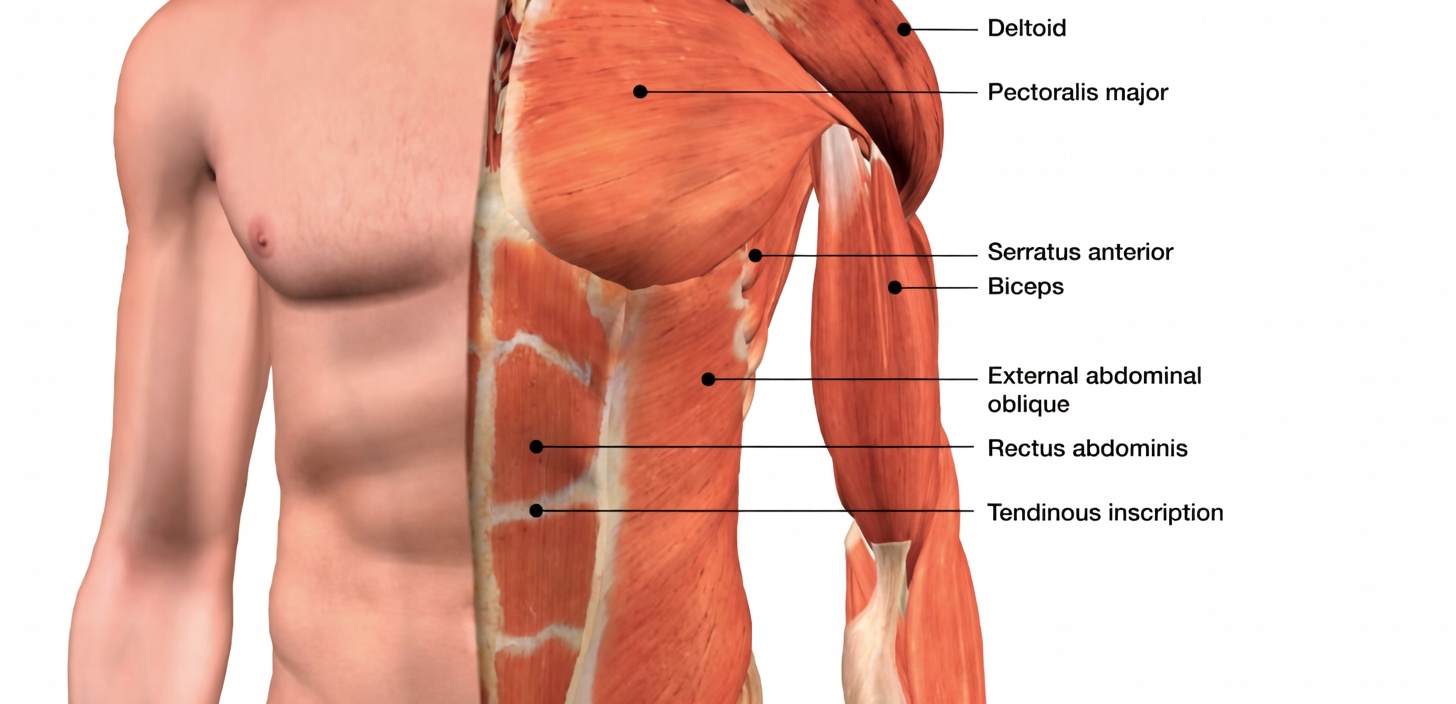
Chest Muscle Anatomy
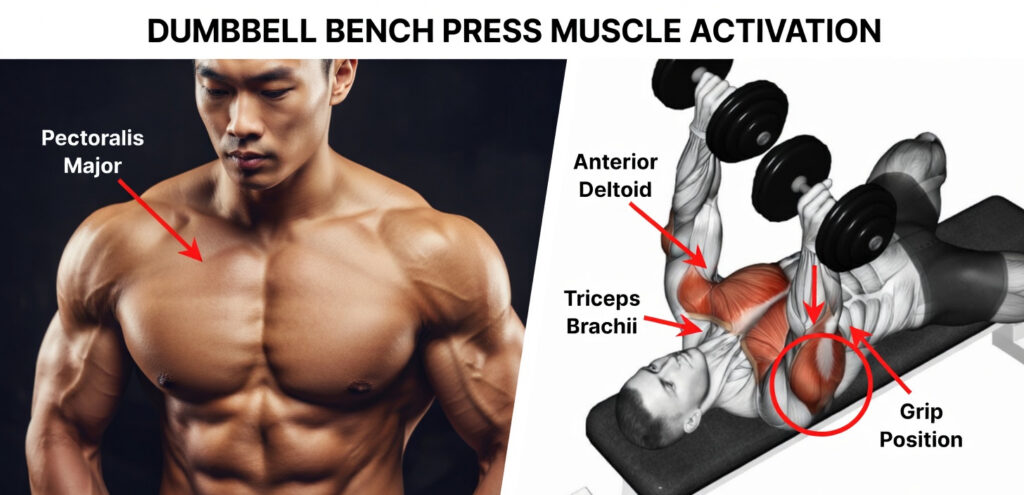
Pectoralis Major
The pectoralis major is the largest and most visible chest muscle. It is the main reason a chest looks thick and muscular.
This fan-shaped muscle begins at the:
- collarbone
- sternum
- ribs
- external oblique region
It then attaches to the upper arm bone, or humerus.
The pectoralis major has two primary sections:
- Clavicular head: often referred to as the upper chest
- Sternal head: commonly described as the middle and lower chest
These fibers help with movements such as:
- shoulder flexion
- horizontal adduction
- internal rotation
- shoulder extension
Pectoralis Minor
The pectoralis minor sits underneath the pectoralis major. It runs from the upper ribs to the shoulder blade.
Its main job is to help pull the shoulder forward and downward, while also supporting proper shoulder mechanics.

Other Upper-Body Muscles That Support Chest Training
A stronger chest is not built in isolation. Several surrounding muscles contribute to pressing strength, posture, and upper-body stability.
Trapezius
Your traps cover the neck, upper back, and shoulder area. They help with posture, shoulder movement, and head position.
Rhomboids
The rhomboids sit in the upper back and control shoulder blade movement. Weak rhomboids can contribute to poor posture and even shoulder discomfort.
Serratus Anterior
These muscles wrap around the ribs and connect near the shoulder blades. They are essential for scapular stability, which matters during pressing, planks, and controlled upper-body movement.
Deltoids
The delts are part of the shoulders, and they are involved in nearly every chest press variation. If you train chest hard, your shoulders will almost always assist.
Latissimus Dorsi
The lats are the large muscles of the back that run from the shoulders toward the waist. A balanced upper body needs both a strong chest and a strong back. Big pecs paired with a weak back is not a good formula for performance or posture.
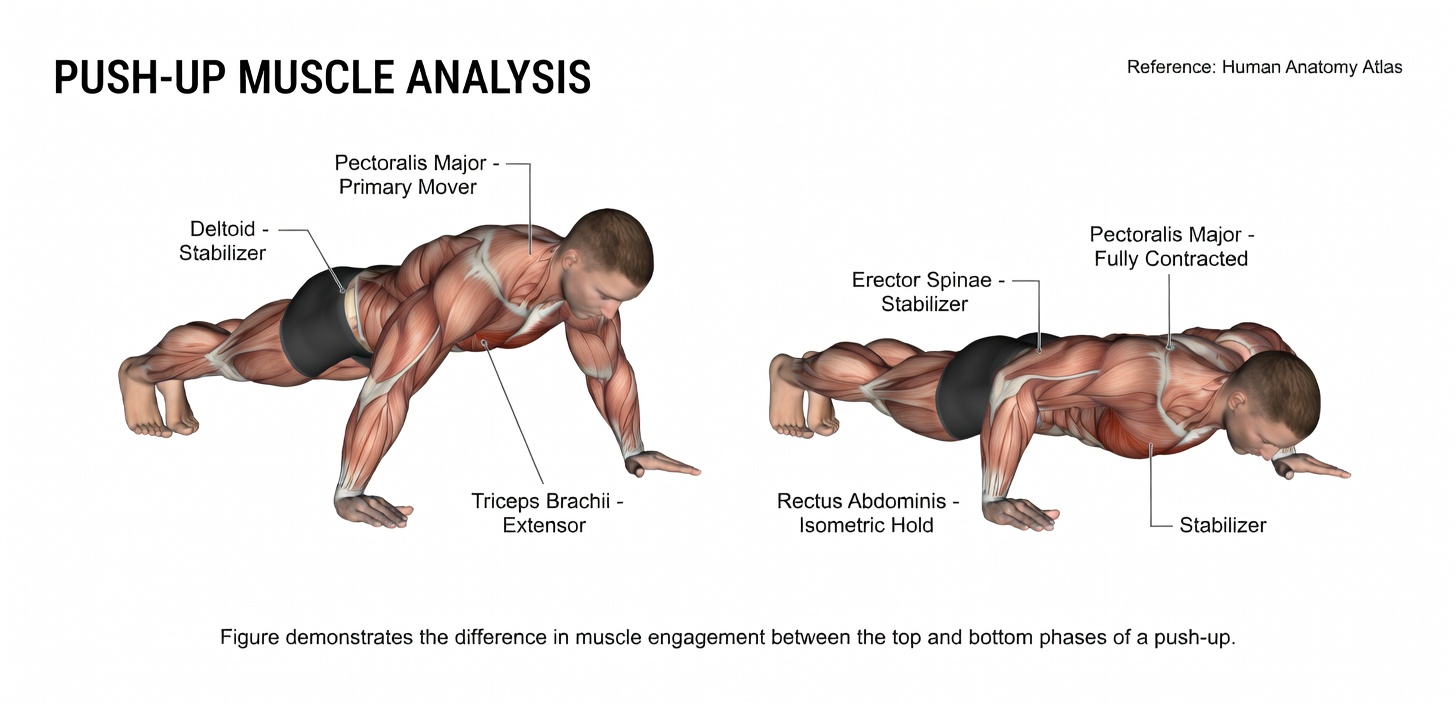
A Quick Note on Chest Training
Everyone wants a bigger chest, but that does not mean loading up the heaviest weight on day one and hoping for the best.
To build muscle effectively, follow the principle of progressive overload:
- Start with a weight you can control
- Use proper technique
- Increase reps or weight over time
- Stay consistent
If you can perform 12 clean reps with perfect form, it may be time to increase the load.
If you keep using the same resistance forever, your body will eventually stop adapting. Progress comes from gradually giving your muscles a reason to grow.
13 Best Chest Exercises for Size and Strength
Most of the exercises below are beginner-friendly, but a few, such as heavy barbell pressing, are better suited to lifters with a good strength base and solid technique.
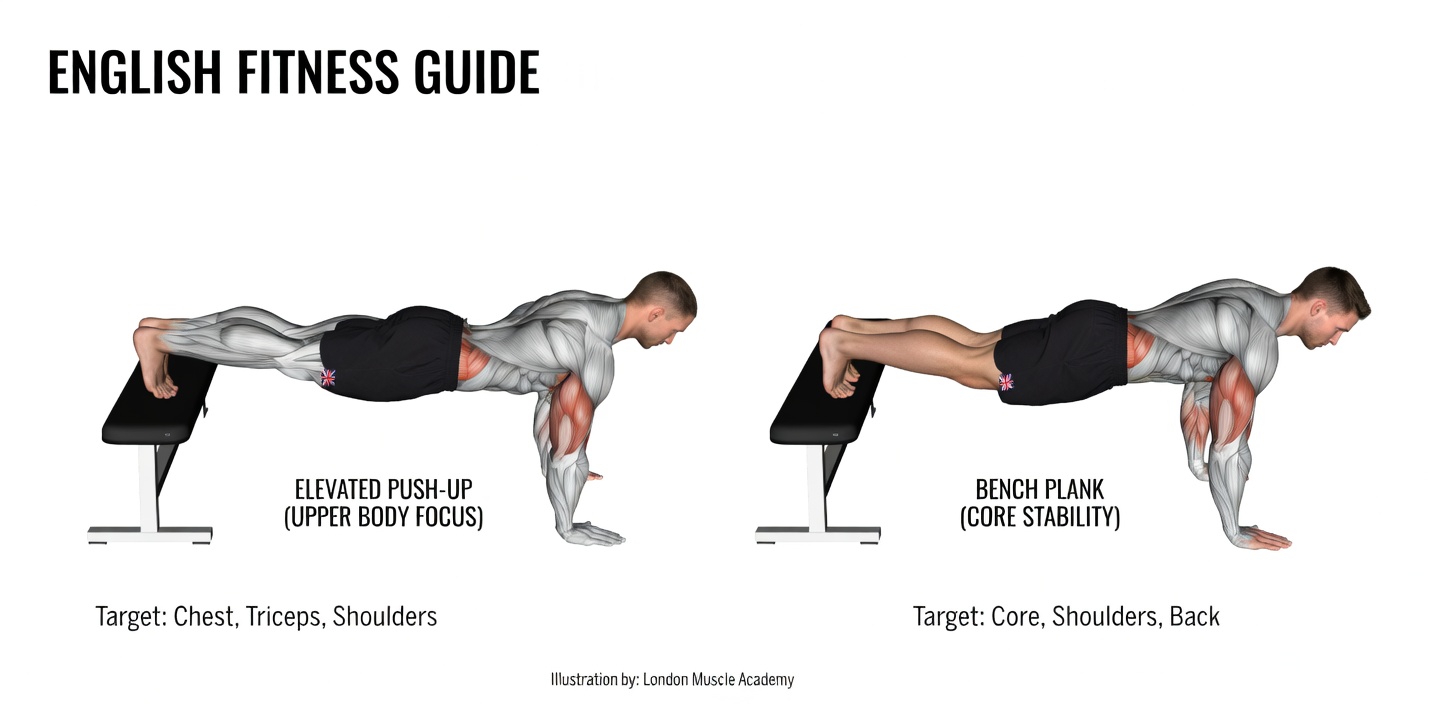
1. Push-Up
The push-up is one of the best bodyweight chest exercises ever created. It trains the chest, shoulders, triceps, and core all at once.
It is also one of the best home chest workouts because you need no equipment.
How to do it
- Start in a high plank position
- Place your hands slightly wider than shoulder width
- Extend your legs behind you with your feet about hip- to shoulder-width apart
- Tighten your abs and glutes
- Keep your body in a straight line from head to heels
- Lower yourself until your chest nearly touches the floor
- Pause briefly
- Push back up explosively
Reps
- Aim for 15 to 20 reps
- Go higher only if you can maintain excellent form
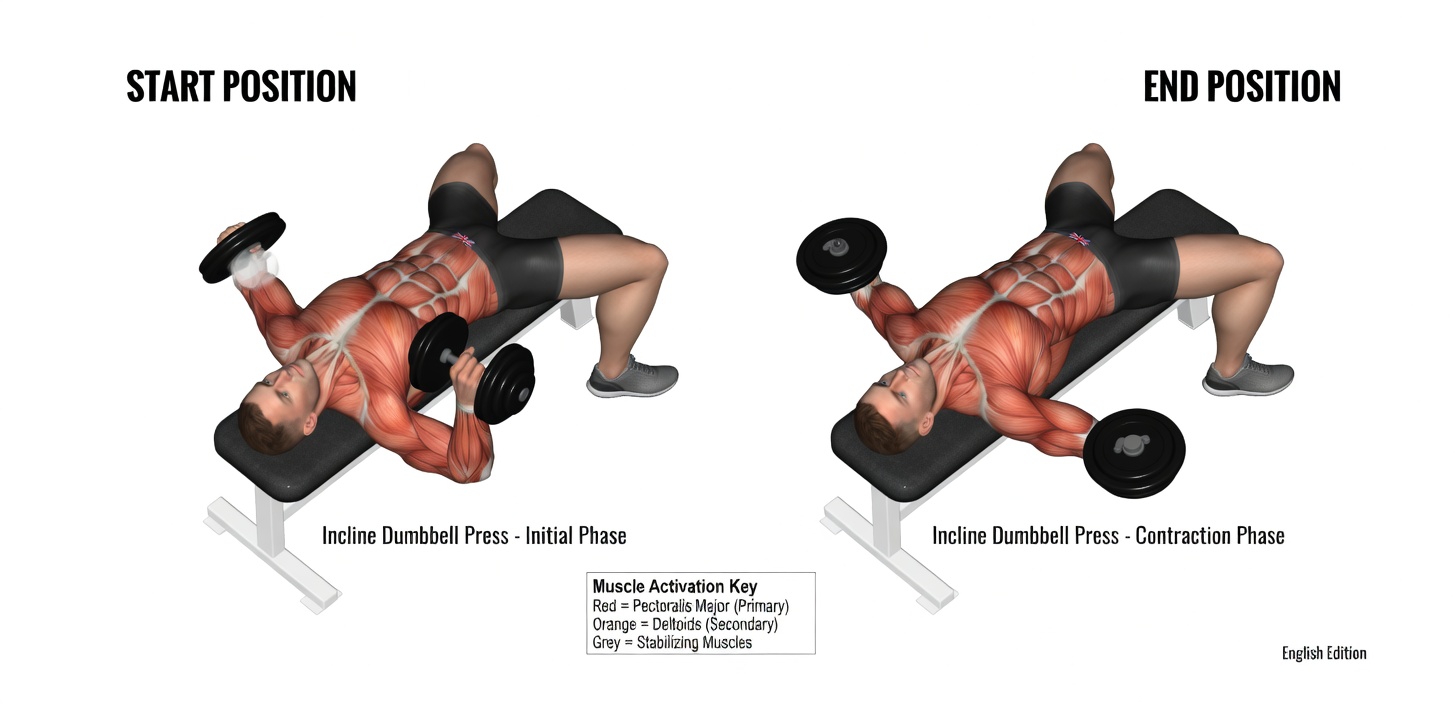
2. Decline Push-Up
The decline push-up increases the challenge by elevating your feet. This variation shifts more emphasis toward the upper chest and shoulders.
You can place your feet on a:
- bench
- box
- step
- stability ball
The higher the surface, the harder the movement.
How to do it
- Get into a plank with your feet elevated
- Brace your core and squeeze your glutes
- Keep a straight line from heels to head
- Lower your body under control until your chest is close to the floor
- Pause for 1 to 2 seconds
- Press back to the start
Reps and sets
- Perform 15 reps
- Complete 2 to 3 sets
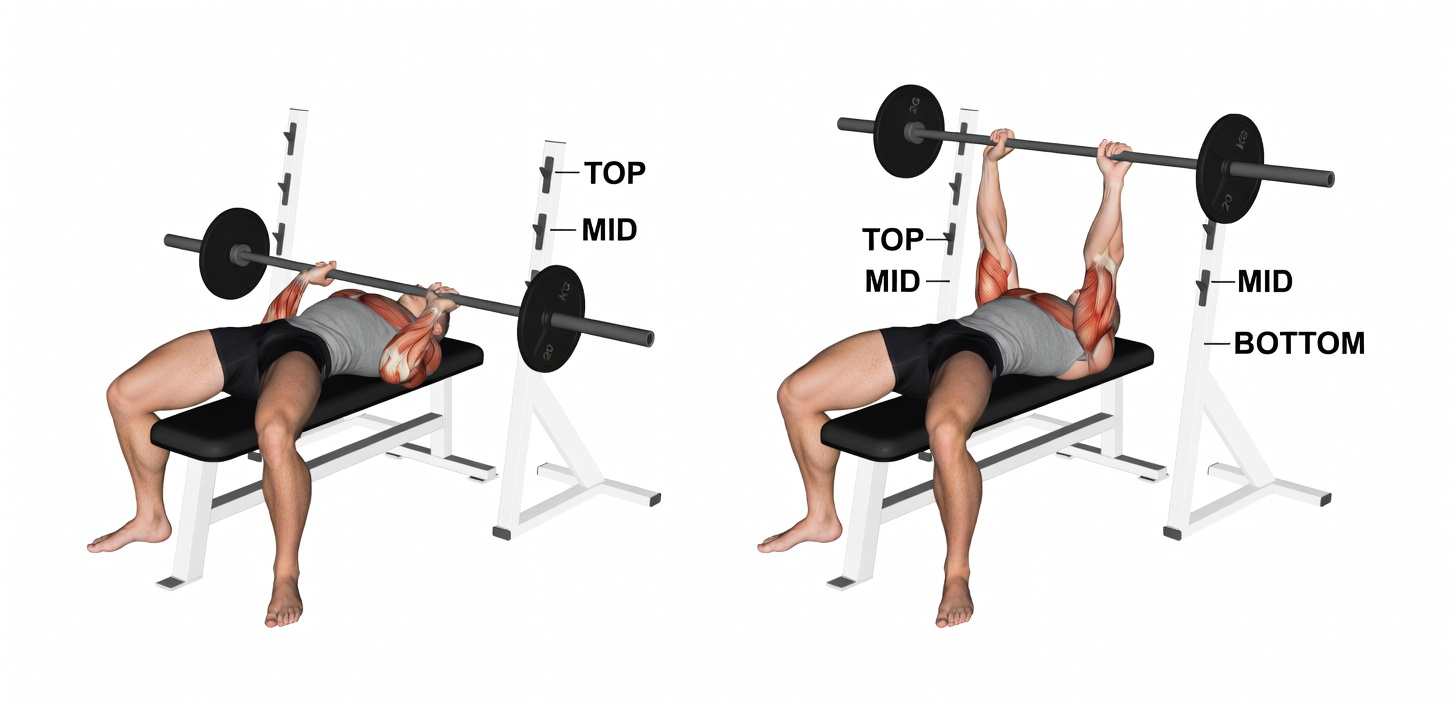
3. Barbell Bench Press
The barbell bench press is a classic for a reason. It is one of the most effective chest exercises for building mass and pressing strength.
This move targets the:
- pectorals
- shoulders
- triceps
If your goal is a bigger chest, the bench press deserves a place in your workout plan.
How to do it
- Lie flat on a bench with your feet planted firmly on the floor
- Grip the bar slightly wider than shoulder width
- Unrack the bar and hold it over your chest
- Lower it slowly to the mid-chest
- Press it back up until your arms are extended
Training tip
- Use a spotter when lifting heavy
- Focus on control, not ego
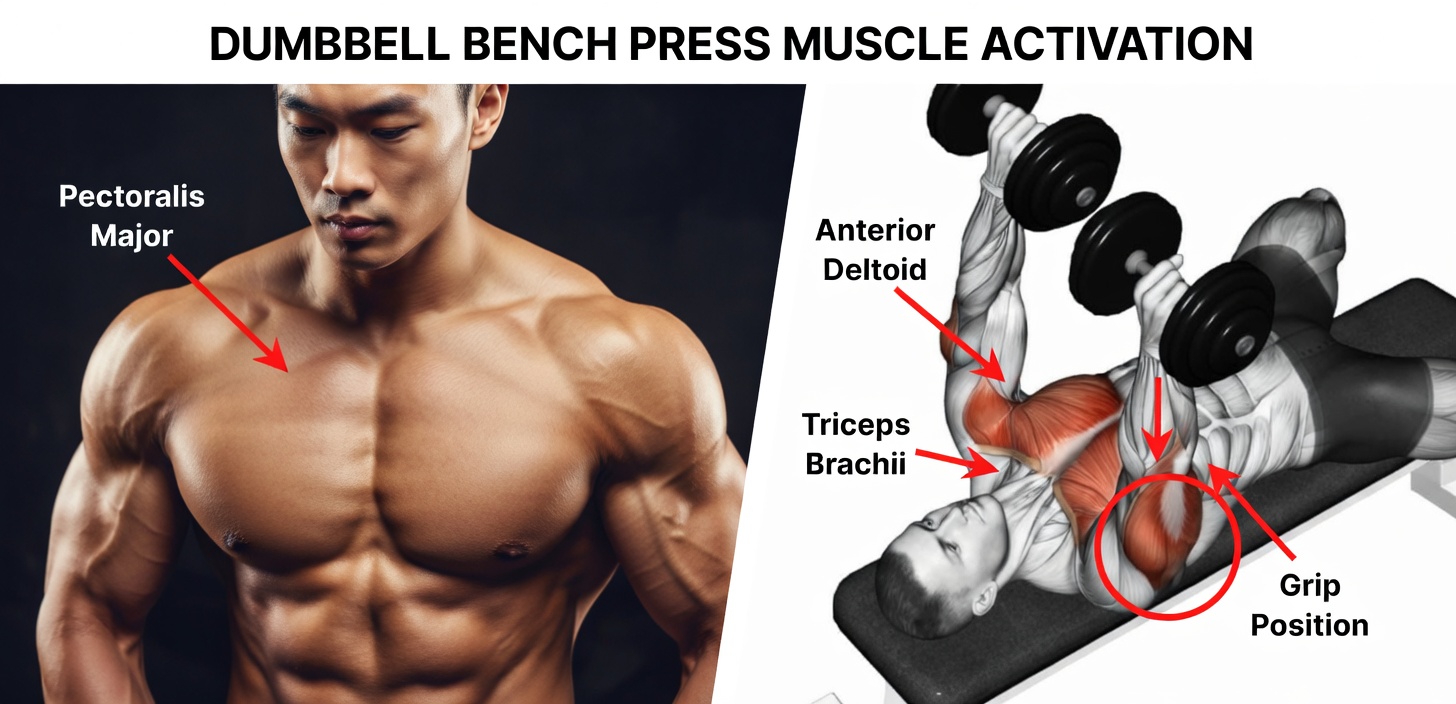
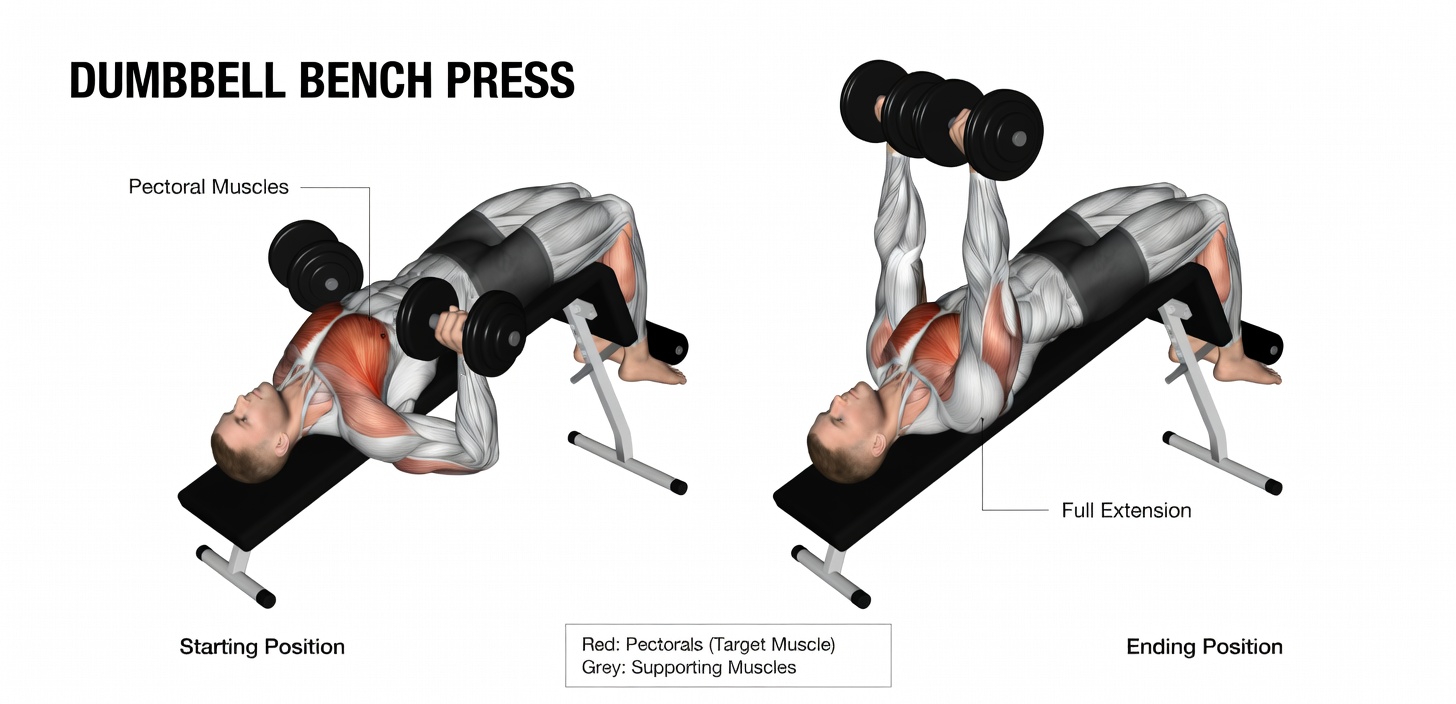
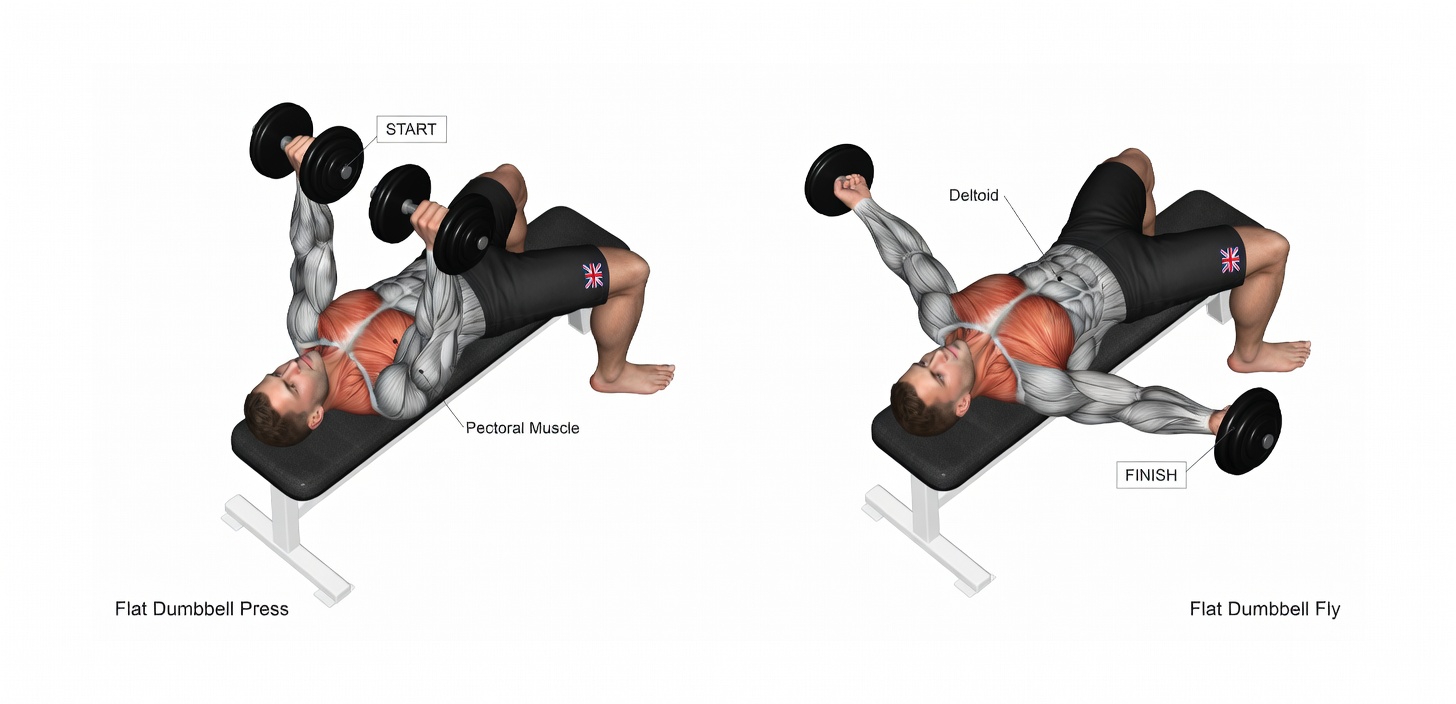
4. Dumbbell Bench Press
The dumbbell bench press is an excellent alternative to the barbell version. It allows for a greater range of motion and helps address left-to-right strength imbalances.
Benefits
- Better stretch through the chest
- Improved muscle control
- More balanced development
How to do it
- Lie on a flat bench holding dumbbells at chest level
- Press the weights up until your arms are nearly straight
- Lower them slowly and evenly
- Repeat with full control
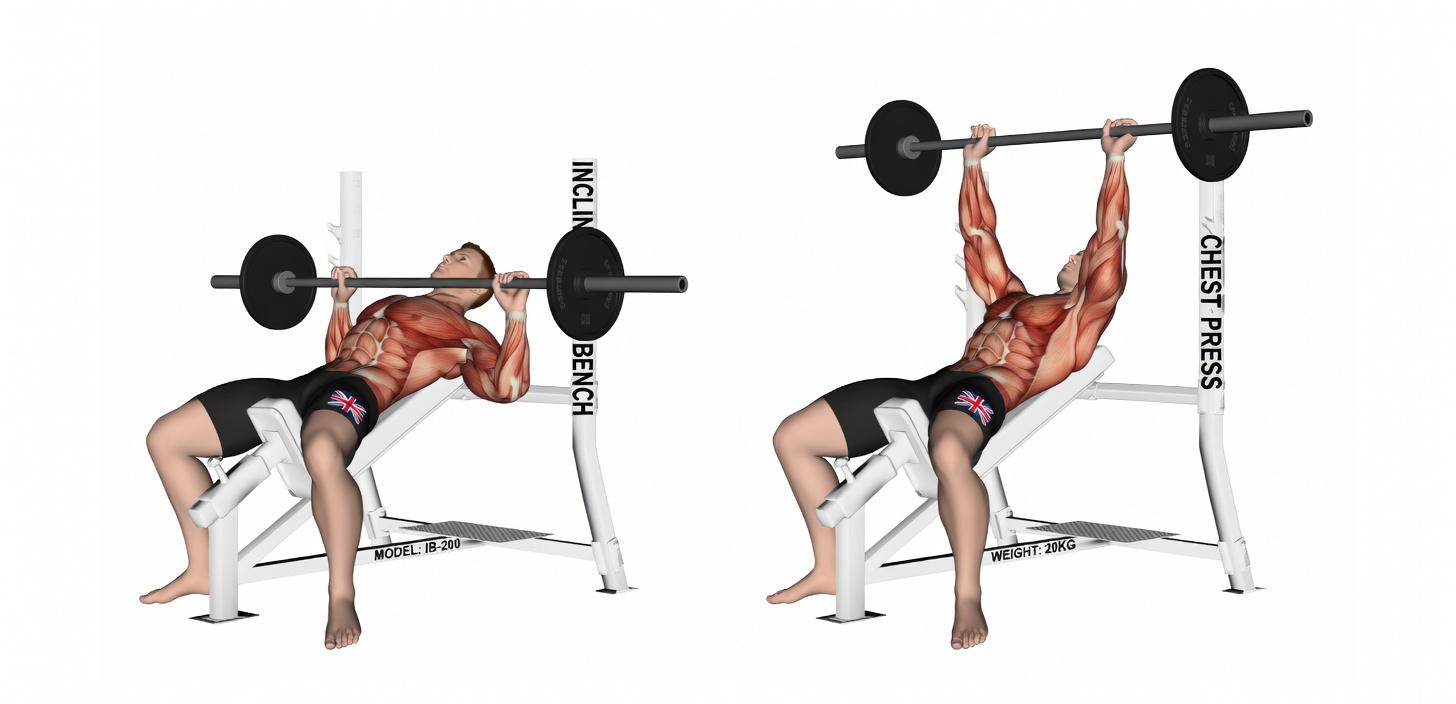
5. Incline Bench Press
If you want to emphasize the upper chest, the incline bench press is a must.
By pressing at an upward angle, you shift more work onto the clavicular fibers of the pecs.
How to do it
- Set the bench to a low-to-moderate incline
- Grip the bar or dumbbells firmly
- Lower the weight toward the upper chest
- Press upward in a controlled path
Why it works
This movement helps create a fuller look in the upper chest, which improves the overall shape of the torso.
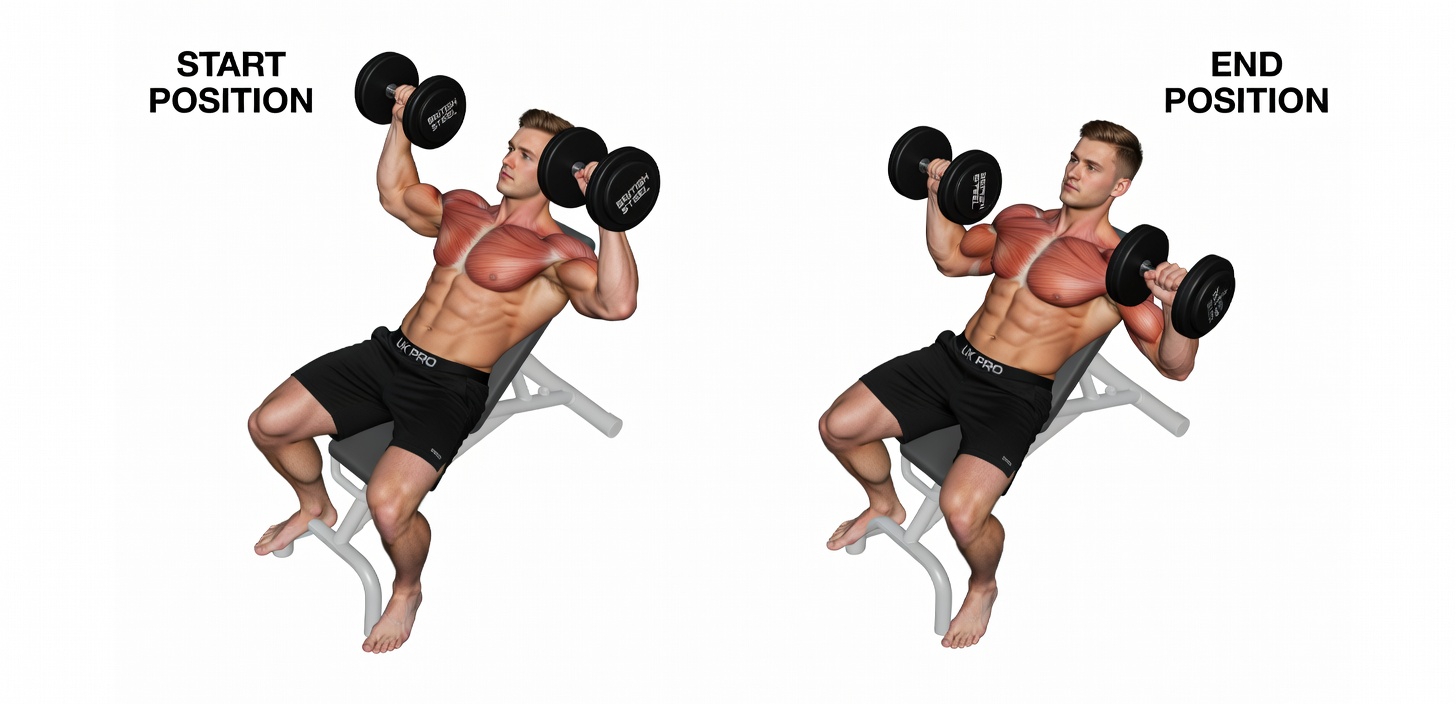
6. Incline Dumbbell Press
This exercise combines the upper-chest focus of the incline press with the increased freedom of movement that dumbbells provide.
Benefits
- Great for upper pec development
- Allows a deeper stretch
- Helps improve symmetry
How to do it
- Sit back on an incline bench with dumbbells in hand
- Start with the weights near shoulder level
- Press upward and slightly inward
- Lower with control
7. Chest Fly
The chest fly is excellent for targeting the pecs through a wide arc of motion. Unlike pressing exercises, the fly places more direct tension on the chest by minimizing triceps involvement.
This can be done with:
- dumbbells
- cables
- a pec deck machine
How to do a dumbbell fly
- Lie on a flat bench with dumbbells above your chest
- Keep a slight bend in your elbows
- Open your arms wide until you feel a chest stretch
- Bring the weights back together slowly
8. Incline Dumbbell Fly
This variation shifts the focus toward the upper chest and can be a useful accessory after pressing movements.
How to do it
- Set the bench to an incline
- Hold the dumbbells above your upper chest
- Lower the weights out to the sides with a soft elbow bend
- Squeeze your chest to return to the top
Tip
Use moderate weight. This is a precision exercise, not a max-strength lift.
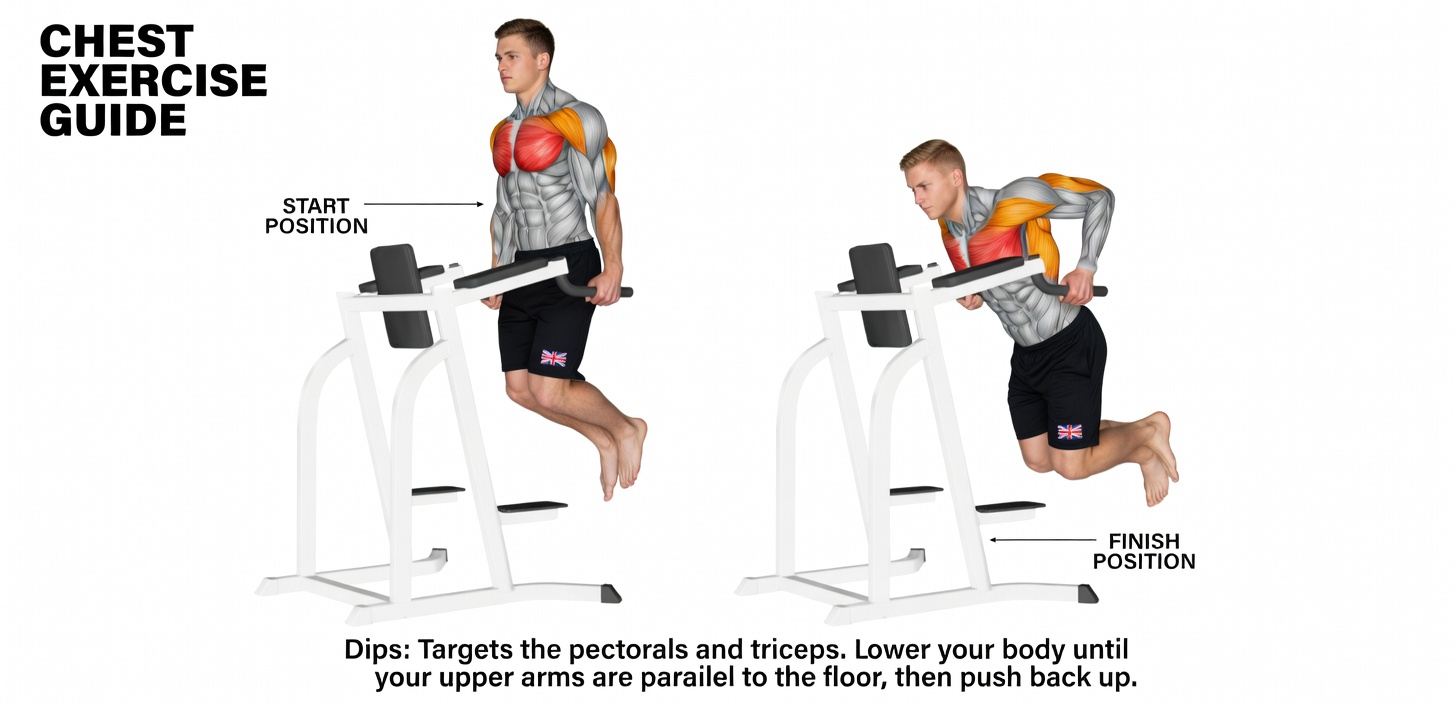
9. Dips
Chest dips are a fantastic bodyweight movement for building the lower chest, shoulders, and triceps.
To emphasize the chest more, lean your torso slightly forward as you descend.
How to do it
- Grip parallel bars and support your body at the top
- Lean slightly forward
- Lower yourself until your upper arms are near parallel to the floor
- Press back up under control
Important
If shoulder mobility is limited, use caution and avoid forcing the range of motion.
10. Cable Crossover
The cable crossover is one of the best chest isolation exercises for creating a strong squeeze and constant tension through the movement.
It is especially effective for improving chest detail and definition.
How to do it
- Stand between two cable pulleys
- Grab the handles and step forward
- Keep a slight bend in the elbows
- Bring your hands together in front of your chest
- Slowly return to the starting position
Why it works
Unlike free weights, cables keep tension on the chest throughout nearly the entire rep.
11. Pec Deck Machine
The pec deck machine is a simple and effective way to isolate the chest, especially for beginners who want a more guided movement.
Benefits
- Easy to learn
- Good mind-muscle connection
- Useful for finishing a chest workout
How to do it
- Sit with your back against the pad
- Place your forearms or hands on the handles
- Bring the arms together in front of you
- Squeeze the chest hard
- Return slowly
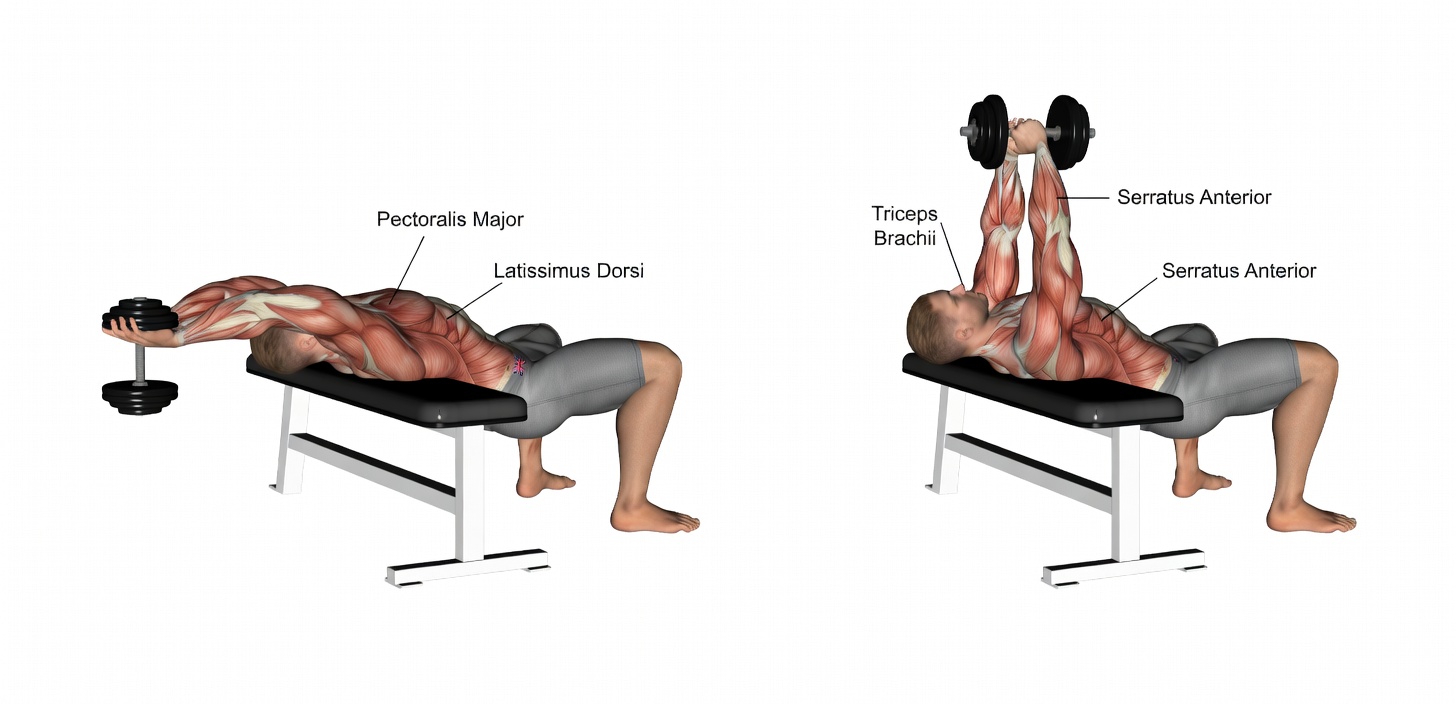
12. Dumbbell Pullover
Although often thought of as a chest-and-back hybrid exercise, the dumbbell pullover can help build the chest when performed correctly.
It also challenges the serratus and improves upper-body control.
How to do it
- Lie across or lengthwise on a bench
- Hold one dumbbell with both hands above your chest
- Lower it slowly back behind your head
- Keep your core tight and elbows slightly bent
- Pull the dumbbell back over your chest
Tip
Focus on the stretch and controlled return rather than heavy loading.
13. Machine Chest Press
The machine chest press is a great option for lifters who want to push the chest hard with added stability.
It is especially useful for:
- beginners
- higher-rep hypertrophy work
- safer training without a spotter
How to do it
- Sit with your back firmly against the pad
- Grip the handles at chest level
- Press forward until your arms are extended
- Lower slowly and repeat
How to Build an Effective Chest Workout
The best chest workout plan usually combines:
- one heavy press
- one incline movement
- one fly or cable exercise
- one bodyweight or machine finisher
Example Chest Workout
- Barbell Bench Press – 4 sets of 6 to 8 reps
- Incline Dumbbell Press – 3 sets of 8 to 10 reps
- Chest Fly or Cable Crossover – 3 sets of 10 to 12 reps
- Push-Ups or Dips – 2 to 3 sets to near failure
This structure helps cover multiple angles while balancing strength and muscle-building work.
Chest Training Tips for Better Results
To maximize chest growth, keep these key points in mind:
- Use full range of motion
- Control the lowering phase
- Avoid bouncing the weight
- Keep shoulders stable
- Train consistently
- Add weight or reps over time
- Do not neglect back and shoulder training
Good technique matters just as much as the exercise choice itself.
Final Thoughts
If you want a chest that looks stronger, broader, and more defined, these exercises can help you get there. From push-ups and decline push-ups to heavy bench presses and chest fly variations, each movement offers a specific benefit for building size and strength.
A bigger chest does not come from doing random reps with poor form. It comes from smart programming, progressive overload, and consistent effort.
Build your workouts around these proven chest exercises, stay patient, and over time your pecs will become one of the standout features of your upper body.