Fallen Off Your Workout Routine? Start With Your Glutes and Hips
If your exercise habits have slipped lately, you are far from alone.
Busy schedules, long hours at a desk, and time lost to commuting can make regular workouts hard to maintain. The good news is that you do not need a gym membership or a long training session to get moving again.
Quick glute and hip exercises done at home can be an excellent starting point, especially for beginners.
Building stronger glutes can help reduce injury risk, improve lower-body performance, and, yes, enhance the look of your backside too.
A stronger butt can also help prevent what many people call dead butt syndrome, or gluteal amnesia.
According to the Cleveland Clinic, prolonged sitting may lead to weak glutes and tight hip flexors, creating a muscular imbalance. When the glutes are not activating properly, it can turn into a classic use-it-or-lose-it situation. If you notice ongoing symptoms or discomfort, it is wise to speak with a medical professional.
What Are the Glute Muscles?
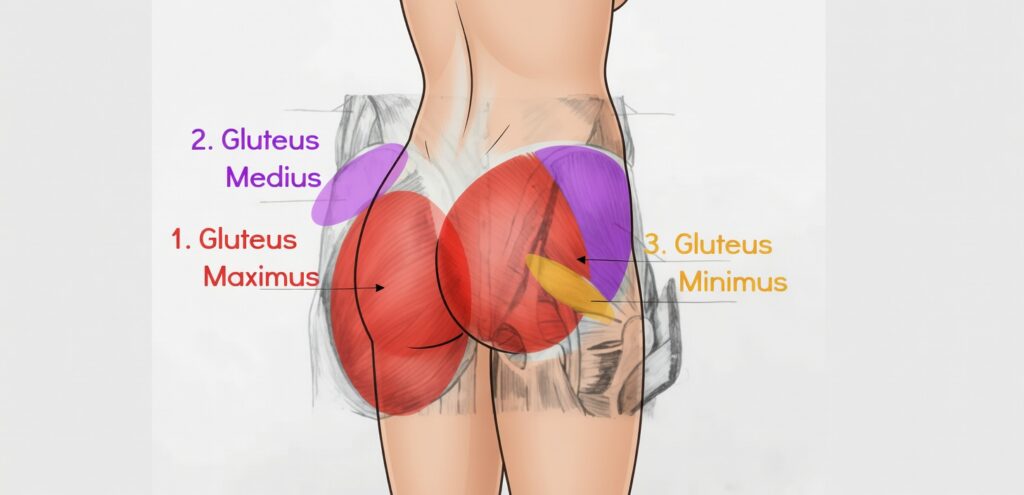
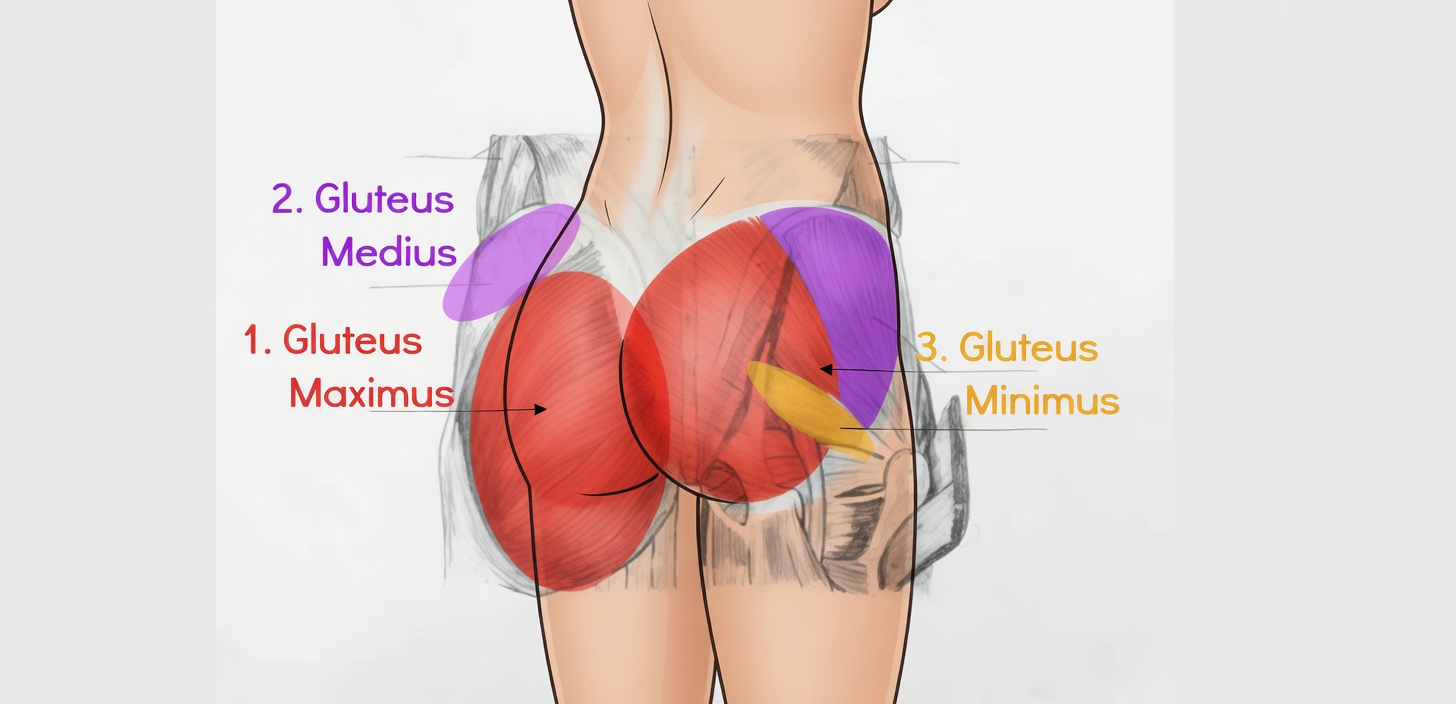
Your glutes are made up of three muscles that form the buttocks:
- Gluteus maximus
- Gluteus medius
- Gluteus minimus
The gluteus maximus is the largest of the three and is often considered one of the strongest muscles in the body. It creates most of the shape of the butt and plays a major role in hip extension and external rotation.
The gluteus medius sits partly underneath the gluteus maximus. It is essential for walking, helps keep the knees stable, supports posture, and can assist in protecting the lower back. Its main job is hip abduction, which means moving the leg away from the body.
The gluteus minimus is the smallest glute muscle and lies beneath the gluteus medius. It helps stabilize the pelvis and also assists with hip abduction.
5 Best Glute Exercises to Strengthen Your Hips and Butt
Adding glute-focused movements to your routine is a smart way to build a workout from scratch or improve an existing one, even if you do not lift weights.
One important reminder: even highly effective exercises can do more harm than good if your form is poor.
Here are five of the best glute and hip exercises you can do at home.
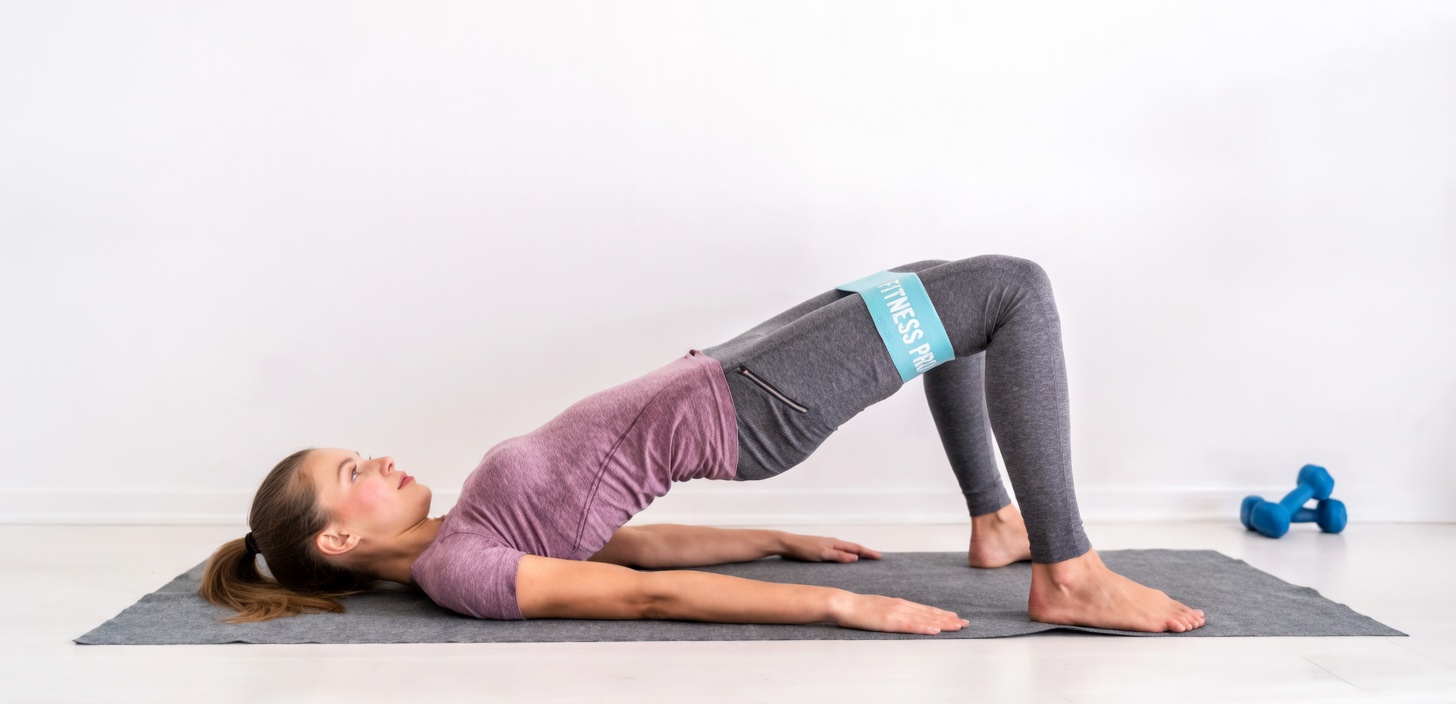
1. Glute Bridge
The glute bridge is one of the most effective bodyweight butt exercises because it strongly emphasizes hip extension.
Since your upper back stays supported on the floor, it is also a joint-friendly movement and can be especially useful for people managing lower back discomfort.
In addition to the glutes, this exercise also recruits the:
- Hamstrings
- Quadriceps
- Abdominals
You can do glute bridges with no equipment at all, though an exercise mat can make them more comfortable. To make them harder, try:
- A single-leg glute bridge
- A dumbbell across the lower abdomen
- A kettlebell
- A mini resistance band
Glute Bridge With a Mini-Band
Using a mini-band adds extra tension and encourages the hips to open while the glutes work.
- Place the mini-band just above your knees.
- Lie on your back with your knees bent and feet flat on the floor.
- Tighten your glutes and press through your heels to lift your hips toward the ceiling.
- As you rise, keep tension on the band by pressing your knees slightly outward.
- At the top, your body should form a straight line from shoulders to knees.
- Lower slowly and repeat.
Glute Bridge Without a Resistance Band
- Lie face-up on the floor or a mat with your arms resting by your sides and palms down.
- Bend both knees and slide your heels in toward your butt.
- Keep both feet planted firmly on the floor.
- Push your hips upward toward the ceiling.
- Squeeze your glutes and aim to create a straight line from your chest to your knees.
- Lower your hips back down with control and repeat.
Recommended reps:
- Start with 2 to 3 sets of 8 to 10 reps
- Progress to 3 sets of 15 to 20 reps
2. Bodyweight Squat
The bodyweight squat is a classic lower-body movement that trains several major muscle groups at once.
It works the:
- Glutes
- Quadriceps
- Hamstrings
- Core
If you want to place more emphasis on the glutes during squats, focus on driving through your heels instead of the balls of your feet. This small adjustment can shift more of the effort toward the backside and may also require less ankle mobility.
For even more glute activation, add a strong hip squeeze at the top of each rep.
How to Do a Bodyweight Squat
- Stand tall with your chest up and eyes facing forward.
- Place your feet about shoulder-width apart, or slightly wider if that feels more natural.
- Turn your toes slightly outward.
- Inhale, send your hips back, and begin lowering as if sitting into a chair.
- Keep your torso controlled and your knees tracking outward rather than collapsing inward.
- Try not to let your knees travel excessively past your toes.
- Lower until your knees reach about a 90-degree bend, or as low as you can comfortably control.
- Push through your heels to stand back up.
- At the top, squeeze your glutes and fully extend your hips.
Recommended reps:
- Start with 2 sets of 6 to 8 reps
- Build up to 3 sets of 10 to 12 reps
3. Bulgarian Split Squat
The Bulgarian split squat adds an extra stability challenge because each leg has to work more independently.
This move targets the:
- Glutes
- Quadriceps
- Abdominals
- Hip adductors
Like the regular squat, pressing through the heel of the front foot will help increase glute involvement.
All you need is a sturdy chair, bench, or couch. To make it more advanced, you can add:
- Dumbbells
- Kettlebells
- A resistance band
How to Do a Bulgarian Split Squat
- Stand a few feet in front of a chair or bench, facing away from it.
- Place yourself in a staggered stance.
- Rest one foot behind you on the chair or bench.
- Keep your front foot planted firmly on the floor.
- Lower your body straight down until your back knee lightly reaches the floor.
- In the bottom position, your front shin may lean slightly forward, and your torso should match that angle naturally.
- Drive through the heel of the front foot to return to standing.
- Finish your reps, then switch legs.
Recommended reps:
- Begin with 2 sets of 6 to 8 reps per side
- Progress to 3 sets of 10 to 12 reps per side
4. Romanian Deadlift
The Romanian deadlift is a powerful exercise for training the posterior chain.
That includes muscles along the back side of the body, such as the:
- Glutes
- Hamstrings
- Calves
- Spinal erectors
- Upper back
This movement strengthens the backside while placing less stress on the knees than many other lower-body exercises.
Improving posterior-chain strength can support better posture and may help lower the risk of back injury.
The Romanian deadlift is all about mastering the hip hinge. It is an excellent bodyweight exercise on its own, but resistance can be added with:
- A barbell
- Dumbbells
- Kettlebells
- A resistance band
How to Do a Romanian Deadlift
- Stand tall with your feet hip-width apart.
- Pull your shoulder blades gently down and back.
- Keeping your spine neutral, push your hips backward.
- Imagine trying to reach your butt toward a wall behind you.
- Lower until you feel a stretch through your hamstrings and calves.
- Your shins should stay nearly vertical from knee to ankle.
- Squeeze your glutes and drive your hips forward to return to the top.
Recommended reps:
- Start with 2 sets of 6 to 8 reps
- Work up to 3 sets of 10 to 12 reps
5. Fire Hydrant
The fire hydrant is a great finishing exercise for any glute workout because it directly targets the gluteus medius and gluteus minimus.
These smaller glute muscles can be harder to isolate since the gluteus maximus tends to dominate many lower-body movements. Fire hydrants help train hip abduction and pelvic stability, both of which are important for walking, posture, and overall hip function.
You can do this exercise with bodyweight alone or add a mini-band around the thighs for more resistance.
How to Do a Fire Hydrant
- Start on all fours with your hands under your shoulders and knees under your hips.
- Keep your back flat and your core engaged.
- Without shifting your weight too much, lift one knee out to the side while keeping it bent at 90 degrees.
- Raise the leg only as high as you can without twisting your torso.
- Pause briefly at the top and squeeze the side glute.
- Lower with control and repeat before switching sides.
Recommended reps:
- Start with 2 sets of 8 to 10 reps per side
- Progress to 3 sets of 12 to 15 reps per side
Final Thoughts
If you are getting back into exercise, glute and hip training is a practical place to begin.
These at-home movements can help improve strength, support better posture, reduce the effects of prolonged sitting, and build a stronger lower body without requiring a gym.
Whether your goal is injury prevention, better athletic performance, or simply feeling stronger, consistent glute work can make a real difference.
Focus on form, start with manageable reps, and build gradually. A stronger, healthier backside starts with simple movement done well.