Why Upper-Body Strength Matters After 60
Staying active and independent in your 60s and beyond depends a lot on keeping your upper body strong. When these muscles are not maintained, everyday tasks can start to feel harder, and you may notice changes in posture, stability, and balance.
Your upper body includes the muscles in your shoulders, back, chest, and arms. These muscles support daily movements like:
- Lifting and carrying grocery bags
- Picking up a laundry basket
- Mowing the lawn
They also play an important role in posture, upper-body stability, and overall balance. Since strength can naturally decline with age, not exercising these muscles may leave you more vulnerable to:
- Injuries
- Poor posture
- Reduced stability
For people who need to pay closer attention to heart health, upper-body strengthening can also help support a healthier heart. The heart is surrounded by the muscles of the upper body, and adding exercise to your routine may help by increasing blood flow and improving cardiac and skeletal muscle mass.
What Causes This Decline?
A common reason upper-body strength decreases over time is simply that these muscles are not trained enough. If your current routine does not include exercises that target the upper body, strength, stability, and function can gradually drop.
That can make normal daily activities more challenging and may affect how well you move and carry yourself.
The Best Upper-Body Exercise to Start After 60
If you want one highly effective exercise to add to your routine, pushups are a great place to begin.
Pushups work many of the key upper-body muscles at once, which makes them a strong choice for building functional strength. Even better, they can be adjusted for nearly any fitness or strength level.
If standard pushups feel too difficult, that is completely okay. You can make them easier by using elevation, which reduces the effect of gravity and lowers the challenge. If you are just getting started, a wall pushup is a simple starting point, and you can gradually work your way toward a floor pushup.
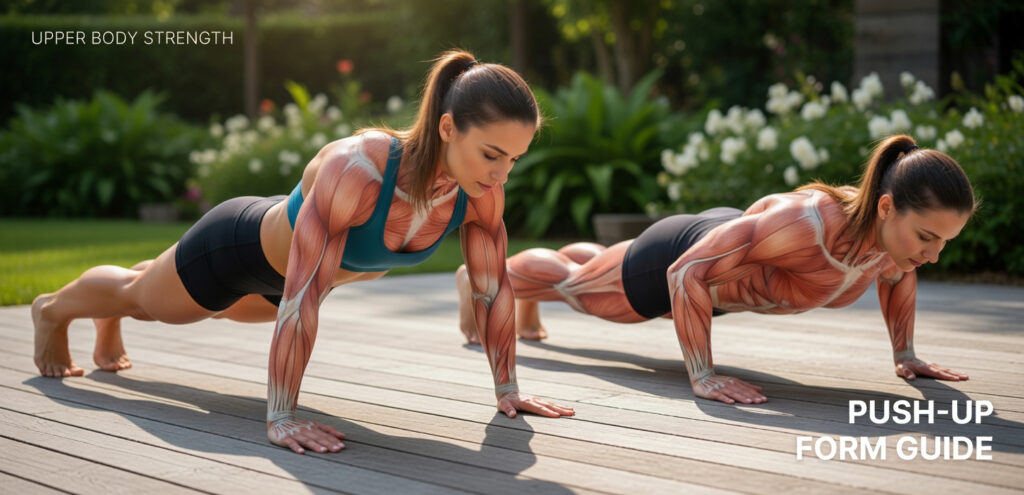
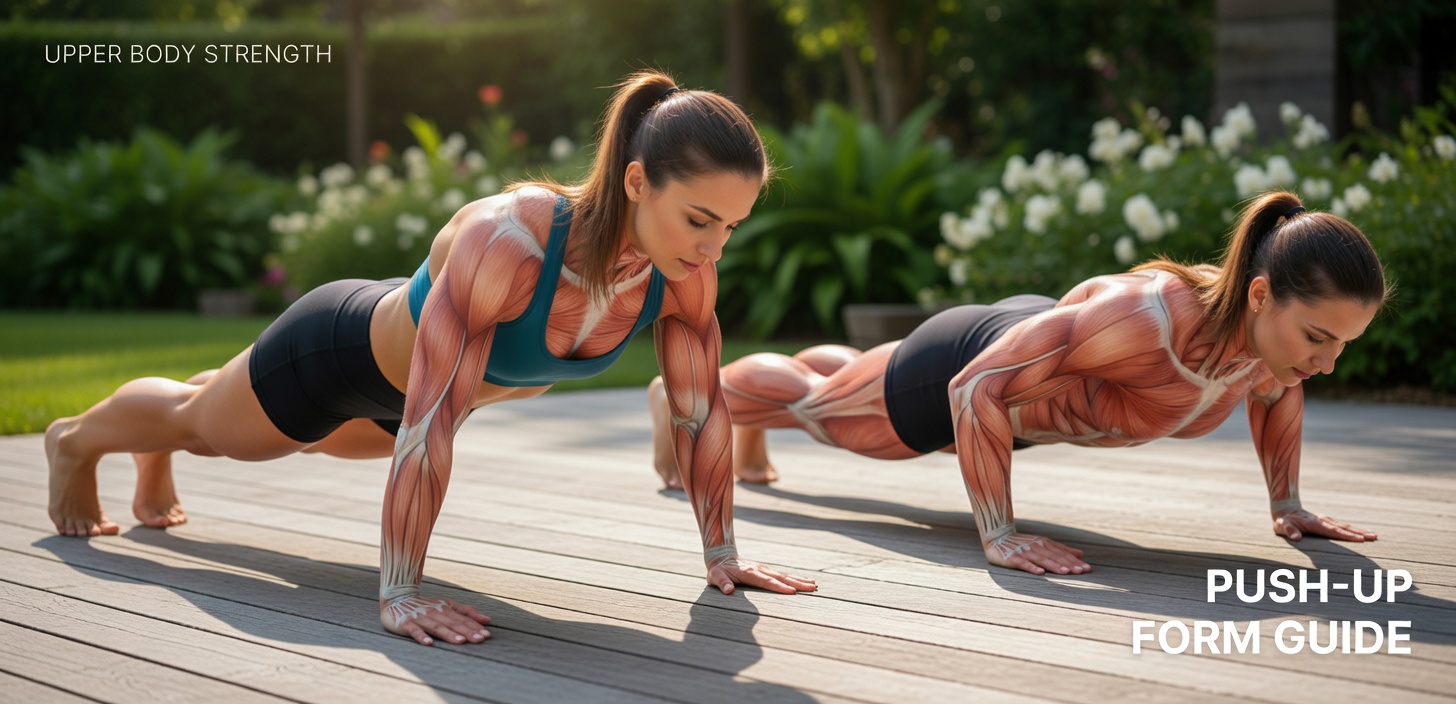
How to Do a Pushup With Proper Form
Good form is the most important part of the exercise. Follow these steps:
- Place your hands at chest level, slightly wider than shoulder-width apart.
- Set your feet about hip-width apart and keep them aligned with your body.
- Make sure your toes and heels do not turn inward or outward. They should stay parallel.
- Keep a straight line from your shoulders to your hips.
- Draw your belly button in so your back keeps its natural curve.
- Do not let your head drop. Keep it aligned with your shoulders.
- Tighten your core and squeeze your glutes.
- Bend your elbows to lower your chest and hips toward the floor, or toward whatever surface you are using.
- Lower until you are as close to the surface as possible.
- Engage your chest, triceps, and core, then press through your hands to return to the starting position.
How Many Should You Do?
A good starting goal is:
- 7 to 10 repetitions
As your fitness level improves, you can gradually increase the number of reps.
A Simple Way to Stay Strong and Independent
Pushups are a practical and flexible exercise that can help you maintain upper-body strength, support everyday movement, and improve stability as you age. Whether you start at the wall or on the floor, the key is to begin at a level that feels right for you and focus on proper form.
Consult a healthcare professional before making changes.