Shoulder Health and Rotator Cuff Exercises: How to Protect a Highly Mobile Joint
The shoulder is one of the most mobile and mechanically demanding joints in the body. We rely on it for countless everyday actions, from reaching and lifting to pushing, pulling, and carrying. Because of this constant use, shoulder injuries are very common and can seriously limit daily function.
One of the most problematic regions of the shoulder is the rotator cuff.
In this guide, we’ll cover the fundamentals of shoulder health, explain the role of the rotator cuff, and highlight effective exercises to help keep this joint strong, stable, and resilient.
You may also enjoy:
- How to Fix Forward Head Posture: 3 Stretching Exercises to Try
- 7 Useful Stretches for Shoulder Pain to Release Deep Tension and Improve Mobility
Rotator Cuff Basics
So, what is the rotator cuff?
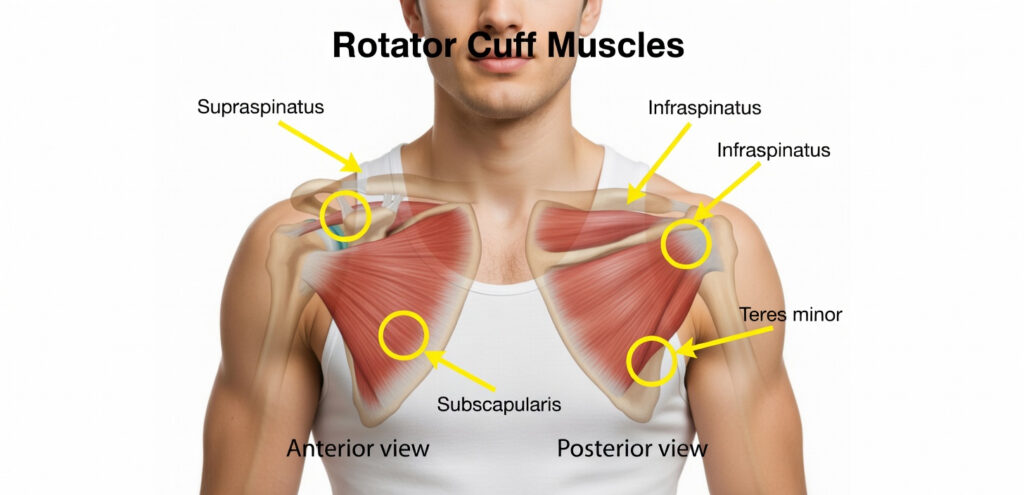
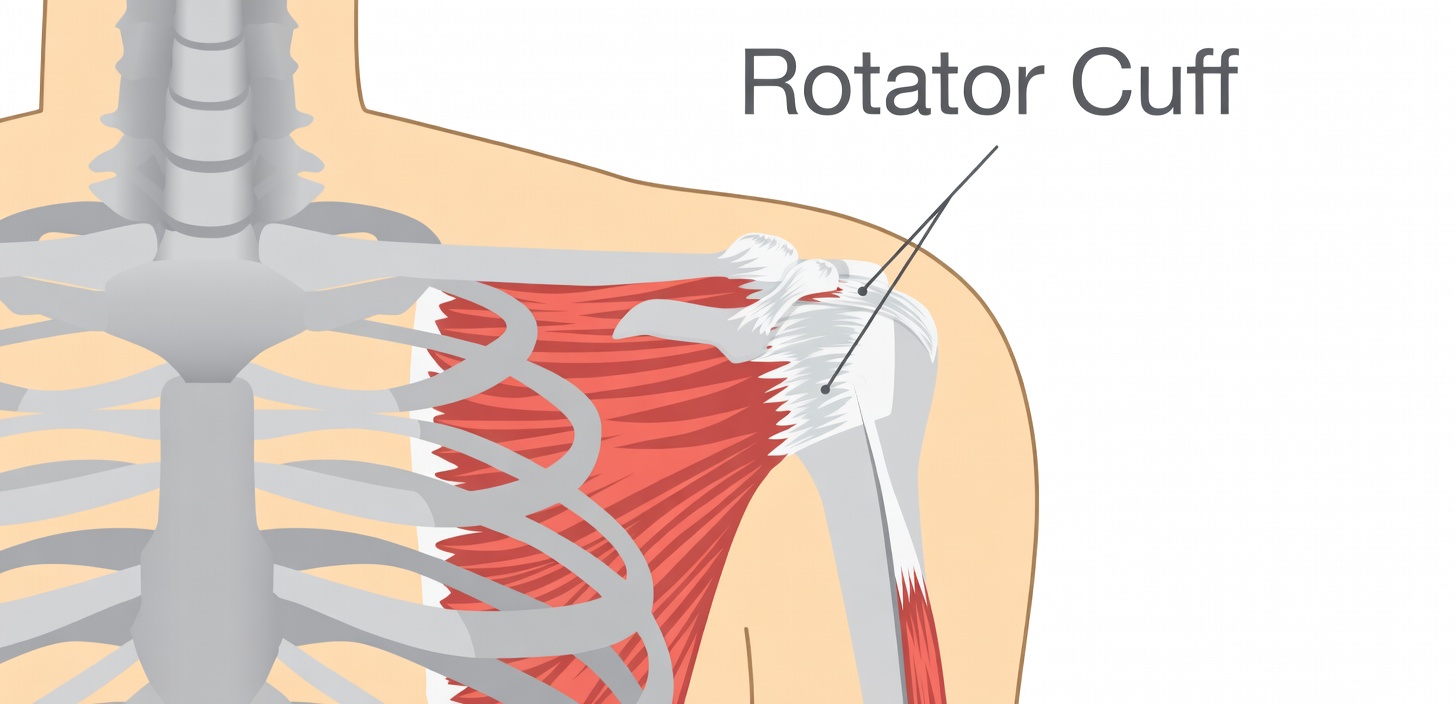
The rotator cuff is a group of four muscles and their tendons that support the shoulder joint by providing both movement and stability. These muscles include:
-
Supraspinatus
This is the rotator cuff tendon most often injured. It helps begin shoulder abduction, which means lifting the arm away from the body, and also assists with shoulder rotation. -
Infraspinatus
Located on the back of the shoulder, this muscle helps rotate the arm outward, also known as external rotation. -
Teres minor
This muscle works together with the infraspinatus to create external rotation of the shoulder. -
Subscapularis
This muscle performs the opposite action of the infraspinatus and teres minor. It is the primary internal rotator of the rotator cuff group.
Each muscle has its own specific job, but they do not work alone. The rotator cuff functions as a team, helping keep the shoulder joint centered and stable during nearly all arm movements.
What Causes a Rotator Cuff Tear?
Because rotator cuff tears are so common, it is helpful to understand what usually leads to them.
In most cases, a rotator cuff tear develops because of repetitive strain over time. In other instances, the tendons or muscles may be damaged by trauma, such as a fall or sudden forceful movement.
However, rotator cuff injuries are especially likely when a person:
- Has poor posture
- Uses the shoulders with incorrect mechanics during exercise or daily tasks
The Role of Poor Posture
In this context, poor posture often means rounded shoulders.
When the shoulders sit forward, the space underneath the acromion—a small part of the shoulder blade—becomes narrower. The supraspinatus tendon passes through this area. If there is not enough room, that tendon may repeatedly rub against nearby bony structures.
Over time, that friction can gradually wear the tendon down and eventually contribute to tearing.
Faulty Shoulder Mechanics
Repeatedly using the shoulders with poor form can also overload the rotator cuff tendons. Whether during workouts, lifting, reaching, or repetitive job tasks, bad movement patterns can create excessive stress in the shoulder and increase the risk of injury.
Why Exercise Helps a Rotator Cuff Injury
You might wonder why exercise for a rotator cuff injury can be helpful. If a tissue is damaged, shouldn’t rest be enough?
The answer is: rest matters, but so does the right kind of movement.
An injured area does need time to recover. At the same time, carefully selected exercises can support healing by improving strength, coordination, circulation, and joint control.
It is also important to remember that shoulder health does not depend only on the shoulder itself. Exercises that strengthen the core can improve trunk stability, and a more stable trunk often allows the shoulder and arm to move with better control and less strain.
Top 5 Exercises for a Healthy Rotator Cuff
Below are five excellent movements to help strengthen the shoulder, improve rotator cuff function, and support recovery.
1. Rows
Rows are one of the best exercises for building the muscles of the upper back, shoulders, and arms. They can be performed with:
- Dumbbells
- Barbells
- Resistance bands
- Kettlebells
- Cable machines
No matter which variation you choose, rows are valuable for improving posture and strengthening the muscles that support healthy shoulder mechanics.
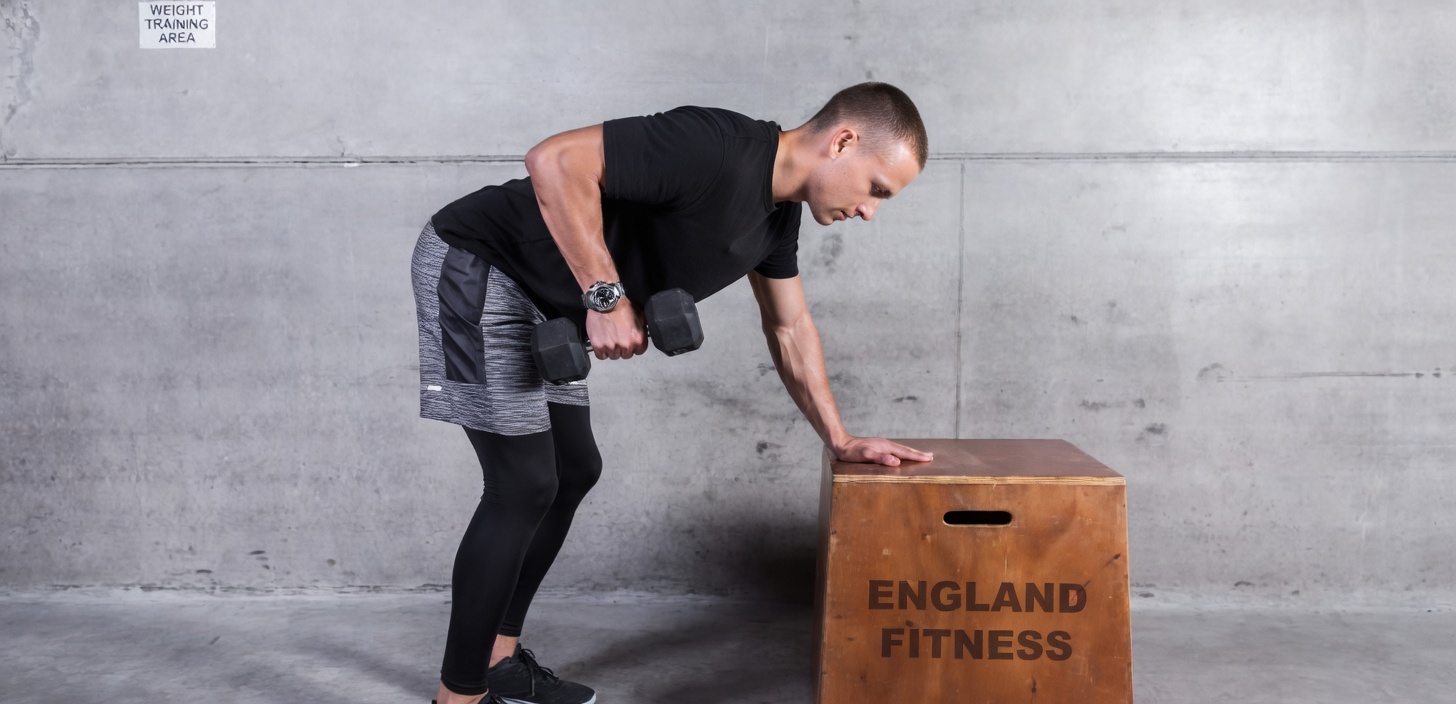
For this article, we’ll focus on the dumbbell bent-over row.
How to Do It
- Stand next to the end of a bench with a dumbbell in your left hand.
- Hinge forward at the hips and place your right hand on the bench for support.
- Keep your trunk close to parallel with the floor.
- Let the dumbbell hang straight down to start.
- Slowly pull the weight up toward the left side of your chest or torso.
- As you row, think about drawing your left shoulder blade inward toward your spine.
- Lower the weight back down in a slow, controlled manner.
- Repeat on both sides.
Recommended Volume
- 10–12 repetitions
- 3–5 sets
- 2–3 times per week
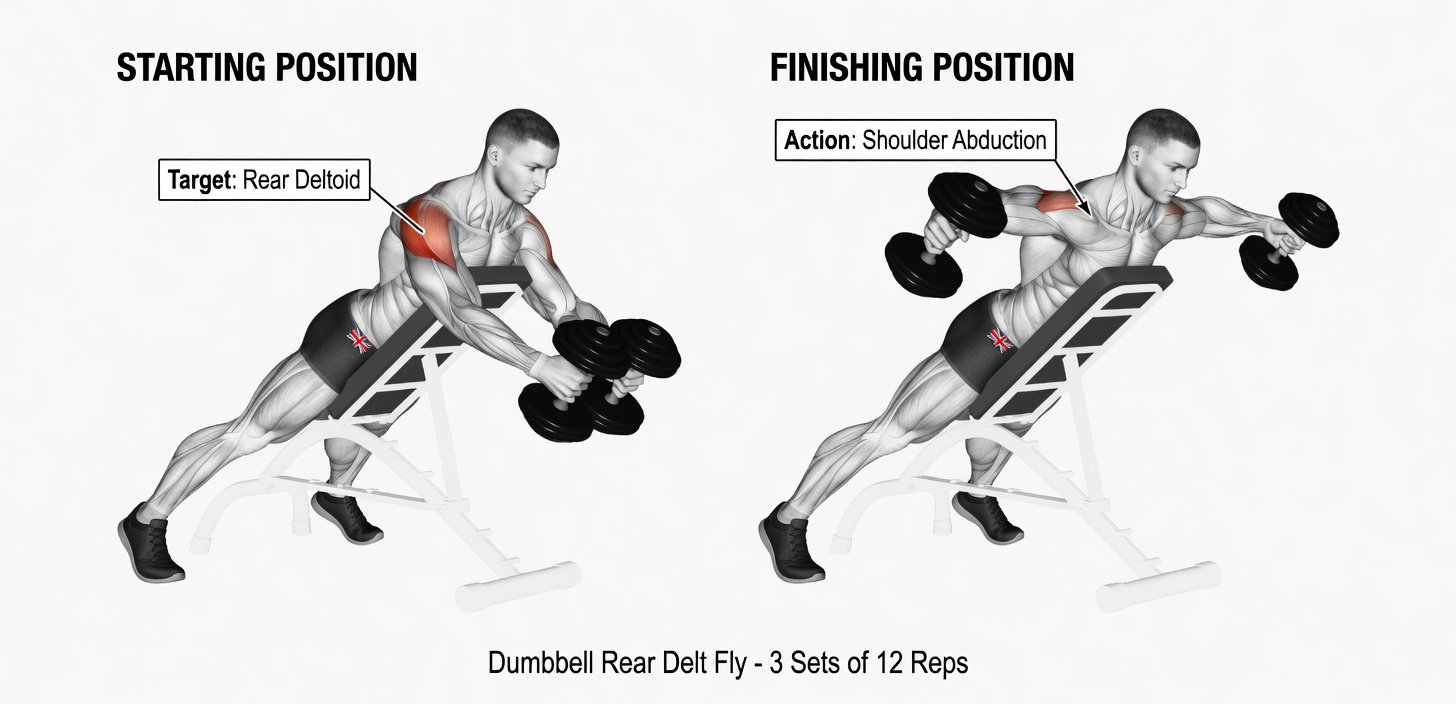
2. Prone Reverse Fly
This exercise targets the upper back and shoulder stabilizers. If lying on your stomach is uncomfortable, you can do a similar movement standing with a resistance band. If you are comfortable in the prone position, use light dumbbells.
How to Do It
- Hold a light dumbbell in each hand.
- Lie face down on a bench.
- Let your arms hang toward the floor.
- Slowly raise the weights outward and upward by squeezing your shoulder blades together.
- Pause briefly at the top.
- Lower the weights back to the starting position with control.
Recommended Volume
- 10–12 repetitions
- 3–5 sets
- 2–3 times per week
3. Banded Shoulder Flexion
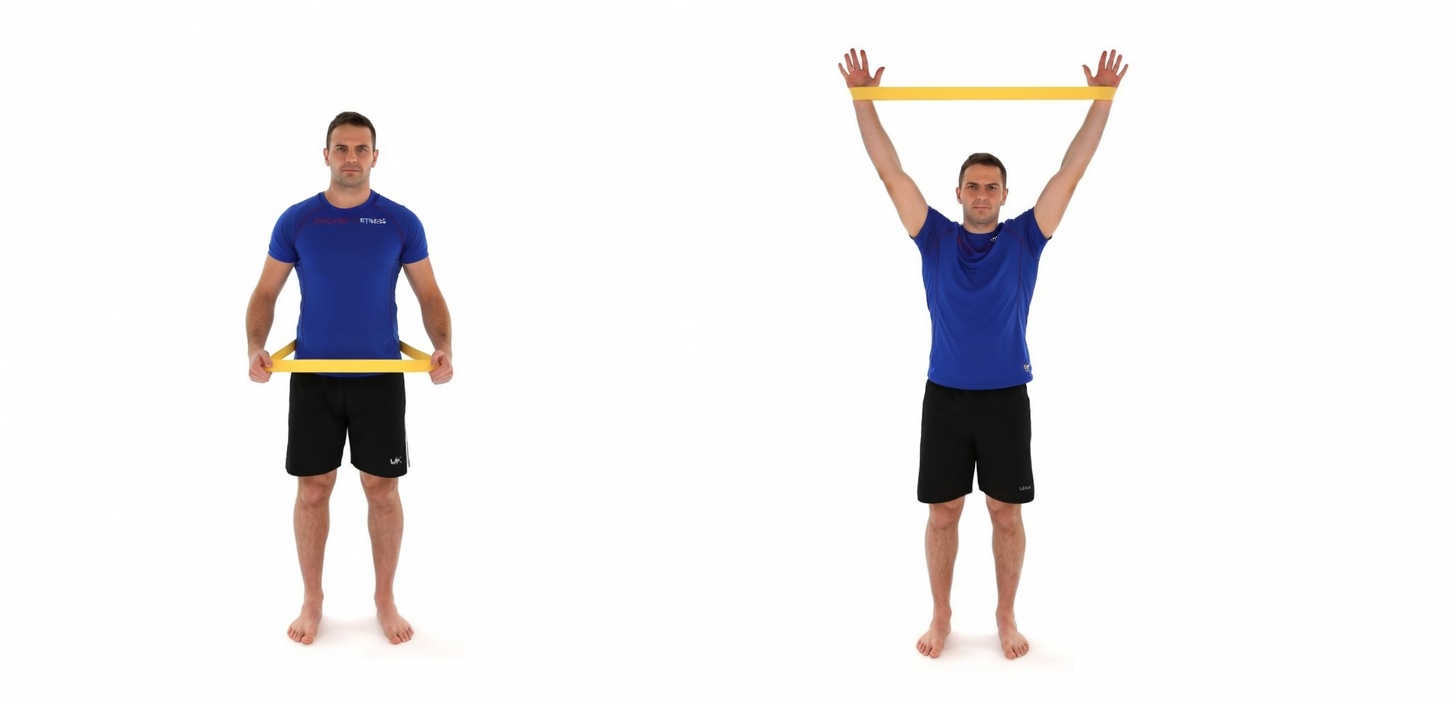
Shoulder flexion is the motion of lifting the arms in front of the body and overhead. If the muscles that stabilize the shoulder blades are not active during this movement, the rotator cuff may be placed under more stress.
Using a looped resistance band helps activate the scapular stabilizers, encouraging better shoulder mechanics throughout the movement.
How to Do It
- Stand upright with a looped band around your wrists, or hold one end of a band in each hand.
- Start with your arms by your sides.
- Create tension in the band by gently pulling outward.
- While maintaining that outward tension, raise your arms overhead.
- Lower your arms back down slowly without losing band tension.
Recommended Volume
- 10–12 repetitions
- 3–5 sets
- 2–3 times per week
4. Banded Punches with Rotation
The punching motion is a very natural movement pattern for the shoulder. When performed with control, it can help improve strength, coordination, and rotational control through the upper body.
Adding trunk rotation also encourages better integration between the core and shoulder.
How to Do It
- Attach a resistance band to a secure anchor point at about shoulder height.
- Hold the band in your right hand while facing away from the anchor.
- Place your left foot slightly in front of your right, about hip-width apart.
- Shift your weight forward as you extend your right arm in a punching motion.
- At the same time, allow your trunk to rotate slightly to the left.
- Reverse the movement and return to the starting position.
- Repeat on the other side.
Recommended Volume
- 10–12 repetitions per side
- 3–5 sets
- 2–3 times per week
5. Standing W’s with a Band
Many shoulder exercises are named after letters, such as Y’s, T’s, and I’s. Among them, W’s are especially effective for strengthening the muscles that support posture and external rotation.
This movement promotes shoulder stability and helps counter the rounded-shoulder position that often contributes to rotator cuff problems.
How to Do It
- Attach a resistance band to a stable point slightly below shoulder height if possible.
- Hold the band with both hands.
- Rotate your arms backward so your hands are near shoulder height while your elbows stay close to your sides.
- From behind, your arms and torso should resemble a rough W shape.
- Pull the band apart while keeping your chest open and shoulder blades gently drawn back.
- Return to the starting position with control.
Recommended Volume
- 10–12 repetitions
- 3–5 sets
- 2–3 times per week
Final Thoughts on Rotator Cuff Health
The shoulder is an incredibly useful joint, but its high level of mobility also makes it vulnerable to injury. The rotator cuff plays a major role in both shoulder stability and movement, which is why keeping it strong is so important.
Poor posture, repetitive strain, and improper movement patterns can all increase the risk of rotator cuff tears. The good news is that a smart exercise program can help improve shoulder function, reduce stress on the tendons, and support long-term joint health.
By regularly practicing movements like:
- Rows
- Reverse flies
- Banded shoulder flexion
- Banded punches with rotation
- Standing W’s
you can help build stronger, healthier, and more resilient shoulders.