Build a Bigger Chest With the Most Effective Exercise
For many men, chest development is a top fitness goal. A fuller chest, wider shoulders, and a leaner waist create the classic V-shaped upper body that is often associated with strength and attractiveness.
Research supports this idea as well.
Several studies on male attractiveness have found that a lower waist-to-chest ratio is one of the most appealing physical traits. In simple terms, that means a narrower waist combined with a broader, more developed chest.
However, if your chest training only rotates between the flat bench press and the incline bench, you may be leaving real muscle growth on the table.
To build bigger pecs, you need to train the entire chest properly. Some exercises stimulate the chest muscles far better than others, and that stimulation is essential for growth.
In this guide, you’ll learn about one chest exercise you should include regularly if your goal is to increase chest size. It is one of the most reliable movements for building stronger, larger pecs.
Before that, it helps to understand the muscles you are actually training.
Chest Muscles: A Quick Breakdown
If you want better chest workouts and more noticeable results, you need to know the main muscles involved.
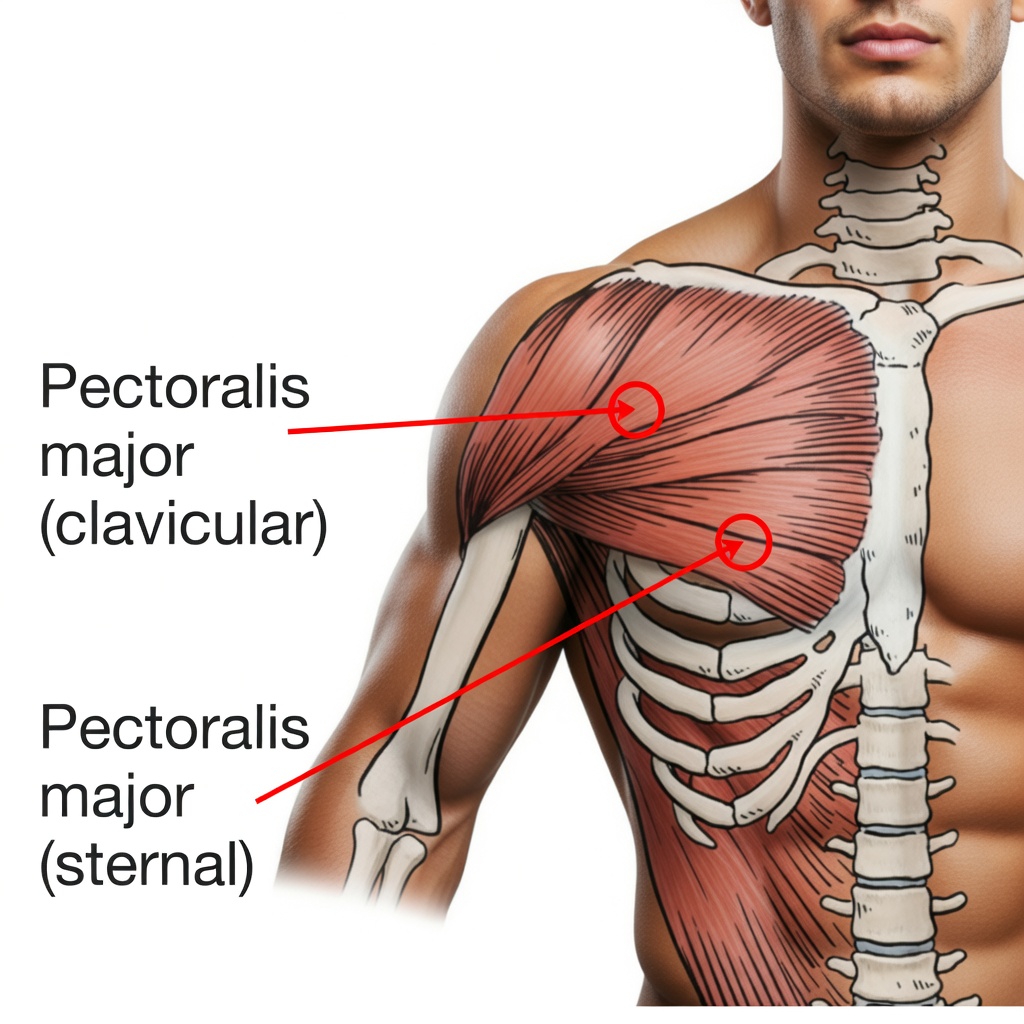
Pectoralis Major
The pectoralis major is the largest muscle of the chest and accounts for most of its size. It has two primary parts:
- Sternocostal head
- Clavicular head
Together, these sections play a major role in pressing and arm movement.
Pectoralis Minor
The pectoralis minor sits underneath the pectoralis major. It helps control forward shoulder movement and contributes to shoulder stability, flexibility, and overall range of motion.
Serratus Anterior
Found along the side of the chest wall, the serratus anterior becomes especially active during overhead lifting movements. It helps support shoulder function and upper-body mechanics.
Now that you know the basic chest anatomy, let’s look at the best exercise for chest muscle growth.
The Best Chest Exercise for Bigger Pecs
Barbell Bench Press
According to research from the University of Wisconsin, the barbell bench press ranks as the top chest exercise for activating the pectoralis major.
In the study, researchers compared several popular chest exercises and measured how much each one engaged the chest muscles. Among all the movements tested, the barbell bench press produced the highest level of activation.
That makes it one of the most effective exercises for building chest strength and size.
The real key, though, is using proper form. Good technique helps you train the chest more effectively while reducing unnecessary strain.
How to Do the Barbell Bench Press Correctly
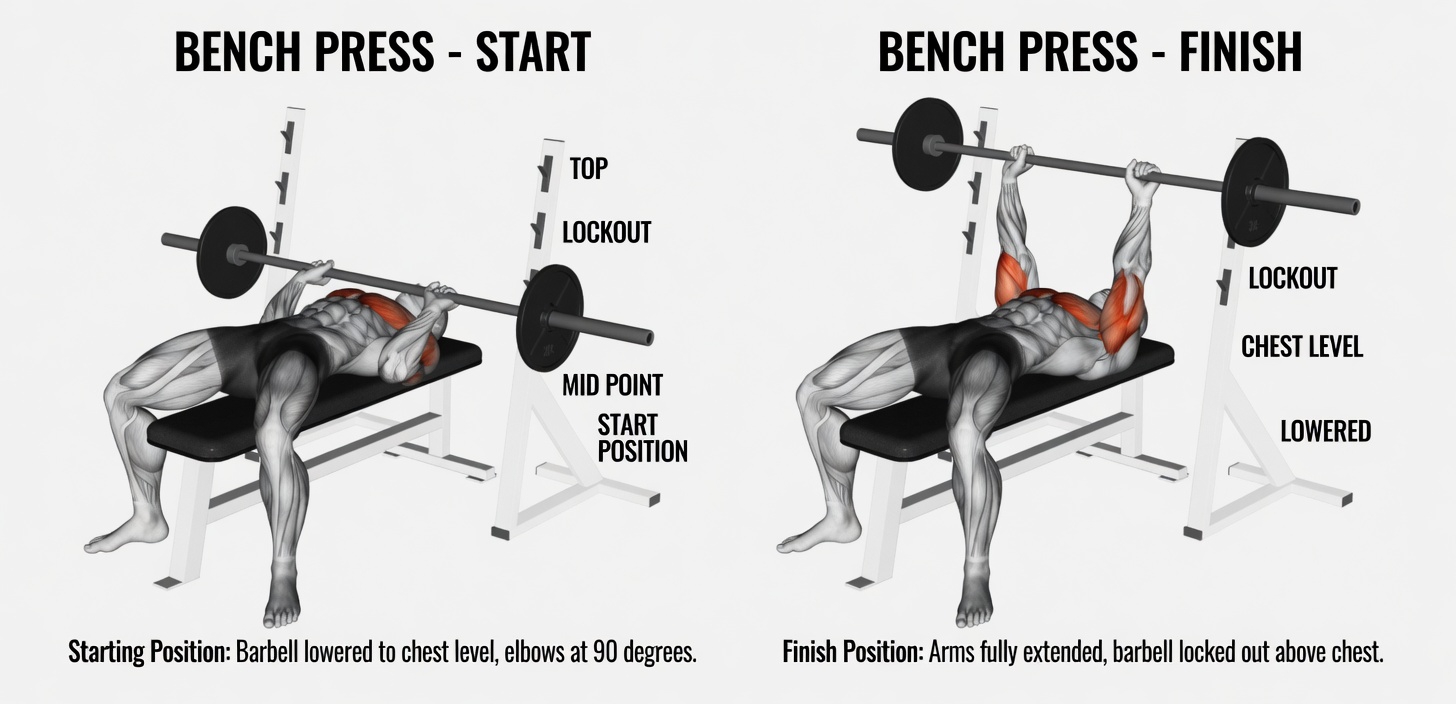
Follow these steps to perform the movement safely and effectively:
- Lie flat on a bench with your back supported and the barbell positioned on the rack above you.
- Grab the bar with an overhand grip, placing your hands slightly wider than shoulder-width apart.
- Set your arms so your upper arms are aligned properly with your body and your elbows are bent at about 90 degrees.
- Lift the bar out of the rack.
- Inhale as you lower the bar slowly and with control until it lightly touches the middle of your chest, around nipple level.
- Pause briefly at the bottom.
- Exhale and press the bar upward powerfully until your arms are extended again.
Why the Barbell Bench Press Works
The barbell bench press stands out because it challenges the chest muscles heavily while also involving supporting muscles in the upper body. When done consistently with proper form, it can help you:
- Build more chest mass
- Improve pressing strength
- Stimulate the pectoral muscles efficiently
- Support a broader, more powerful upper-body look
Final Takeaway
If your goal is a bigger chest, don’t rely on random pressing variations alone. Focus on exercises that deliver the strongest muscle activation.
The barbell bench press remains one of the best chest exercises for developing bigger pecs. Learn the movement, use solid form, and make it a regular part of your chest workout routine if you want serious results.