2 Exercises to Make Getting Up Off the Floor Easier
As we age, it is common to experience a gradual decline in flexibility, mobility, strength, stability, and balance.
At the same time, the body naturally loses muscle mass over the years. This can make you feel weaker, less steady, and more limited in how freely you move. As a result, everyday actions like getting up off the floor can start to feel much harder than they used to.
The good news is that reduced mobility is not something you simply have to accept. With the right training, you can slow it down and even prevent much of it.
Doing functional strengthening exercises every day can help preserve lean muscle, support joint health, and improve flexibility, range of motion, and overall movement quality.
Certain exercises are especially helpful because they closely copy the movement pattern of standing up from the floor. They train your body to push through one leg, stabilize your balance, and rise with control.
The more often you practice these movements, the more strength you build in your muscles and joints. Over time, this can make daily activities feel smoother, easier, and far less tiring.
Below are 2 effective get-up exercises that can help you stand up from the floor with much greater ease.
1. Single-Leg Box Squat
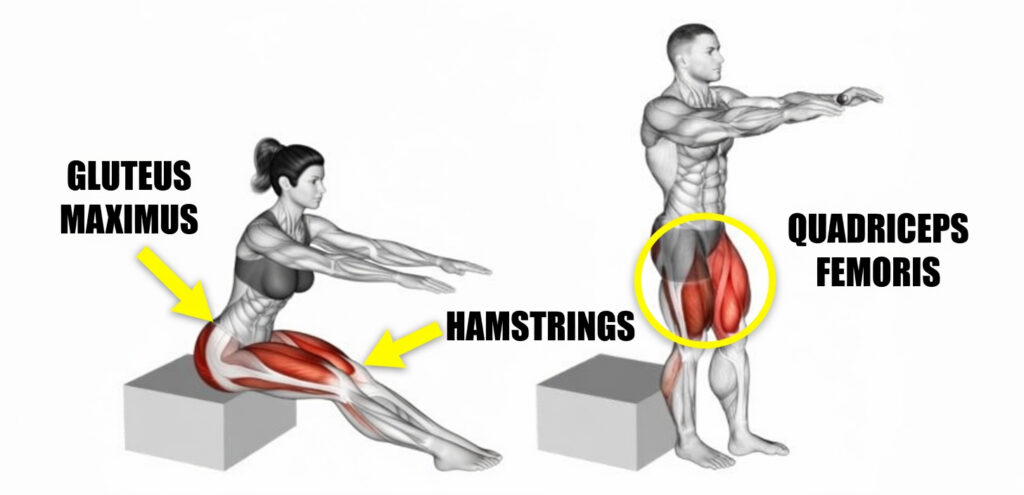
The single-leg box squat is a safe and highly effective squat variation for building lower-body strength.
If getting up from the floor feels difficult, this exercise is a great option because it closely resembles the movement of standing back up. It helps improve leg power, stability, coordination, and balance.
It also trains the motion needed to lower yourself down toward the floor. That means it can make both getting down and getting back up feel easier and more controlled.
Because this is a one-leg-at-a-time exercise, it helps address strength differences between the left and right sides of the body. Many people naturally rely more on their stronger side, which can allow imbalances to grow over time. Unilateral exercises like this are excellent for correcting that and strengthening the weaker leg.
Balancing on one leg also increases the challenge, forcing your body to work harder to stay steady and aligned.
Another advantage is that this movement works for nearly every fitness level. By changing the height of the box or bench, you can make the exercise simpler or more challenging.
This exercise targets several important muscle groups, including the:
- Hips
- Glutes
- Hamstrings
- Ankles
- Core
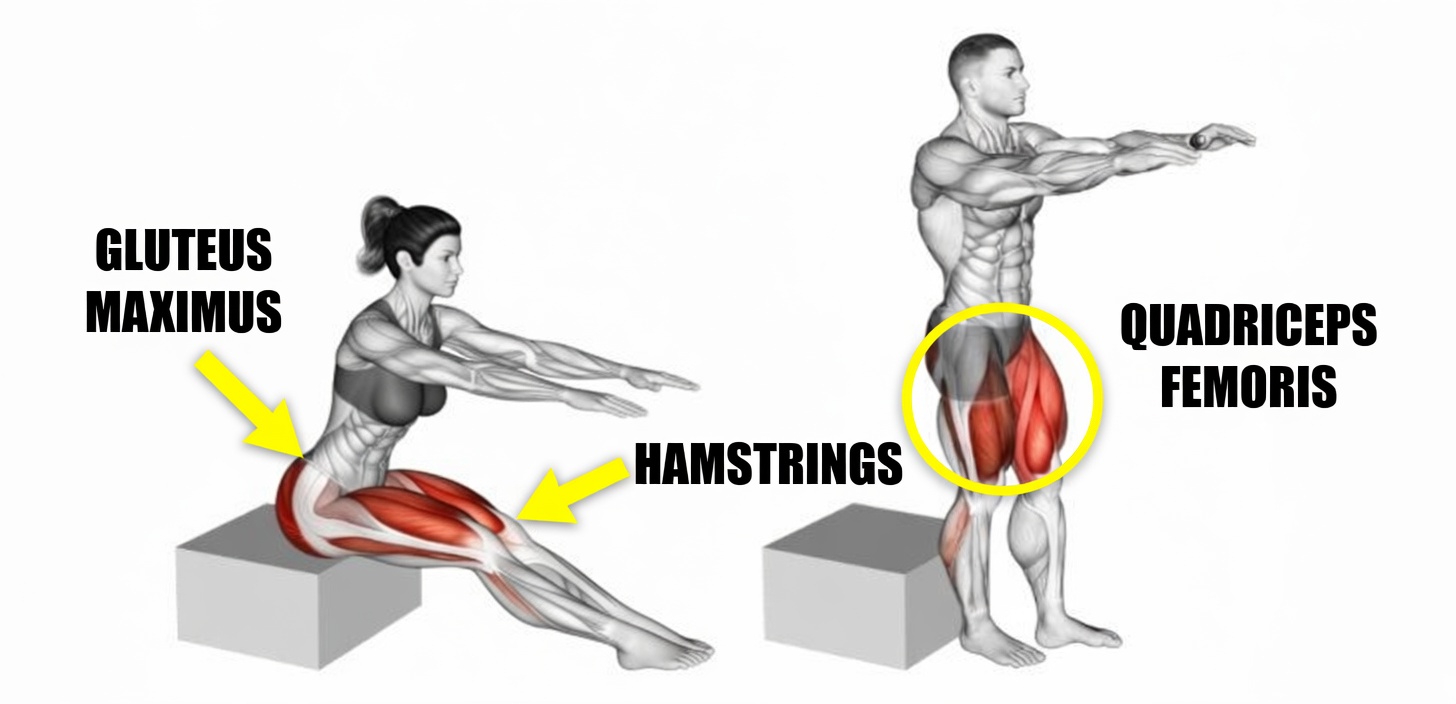
How to Do a Single-Leg Box Squat
- Stand tall with a box or bench placed behind you.
- Lift your right foot off the floor so you are balancing on your left leg.
- Extend your arms straight in front of you at chest height to help with balance.
- Keep your right leg slightly forward as you bend your left knee.
- Tighten your core and squeeze your glutes.
- Push your hips back and slowly lower yourself as if sitting down onto the box.
- As soon as your hips lightly touch the box, press through your left foot to stand back up.
- That completes 1 repetition.
Recommended Reps and Sets
- Perform 10 reps on one leg
- Switch sides and repeat
- Aim for 2 to 3 sets
2. Prisoner Get-Up
The prisoner get-up is an excellent exercise for improving core stability, balance, and leg strength.
This dynamic full-body movement prepares you for the real-life action of standing up from the floor. Because your hands stay clasped behind your head, your body has to rely more on the muscles of the core, hips, and legs to maintain control and balance.
In one movement, it activates multiple muscle groups, including the:
- Quads
- Glutes
- Hamstrings
- Core
- Hips
It also engages the muscles that stabilize the spine, which can support better posture and stronger upper-body positioning.
The benefits go far beyond simply helping you get off the floor. It is also a strong conditioning exercise that gets your whole body moving, challenges your coordination, and can even improve endurance when performed for higher repetitions.
If this movement feels too difficult at first, you can modify it by keeping one hand on a wall or another stable surface for support.
The standing portion of the exercise helps your legs become stronger and more mobile, which can make everyday tasks much less demanding.
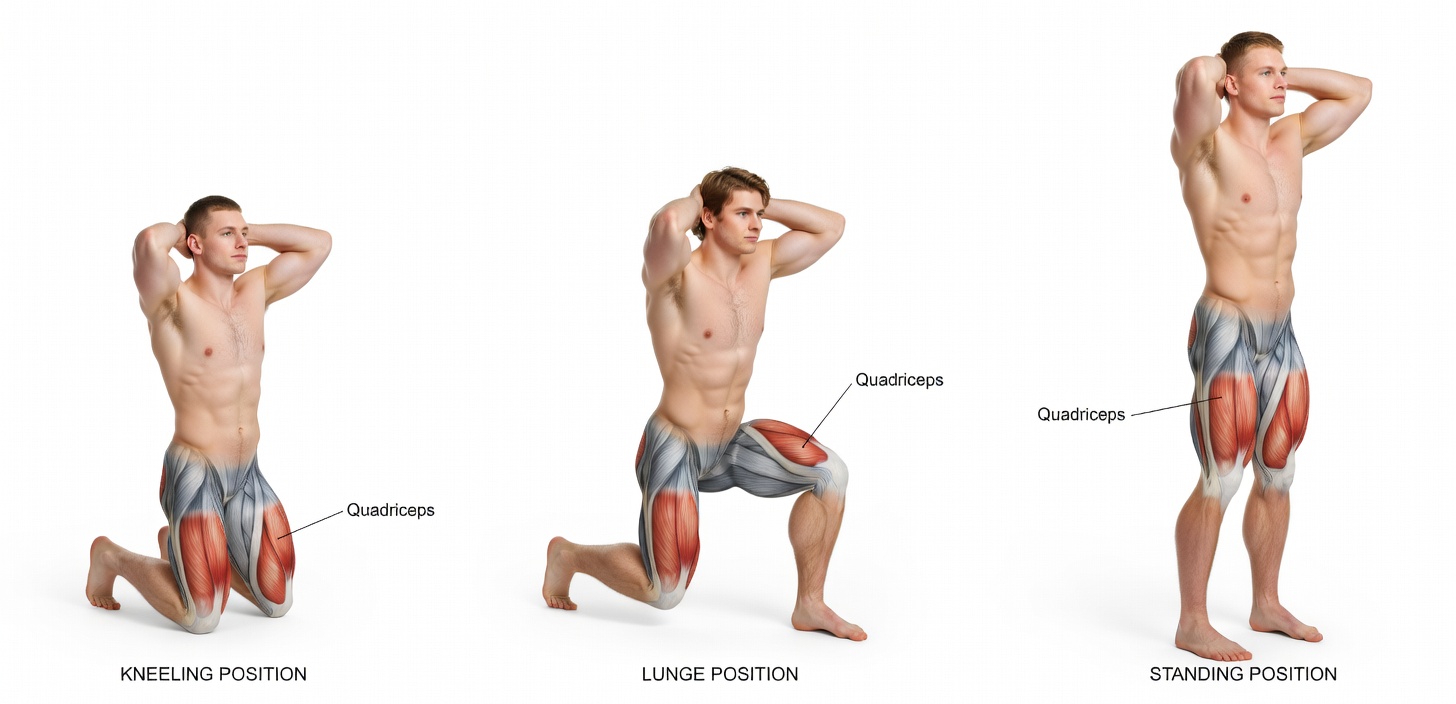
How to Do the Prisoner Get-Up
- Stand upright with your feet about shoulder-width apart.
- Place your hands behind your head and keep your elbows open wide.
- Brace your core and tighten your glutes.
- Lower yourself down to your knees, one knee at a time, while keeping your back straight.
- From the kneeling position, return to standing one leg at a time.
- Use control throughout the movement and keep your core engaged.
- That counts as 1 repetition.
Recommended Reps and Sets
- Perform 10 reps per side
- Complete 2 to 3 sets
Final Thoughts
If you want to make getting up off the floor easier, these two functional exercises can be extremely helpful. Both movements strengthen the legs, improve balance, and train the exact patterns your body uses when rising from the ground.
By practicing them regularly, you can improve mobility, flexibility, joint stability, and lower-body strength, making daily movement feel safer, easier, and more effortless over time.