2 Simple Exercises to Make Getting Up Off the Floor Easier as You Age
One of the harder parts of aging is realizing that everyday movements can start to feel more demanding.
Getting up from the floor is a perfect example. What once felt effortless in younger years can gradually become difficult with age.
This happens because the body naturally loses flexibility, mobility, strength, stability, and balance over time.
As muscle mass declines, the body often becomes weaker and less steady. That can reduce your range of motion and make normal movements feel more restricted.
Because of these changes, even a basic movement like standing up from the floor can become much more challenging.
The good news is that reduced mobility is not something you simply have to accept. With the right exercises, you can slow it down and even improve how your body moves.
Practicing functional strength exercises every day can help preserve lean muscle, support flexibility, and improve overall mobility.
Two movements in particular are especially helpful because they closely copy the action of getting up from the floor.
They train your body to push through one leg, rise with control, and maintain balance throughout the movement.
The more often you do them, the more strength, joint support, flexibility, and coordination you build.
Together, these benefits can make everyday movements feel smoother, safer, and far less tiring.
Here are 2 effective get-up exercises that can help you stand up from the floor with much greater ease.
Why These Exercises Matter
These movements are useful because they target the same physical abilities needed to get down to the floor and stand back up safely:
- Leg strength
- Hip mobility
- Core stability
- Balance and coordination
- Joint control
By improving these areas, you can move with more confidence and reduce the strain of daily activities.
1. Single-Leg Box Squat
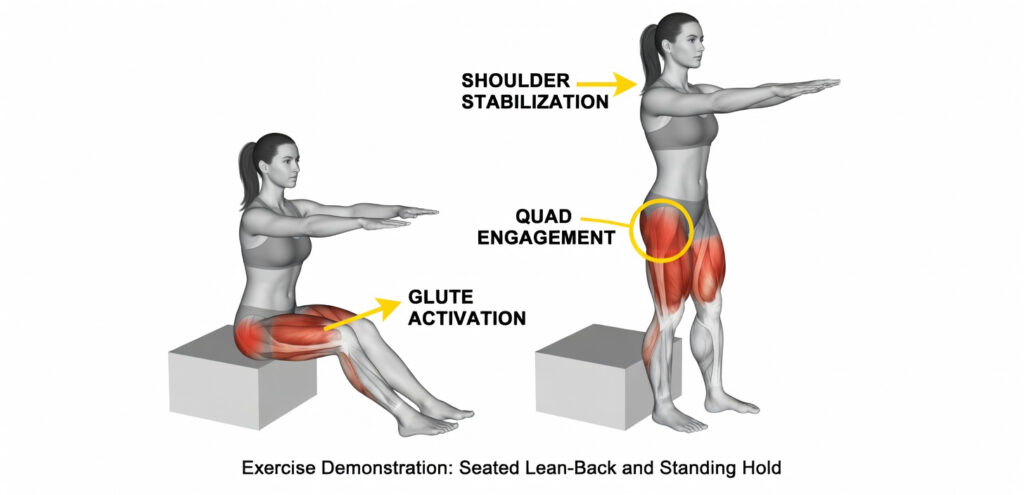
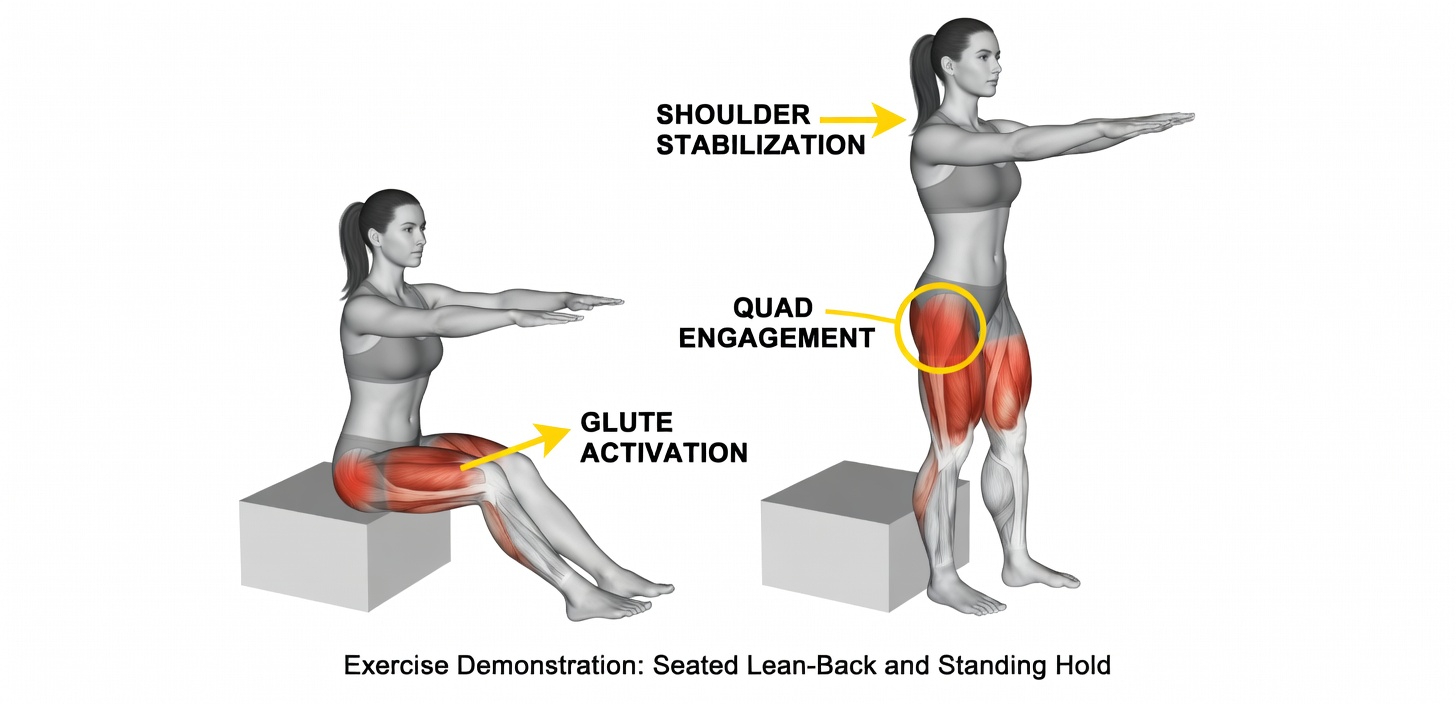
The single-leg box squat is a safer, more controlled squat variation that is excellent for building lower-body strength.
For people who struggle with standing up from the floor, this exercise is especially valuable because it closely resembles that movement pattern. It helps strengthen the muscles involved while also improving balance and stability.
Another major benefit is that it trains the range of motion needed to lower yourself down toward the floor. That means it can help make both getting down and getting back up easier.
This version works one leg at a time, which is useful if one side of your body is weaker than the other. Since the body often compensates for imbalances, unilateral exercises like this can help correct those differences and improve overall strength.
Standing on one leg also increases the challenge. The working leg must handle more load, and your body has to stay focused to maintain balance.
This makes it a great exercise for nearly all fitness levels. You can simply adjust the height of the box or bench to make it easier or more difficult.
It is particularly effective for the:
- Hips
- Glutes
- Hamstrings
- Ankles
- Core
How to Do a Single-Leg Box Squat
- Stand tall with a bench or box positioned behind you.
- Lift your right foot off the floor so you are balancing on your left leg.
- Extend your arms straight in front of you at chest height for balance.
- Keep your right leg slightly forward and begin bending your left knee.
- Tighten your core and glutes, then push your hips back as if you are sitting down.
- Lower yourself slowly until your hips lightly touch the box.
- Press through your left foot to return to standing.
That counts as 1 rep. Perform 10 reps, then switch sides. Aim for 2 to 3 sets.
2. Prisoner Get-Up
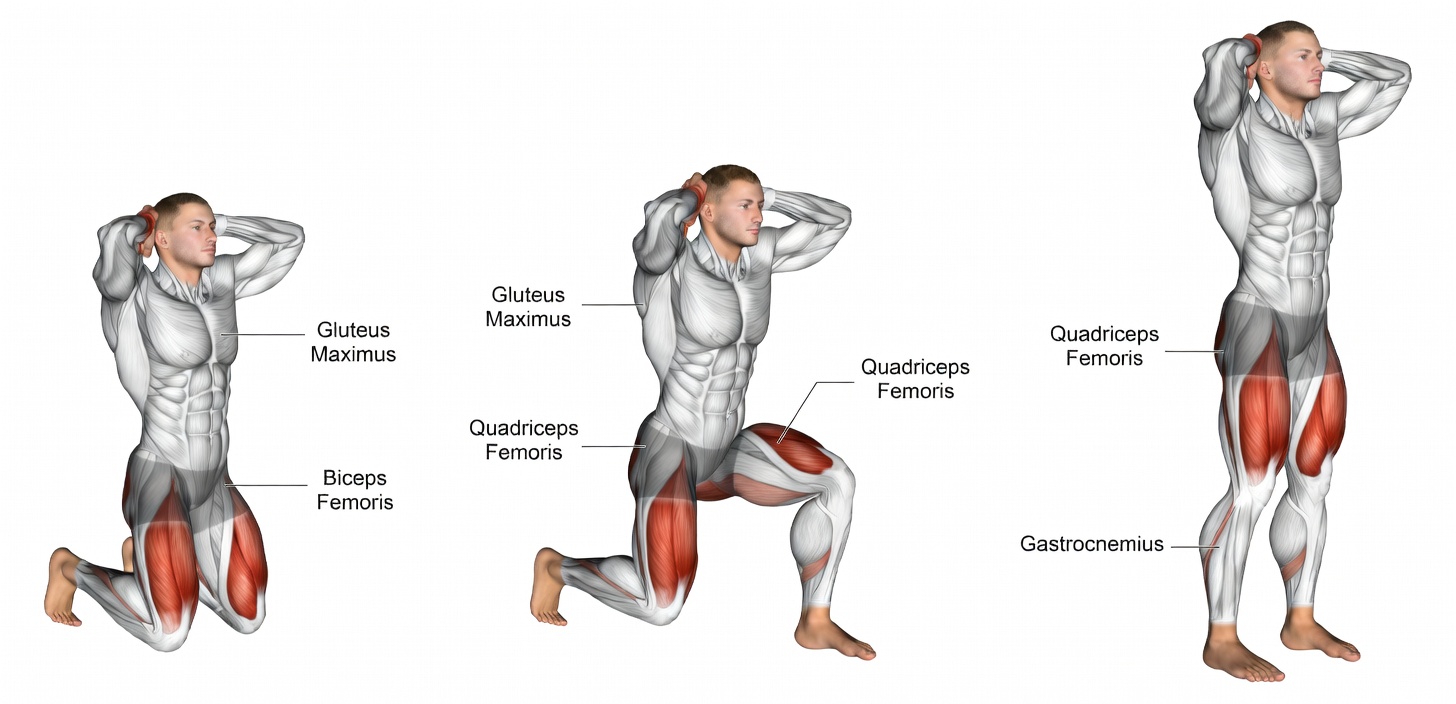
The prisoner get-up is a powerful exercise for improving core strength, balance, coordination, and leg power.
It is a dynamic full-body movement that prepares you for the real-life action of getting up from the floor.
Because your hands stay clasped behind your head, your body cannot rely on the arms for support. That forces your muscles to work harder to keep you balanced and controlled as you rise.
In one movement, this exercise works the:
- Quadriceps
- Glutes
- Hamstrings
- Core
- Hips
It also activates the muscles that support the spine, which can improve posture and contribute to better upper-body stability.
This is a highly functional movement with benefits that go far beyond floor mobility. It helps with everyday tasks, movement control, and body awareness.
It can also be used as a conditioning exercise. When done for more repetitions, it challenges your stamina while still building strength and balance.
If the movement feels too difficult at first, you can modify it by placing one hand on a wall or another stable object for support.
The standing phase of the exercise helps strengthen your legs and improve mobility, making it easier to rise from the floor during daily life.
How to Do the Prisoner Get-Up
- Stand with your feet about shoulder-width apart.
- Place your hands behind your head and keep your elbows open.
- Tighten your core and glutes.
- Lower yourself down to your knees one knee at a time, keeping your back straight.
- From the kneeling position, return to standing one leg at a time with control.
That is 1 rep. Perform 10 reps per side and complete 2 to 3 sets.
Final Thoughts
If getting up from the floor has started to feel harder, adding a few targeted mobility and strength exercises to your routine can make a real difference.
Both the single-leg box squat and the prisoner get-up train the exact muscles and movement patterns needed to stand up safely and comfortably.
With regular practice, you can improve:
- Strength
- Flexibility
- Balance
- Stability
- Confidence in daily movement
These simple exercises can help you stay more mobile, independent, and capable as you age.