5 Glute Bridge Variations to Build Stronger Glutes and a More Stable Lower Body
The glute bridge is one of the best exercises you can add to any lower body workout. It strengthens several key muscles at once, especially the glutes, hamstrings, and hips.
This movement also activates the core while helping to release tension in tight hip flexors. That makes it useful not only for strength training, but also for improving mobility and body control.
If there is one standout reason to do glute bridges, it is their ability to seriously challenge your butt muscles. Strong glutes matter for more than appearance. They play a major role in movement, posture, and injury prevention.
Well-developed glutes can help support better alignment, improve daily physical performance, and reduce the risk of strain during exercise and everyday activities.
The glutes are also responsible for generating much of the power in your lower body. As they become stronger, you may notice better performance in walking, climbing stairs, lifting, running, and other daily movements.
From a broader fitness perspective, training the glutes can also benefit surrounding areas such as the core and lower back. Stronger glutes support the muscles that stabilize the spine, which may lead to improved posture and less back discomfort.
For anyone aiming to build a stronger, firmer backside, the glute bridge is an excellent choice. Another advantage is convenience: it requires no equipment, very little room, and can be done almost anywhere.
All you need is a comfortable flat surface to lie on. Because it is a low-impact exercise, the glute bridge is suitable for most fitness levels and is generally gentle on the knees and hips.
Below are 5 glute bridge exercise variations you can start using right away.
1. Basic Glute Bridge
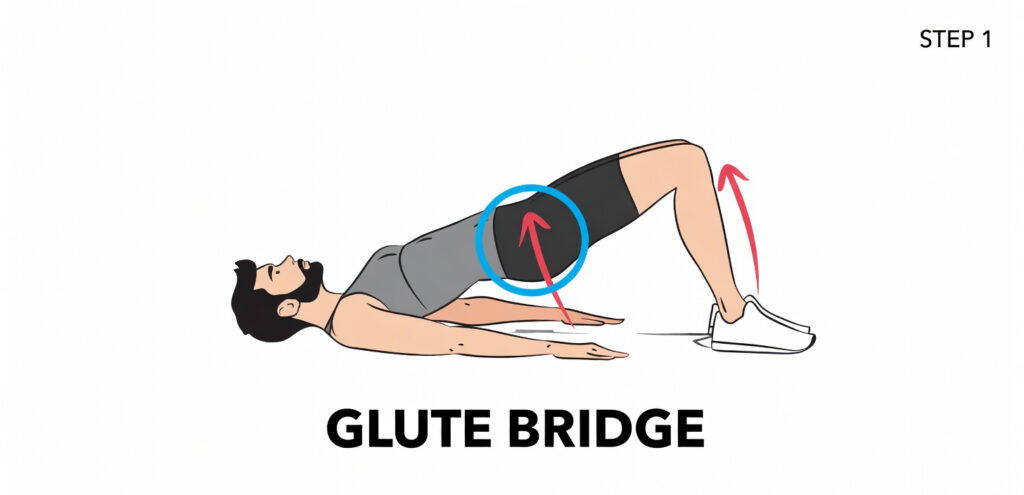
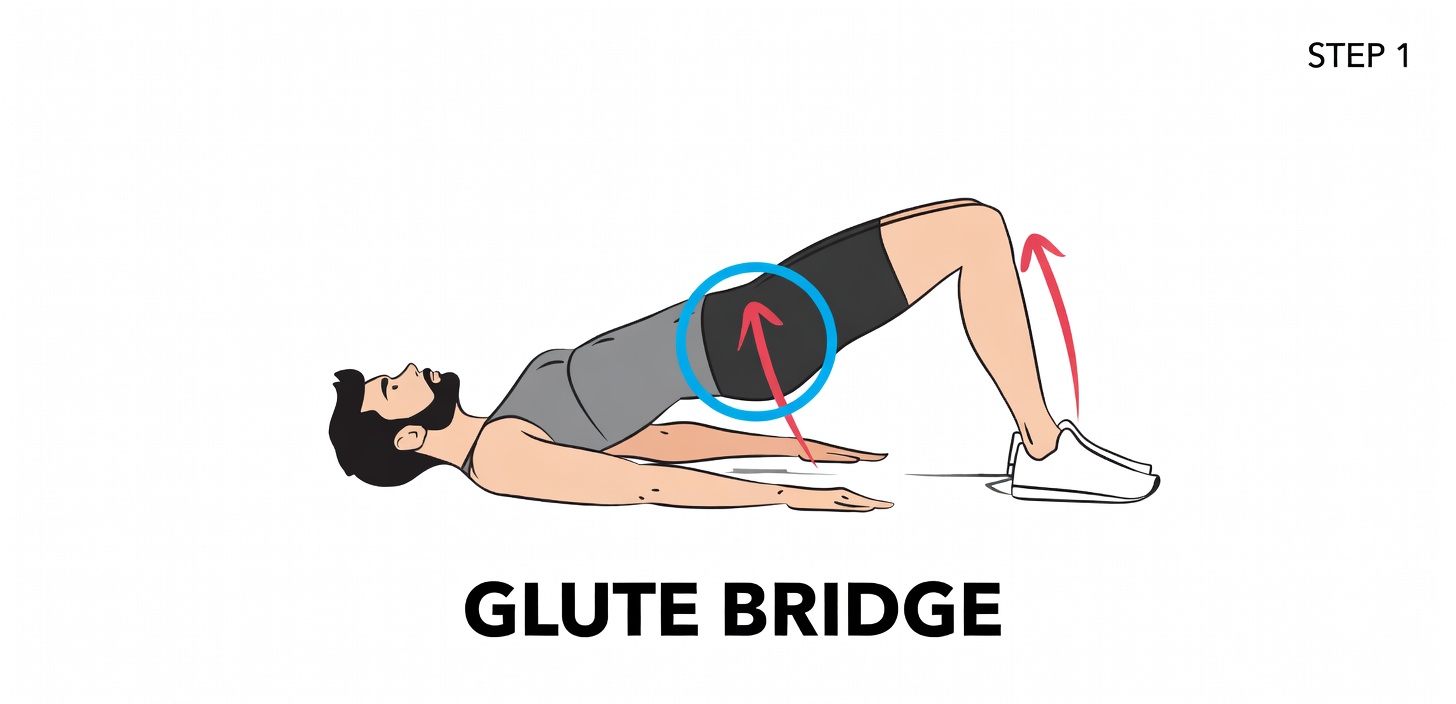
Start with the classic bodyweight glute bridge. This foundational version is simple, effective, and ideal for learning proper technique before moving on to more advanced variations.
People usually perform this exercise in two main ways:
- Hold, where you pause at the top
- Pulse or rep style, where you lift and lower repeatedly
Whether you choose an isometric hold or a dynamic version, the main muscles worked remain the same. The exercise primarily targets the glutes, hamstrings, and hips, while also engaging the core, abs, and lower back.
This is the best place to begin if you are new to glute bridges.
How to do a basic glute bridge
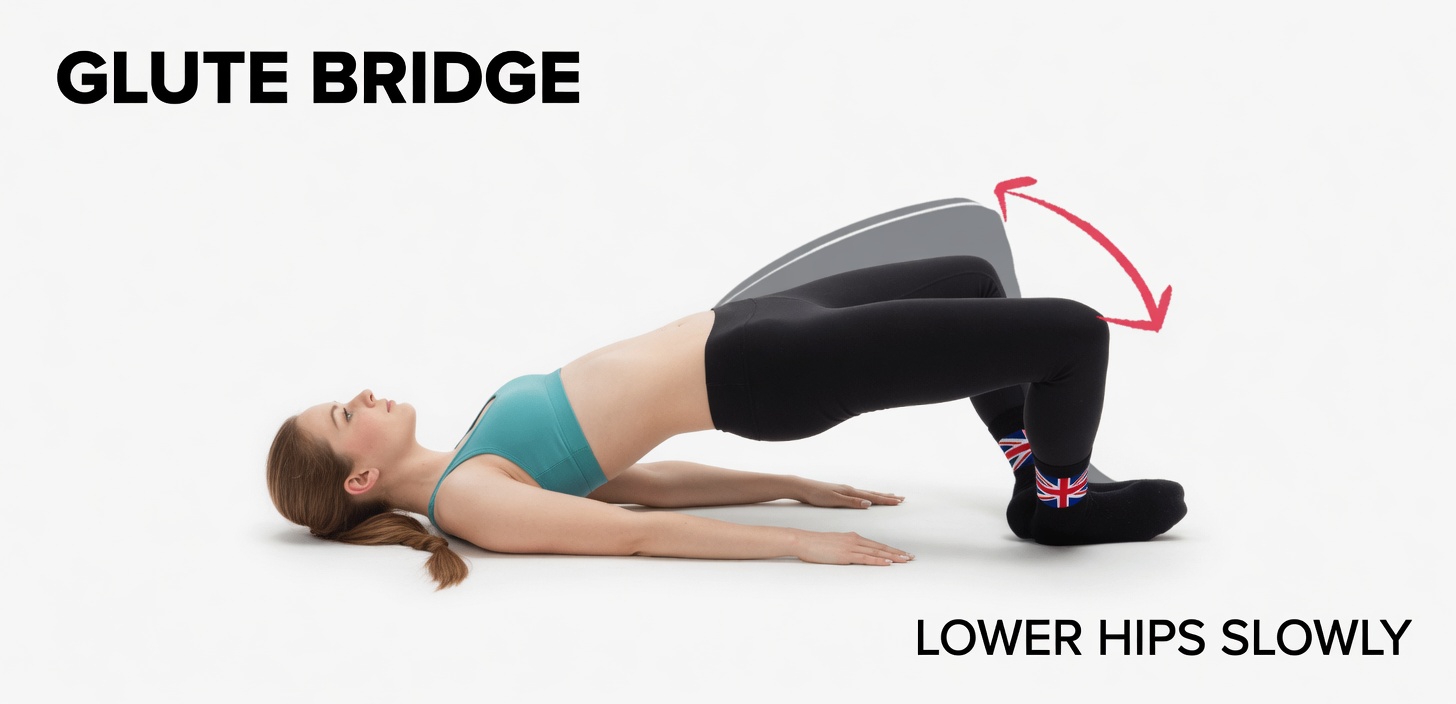
- Lie on your back with your knees bent to about 90 degrees.
- Keep your feet flat on the floor and place your arms by your sides.
- Press through your feet and lift your hips until your shoulders, hips, and knees form a straight line.
- Squeeze your glutes at the top and avoid arching your lower back too much.
- Hold for 1 to 2 seconds, then lower back down with control.
- Perform 8 to 10 reps for the dynamic version.
For a bridge hold, simply stay in the top position longer and perform fewer repetitions.
2. Marching Glute Bridge
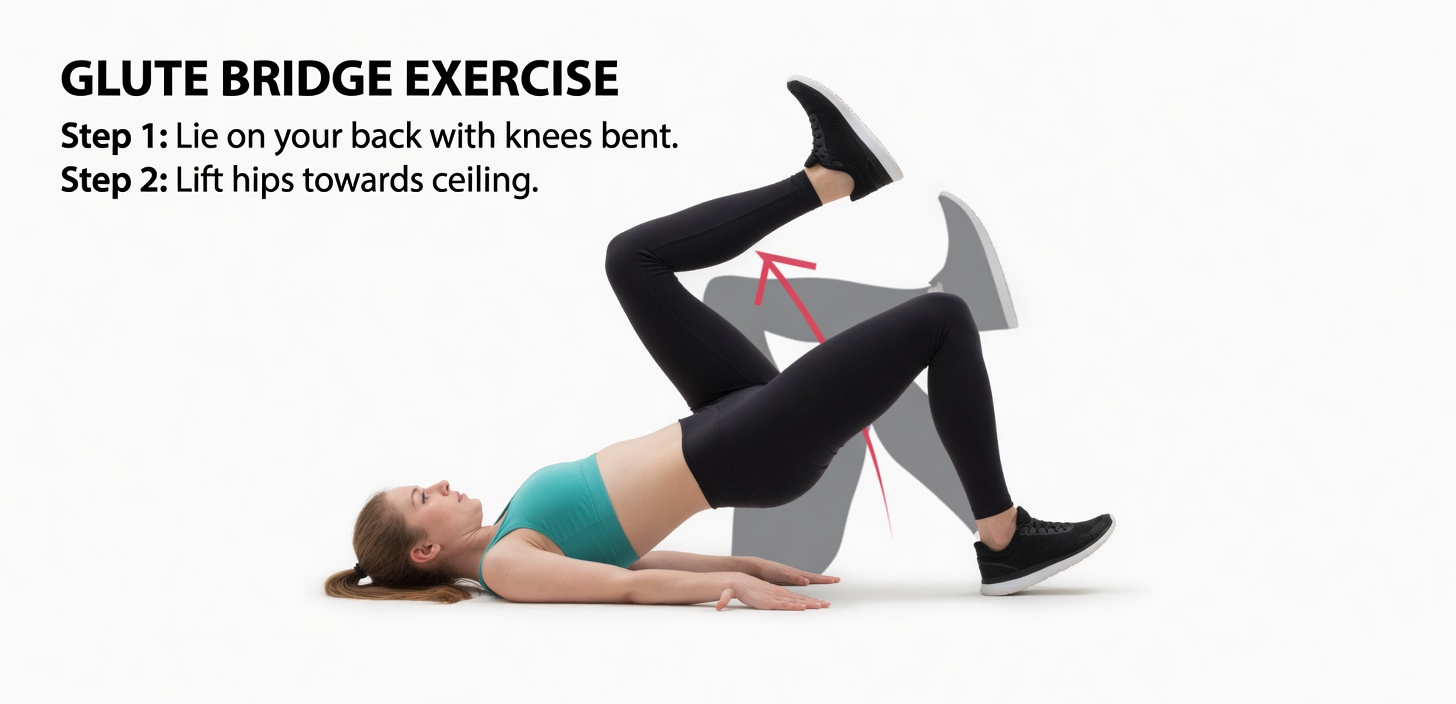
The marching glute bridge adds a single-leg element to the standard bridge. While holding your hips up, you lift one leg at a time in an alternating pattern.
This variation is excellent for improving balance, stability, and unilateral strength. Because each side has to work independently, it can help correct muscle imbalances between the right and left legs.
It also increases the demand on your core, making it a more challenging total-body movement than it may first appear.
How to do a marching glute bridge
- Lie on your back with your knees bent and feet flat on the floor.
- Place your arms at your sides with your palms facing up.
- Tighten your core and drive through your heels to lift your hips.
- At the top, your shoulders, hips, and knees should be aligned.
- Hold that bridge position as you lift one knee toward your chest.
- Pause briefly, lower that foot back down, and repeat with the other leg.
- Continue alternating sides until you complete 8 to 10 reps total.
3. Butterfly Glute Bridge
The butterfly glute bridge combines a bridge with the position used in the seated butterfly stretch. This creates a unique movement that challenges the glutes while opening the hips.
You will likely feel both a stretch and a strengthening effect, especially in the glutes, inner thighs, and hip flexors. Although it may look easy, this variation can be surprisingly demanding.
Because your hips are more open, your body has to work harder to maintain alignment. That means greater involvement from the glutes and hamstrings to keep the pelvis lifted and stable.
As you perform this exercise, focus on the stretch through the front of the hips and the active squeeze through the glutes.
How to do a butterfly glute bridge
- Lie on your back on a mat.
- Bring the soles of your feet together and let your knees fall outward.
- Position your feet roughly 12 inches away from your glutes.
- Brace your core and press your hips upward by pushing the outer edges of your feet into the floor.
- Lift until your torso and thighs form a straight line.
- Squeeze your glutes and hold for about 10 seconds.
- Lower down slowly and repeat 3 times.
4. One-Leg Glute Bridge
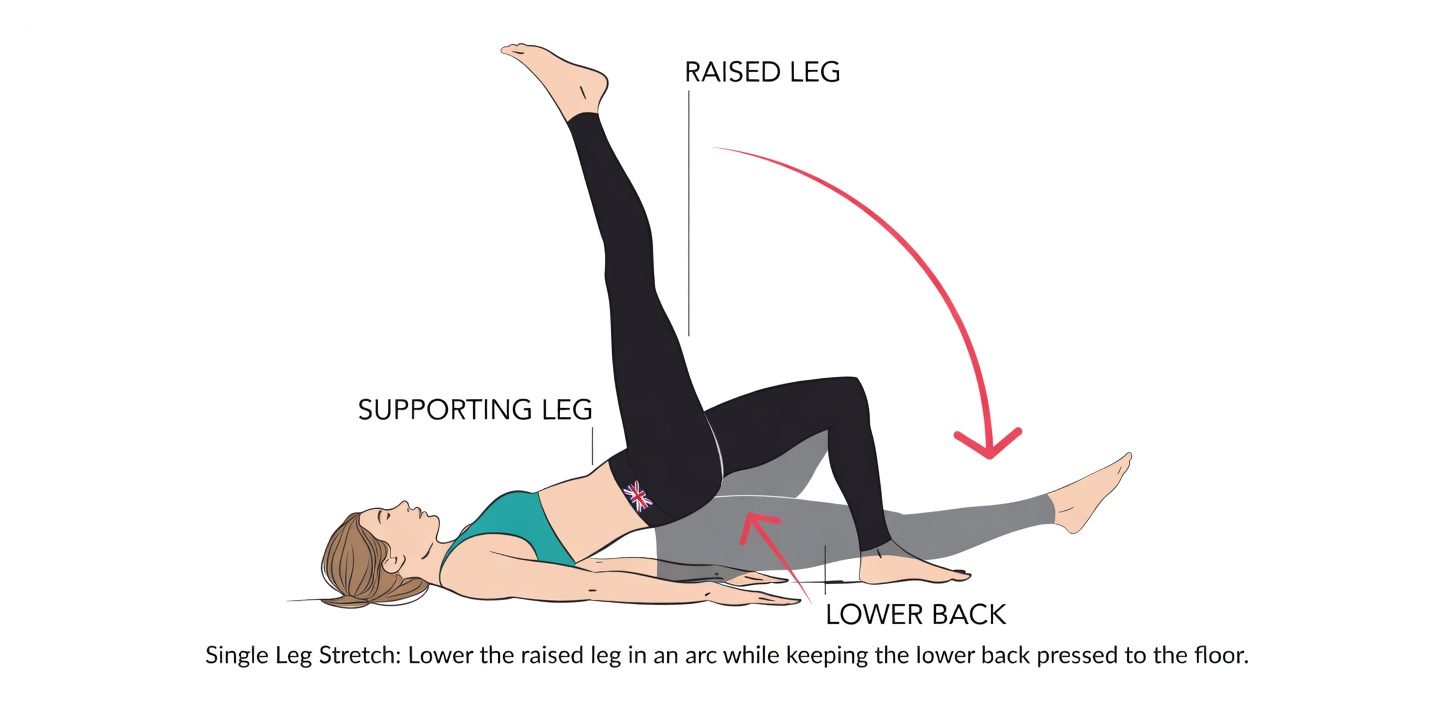
The one-leg glute bridge is a more advanced progression of the basic bridge. It increases the difficulty by forcing one side of the body to stabilize while the other leg moves.
This version is ideal for building single-leg strength, improving coordination, and developing better hip stability. It also challenges your balance and requires strong core engagement throughout the movement.
One leg remains grounded and supports the body, while the other leg stays lifted and moves dynamically. Because each side has a different job, this variation demands greater control than the standard bridge.
You will likely feel this one intensely in the hamstrings and glutes.
Before attempting it, make sure you are comfortable with proper form in the regular glute bridge.
How to do a one-leg glute bridge
- Lie flat on your back with your knees bent and feet on the mat.
- Keep your core tight and your spine neutral.
- Lift your right leg and extend it straight.
- Drive through your left foot to raise your hips until your shoulders, hips, and left knee are aligned.
- While holding your hips up, lower the raised right leg toward the mat and lift it again.
- That counts as one rep.
- Complete 10 to 12 reps on one side, then switch legs.
5. Glute Bridge and Curl
The glute bridge and curl is a tougher variation that can significantly increase glute activation. It is a great option for building a stronger backside while also helping reduce issues linked to weak glutes, such as poor movement mechanics and discomfort.
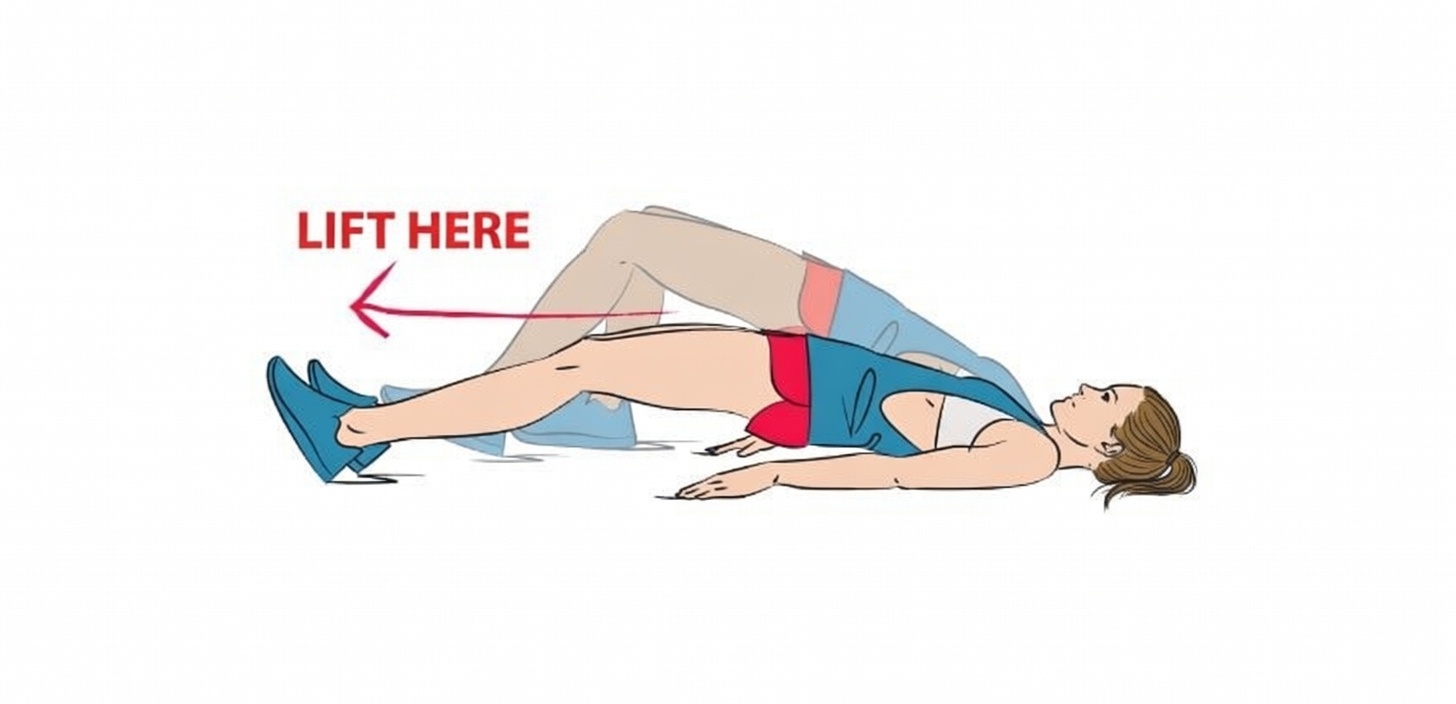
By adding a sliding leg curl to the bridge, you place even more tension on the glute muscles, while also challenging the hamstrings, hips, and core.
This exercise is a good reminder that you do not always need completely new workouts to make training effective. Sometimes, a small change in how you perform a familiar movement can make it feel fresh and much more challenging.
To do this variation, you will need sliders. If you do not have them, a towel on a smooth surface such as hardwood can work as an alternative.
The sliding action changes the angle and tension of the exercise, helping you train the same muscle groups in a different and highly effective way.
How to do a glute bridge and curl
- Lie on your back with your heels placed on gliders or towels.
- Keep your arms at your sides and your legs extended with a slight bend in the knees.
- Tighten your core and lift your hips off the floor.
- As you hold the bridge, slide your heels toward your glutes in one smooth motion.
- Pull in until your body forms a straight line from your knees to your shoulders.
- Slowly extend your legs back out with control.
- Avoid over-arching your back as you return to the starting position.
Why Glute Bridge Variations Are Worth Adding to Your Routine
Glute bridge exercises are effective, accessible, and easy to adapt for different fitness levels. They strengthen the glutes, improve core stability, support better posture, and can help reduce lower back pain.
Because these variations range from beginner-friendly to more advanced, they are suitable for almost anyone looking to improve lower body strength without putting too much stress on the joints.
If your goal is to develop stronger glutes, increase lower body power, and move better in daily life, these glute bridge variations are a smart place to start.