Push Your Fitness Further With This 4-Move Full-Body Resistance Band Workout
You do not need a gym membership or a rack of heavy dumbbells to get stronger. With the right plan, you can build full-body strength at home using one simple piece of equipment: a resistance band.
Resistance bands are often overlooked, but they are one of the most practical tools for strength training. They are light, easy to carry, budget-friendly, and useful almost anywhere. Whether you are training at home, traveling, or exercising outdoors in the summer, bands make it easier to stay consistent with your routine.
Because they are compact enough to fit into a backpack or travel bag, resistance bands are ideal for people who want a portable workout option. They are also highly versatile. You can use them to increase the difficulty of strength movements and even add resistance to cardio exercises without limiting natural movement the way dumbbells or barbells sometimes do.
Like free weights, resistance bands come in different resistance levels. You can choose anything from light tension to very heavy tension, and many sets include multiple bands so you can progress over time. In general, resistance levels can start at around 5 pounds and go as high as 150 pounds.
Before using bands in your workouts, test a few resistance levels to find what feels right for each exercise.
What You Need for This 4-Week Workout Plan
For this resistance band training plan, it helps to have more than one band available.
- Beginners: use light to medium resistance
- Advanced exercisers: use medium to heavy resistance
If you are new to band training, this 4-move challenge is a great place to start. The routine includes only four exercises, and each one can be made easier or harder simply by changing the band tension.
If any of the movements feel unfamiliar, practice them first without a band. Learning the mechanics before adding resistance will help you move safely and correctly.
Over the next four weeks, this plan is designed to help you build total-body strength and improve your overall fitness.
How the Resistance Band Challenge Works
This program uses four exercises performed across different workout days each week.
Your weekly structure looks like this:
- 4 workout days
- 1 cardio day
- 2 rest days
Each week, the number of reps and sets increases to keep your body challenged and encourage strength gains.
Although each movement emphasizes certain muscle groups, all four are compound exercises, meaning they work multiple muscles at the same time. That makes the workout efficient and effective, especially if you want strong results without spending hours training.
On each workout day, perform the exercises in the order listed. The suggested reps and sets can be adjusted based on your fitness level and recovery.
The 4 Full-Body Resistance Band Exercises
This workout uses a loop resistance band, which is a continuous band without handles. It is large enough to work around or under part of your body and is especially useful for full-body training.
If you only have resistance bands with handles, you can still do these exercises with small modifications.
1. Resistance Band Squat
Primary muscles worked:
- Hamstrings
- Glutes
- Hip flexors
Secondary muscles worked:
- Core
- Arms
- Chest
- Back
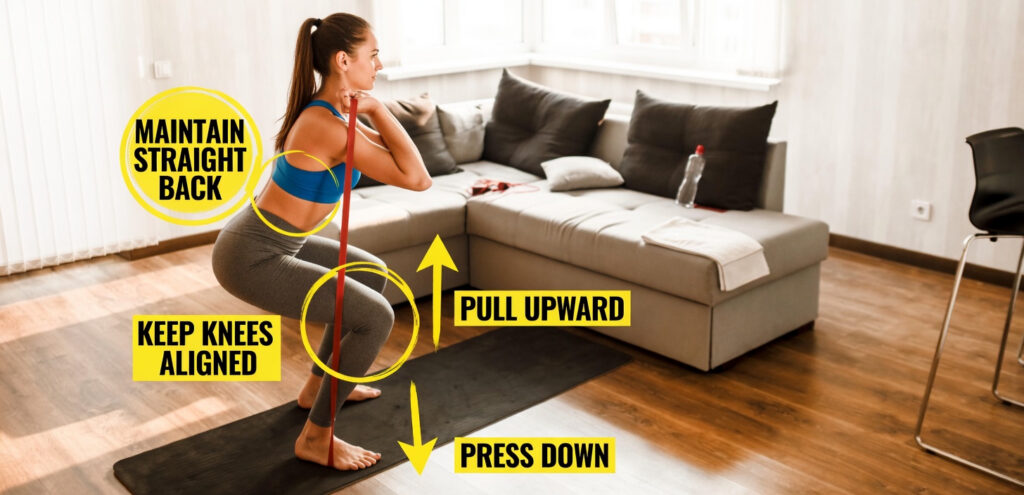
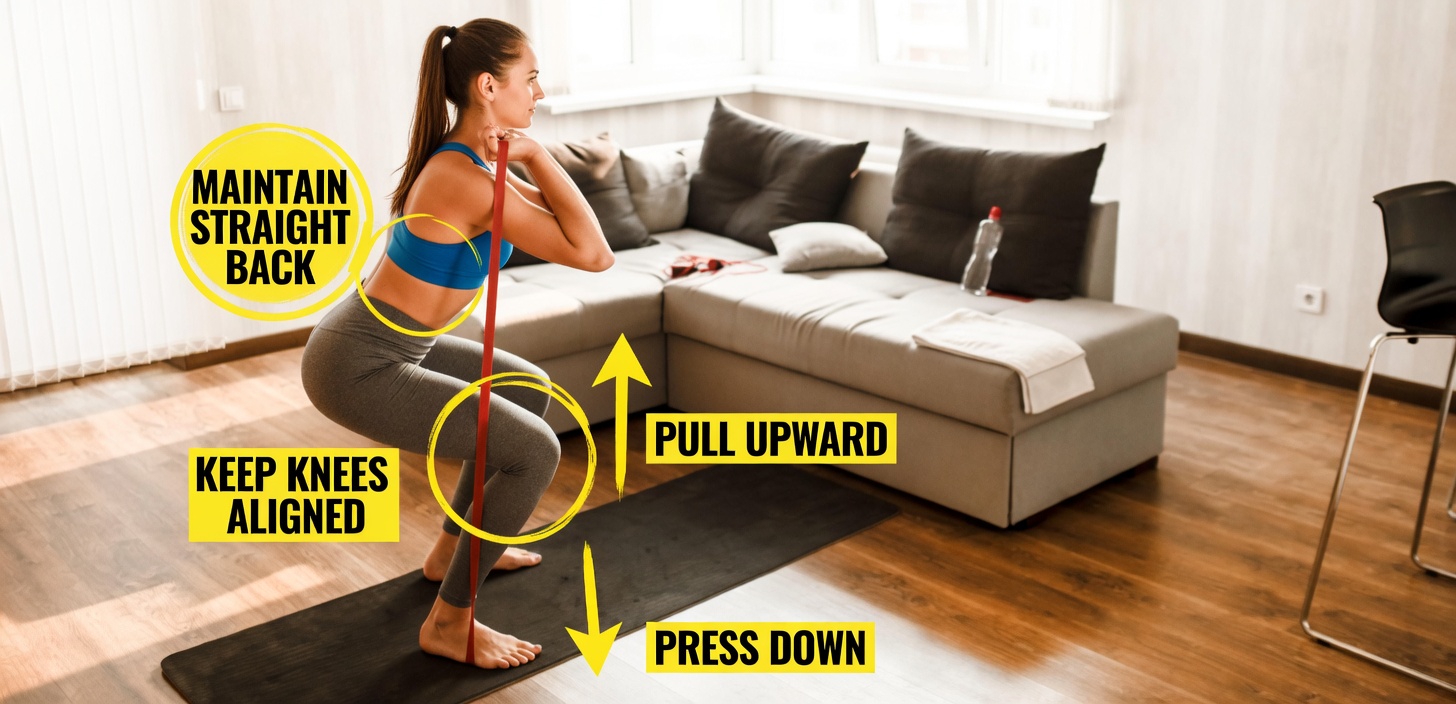
The resistance band squat is an excellent lower-body strength exercise that also challenges your core and upper body. It works many of the same muscles as a bodyweight squat, including the glutes, hamstrings, and quads, but the added tension from the band increases the challenge.
Bands also help control both the lowering and lifting phase of the squat, keeping your muscles under tension for the full movement.
How to do a resistance band squat
- Stand on the middle of the band with your feet about shoulder-width apart.
- Hold the top of the band and bring your hands up near your shoulders, palms facing upward.
- Lower into a squat just as you would in a normal bodyweight squat.
- Keep tension in the band throughout the entire movement.
- Press back up with control, squeeze your glutes at the top, and keep your abs engaged.
That counts as one rep.
2. Resistance Band Push-Up
Primary muscles worked:
- Chest
- Shoulders
- Core
Secondary muscles worked:
- Glutes
- Hip flexors
- Hamstrings
Push-ups are already one of the best bodyweight exercises for upper-body strength. They train the chest, shoulders, triceps, and core while also involving the glutes and legs for stability.
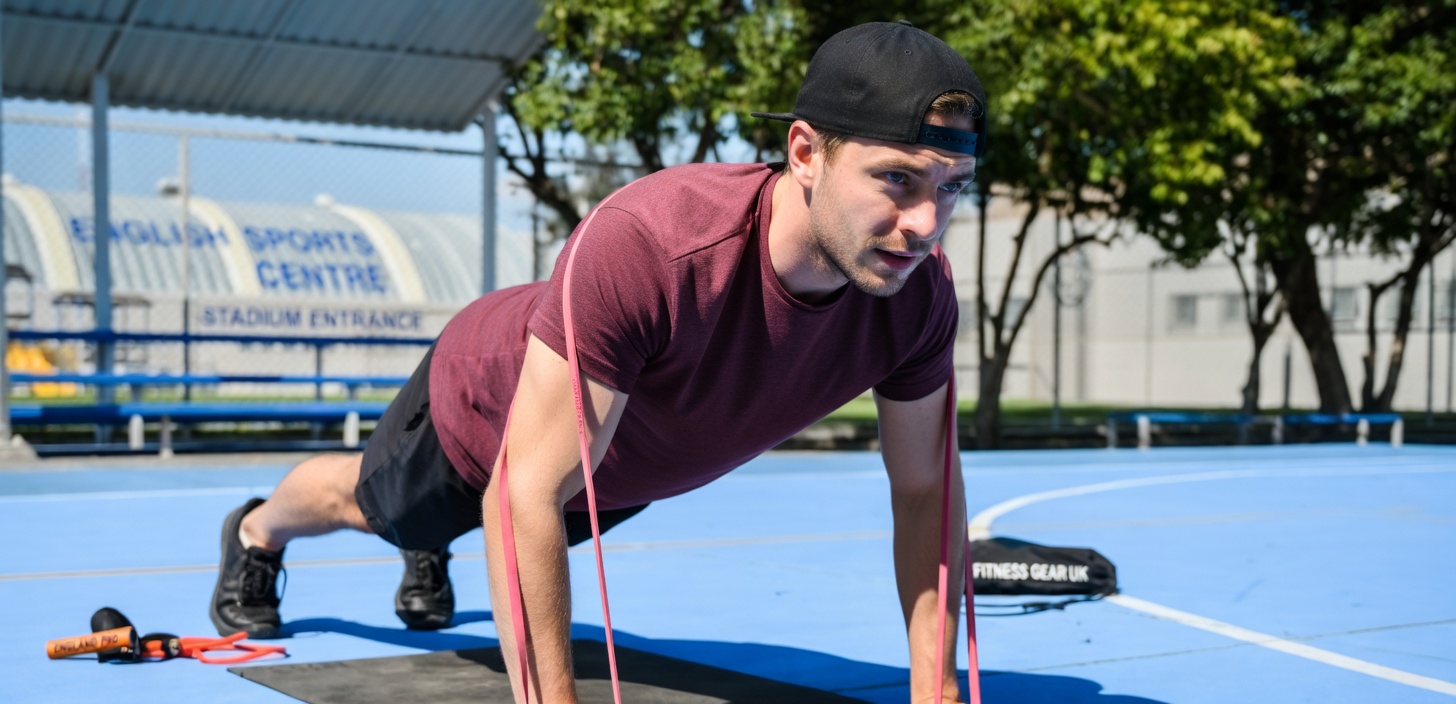
Adding a resistance band makes the movement more demanding by increasing tension as you press upward. This can help develop a stronger chest, more powerful arms, and a fitter upper body.
If you are a beginner, start with regular push-ups first. Once you feel comfortable, add a light band.
How to do a resistance band push-up
- Hold each end of the band and wrap it across your upper back.
- Keep the band in place as you move into a push-up position.
- Perform your push-ups as usual while maintaining tension in the band.
- Keep your body in a straight line from head to heels.
The band may shift at first, but it gets easier to control with practice.

3. Resistance Band Row
Primary muscles worked:
- Back
- Arms
Secondary muscles worked:
- Core
- Glutes
- Hip flexors
- Hamstrings
If you spend a lot of time sitting or dealing with ongoing back discomfort, strengthening the upper and mid-back is especially important. These muscles support posture, stability, and healthy movement, yet they are often neglected in home workouts.
The standing resistance band row is a simple and effective way to train those muscles without needing dumbbells or gym machines.
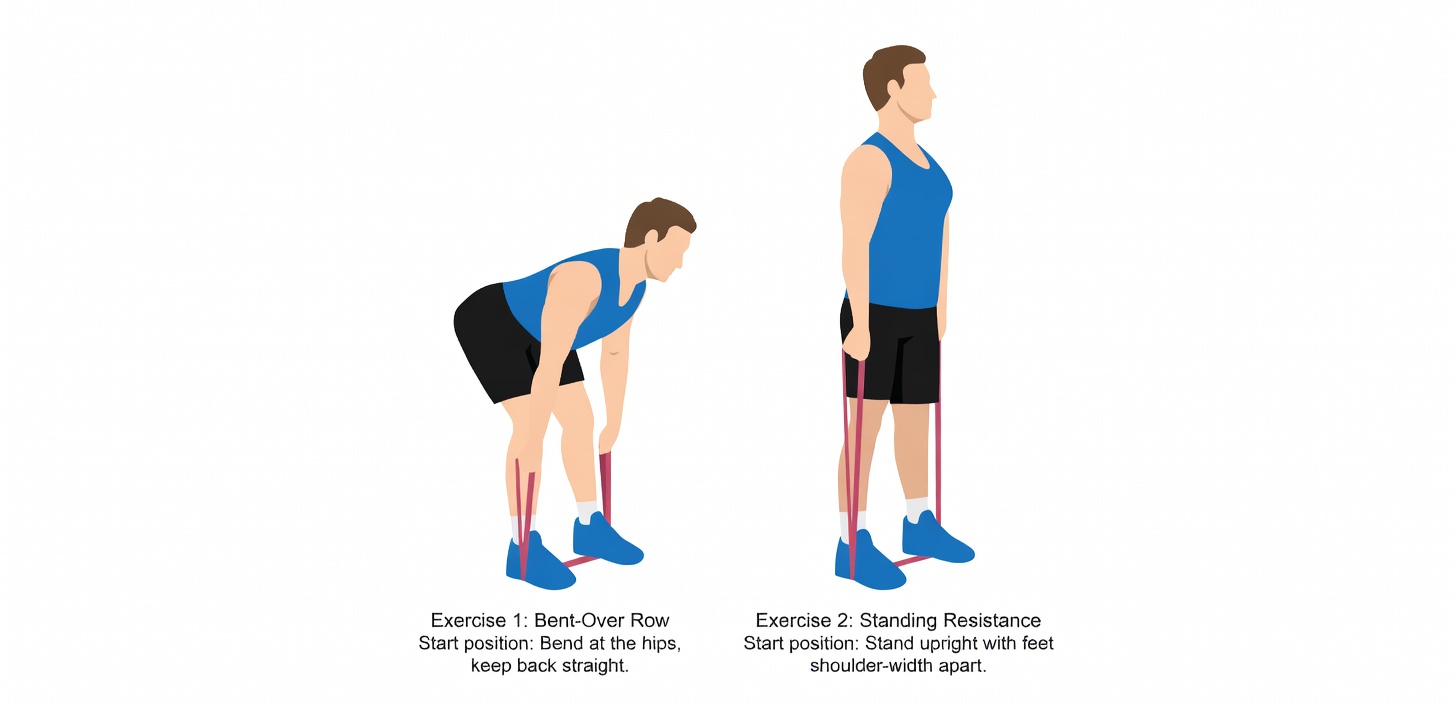
How to do a resistance band row
- Hold both ends of the loop band and stand on the middle of it.
- Place your feet about shoulder-width apart with your toes facing forward.
- Slightly bend your knees and keep your back flat.
- Brace your core and pull your elbows up and back, leading from the shoulder blades.
- Keep the rest of your body still as you row.
- Slowly return to the starting position.
That is one rep.
4. Resistance Band Deadlift
Primary muscles worked:
- Hamstrings
- Glutes
- Hip flexors
Secondary muscles worked:
- Core
- Arms
- Chest
- Back
The deadlift is one of the most effective exercises for building lower-body strength. It is often called one of the best total-body lifts because it trains the posterior chain, especially the glutes and hamstrings, while also engaging the core and back stabilizers.
You do not need a heavy barbell to benefit from this movement. A resistance band can provide plenty of tension for an effective home workout.
How to do a resistance band deadlift
- Hold the ends of the band and stand on the middle of it with your feet shoulder-width apart.
- Point your toes forward, brace your core, lift your chest, and keep your back straight.
- Maintain a slight bend in your knees.
- Hinge your hips backward without letting them travel past your knees.
- Drive your hips forward and squeeze your glutes to stand tall.
- Pause for 1 to 2 seconds at the top, then return to the starting position with control.
That completes one rep.
4-Week Resistance Band Progression
The goal of this challenge is to stay consistent for four weeks while gradually increasing the training demand.
Weekly format
- Workout Days: 4 days per week
- Cardio: 1 day per week
- Rest: 2 days per week
Progression method
- Week 1: start with manageable reps and a lighter band
- Week 2: increase reps or add a set
- Week 3: continue progressing with more total volume
- Week 4: use your strongest safe resistance and highest planned workload
A simple example of progression could look like this:
- Week 1: 10 to 12 reps
- Week 2: 12 to 15 reps
- Week 3: 3 to 4 sets per exercise
- Week 4: increase resistance or total reps while maintaining good form
Tips for Better Results
To make the most of this full-body resistance band workout, keep these points in mind:
- Choose a band that feels challenging but still lets you maintain proper form
- Focus on controlled movement rather than rushing through reps
- Keep your core engaged during every exercise
- Rest when needed, especially if you are new to strength training
- Progress gradually by increasing reps, sets, or band tension over time
Final Thoughts
This 4-move resistance band workout is a simple but effective way to build strength at home, outdoors, or while traveling. With just one portable piece of equipment, you can train your legs, glutes, back, chest, shoulders, arms, and core.
If you are just getting started with resistance bands, this 4-week challenge offers an easy entry point. Stay consistent, increase the difficulty gradually, and you can build full-body strength without ever stepping into a gym.