5 Strength Training Exercises to Stay Strong, Mobile, and Independent as You Age
As the years go by, staying fit is about more than appearance. It is about keeping your body strong, flexible, balanced, and mobile so you can continue doing everyday activities with confidence. One of the best ways to support healthy aging is through regular strength training.
Strength exercises help you build and preserve muscle, which naturally declines with age. They also support bone density, strengthen connective tissues such as ligaments, and improve overall body stability. Together, these benefits can help protect your bones, enhance mobility, and lower the risk of falls.
How Often Should Older Adults Do Strength Training?
For the best results, the CDC recommends strength training at least 2 days per week. Ideally, these workouts should involve the whole body and focus on compound movements, which train several muscle groups at once.
The five exercises below are excellent examples of full-body strength training moves. They are simple, practical, and especially helpful for improving strength, coordination, and stability.
Before starting any new exercise program, it is always wise to check with your doctor or a qualified fitness professional to make sure the routine is safe and appropriate for your needs.
Related Fitness Topics You May Enjoy
- Want to age well? Add daily hip exercises to your routine.
- The 3 best exercises to transform your body in your 50s and beyond.
1. Incline Push-Up
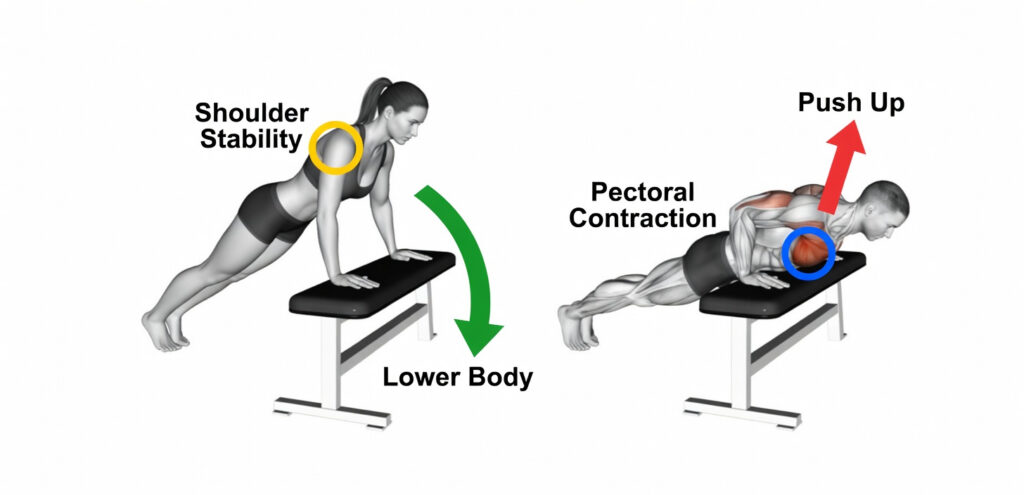
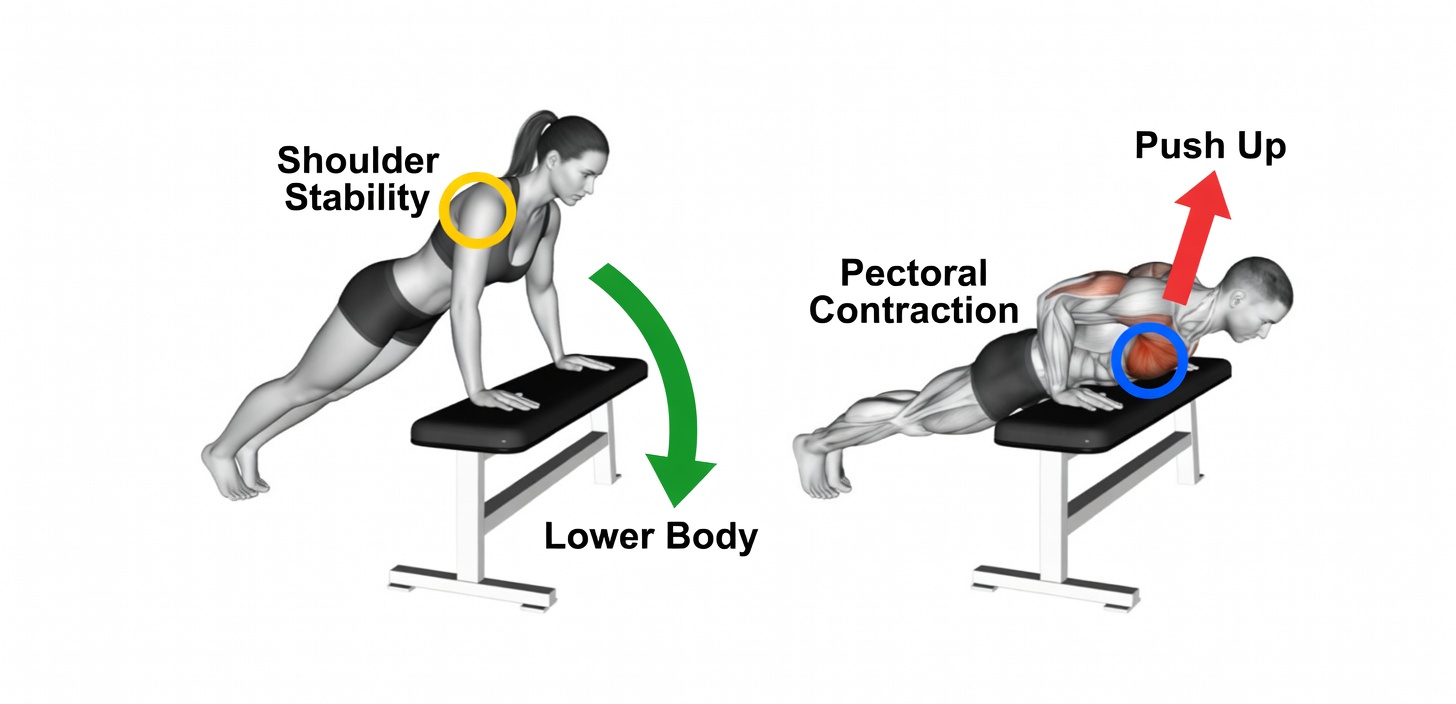
The incline push-up is a modified version of the classic push-up. Instead of placing your hands on the floor, you position them on an elevated surface such as a bench, countertop, or sturdy box.
This variation works the chest, arms, and core, while also engaging the legs and glutes to keep your body stable throughout the movement. Because your upper body is elevated, you do not have to lift as much body weight as in a standard push-up, making this exercise more manageable and joint-friendly.
It is an excellent choice for older adults who want to rebuild upper-body strength and improve stability safely.
How to do an incline push-up
- Stand facing a sturdy bench, box, or similar surface.
- Lean forward and place your hands on the edge, slightly wider than shoulder-width apart, with your fingers pointing forward.
- Step your feet back until your body forms a straight line from head to heels, like a high plank.
- Tighten your core and avoid letting your back sag or arch.
- Bend your elbows and lower your chest toward the surface.
- Push through your hands to return to the starting position.
Recommended sets and reps:
- Perform 2 to 3 sets
- Do as many repetitions as you can with good form
- Beginners can start with 6 to 8 reps per set
2. Squat
Strong legs are essential for maintaining freedom and independence as you age. The squat is one of the best exercises for strengthening the legs, glutes, and core.
This movement is especially valuable because it mirrors daily activities such as sitting down, standing up, and lifting objects. Practicing squats regularly can improve lower-body strength, support joint function, and help preserve mobility.
How to do a squat
- Stand with your feet about shoulder-width apart.
- Brace your core and push your hips back.
- Lower your body as if you were about to sit into a chair.
- Continue lowering until your thighs are roughly parallel to the floor, or as low as feels comfortable with good form.
- Press through your feet and slowly rise back to standing.
Tip: Move with control throughout the exercise rather than rushing through each repetition.
3. Glute Bridge
If you spend a lot of time sitting at a desk or in the car, your glutes and lower back may become weak. Sitting for long periods can also tighten the hip flexors, which may affect posture and movement.
That is why activating and strengthening the muscles around the hips is so important, especially later in life. The glute bridge helps strengthen the glutes, hamstrings, and lower back, which can support better posture, reduce discomfort, and improve mobility.
This is a simple floor exercise that works well for beginners and can easily be done at home.
How to do a glute bridge
- Lie on your back on a mat with your knees bent and feet flat on the floor.
- Place your arms by your sides with your palms facing down.
- Press through your feet and lift your hips toward the ceiling using your glutes and hamstrings.
- Keep your knees aligned and avoid letting them fall inward.
- Pause when your body forms a straight line from shoulders to knees.
- Squeeze your glutes at the top, then slowly lower back down.
Recommended sets and reps:
- Complete 2 to 3 sets
- Aim for 8 to 10 reps
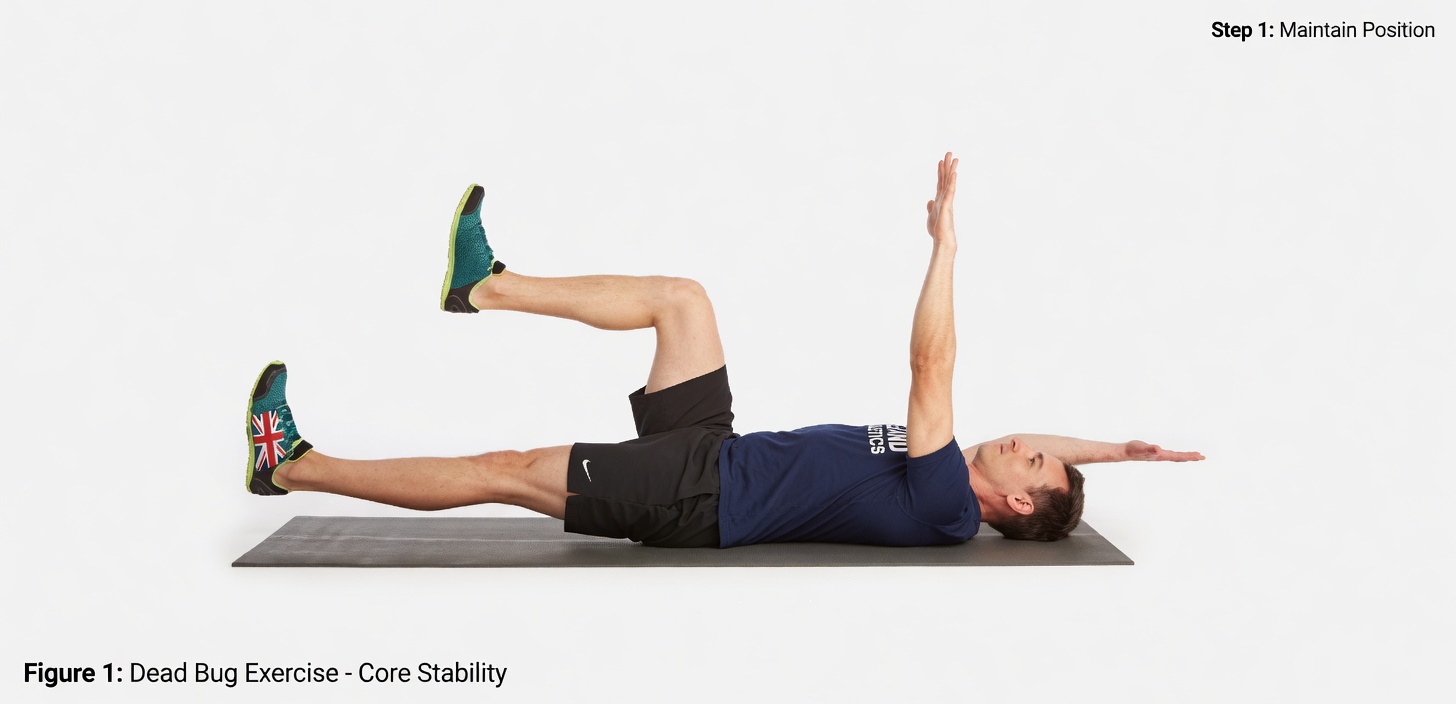
4. Dead Bug
The dead bug is a beginner-friendly core exercise that targets the deep abdominal muscles, including the transverse abdominis, as well as the muscles that support the spine.
This movement is designed to improve core stability, which is essential for healthy movement, balance, and coordination. A strong core helps your upper and lower body work together more efficiently and may also help reduce the risk of lower back pain.
The dead bug is a great option if you want a gentler alternative to exercises like the plank while still training your core effectively.
How to do a dead bug
- Lie flat on your back on a mat.
- Extend both arms straight up over your chest.
- Lift your legs and bend your knees to 90 degrees so your thighs are vertical and your shins are parallel to the floor.
- Tighten your core and keep your lower back gently pressed into the mat.
- Slowly move your right arm overhead while extending your left leg forward.
- Lower the leg only until it is a few inches above the floor.
- Return to the starting position with control.
- Repeat on the opposite side.
Recommended sets and reps:
- Perform 8 to 10 reps per side
5. Bird Dog
Like the dead bug, the bird dog is excellent for strengthening the abs and deep core stabilizers. It is also highly effective for improving balance, coordination, posture, and full-body stability.
One of the biggest benefits of this exercise is that it teaches you how to maintain a neutral spine while moving your arms and legs. It activates important muscles in the core, back, hips, and sides of the torso, all of which contribute to better movement and stability in everyday life.
Because so many basic motions rely on the core, keeping this area strong is especially important as you get older.
How to do a bird dog
- Start on all fours on a mat with your hands under your shoulders and your knees under your hips.
- Tighten your core and keep your spine neutral.
- Slowly extend your right arm in front of you while extending your left leg behind you.
- Reach until your body forms a straight line from fingertips to heel.
- Do not let your back sag, arch, or twist.
- Hold for 1 to 2 seconds.
- Return to the starting position and switch sides.
Recommended sets and reps:
- Complete 5 to 8 reps per side
Final Thoughts
Adding strength training to your weekly routine can make a major difference in how you feel and move as you age. Exercises such as incline push-ups, squats, glute bridges, dead bugs, and bird dogs can help improve strength, support bone health, enhance balance, and keep you more independent over time.
Start slowly, focus on good form, and stay consistent. Even a few strength sessions each week can help you build a stronger, more capable body for the years ahead.