McKenzie Prone Press Up: How This Back Pain Exercise Works
Robin McKenzie is widely recognized in the physical therapy world for developing a groundbreaking system to assess and manage back pain.
Over time, his approach became known as the McKenzie Method, and several movements used within it are now commonly referred to as McKenzie exercises.
One of the best-known exercises taught by McKenzie-trained physical therapists for low back pain relief is the prone press-up.
What Is the McKenzie Prone Press Up?
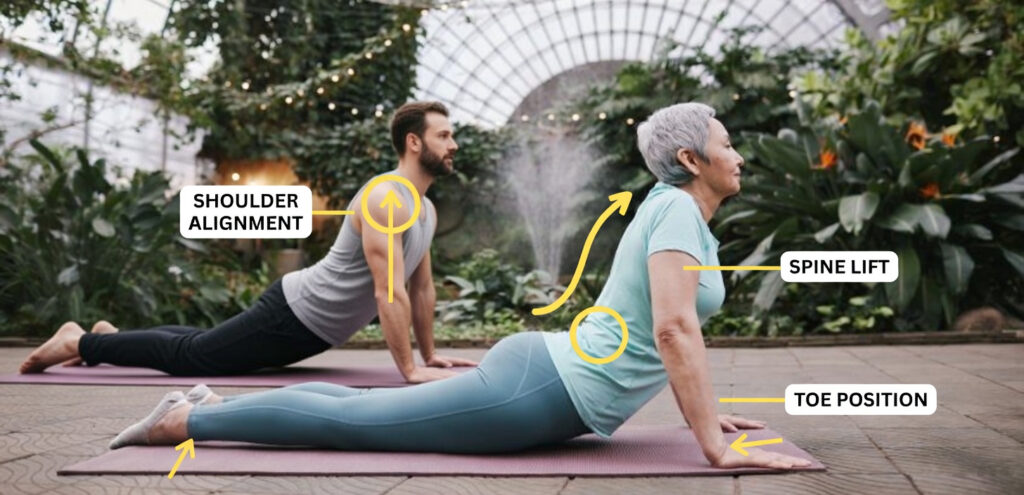
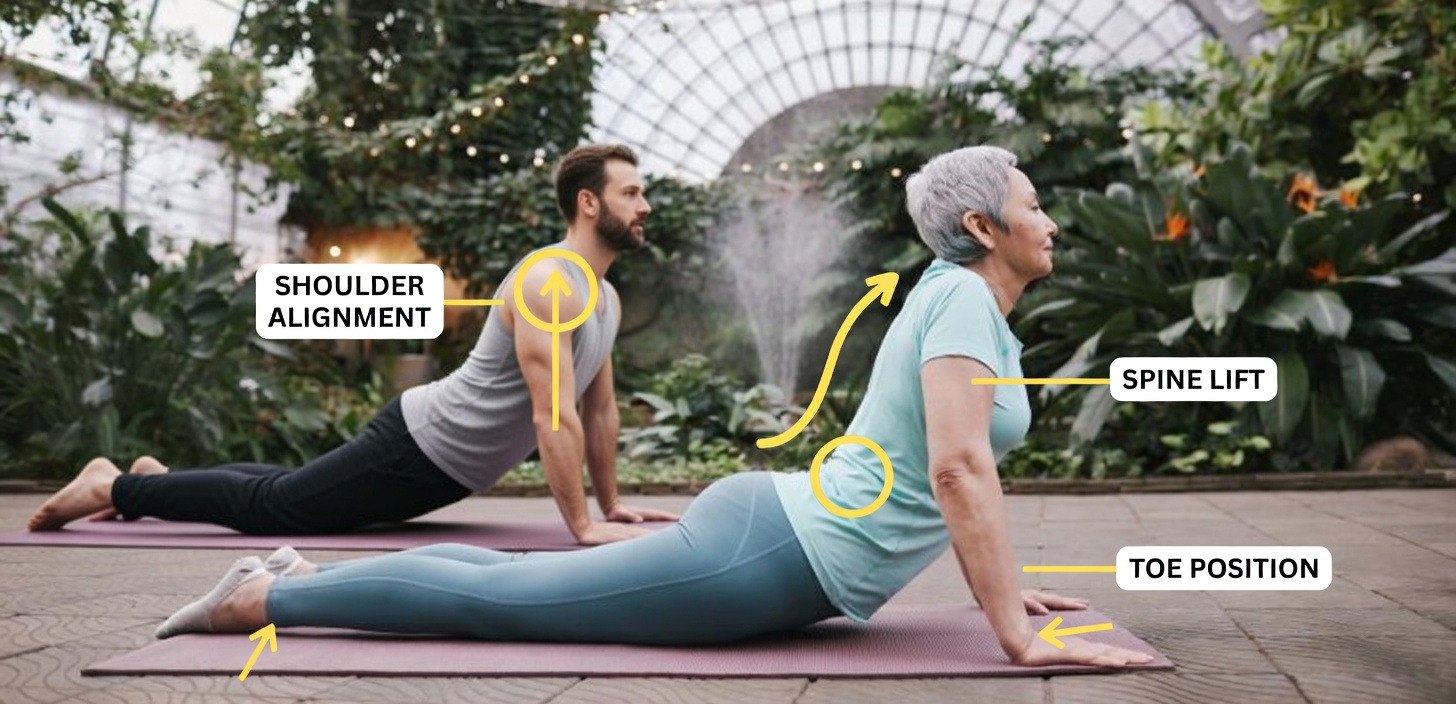
The prone press-up is a spinal extension exercise. Many people in yoga may recognize it as a movement similar to upward dog.
This exercise is designed to encourage the lower back to move into extension, which is why McKenzie practitioners frequently use it for people dealing with low back discomfort.
The full explanation of why extension-based exercises may reduce back pain is complex and sometimes debated. Still, in simple terms, the prone press-up may help because it:
- Improves spinal extension range of motion, which many people rarely use during a normal day
- Stretches structures at the front of the body that often become tight from prolonged sitting
In addition to those benefits, many people simply find that the movement feels very relieving.
Who Should Avoid This Exercise?
Although the prone press-up can be helpful, it is not appropriate for everyone. Certain spinal problems may actually worsen with too much back extension.
If you currently have back pain, the safest approach is to speak with your doctor or physical therapist before starting any new exercise program.
How to Do the McKenzie Prone Press Up Correctly
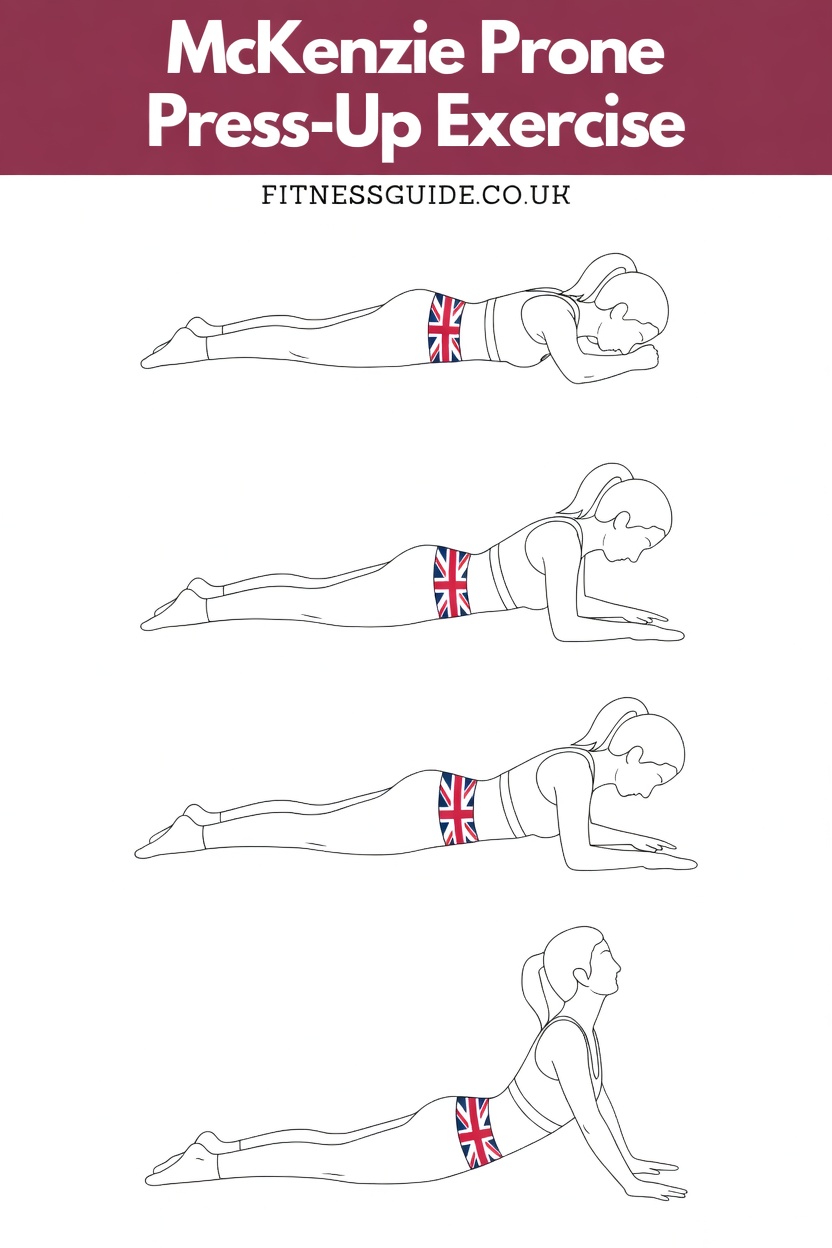
To perform the McKenzie prone press-up safely and effectively, follow these steps:
- Lie flat on your stomach for at least 1 minute.
- If this position does not cause pain, gently rise onto your elbows.
- If you remain comfortable after another minute, place your hands on the floor and press your upper body upward into more extension.
- Keep your hips in contact with the floor while allowing your spine to bend backward.
- Hold the end position for 1 to 2 seconds while breathing slowly and evenly.
- Lower yourself back down to the floor.
- Repeat the movement 10 times per session, 3 to 5 days per week.
Some McKenzie therapists may recommend doing this exercise several times per day if it appears to reduce your symptoms.
Repeated Extensions in Prone vs. Sustained Holds
The instructions above describe REIP, or Repeated Extensions in Prone. This version uses short, repeated movements.
In some cases, a therapist may prefer longer holds instead of quick repetitions. If that is the case, you may be asked to stay in the extended position for as long as 30 seconds while doing fewer reps.
No matter which version you use, stop immediately if the exercise causes:
- Increased pain
- Tingling
- Numbness
- Worsening symptoms of any kind
If that happens, contact your doctor or physical therapist before continuing.
Other McKenzie Exercises for Back Pain
While the prone press-up is one of the most recognized McKenzie back exercises, it is not the only movement used in this method. Other extension and flexion exercises may also be included depending on your symptoms and progression.
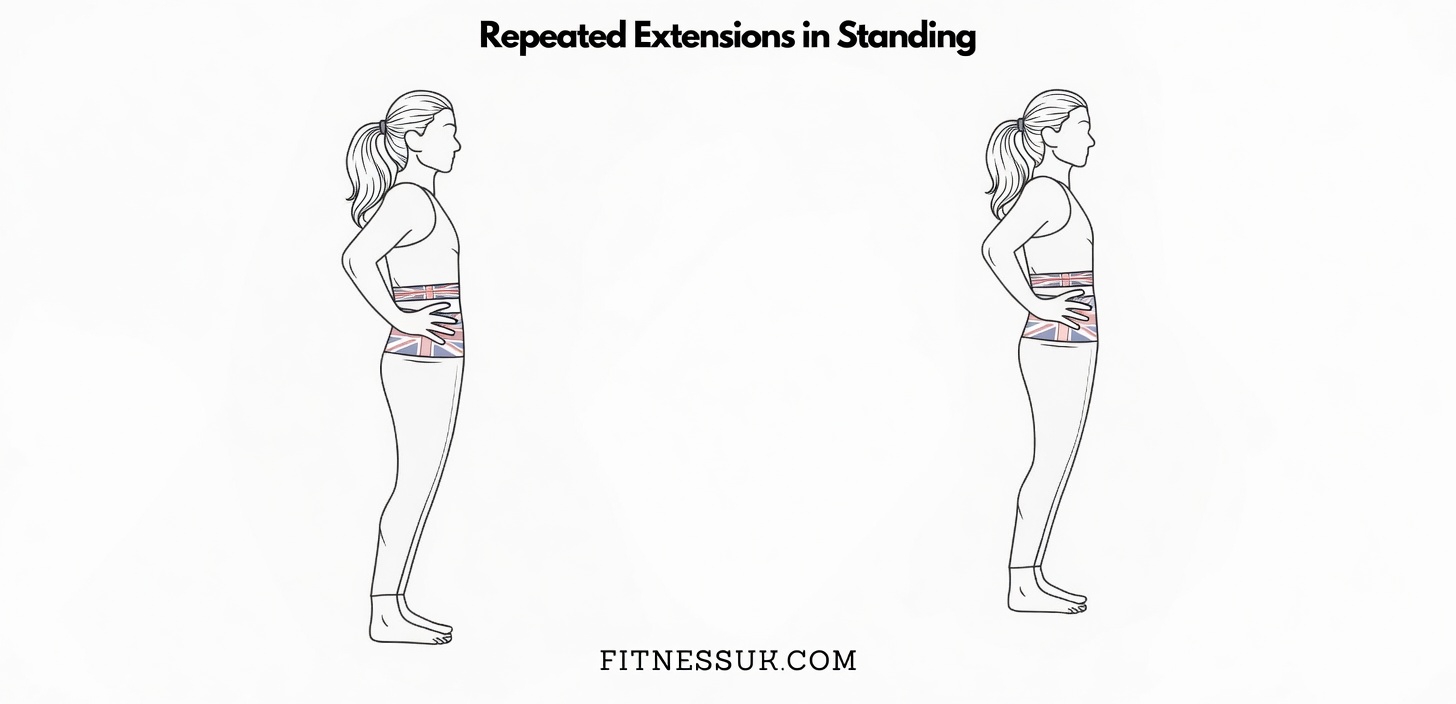
1. Repeated Extensions in Standing
This exercise is often introduced after you are comfortable with the prone press-up.
How to perform it
- Stand with your feet about hip-width apart.
- Place both hands on your lower back.
- Slowly lean backward as far as you can comfortably.
- Hold for 1 to 2 seconds.
- Return to the starting position.
- Complete 10 repetitions per session, at least 3 to 5 times per week.
This is typically considered a progression from prone extension, so it is best to master the floor version first.
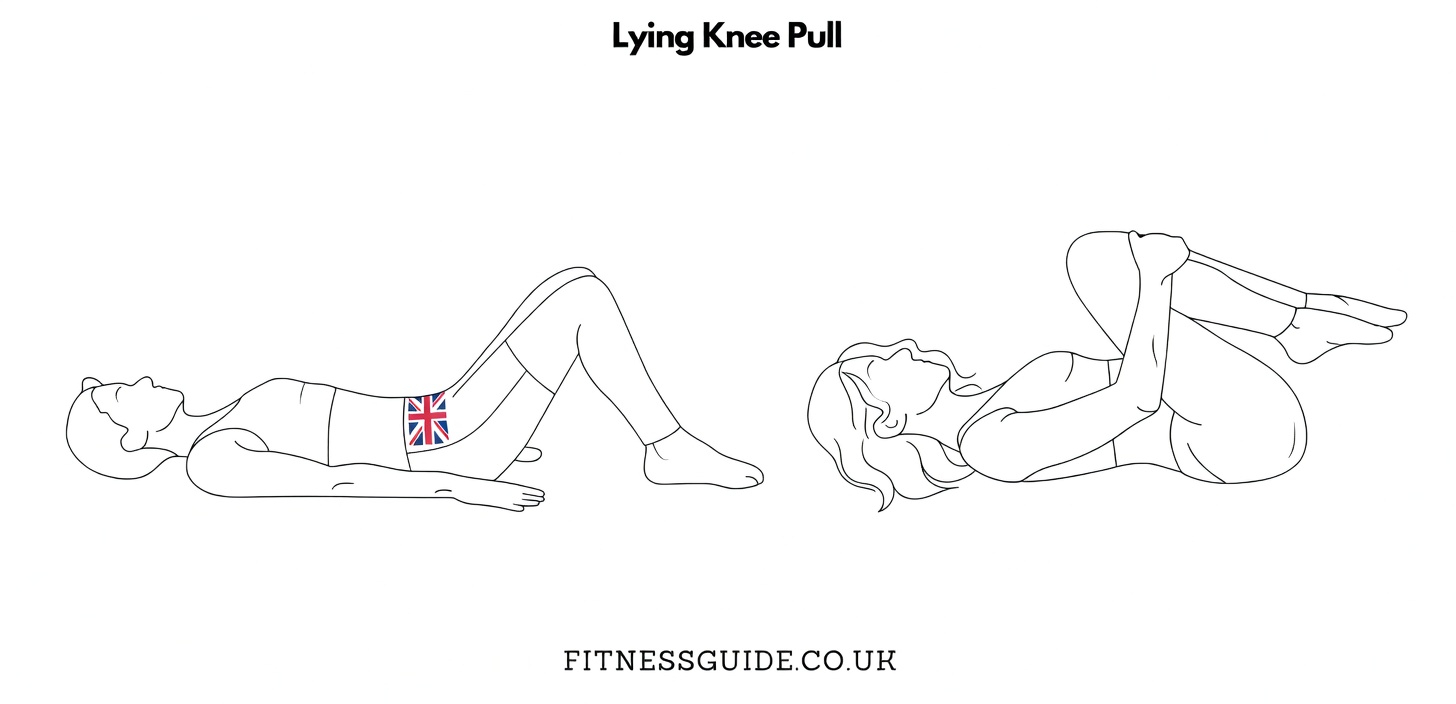
2. Supine Flexion
Although McKenzie treatment often begins with extension exercises, flexion movements may also be added later when appropriate.
How to perform it
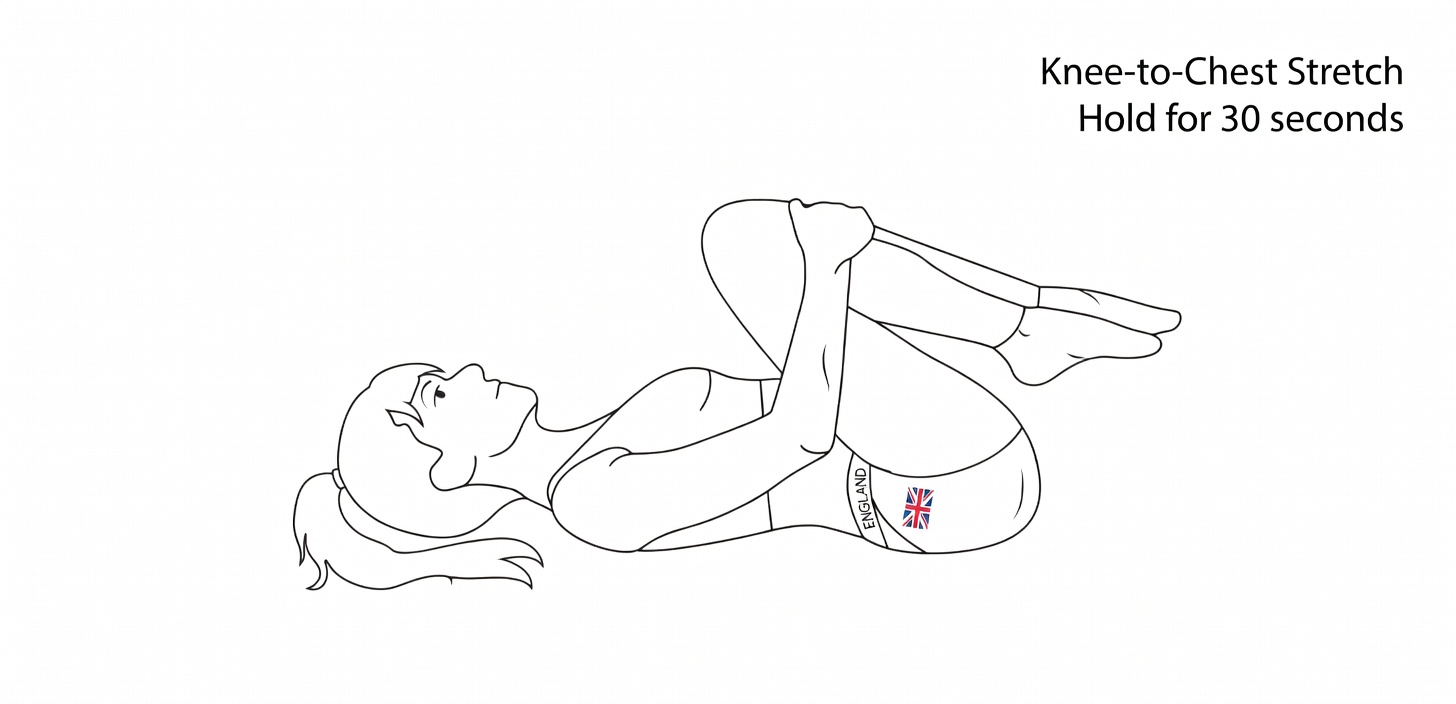
- Lie on your back with your knees bent and your feet flat on the floor.
- Make sure this starting position does not cause pain.
- Bring both knees toward your chest.
- Wrap your arms around your legs and gently hug them in.
- Hold for 1 to 2 seconds.
- Return to the starting position.
- Perform 10 repetitions per session, 3 to 5 times per week.
Flexion exercises can aggravate symptoms in some people with specific back conditions, so pay attention to how your body responds.
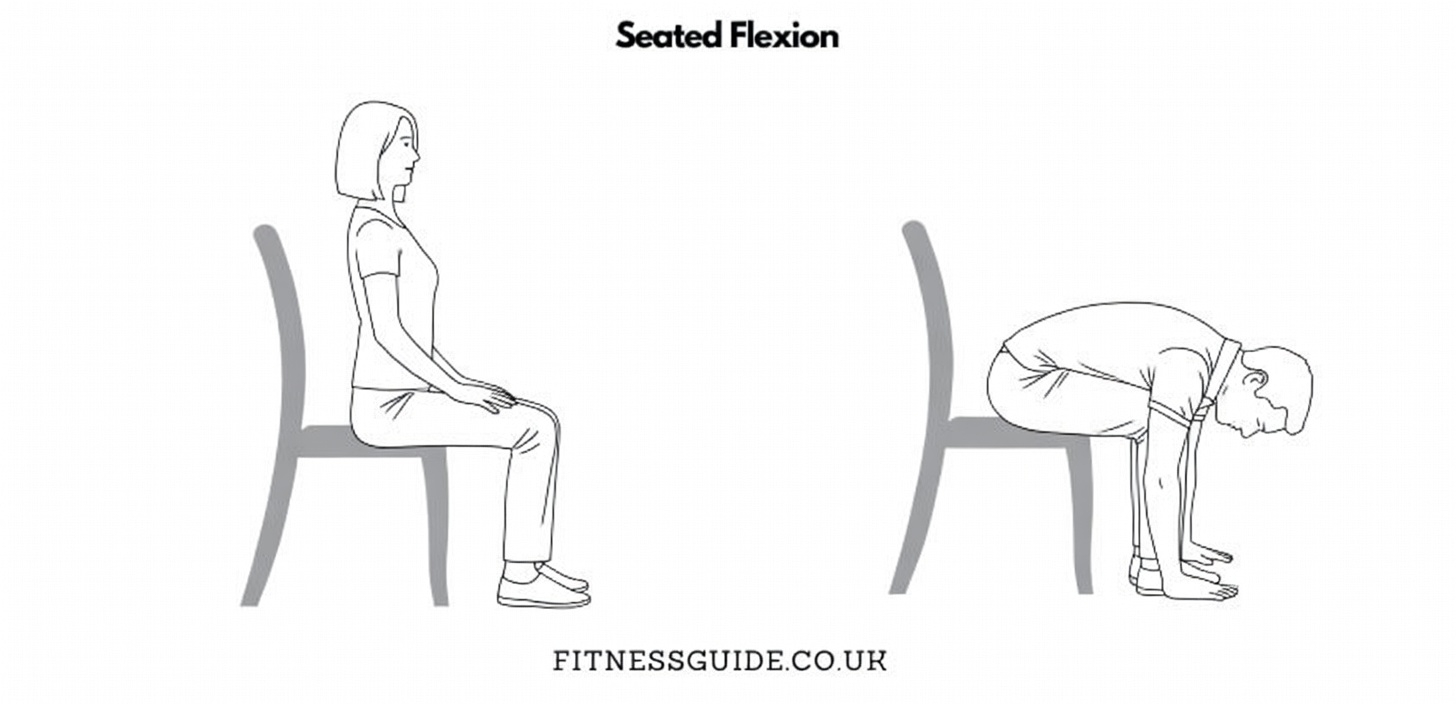
3. Seated Flexion
Seated flexion is often the next step after supine flexion and helps bridge the gap toward more advanced movements.
How to perform it
- Sit on the edge of a firm, stable chair.
- Bend forward so your chest moves toward your thighs.
- Let your hands reach toward the floor.
- Go only as far as feels comfortable.
- Hold the stretch for 1 to 2 seconds.
- Repeat 10 times per session, at least 3 to 5 times weekly.
This movement serves as a transition between lying flexion and standing flexion.
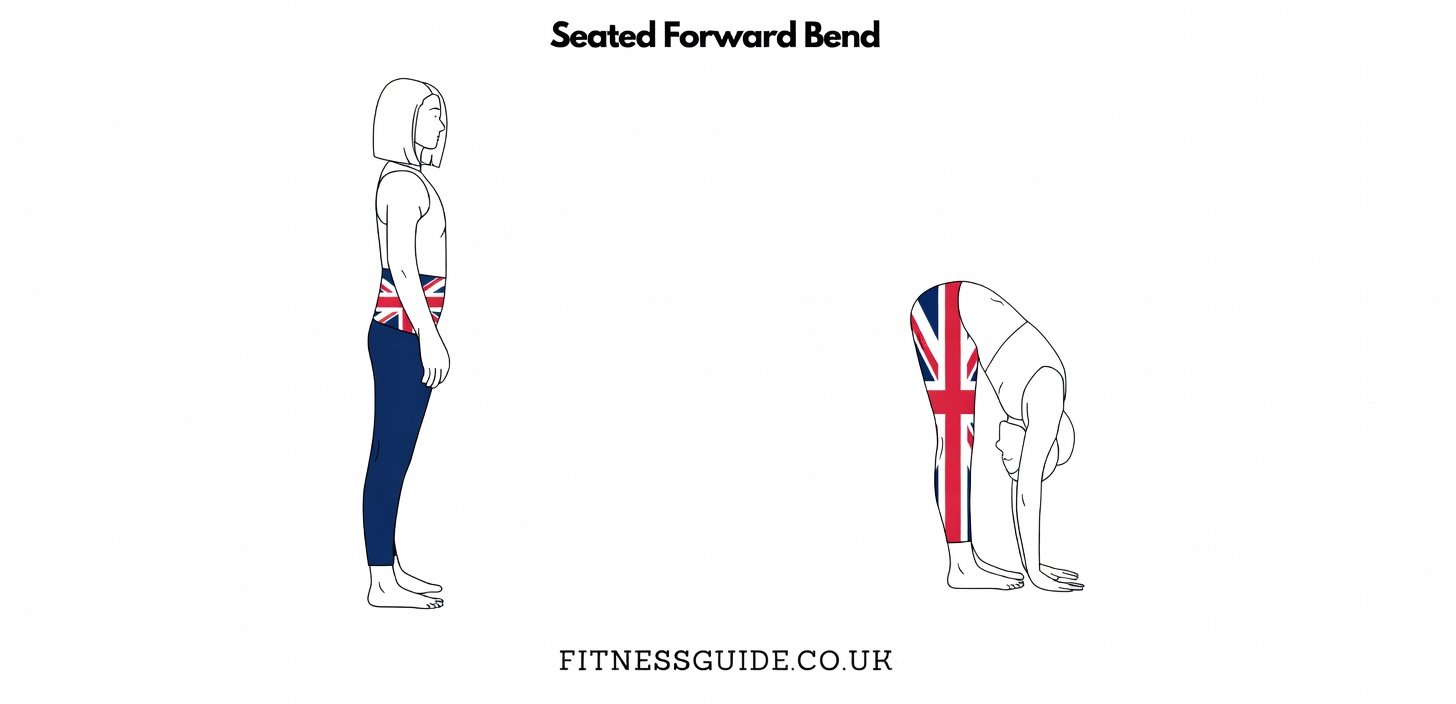
4. Standing Flexion
Standing flexion is usually considered one of the more advanced McKenzie exercises for lower back pain.
How to perform it
- Stand with your feet about hip-width apart.
- Keeping your knees straight, bend forward toward the floor.
- Move only to the point of a comfortable stretch.
- Hold for 1 to 2 seconds.
- Return to standing.
- Complete 10 repetitions per session, 3 to 5 or more sessions each week.
There is no need to force the movement. Stretch only within a comfortable range and avoid pushing through pain.
Important Safety Tips
Before trying any McKenzie exercise routine, keep these points in mind:
- Do not ignore increasing pain
- Stop immediately if you feel tingling or numbness
- Progress gradually from easier movements to harder ones
- Focus on controlled breathing and smooth motion
- Always monitor how your symptoms change during and after exercise
A physical therapist can help determine which direction of movement is best for your condition and whether extension, flexion, or a combination of both is appropriate.
Conclusion
The McKenzie Method for low back pain remains one of the most widely used systems for evaluating and treating back problems. It is popular because it is practical, structured, and often easy to apply.
Although it is not the only option for managing back pain, many people experience meaningful relief with McKenzie exercises such as the prone press-up, standing extensions, and progressive flexion movements.
If you have been struggling with persistent low back pain and standard strategies have not helped, the McKenzie Method may be worth discussing with your healthcare provider.
References
- Namnaqani, F. I., Mashabi, A. S., Yaseen, K. M., & Alshehri, M. A. (2019). The effectiveness of McKenzie method compared to manual therapy for treating chronic low back pain: a systematic review. Journal of Musculoskeletal & Neuronal Interactions, 19(4), 492–499.
- Fahmy, E., Shaker, H., Ragab, W. et al. (2019). Efficacy of spinal extension exercise program versus muscle energy technique in treatment of chronic mechanical low back pain. Egypt J Neurol Psychiatry Neurosurg, 55, 77. https://doi.org/10.1186/s41983-019-0124-5