Make Your Workouts More Fun With a Stability Ball
If you want to break out of a dull exercise routine and add more challenge to your training, a stability ball is a great place to start. This simple but highly effective fitness tool can help you train your entire body while making traditional movements more dynamic and engaging.
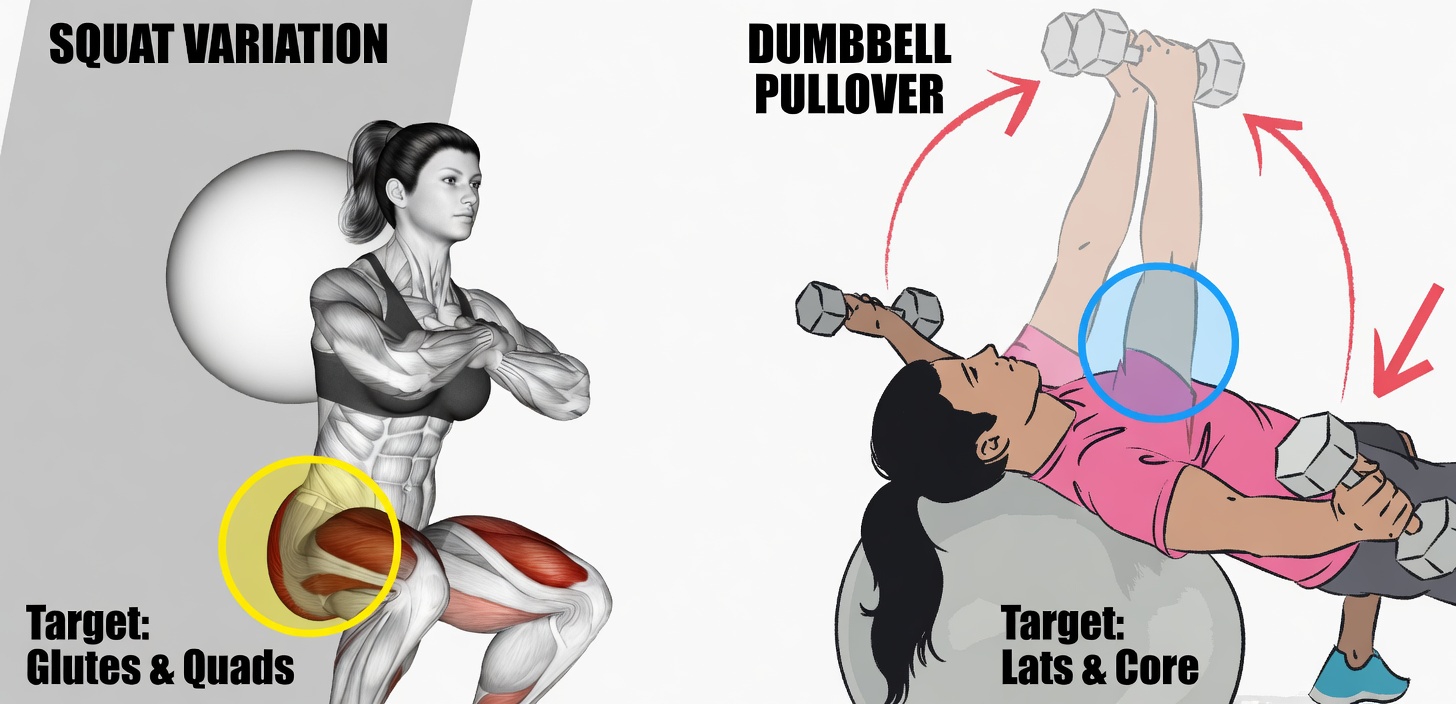
Why Train With a Stability Ball?
A stability ball is much more than a basic piece of gym equipment. It can help you:
- Build core strength
- Improve balance and coordination
- Increase flexibility
- Activate more muscles during each exercise
- Add variety to your workouts
Because the surface is unstable, your core has to stay active throughout every movement. That extra engagement can make familiar exercises more effective and help improve overall body control.
A Full-Body Stability Ball Workout
Stability ball exercises can work all the major muscle groups, including:
- Abs
- Obliques
- Glutes
- Hamstrings
- Shoulders
- Back
- Chest
- Triceps
This style of training is suitable for both beginners and experienced exercisers. If you are new to using a stability ball, start with the most basic movements and focus on control before progressing to more advanced variations.
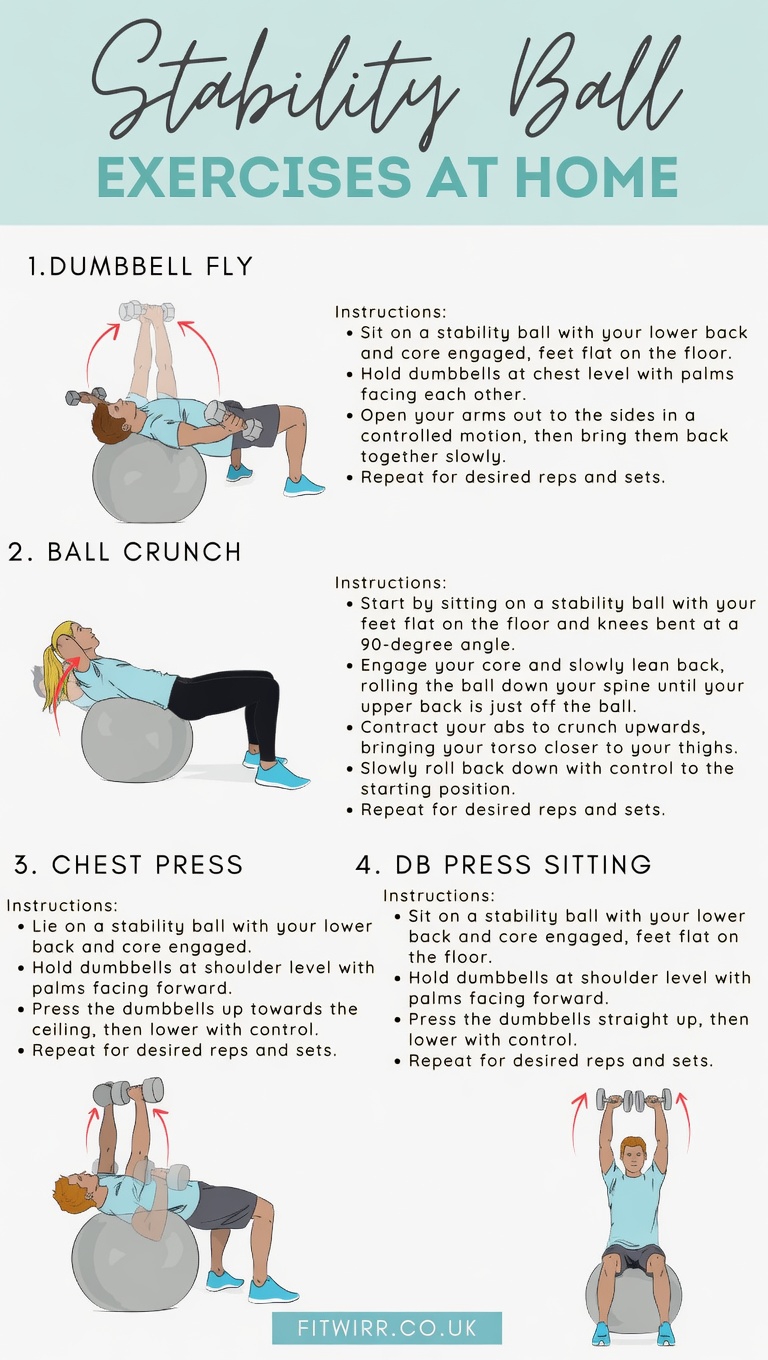
Before You Begin
Proper technique is essential with every stability ball exercise. Good form helps you:
- get better results
- protect your joints
- reduce your risk of injury
- improve balance and muscle activation
The recommended repetitions below are only guidelines. Perform each movement only if you can keep proper alignment from start to finish. If you are a beginner, learn the exercise first and then add the ball once you feel confident.
You May Also Like
- Best Ab Workouts for Men: 17 Ab Exercises for Six-Pack Abs
- 14 Best Exercises to Lose Belly Fat for Men and Women
- Medicine Ball Workout: Shred Your Body With This 15-Min HIIT Workout
- 19 Ways to Do Crunches
Best Stability Ball Exercises for Your Core and Total Body
Keep in mind that correct form matters more than speed or reps. Move with control and stop if your posture starts to break down.
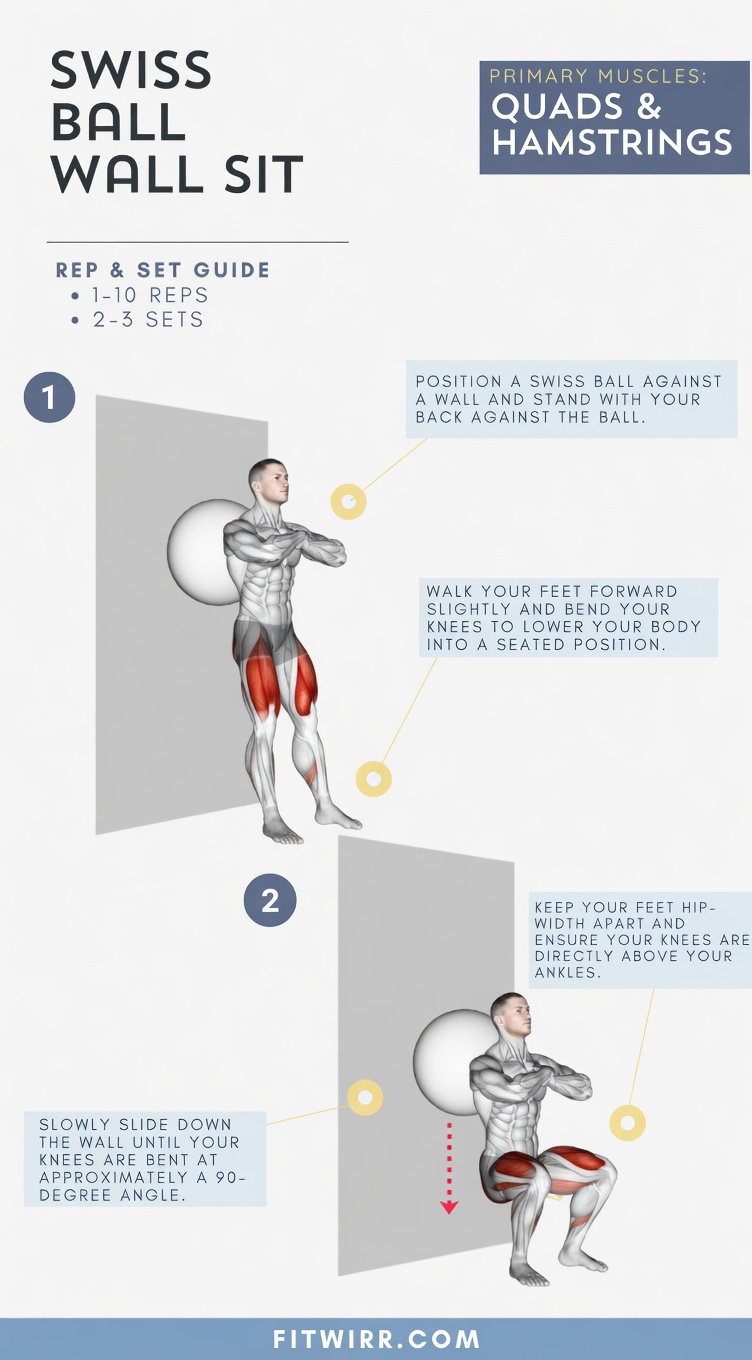
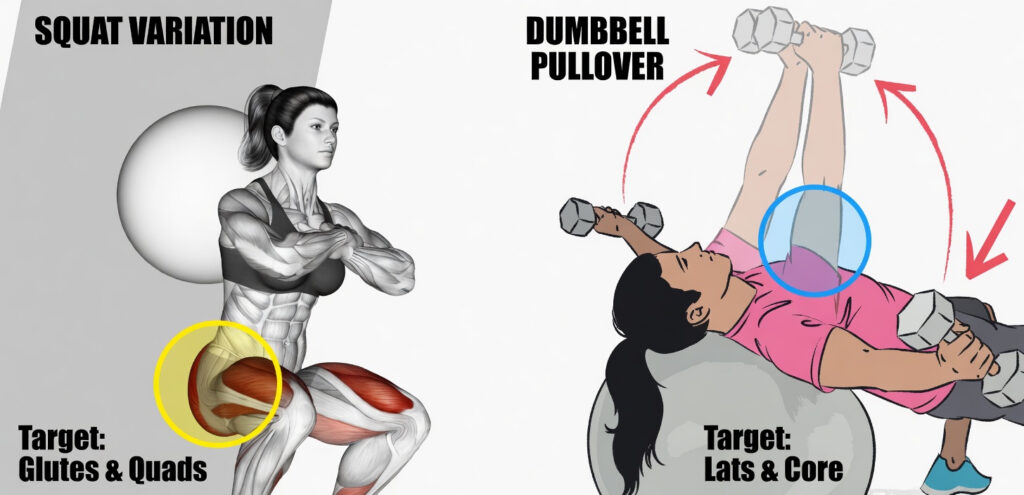
1. Swiss Ball Wall Sit
This exercise strengthens your legs while keeping your core active.
- Stand with your back facing a wall.
- Position your feet slightly wider than shoulder-width apart, with your toes turned out slightly.
- Place the ball between your lower back and the wall.
- Step your feet about 2 feet away from the wall.
- Slowly lower into a squat, keeping your torso upright and your core tight.
- Continue descending until your thighs are parallel to the floor.
- Push evenly through both feet to return to standing.
Suggested volume: 10-12 reps for 2-3 sets
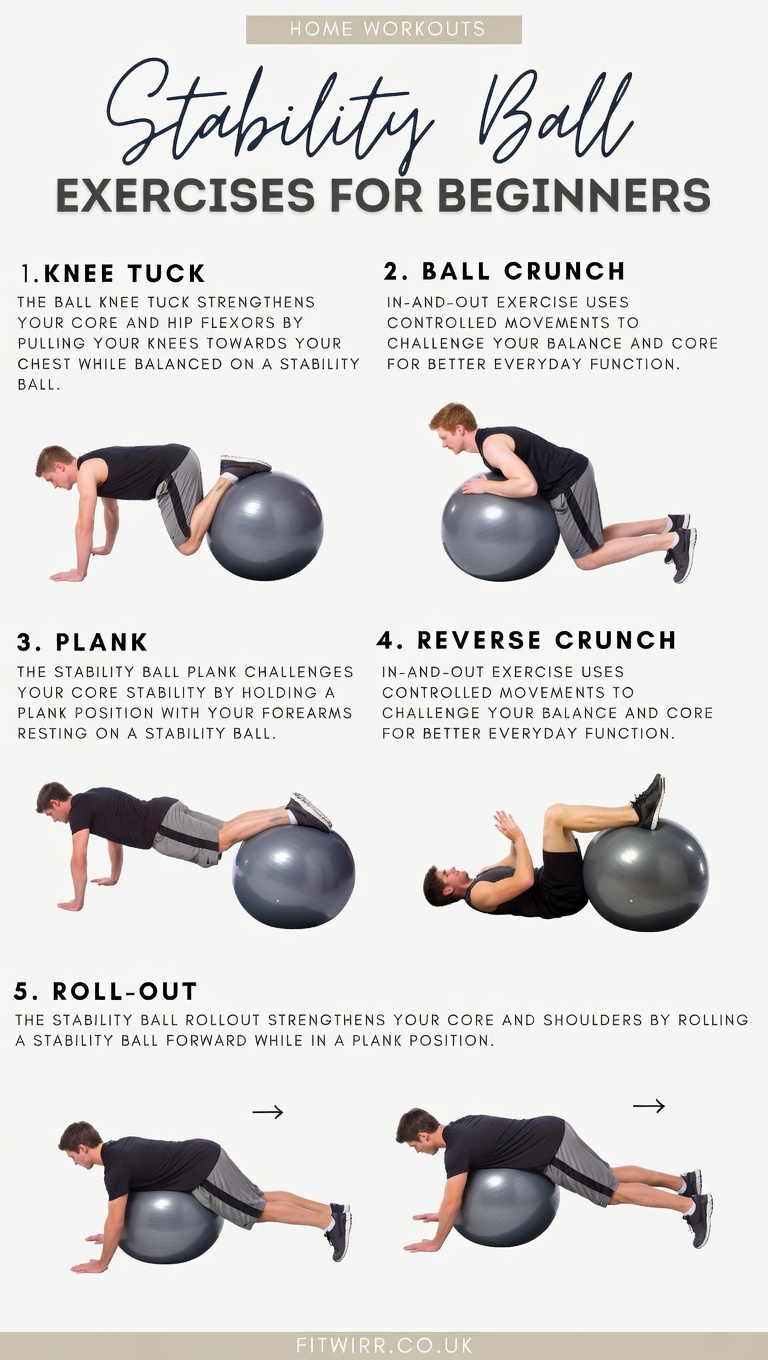
2. Stability Ball Forearm Plank
This variation makes the traditional plank more demanding by increasing instability.
- Place your forearms on the ball and step into a plank position.
- Keep your elbows under your shoulders.
- Form a straight line from your head to your heels.
- Brace your core and breathe steadily.
- Hold the position without letting your hips sag or lift too high.
Suggested volume: Hold for 1 minute to start, then increase over time
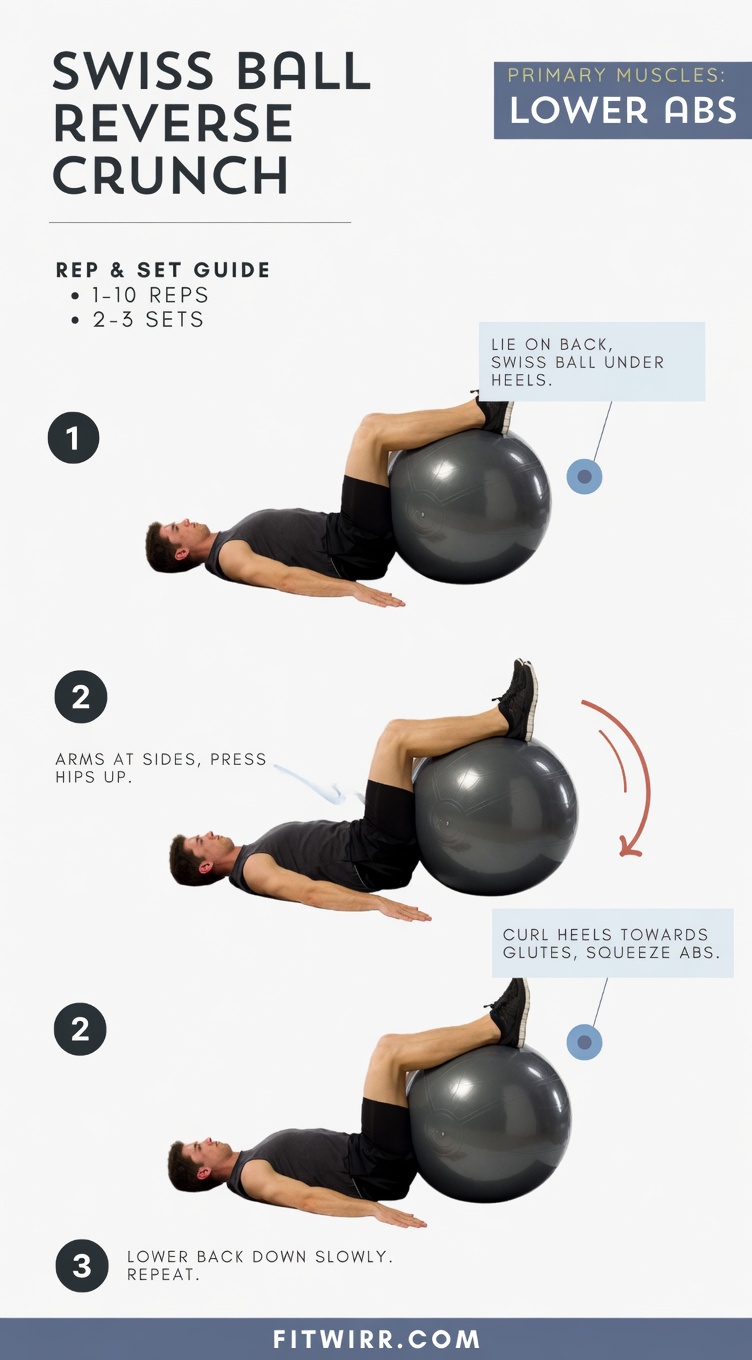
3. Swiss Ball Reverse Crunch
This move targets the lower abs while also testing your stability.
- Lie on your back with your lower back supported by the ball.
- Bend your knees and place your feet flat on the floor, hip-width apart.
- Keep your arms crossed over your chest or out to the sides for balance.
- Tighten your core and lift your hips and knees toward your chest.
- Think about curling your pelvis upward.
- Pause briefly at the top and squeeze your abs.
- Lower back down with control.
Suggested volume: 10-12 reps for 2-3 sets
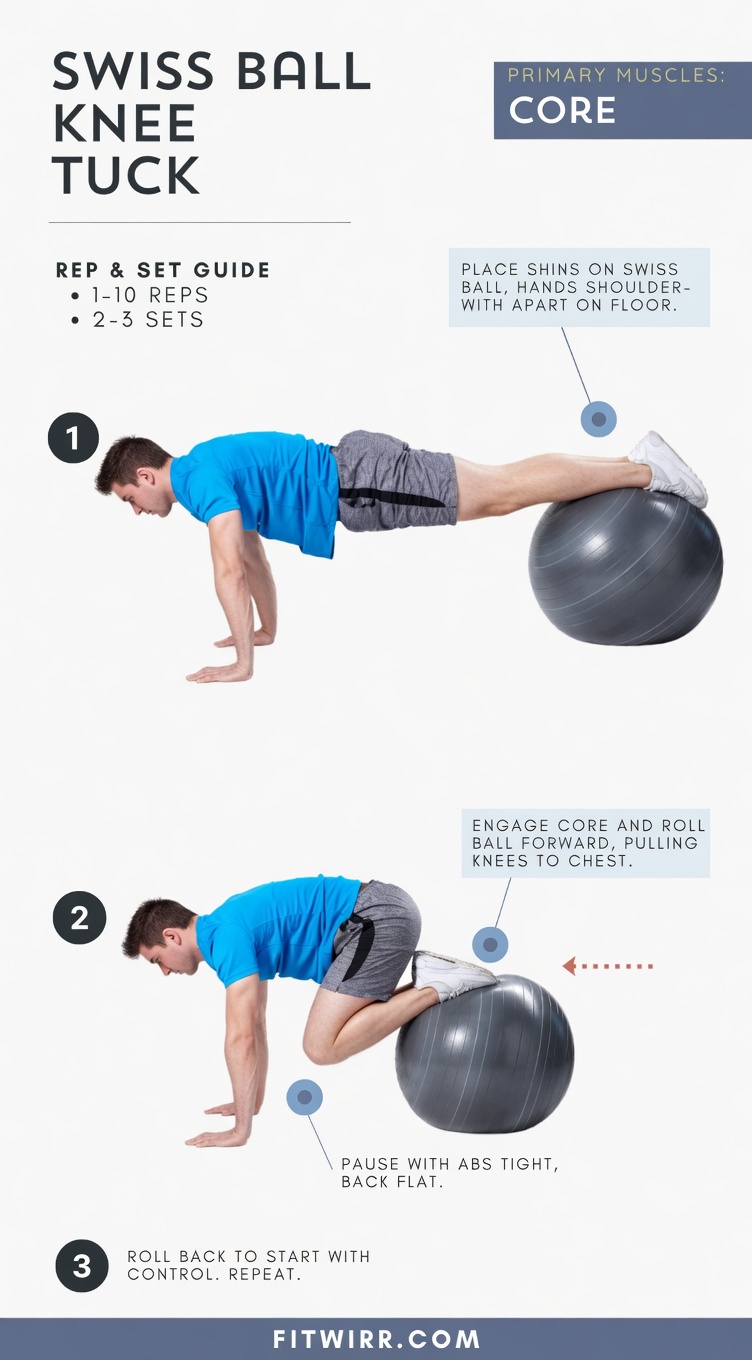
4. Swiss Ball Knee Tuck
This is an excellent core exercise that also works your shoulders and hip flexors.
- Begin in a plank position with your hands under your shoulders.
- Rest your shins on the ball.
- Keep your spine neutral and your core engaged.
- Roll the ball toward your hands by pulling your knees into your chest.
- Pause at the top.
- Slowly extend your legs to return to the starting position.
Suggested volume: 10-12 reps for 2-3 sets
5. Jackknife and Push-Up
This advanced movement combines core work and upper-body strength.
- Start in a plank with the tops of your feet on the ball.
- Pull the ball forward by drawing your knees in toward your chest.
- Extend your legs back out.
- Once your body returns to a straight line, perform a push-up.
- As soon as you press back up, move directly into the next tuck.
Suggested volume: 10-12 reps for 2-3 sets
6. Stability Ball Decline Push-Up
This variation increases the challenge for your chest, shoulders, arms, and core.
- Get into a push-up position with your feet on the ball.
- Place your hands directly under your shoulders.
- Keep your hips level so your body forms one straight line.
- Bend your elbows and lower your chest toward the floor.
- Pause briefly, then press back up.
Suggested volume: 10-12 reps for 2-3 sets
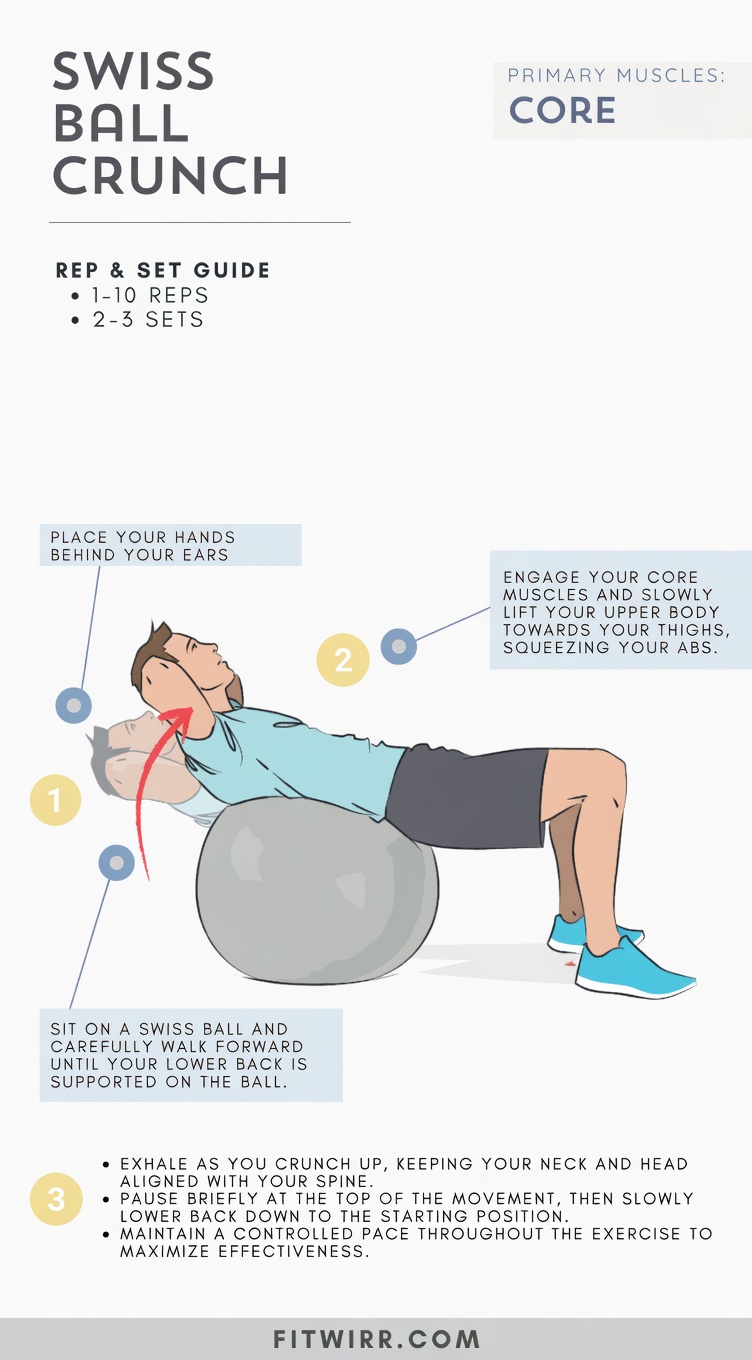
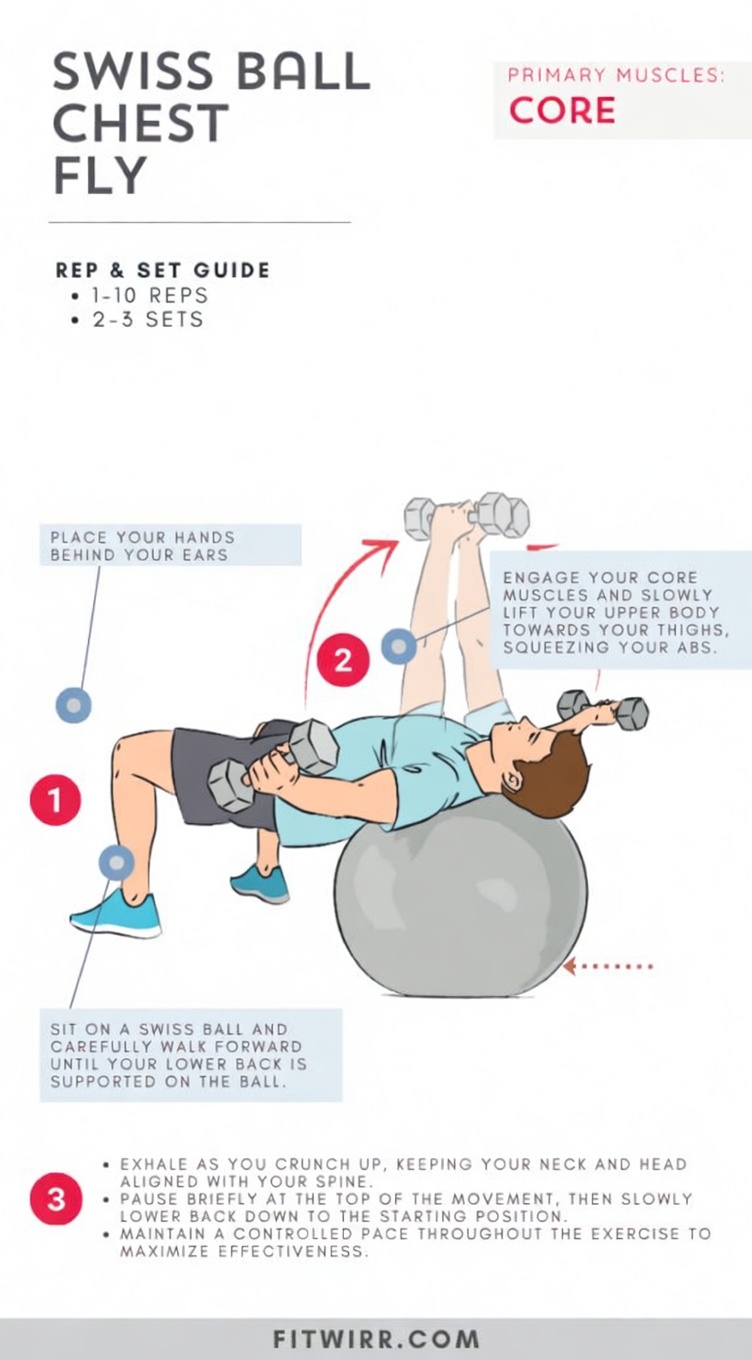
7. Swiss Ball Crunch
Using a stability ball can improve the range of motion of a standard crunch.
- Lie back over the ball.
- Bend your knees and place your feet flat on the floor about hip-width apart.
- Put your fingertips behind your ears.
- Exhale as you contract your abs and lift your upper body into a crunch.
- Pause at the top, then slowly lower back down.
Suggested volume: 10-12 reps for 2-3 sets
8. Ball Side Crunch
This exercise targets the obliques and helps build side-core strength.
- Position the ball under your right hip, outer thigh, and obliques.
- Bend your left knee and plant your left foot firmly on the floor.
- Extend your right leg and press the inner edge of that foot into the floor.
- Place your fingertips behind your ears.
- Exhale and crunch your torso to the right side.
- Hold briefly, then lower back down.
- Complete all reps before switching sides.
Suggested volume: 10-12 reps per side for 2-3 sets
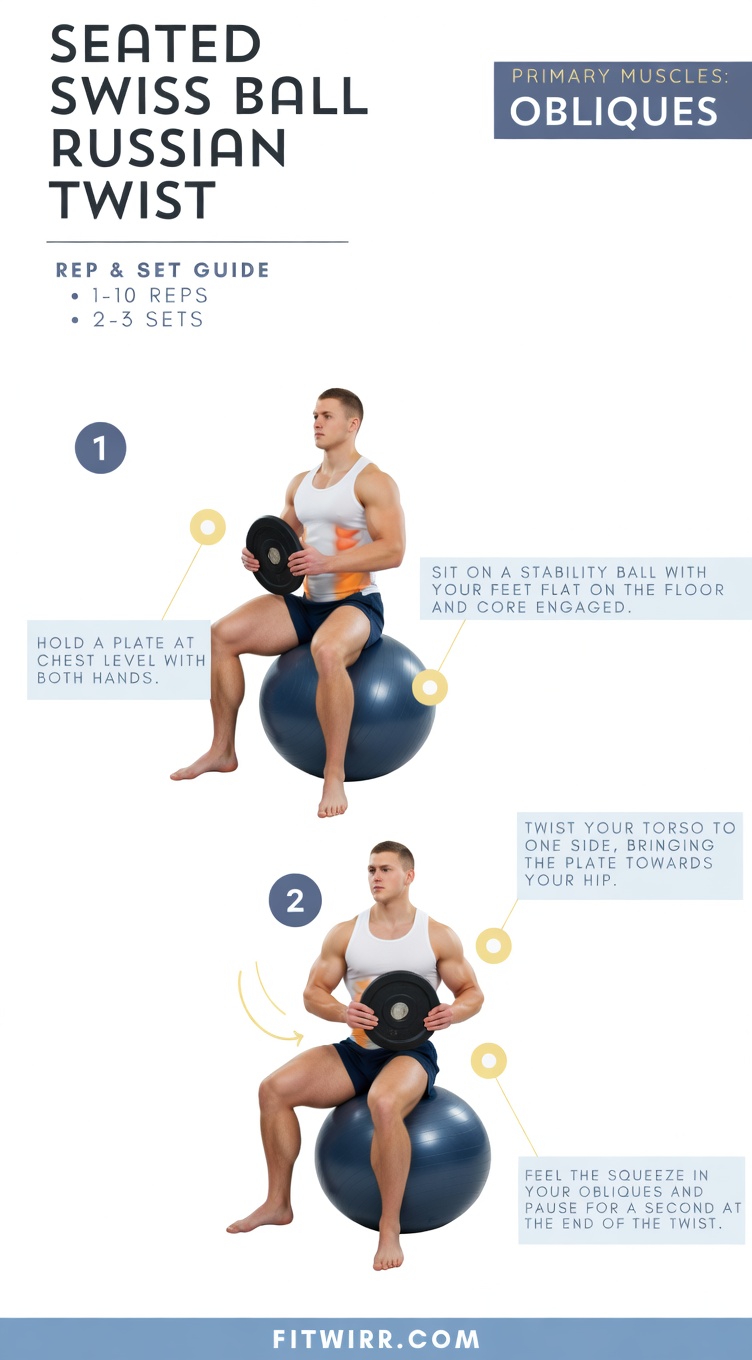
9. Seated Swiss Ball Russian Twist
This movement works the obliques while challenging posture and balance.
- Sit on the ball with your feet flat on the floor, hip-width apart.
- Hold a weight plate in front of your chest.
- Keep your back straight and engage your core.
- Lean back slightly until your torso forms a diagonal line.
- Rotate your torso to one side and move the plate toward the ball beside your hip.
- Return to center.
- Twist to the opposite side.
- Perform each rep slowly and with control.
Modification tips:
- Bring your feet closer together to make balancing easier.
- Hold the plate farther from your body to increase the difficulty.
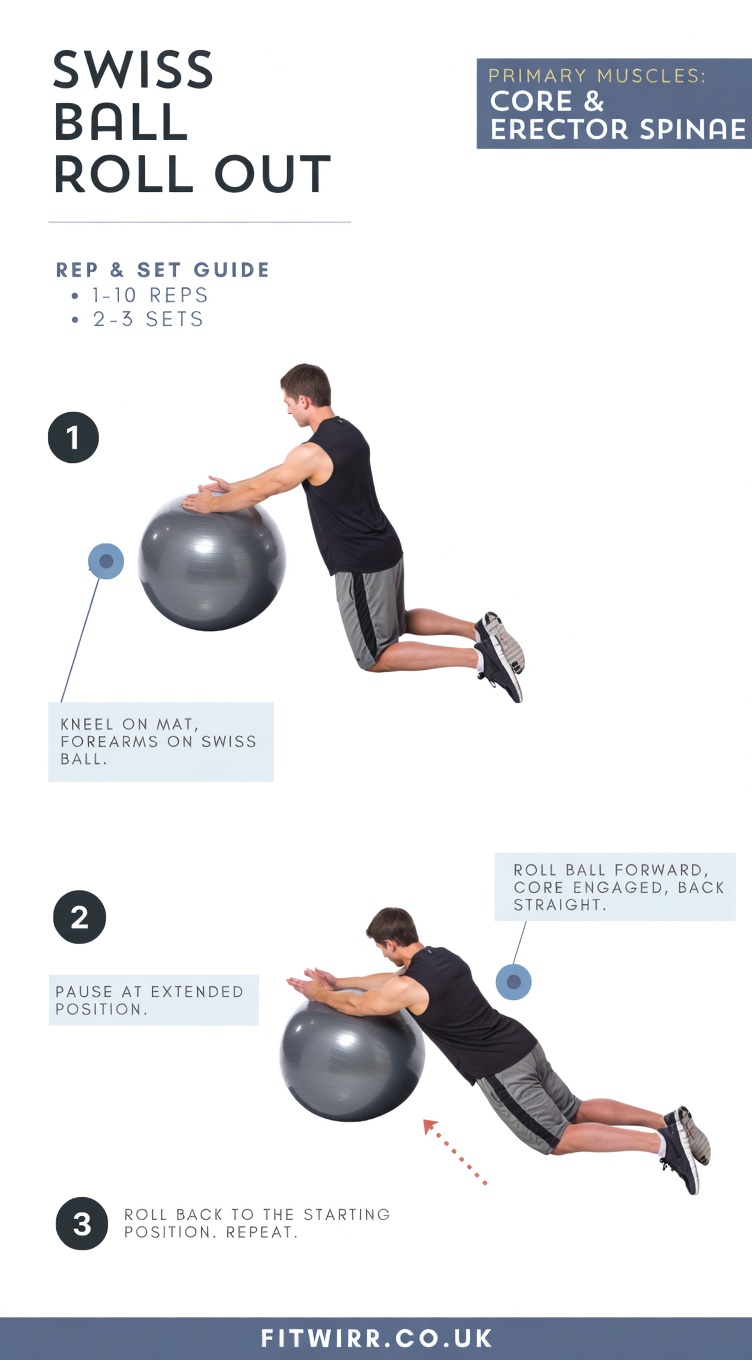
10. Swiss Ball Rollout
This is a strong anti-extension exercise for the abs and shoulders.
- Kneel on a mat with your toes relaxed behind you.
- Place the ball in front of your thighs and rest your hands on top.
- Tighten your core and slowly roll the ball forward in a straight line.
- Let the ball move down your forearms as you extend.
- Once the ball reaches your elbows, reverse the movement and return to the starting position.
Suggested volume: 10-12 reps for 2-3 sets
11. Prone Ball Dumbbell Triceps Extension
This exercise isolates the triceps while also demanding full-body stability.
- Lie face down over the ball with a dumbbell in each hand.
- Extend your legs behind you and tuck your toes into the floor.
- Keep your chest lifted and your body aligned from head to heels.
- Tuck your upper arms close to your sides.
- Exhale and straighten your arms, sending the weights behind you.
- Squeeze your triceps at the top.
- Return with control.
Suggested volume: 10-12 reps for 2-3 sets
12. Hip Raise
This move focuses on the glutes, hamstrings, and core.
- Lie on your back with your arms by your sides.
- Place your heels on top of the ball.
- Bend your knees to roughly 90 degrees.
- Press through your heels and lift your hips until your knees, hips, and shoulders line up.
- Pause at the top.
- Lower slowly back to the floor.
Suggested volume: 10-12 reps for 2-3 sets
13. In & Out
This exercise is all about stability, coordination, and control.
- Start in a high plank with your shins on the ball.
- Keep your hands under your shoulders and your hips level.
- Slowly lift your left leg off the ball and place it on the floor beside it.
- Press firmly into the ball with your right leg and squeeze your glutes to stay steady.
- Bring your left foot back onto the ball.
- Repeat the same action with your right leg.
Suggested volume: 10-12 reps for 2-3 sets
14. Hamstring Leg Curl
This deceptively simple exercise is excellent for the hamstrings, glutes, and core.
- Lie on your back with your arms at your sides.
- Place your heels on the stability ball and straighten your legs.
- Lift your hips off the floor so your body forms a straight line.
- Bend your knees and pull the ball toward your glutes.
- Keep your hips lifted throughout the movement.
- Slowly extend your legs again and return to the starting position.
Suggested volume: 10-12 reps for 2-3 sets
Tips for Better Results
To get the most from your stability ball workout, remember these basics:
- Move slowly and with control
- Keep your core engaged at all times
- Focus on alignment rather than speed
- Start with easier variations before progressing
- Stop if you cannot maintain proper form
Who Should Use a Stability Ball?
A stability ball can work well for many people, including:
- beginners looking to improve coordination
- regular gym-goers who want more variety
- athletes working on core strength and body control
- anyone who wants a low-impact but challenging workout option
Final Thoughts
A stability ball is one of the most versatile tools you can add to your fitness routine. It can help strengthen your abs, improve balance, increase flexibility, and train the whole body in a more engaging way. Whether you are just getting started or looking to make your workouts harder, these stability ball exercises can bring a fresh challenge to your training.
Start with the basics, master your form, and gradually progress as your strength and control improve.