The Best Chest Workouts at Home to Build Stronger Pecs
Want a more defined chest without paying for a gym membership? You absolutely can train your chest at home with great results. With the right mix of bodyweight and dumbbell exercises, you can work different parts of your chest and create balanced muscle development.
Chest Muscle Anatomy: What You Need to Know
At the gym, it is easy to find machines and benches designed for specific chest angles.
For example:
- An incline bench press emphasizes the upper chest
- A decline bench press puts more focus on the lower chest
At home, you need to be a little more creative. Since you do not have access to all those machines, choosing the best home chest exercises becomes even more important.
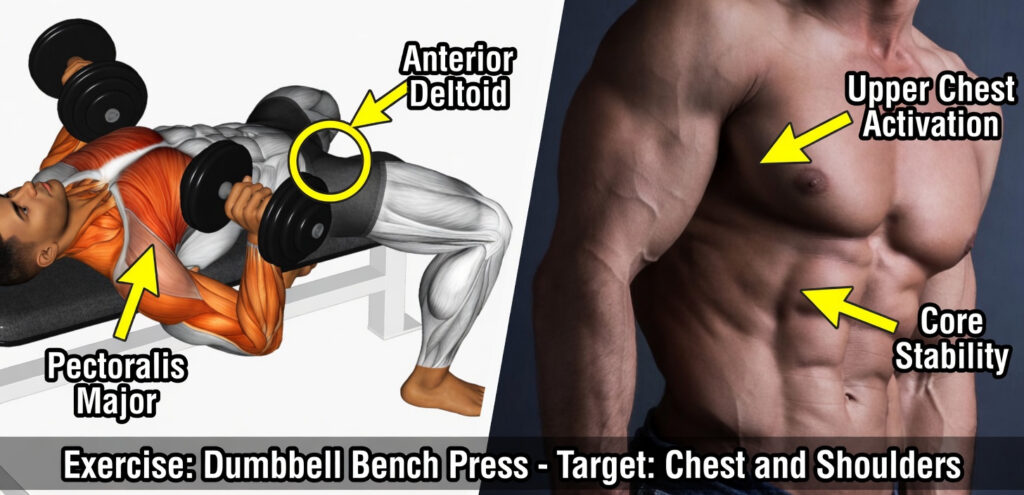
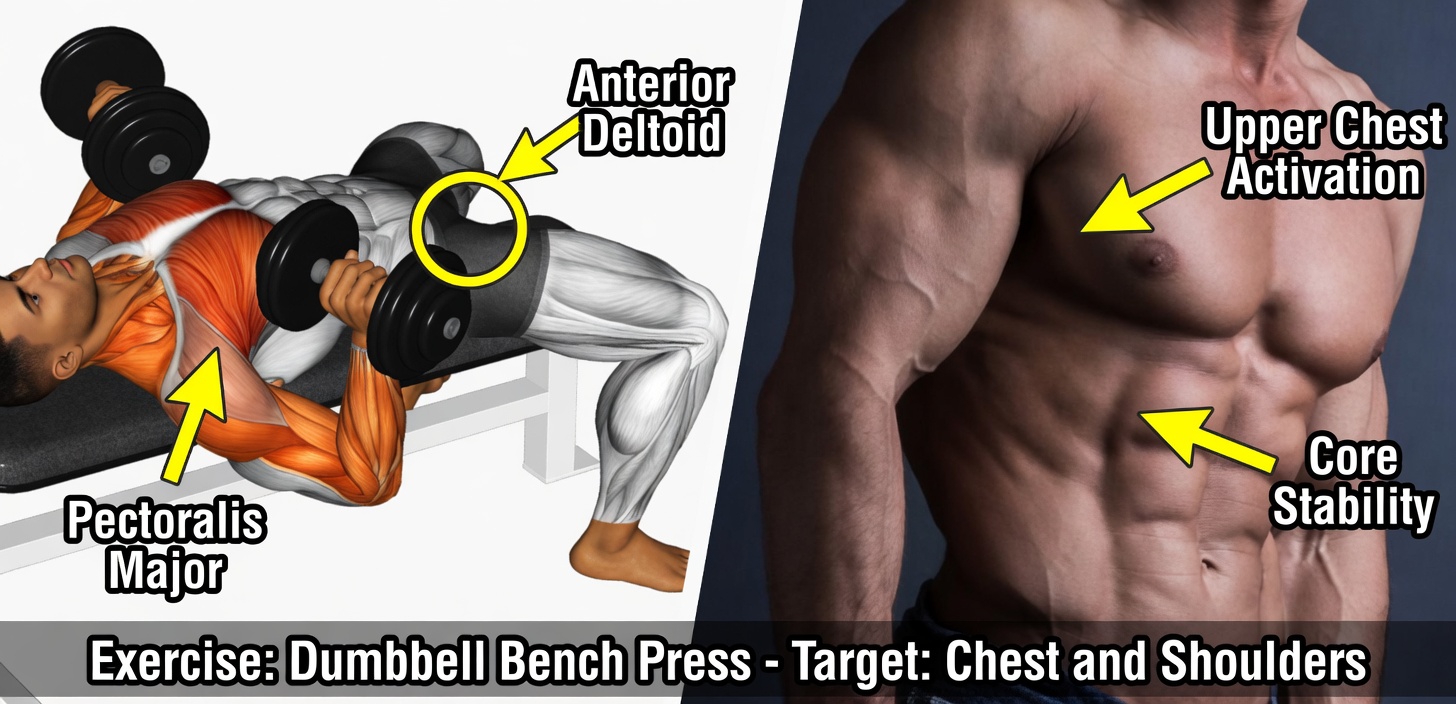
The main chest muscle is the pectoralis major, often called the pec major. It is one of the largest muscles in the upper body and the primary muscle that gives the chest its size and shape.
Even though the pec major covers most of the chest, different exercises stress different areas of it. That is why combining several chest exercises at home is the best way to train your chest fully and build a more complete look.
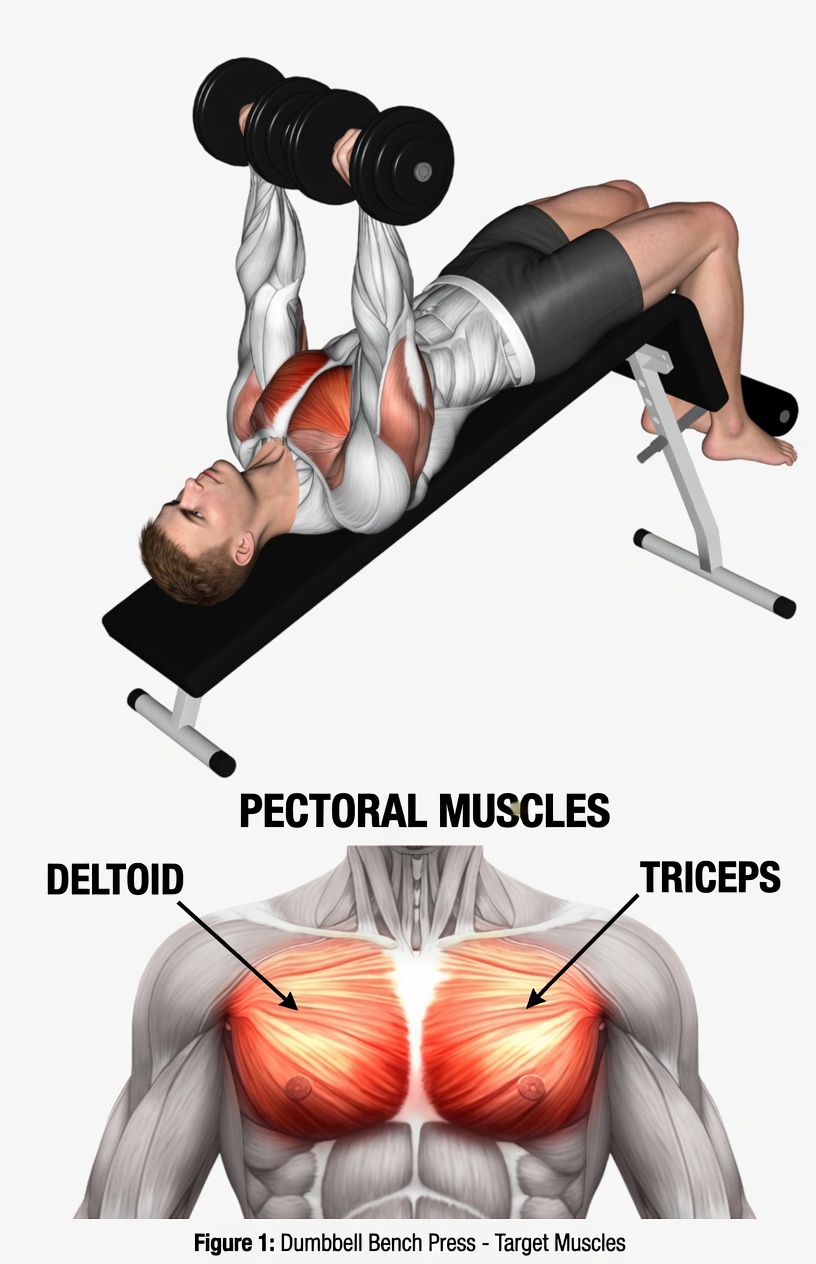
Underneath the pec major sits the pectoralis minor, or pec minor. This smaller muscle supports the major chest movements, so most chest exercises involve both muscles working together.
The good news is simple: you can stimulate all of these muscles effectively without leaving your house.
Best At-Home Chest Workout Basics
These home chest exercises can help a wide range of people, including:
- Men who want more strength and muscle
- Women looking for a firmer upper body
- Seniors aiming to stay strong and active
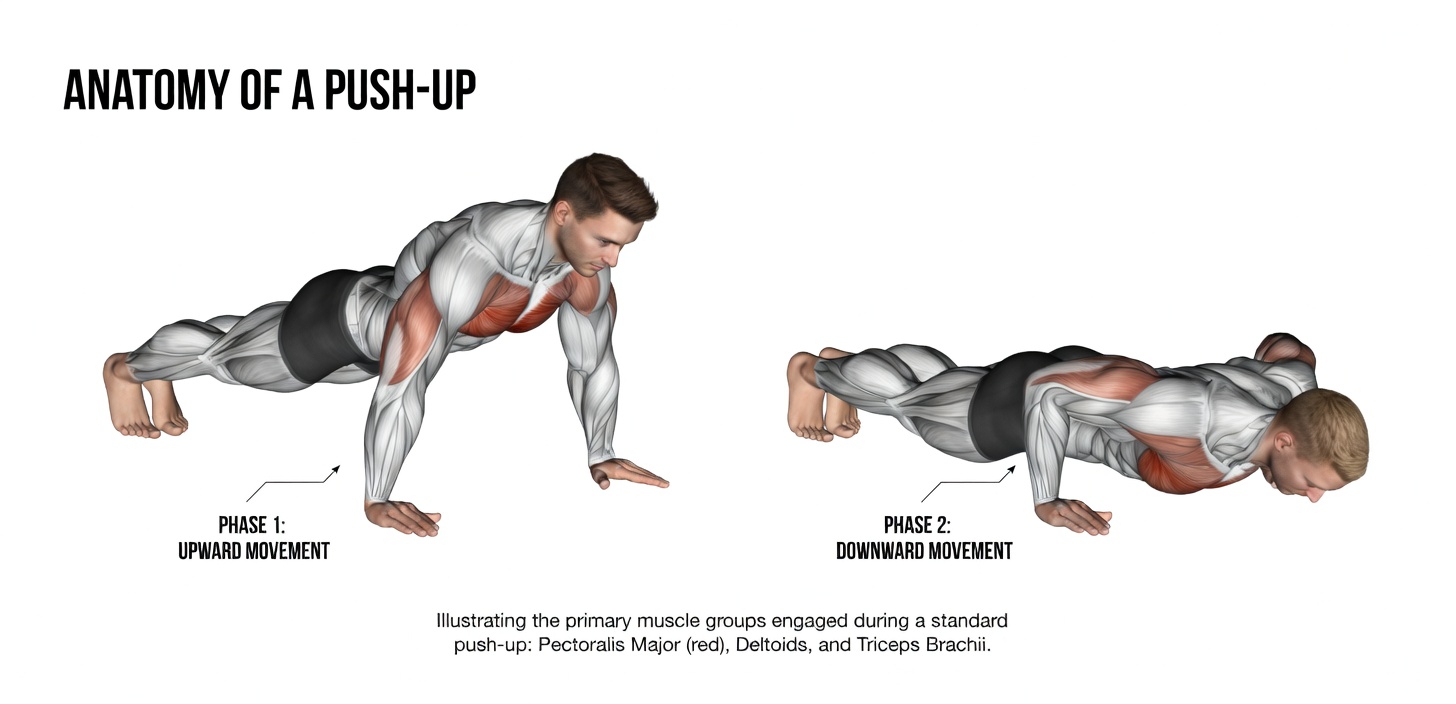
A good chest workout at home does more than train your pecs. Many of these movements also recruit your:
- Shoulders
- Triceps
- Forearms
- Wrists
- Core muscles
You can train with bodyweight alone, or add a few basic tools if you have them.
Helpful Equipment for Home Chest Training
- A workout mat
- A bench or two sturdy chairs
- Dumbbells
- Weights that challenge you safely
Chest Workouts at Home
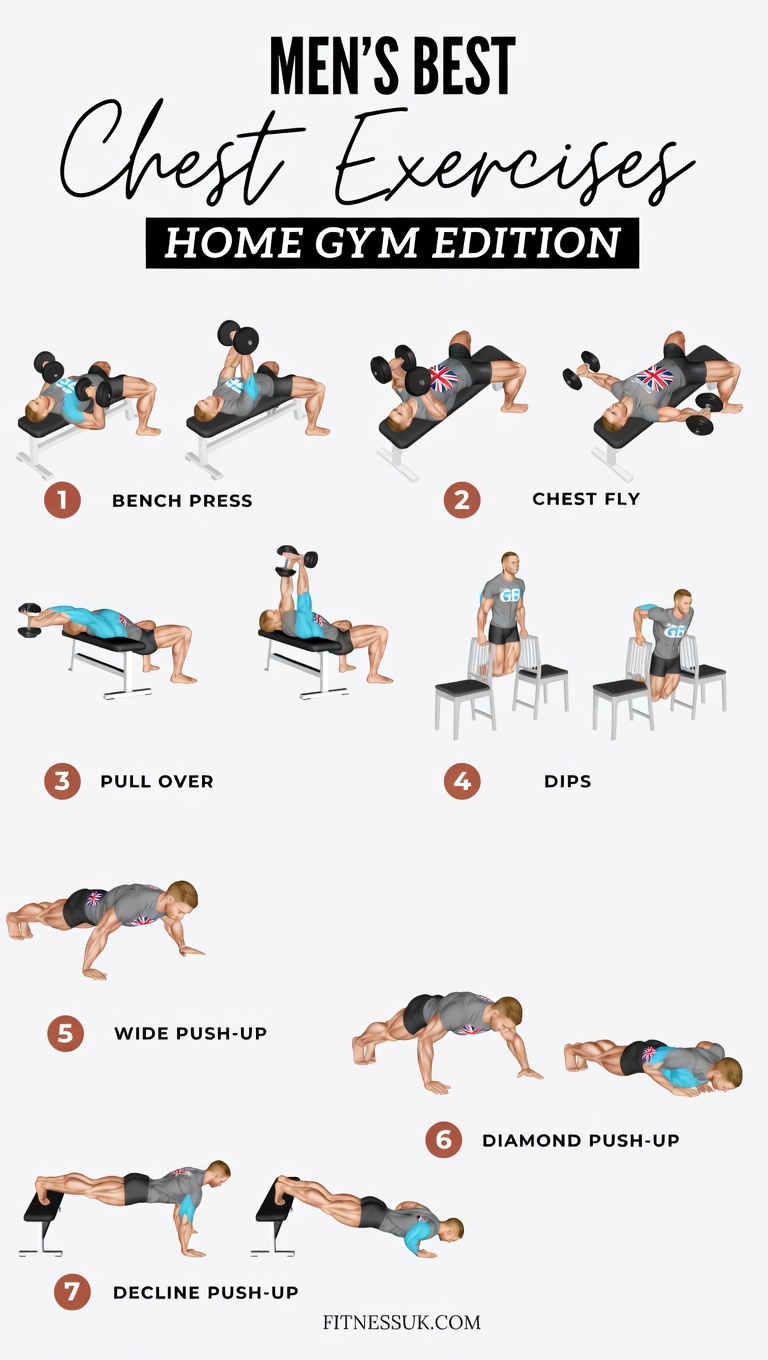
Push-up variations and dips are some of the most effective chest exercises you can do without a gym. Below are some of the best options to build strength and muscle at home.
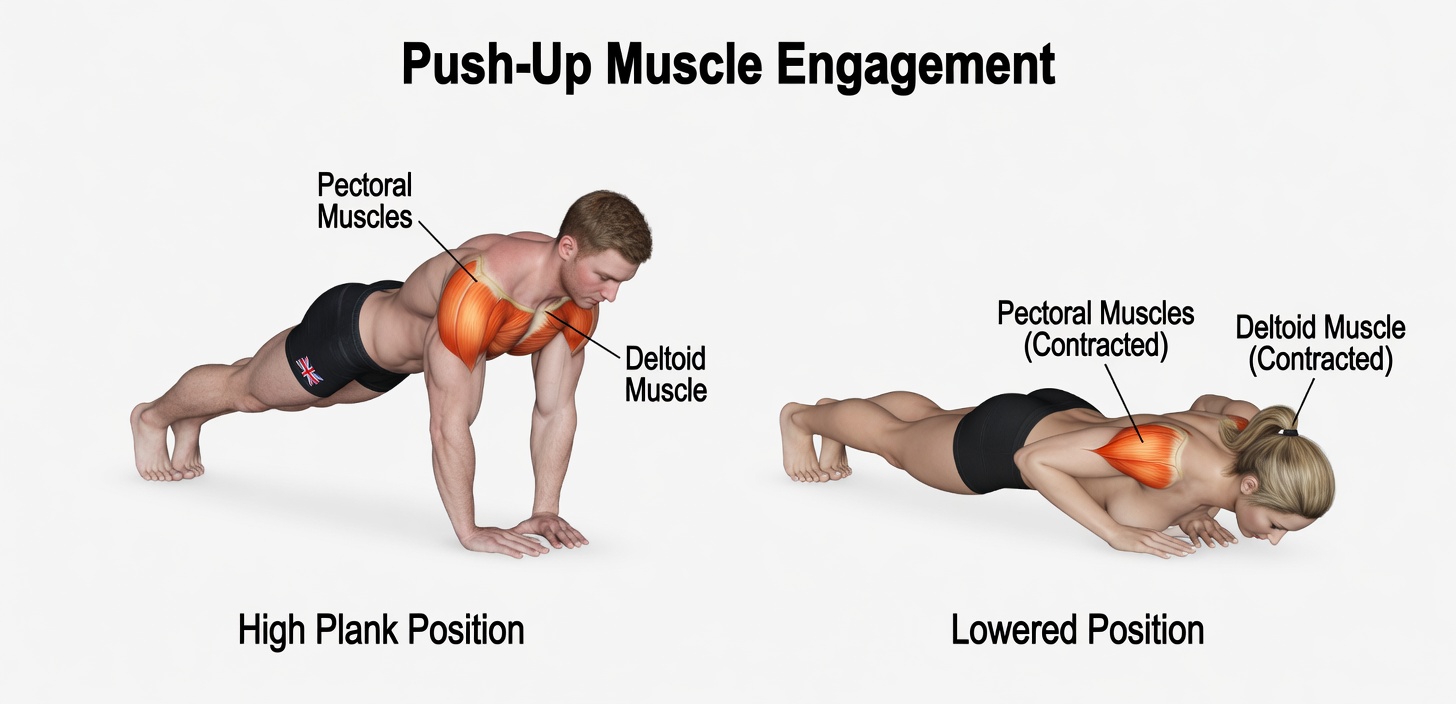
1. Standard Push-Up
Muscles worked: pec major, pec minor, deltoids, triceps, abs, lower back
Reps: until failure
Sets: 3
The standard push-up is one of the best beginner-friendly chest exercises you can do at home. It requires no equipment, works multiple muscle groups, and builds a strong foundation for more advanced variations.
If you cannot yet perform 10 clean push-ups with proper form, this exercise should remain a key part of your chest routine.
A full push-up trains the chest, shoulders, and arms while forcing the core to stay tight. As fatigue builds, your abs and posture start to break down, so focus on keeping your back flat and your midsection engaged.
Because push-ups involve so many muscles at once, they also help raise your heart rate and make you sweat. They are especially useful for building stronger triceps, which can improve firmness in the back of the upper arms.
Regular push-ups are also a great home alternative to the barbell bench press.
How to do a standard push-up
- Start with your hands slightly wider than shoulder-width apart.
- Keep your body in a straight line from head to heels.
- Tighten your glutes and core.
- Bend your elbows slowly and lower your chest toward the floor while drawing your shoulder blades together.
- Inhale as you lower down.
- Keep your gaze slightly forward instead of dropping your chin.
- Push yourself back up to the starting position and exhale.
- Perform 2 to 3 sets for as many quality reps as possible.
2. Incline Push-Up
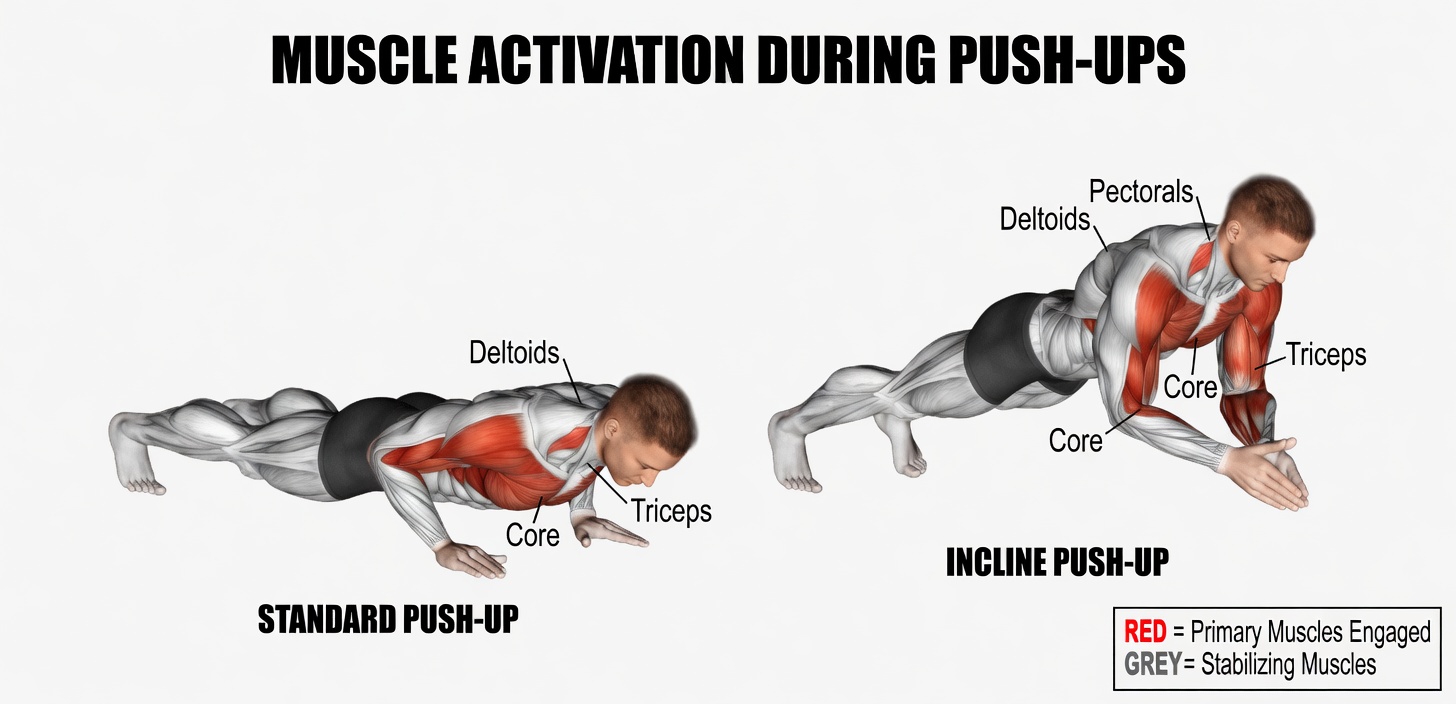
Muscles worked: lower chest, plus the muscles used in a standard push-up
Reps: until failure
Sets: 3
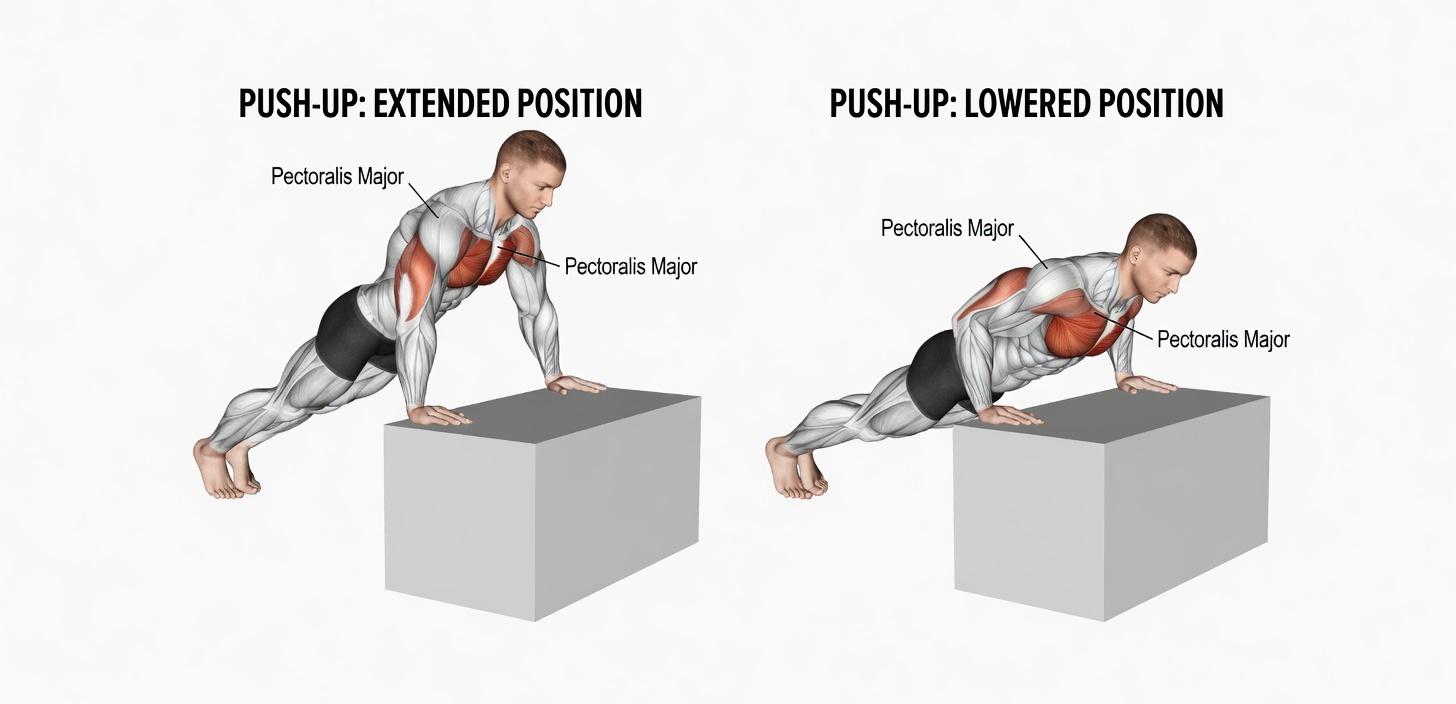
The incline push-up uses the same basic movement pattern as the regular push-up, but with your hands placed on an elevated surface.
This version is especially useful for beginners who do not yet have the strength for floor push-ups. It can also be used to shift more emphasis toward the lower chest.
One easy way to do incline push-ups at home is by using stairs, a bench, or another stable raised surface.
How to do an incline push-up
- Stand facing a solid elevated surface.
- Place your hands slightly wider than shoulder-width apart.
- Keep your feet on the floor about shoulder-width apart.
- Brace your core, abs, and glutes.
- Bend your elbows and lower your chest toward the surface.
- Inhale on the way down and pause briefly at the bottom.
- Push back to the starting position while keeping your body straight from head to toe.
- Repeat for 10 to 15 reps or until your form starts to fail.
3. Decline Push-Up
Muscles worked: upper chest, deltoids, triceps
Reps: until failure
Sets: 3
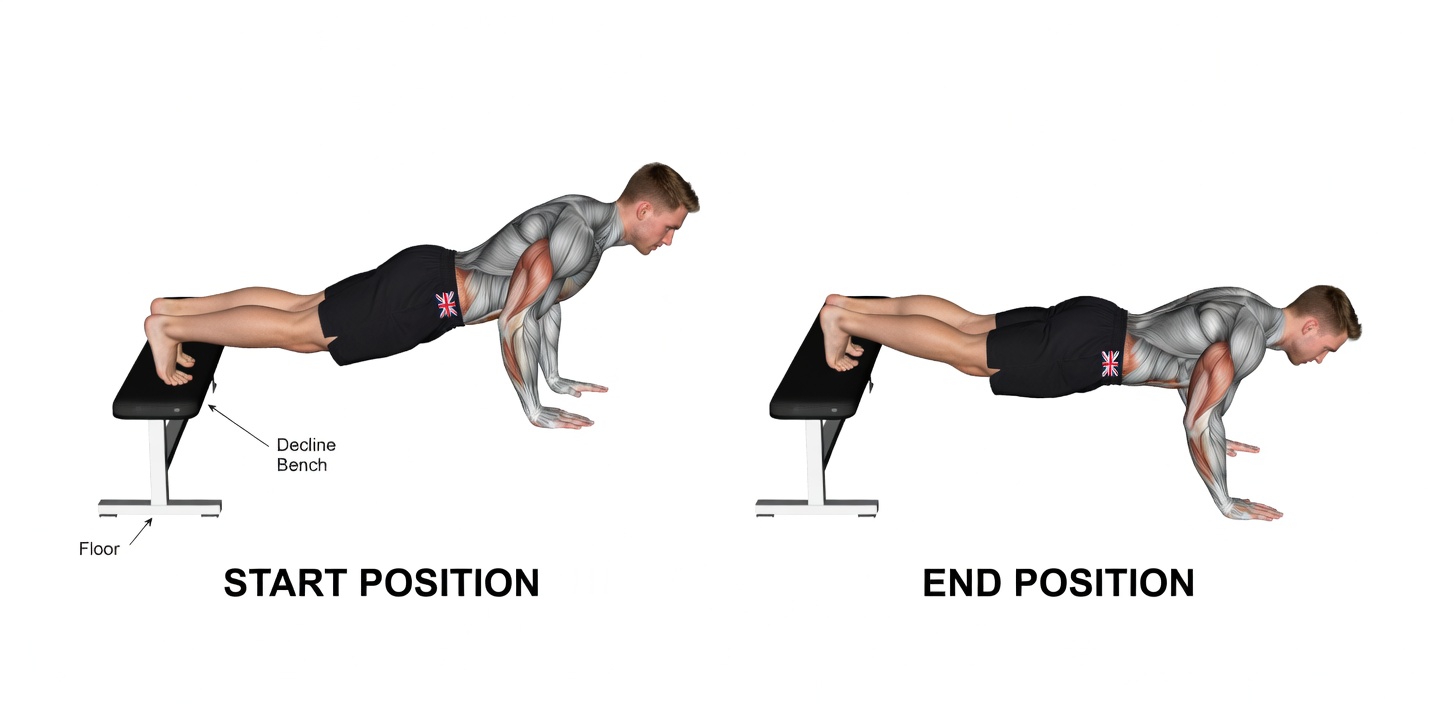
Decline push-ups are more demanding than standard push-ups because your feet are elevated, which increases the amount of bodyweight you must press.
In a normal push-up, your feet help support some of your weight. In a decline push-up, gravity works against you more, making the movement feel heavier and more intense.
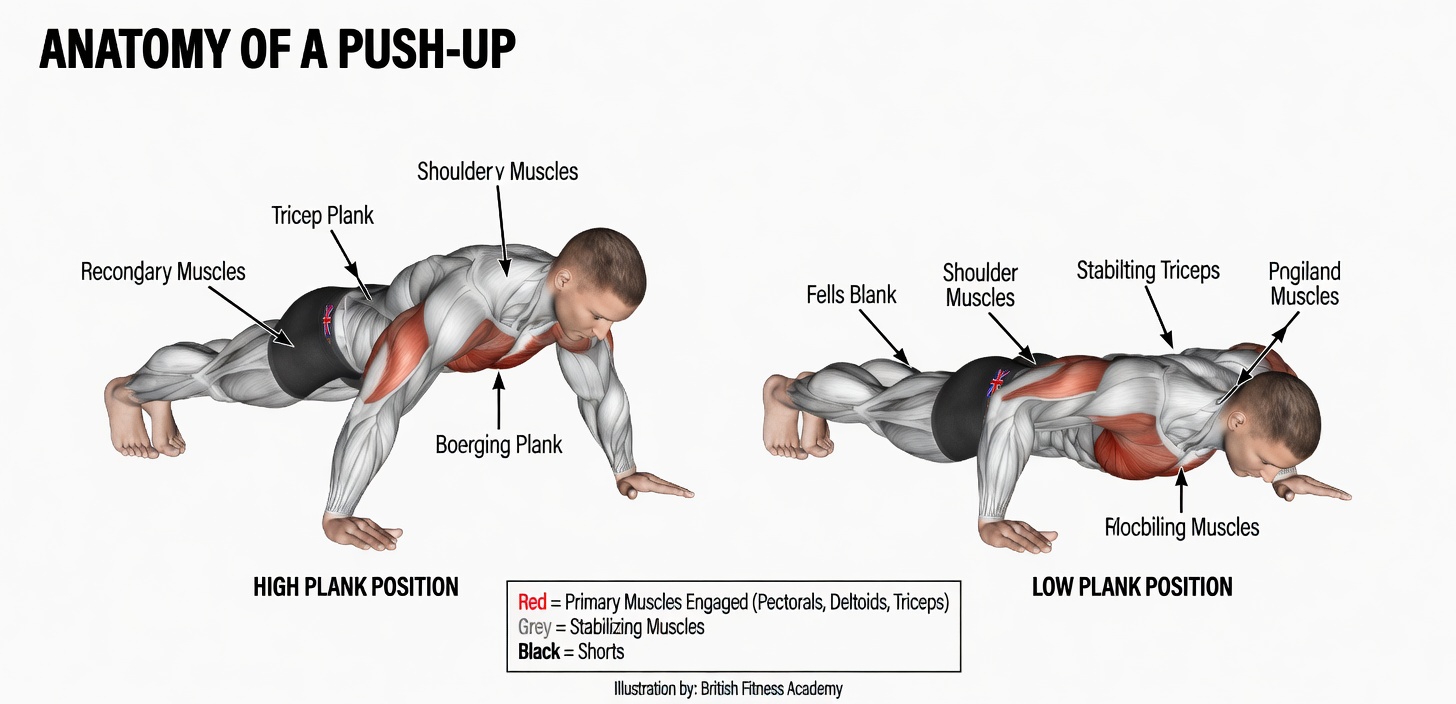
This variation places more emphasis on the upper pectorals and also challenges the shoulders more strongly. If your goal is to build a broader-looking upper body, stronger delts can help improve the appearance of your chest.
There is one thing to watch out for: the steeper the angle, the more the shoulders begin to take over. To get the best results, choose a height that still allows your chest to do most of the work.
Decline push-ups also involve the triceps heavily, which makes them useful if you want to improve tone and firmness in the upper arms.
How to do a decline push-up
- Place your hands on the floor.
- Put your feet on a stable elevated surface.
- Keep your body straight and your core tight.
- Lower yourself under control.
- Press back up for the desired number of reps.
4. Diamond Push-Up
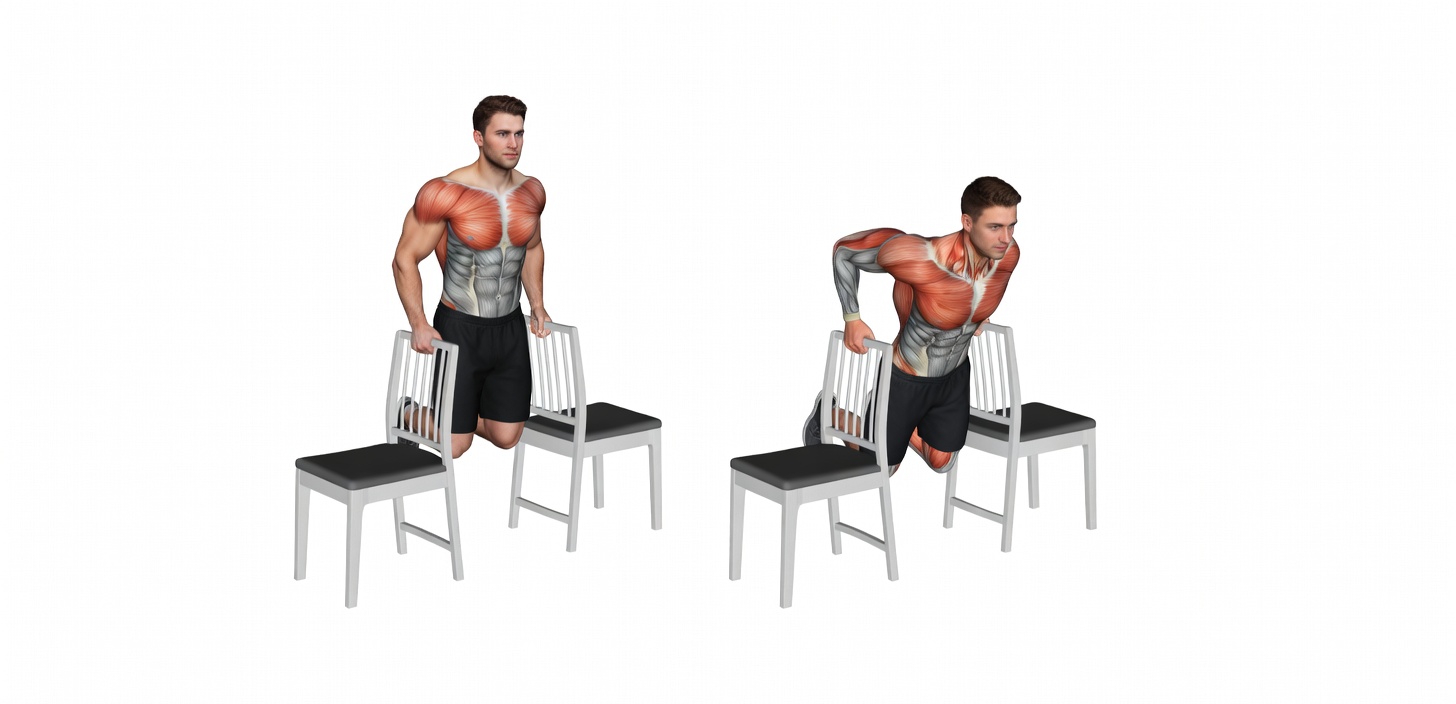
Muscles worked: inner chest, deltoids, triceps
Reps: until failure
Sets: 3
If you want more triceps involvement than a regular push-up provides, the diamond push-up is a smart choice.
Bringing your hands close together reduces the advantage of the chest muscles and shifts more of the work to the triceps and shoulders. At the same time, it increases the challenge on the inner portion of the chest, especially near the sternum.
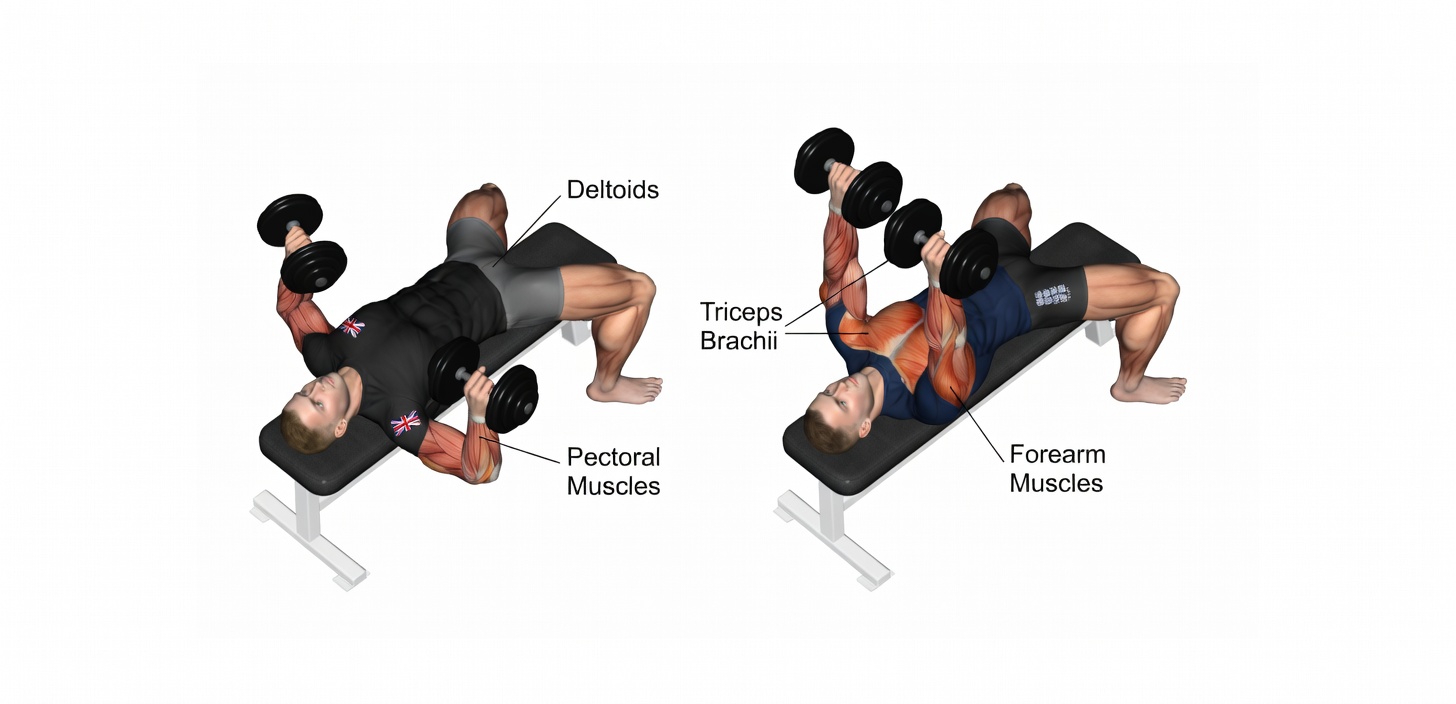
Since the pectoralis major attaches near the center of the chest, close-hand pressing movements can stimulate those middle chest fibers more directly. That makes diamond push-ups a great finishing move if you want a firmer, fuller-looking chest.
How to do a diamond push-up
- Begin in a regular push-up position.
- Move your hands inward until your thumbs and index fingers touch.
- Form a diamond shape with the space between your hands.
- Lower your body the same way you would in a standard push-up.
- Push back up while keeping your body aligned.
A small change in hand placement can dramatically change which muscles work hardest.
5. Plyometric Push-Ups
Muscles worked: chest, abs, triceps, shoulders
Reps: 8 to 12
Sets: 2 to 3
If regular push-ups have become too easy, plyometric push-ups are an excellent way to make your workout more challenging.
This explosive variation increases power, speed, and overall upper-body intensity. It is a strong progression for people who have already built a solid push-up base and want to take their home chest workout to the next level.
Because plyometric push-ups require forceful pressing, they challenge the chest, shoulders, triceps, and core all at once.
Final Thoughts
You do not need fancy gym machines to build a stronger chest. With smart exercise selection and proper technique, home chest workouts can train your upper chest, lower chest, inner chest, shoulders, and triceps very effectively.
For complete chest development, combine several push-up variations instead of relying on just one movement. That way, you can target your chest from different angles and create better overall strength and shape.
Stay consistent, focus on form, and keep challenging yourself as you get stronger.