Sciatic Nerve Pain: Causes, Symptoms, and Simple Exercises for Relief
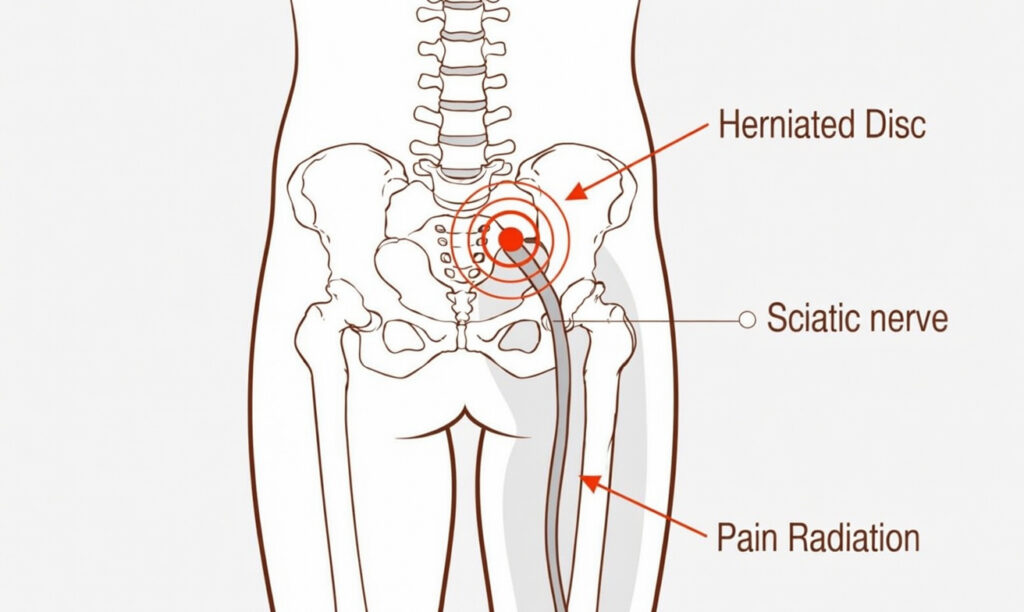
The sciatic nerve is the longest nerve in the human body, which means there are many points along its pathway where it can become irritated or compressed.
The good news is that many cases of sciatica improve with a few simple exercises done consistently.
What Is Sciatica?
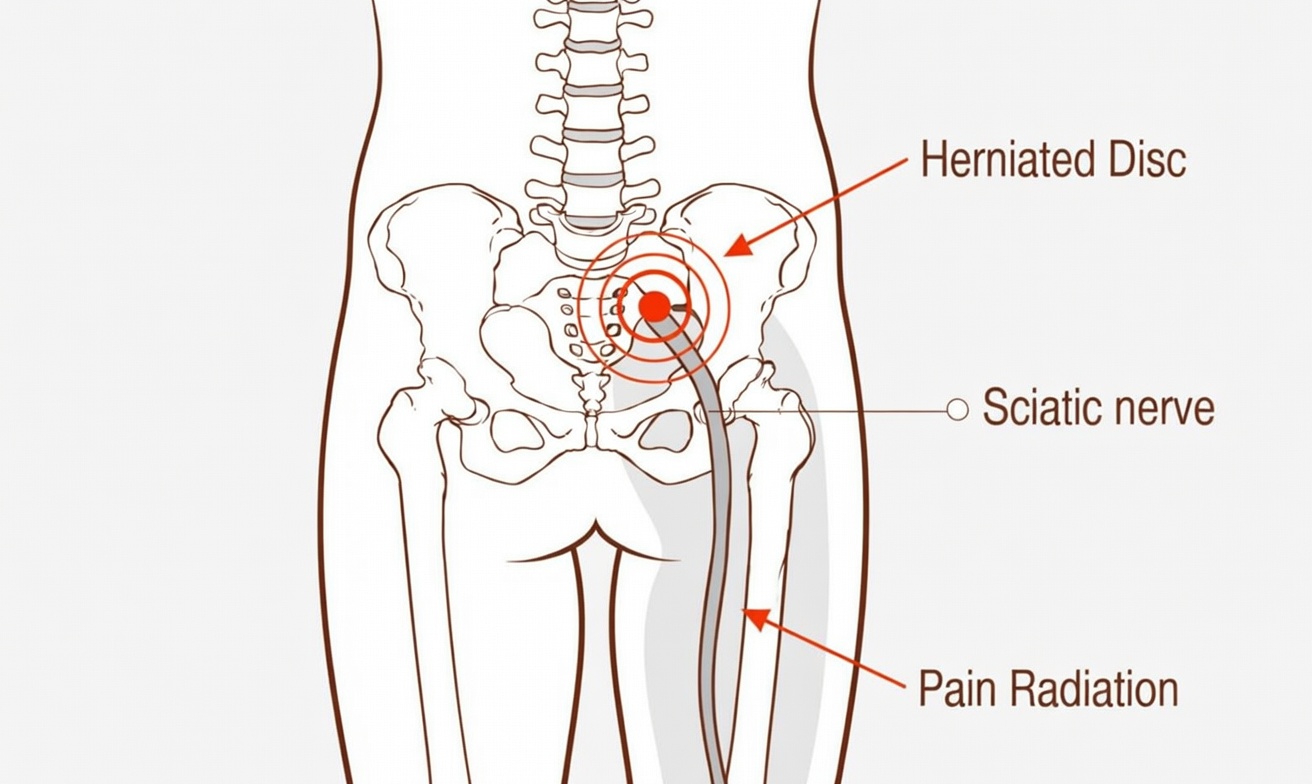
Sciatica is a broad term used to describe irritation of the sciatic nerve. Because this nerve runs from the lower spine down through the buttock and along the back of the leg, it can be affected in several places and for many different reasons.
Common Causes of Sciatica
The sciatic nerve is formed when several nerve roots in the lower spine join together. From there, it travels down the back of the leg and branches out along the way. Since it is long and heavily involved in movement and sensation, it is especially prone to irritation.
Sciatica may be triggered by:
- Injury or trauma
- Muscle tightness
- Herniated discs or bone spurs
- Certain medications
- Tumors affecting the spine
- No obvious cause in some cases
While less common causes, such as medication-related nerve irritation, can occur, this article focuses mainly on sciatica linked to tight muscles and other musculoskeletal problems.
Sciatica Symptoms
Sciatica symptoms can differ from person to person, but the most common signs include:
- Lower back pain and/or leg pain
- Tingling in the leg or foot
- Muscle weakness, including foot dragging or a steppage walking pattern
During an exam, a healthcare professional may also notice changes in reflexes. A full medical history and additional testing can help identify the exact source of the problem.
Different Types of Sciatica
Sciatica is not a single condition. It is a group of symptoms that may vary depending on the cause and duration.
One common way to classify sciatica is by how long it lasts:
- Acute sciatica: symptoms that have been present for only a few weeks
- Chronic sciatica: symptoms that continue for several months or longer
Sciatica can also be described based on:
- Whether it affects one side or both sides of the body
- Which parts of the back or leg are involved
- How intense the symptoms are
Here, the focus is on mild sciatica that may respond well to exercise.
How to Relieve Sciatica Pain
There are many treatment options for sciatic nerve pain, including:
- Physical therapy
- Medication
- Acupuncture
- Other supportive therapies
Even so, exercise is often one of the most effective and accessible ways to reduce sciatica symptoms. Below are three simple exercises that can help loosen tight areas that may be contributing to sciatic nerve compression.
3 Simple Sciatica Exercises to Reduce Pain
For one of these exercises, you will need a small ball, such as a tennis ball or lacrosse ball. Other than that, you only need enough floor space to lie down comfortably.
General Guidelines
Follow these recommendations for each exercise:
- Perform each movement for 30 seconds
- Repeat each stretch 4 times on each leg, when applicable
- Aim for moderate discomfort, not severe pain
If the movement feels too intense, reduce the pressure. If you barely feel anything, increase the stretch slightly. These exercises are meant to target areas that commonly contribute to sciatic nerve irritation.
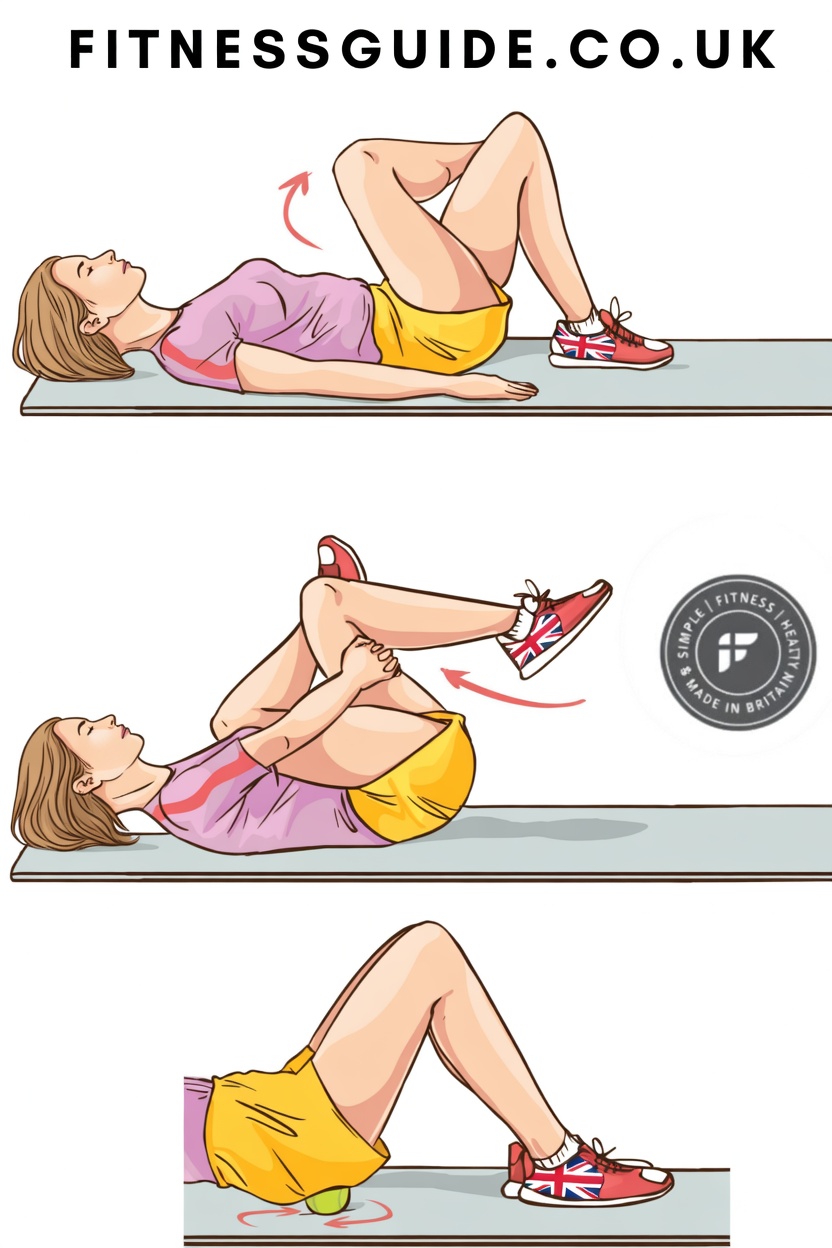
1. Basic Supine Piriformis Stretch
This beginner-friendly piriformis stretch is simple, gentle, and usually comfortable for most people. It also requires no equipment.
How to do it
- Lie on your back with both knees bent and your feet flat on the floor.
- Lift the painful leg and cross it over the opposite leg.
- Place the ankle of the painful leg just above the knee of the other leg.
- Let the crossed leg relax until you feel a mild stretch in the hip and buttock.
- Hold for 30 seconds.
- Repeat 4 times on both sides.
2. Advanced Piriformis Stretch
This version builds on the previous exercise. If the basic stretch did not feel strong enough, this one usually provides a deeper stretch.
How to do it
- Begin in the same position as the basic supine piriformis stretch.
- Reach underneath the thigh of the non-painful leg, placing your hands behind the hamstring.
- Gently pull that thigh toward your chest.
- As you do this, the ankle of the affected leg will move with it, increasing the stretch in the buttock.
- You may feel a strong stretch in the painful side, but stay within a level of moderate discomfort.
- Hold for 30 seconds and repeat 4 times.
3. Lacrosse Ball Piriformis Release
This exercise works like a deep tissue massage for the piriformis muscle. If you bruise easily or are unsure whether this technique is safe for you, speak with a healthcare professional first.
How to do it
- Lie on your back with your knees bent and your feet flat on the floor.
- Lift the painful side of your buttock slightly and place a lacrosse ball underneath it.
- Lower yourself gently so the buttock rests on the ball.
- Use your legs to slowly move your body in small circular motions over the ball.
- Continue this mini massage for 30 seconds.
- Repeat 4 times.
Final Thoughts
Sciatica can be frustrating and uncomfortable, especially when it causes pain, weakness, or tingling that lasts for a long time. Fortunately, many mild cases can improve with a few targeted exercises aimed at releasing tight muscles and easing pressure on the sciatic nerve.
If your symptoms are severe, worsening, or not improving, contact your doctor or physical therapist for proper guidance.
References
- Davis D, Maini K, Vasudevan A. Sciatica. Updated September 2, 2021. In: StatPearls [Internet]. Treasure Island (FL): StatPearls Publishing; 2022 Jan-. Available from: https://www.ncbi.nlm.nih.gov/books/NBK507908/
- Koes BW, van Tulder MW, Peul WC. Diagnosis and treatment of sciatica. BMJ (Clinical Research Ed.). 2007;334(7607):1313–1317. https://doi.org/10.1136/bmj.39223.428495.BE