A Simple Piriformis Stretch for Sciatic Nerve Pain Relief
Need an effective piriformis muscle stretch? You’re in the right place.
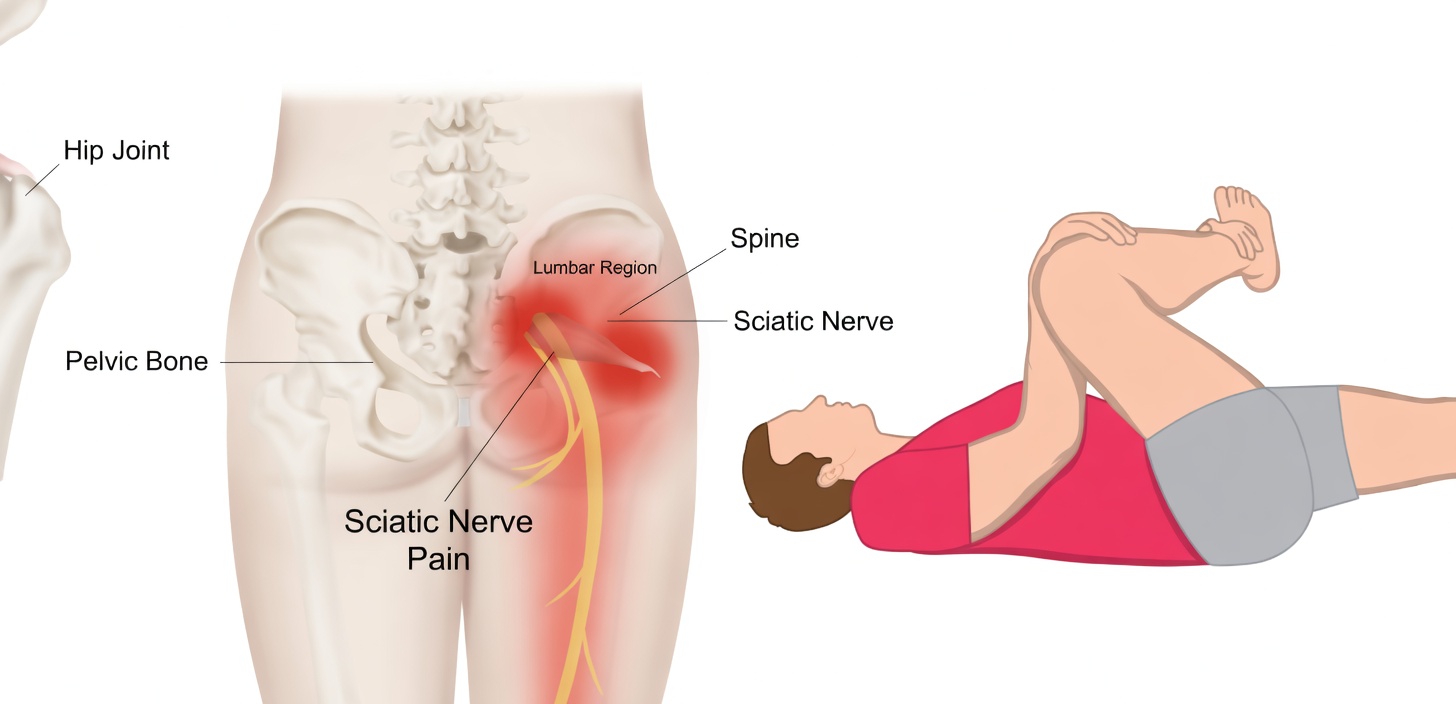
If you have ever felt pain that travels from the lower back into the leg, there is a good chance your sciatic nerve has become irritated. That irritation can happen for several reasons, including a bulging lumbar disc, direct pressure on the nerve, side effects from certain medications, or excessive muscle tightness.
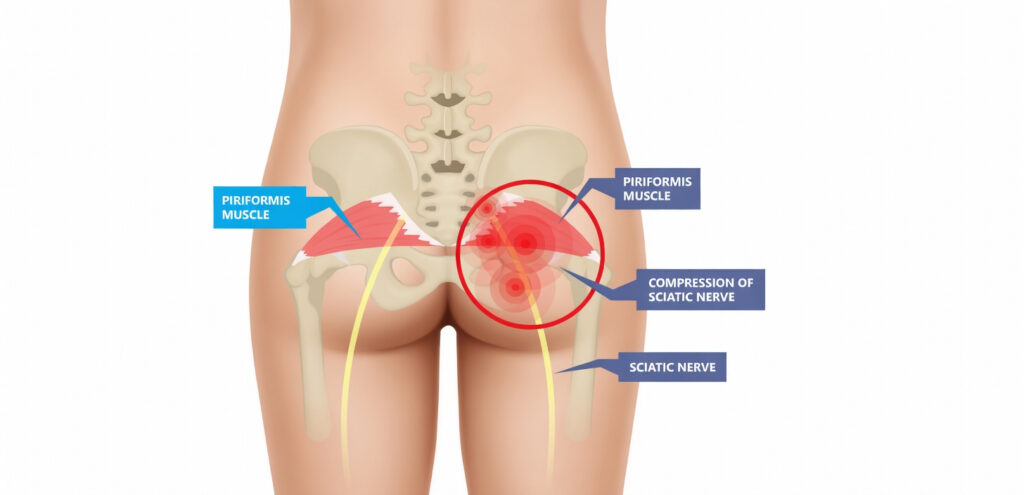
One muscle that commonly contributes to this problem is the piriformis. When it becomes too tight, it may place pressure on the sciatic nerve and trigger symptoms that resemble sciatica.
Piriformis Muscle Anatomy
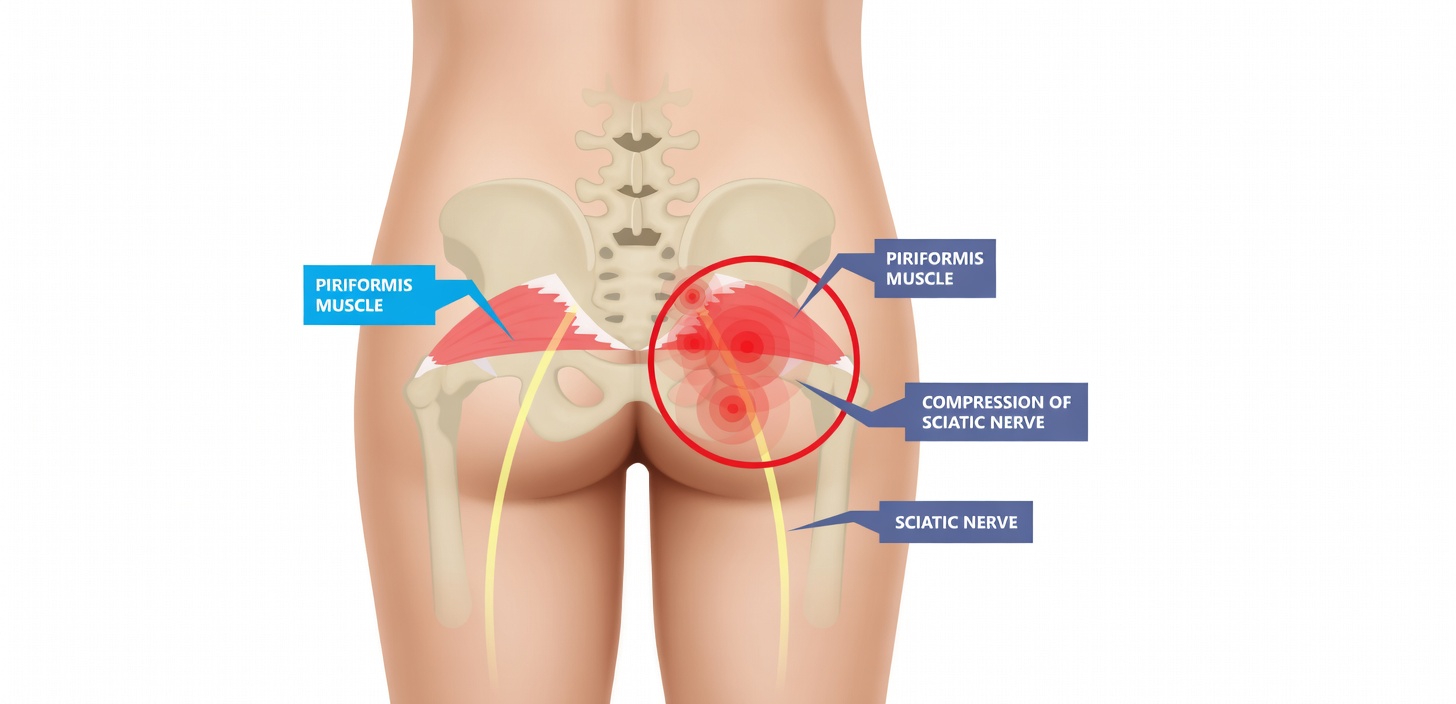
The piriformis is a small but important muscle that sits beneath the gluteus maximus. It connects the sacrum to the upper part of the femur, helping the hip rotate outward.
Because of where this muscle is located, it can strongly influence the sciatic nerve. In many people, the nerve passes very close to the piriformis, and in some cases even through it, on its way down the leg.
When the piriformis becomes tight enough to compress or irritate the sciatic nerve, the resulting condition is often called piriformis syndrome.
How a Piriformis Stretch Can Help
One of the easiest ways to reduce discomfort linked to a tight piriformis is through gentle stretching. There are many piriformis stretches available, but the best option depends on your body, mobility, and symptom pattern.
When assessing someone with suspected piriformis syndrome, it is common to test several stretches before choosing the most appropriate one. The best stretch is usually the one that:
- Creates a clear stretching sensation without sharp pain
- Matches the person’s flexibility and physical ability
- Can be performed safely and consistently
Below is one of the most commonly recommended options. It works well as a beginner-friendly piriformis stretch, is suitable for most people, and can easily be adjusted if the stretch feels too strong or too mild.
Supine Piriformis Stretch
The supine piriformis stretch is a classic exercise for people dealing with piriformis syndrome or general piriformis tightness. It is often a top choice because:
- Most people can comfortably perform it while lying on their back
- It is simple to modify for different levels of flexibility
- It allows an easy transition into stretches for the glutes, hamstrings, and surrounding muscles
Used correctly, this stretch can help reduce piriformis tension and may support a more comfortable, pain-free return to daily activity.
How to Do the Supine Piriformis Stretch
Aim for 120 seconds of total stretch time per session for each side. You can divide that however you like, but a good starting point is:
- 12 repetitions of 10-second holds
As for intensity, the stretch should create moderate discomfort, not sharp or severe pain.
For frequency, try to complete this routine:
- 3 to 5 times per week
- If it feels good and does not worsen symptoms, you may stretch daily
Step-by-Step Supine Piriformis Stretch Instructions
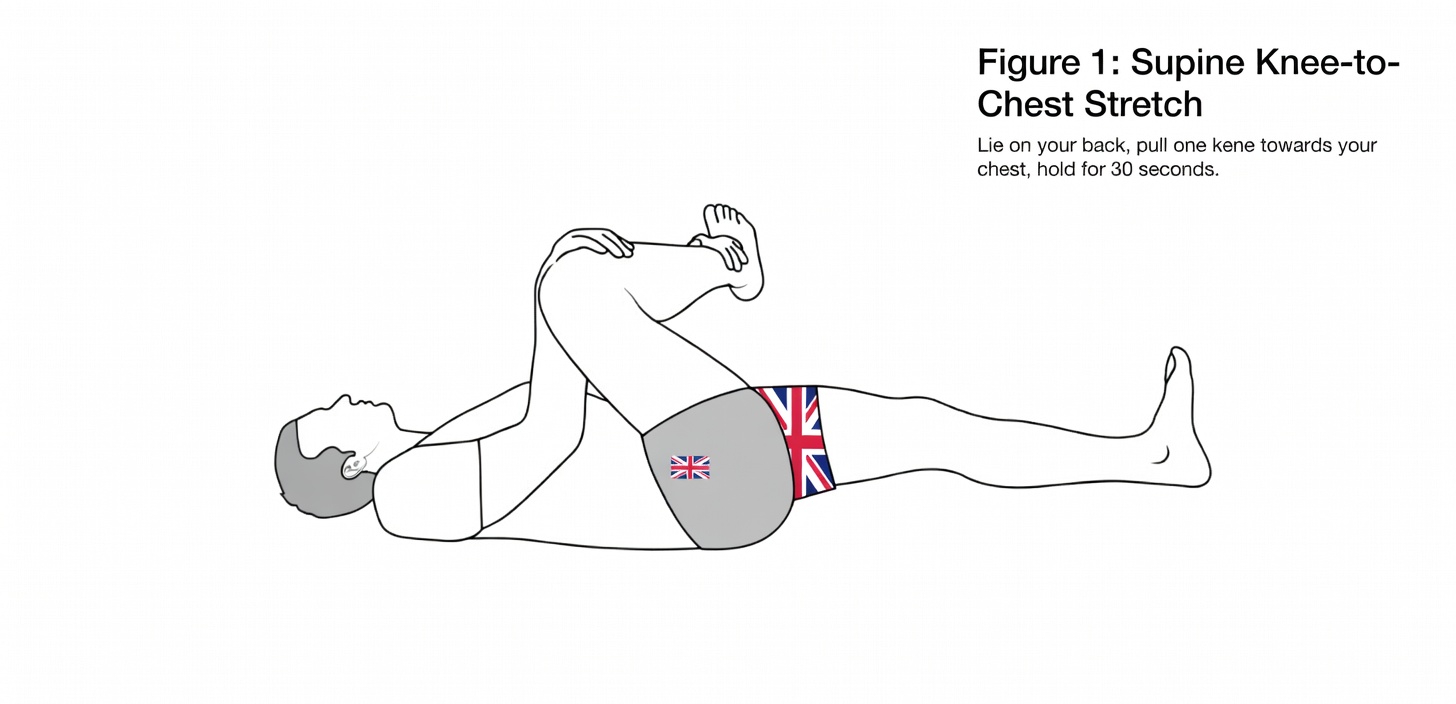
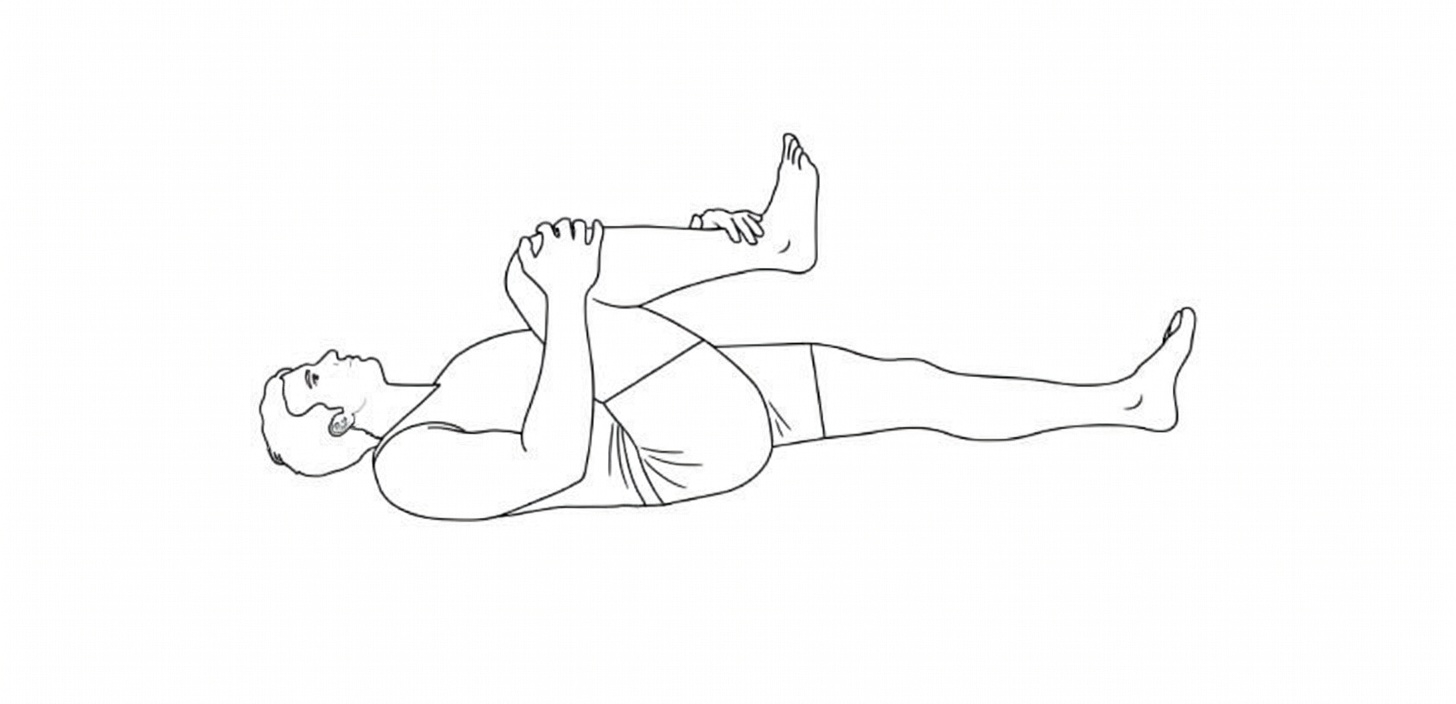
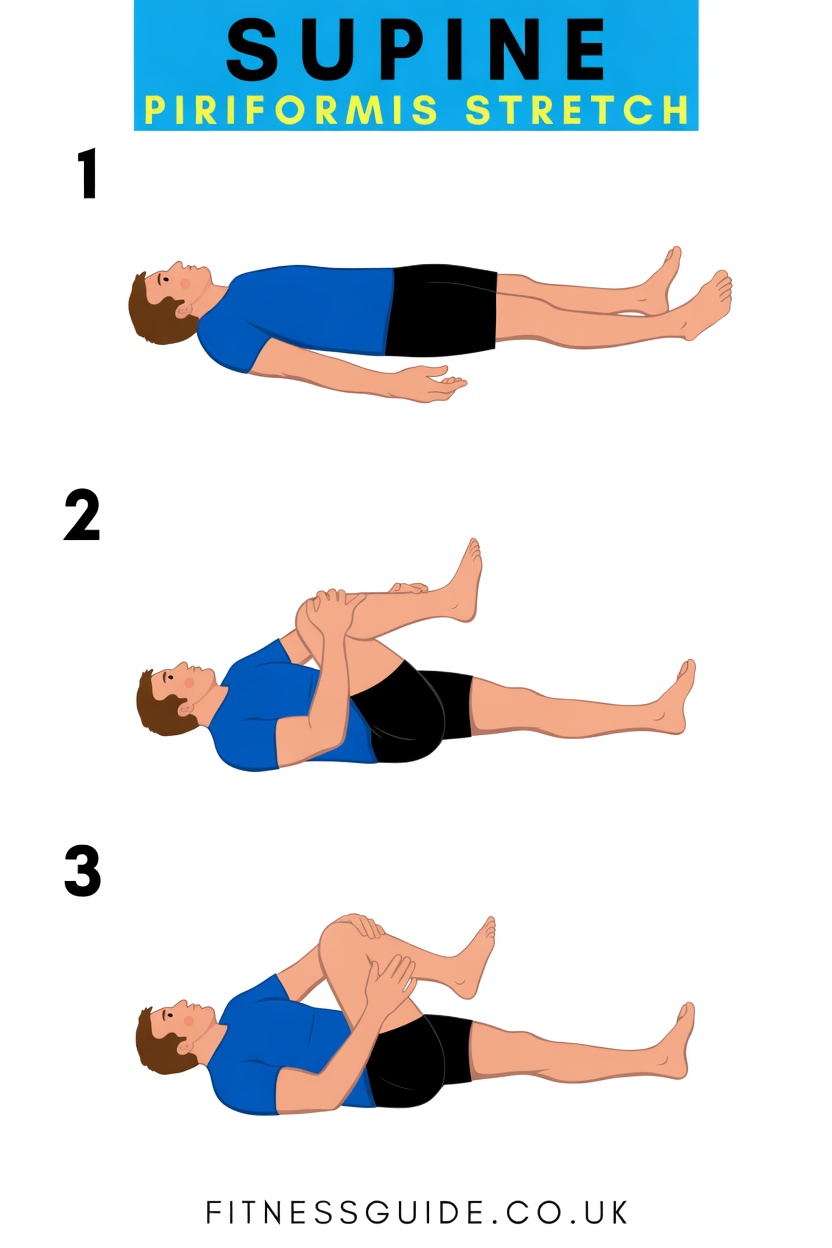
- Lie on your back with both knees bent. This position is often called the hook-lying position.
- Hold your right leg with both hands.
- Turn the right leg slightly outward so that your shin is roughly perpendicular to your torso.
- Gently draw the leg toward your chest.
- Once you feel a mild to moderate stretch in the right buttock area, pause there.
- Hold the stretch for 10 seconds.
- Release gently and rest for a few seconds.
- Repeat 12 times, then switch to the other side.
If you notice increased tingling, burning, numbness, or radiating pain in your back, leg, or foot, first try making a small adjustment to your position. If the symptoms continue, stop the exercise and speak with a qualified healthcare professional.
When to See a Physical Therapist
This stretch is most appropriate for mild piriformis tightness or mild piriformis syndrome symptoms. You should seek medical or physical therapy guidance right away if your symptoms are:
- Constant and not improving
- Getting worse over time
- Preventing you from sleeping well
- Changing the way you walk
- Causing stumbling, weakness, or falls
You should also consider seeing a physical therapist if you try this stretch for several days and feel no improvement. A professional can confirm whether you are doing the exercise correctly and determine if another issue may be causing the pain.
Summary
A tight piriformis can irritate the sciatic nerve and lead to pain, tingling, or discomfort in the lower back, buttock, and leg. A gentle supine piriformis stretch is often a helpful first step for relieving tension in this area.
If the stretch helps, continue using it consistently. If your symptoms do not improve after a few days, or if they become more intense, contact your doctor or physical therapist as soon as possible.