Exercises to Avoid After 50: What to Skip and What to Do Instead
Let’s clarify something first: being over 50 does not automatically mean you must avoid every exercise on this list. If you are highly trained, mobile, and physically active, you may still be able to perform many of them safely.
That said, there is no one-size-fits-all list of forbidden movements in fitness. What works or does not work depends on your health, conditioning, mobility, and training history.
However, if you are the average adult over 50—someone who is not training at a high level and may already deal with stiffness, limited mobility, or inconsistent workouts—many doctors and personal trainers agree that certain exercises are best limited or avoided.
Why? Because some movements can worsen existing issues such as high blood pressure, joint discomfort, poor posture, and muscle imbalance. As we age, joints often become less flexible and muscle mass gradually declines, which can raise the risk of strain and injury.
If you are over 50, it is wise to be cautious with the exercises below, and in some cases, avoid them altogether.
9 Exercises to Never Do After 50
1. Running a Marathon
Marathon training and very long cardio sessions are often not the best choice after 50, especially for people who are not already experienced endurance athletes.
As you get older, experts often recommend placing more emphasis on strength training than on excessive cardio. Muscle plays a major role in longevity, metabolism, posture, and daily function. Since muscle naturally decreases with age, preserving it becomes increasingly important.
Long-distance running can place significant stress on the cardiovascular system and joints. In many cases, adding more resistance training, such as TRX, bands, or weights, may offer better long-term benefits.
Building functional muscle can help you:
- Support heart health
- Improve metabolism
- Maintain posture
- Stay stronger for everyday movement
2. Leg Extensions
The leg extension machine can strengthen the quadriceps and may also support lower-body development, but its design can put a large amount of pressure on the kneecap.
For many adults over 50, the knees are already a vulnerable area. If you have a history of knee pain, injury, or chronic inflammation, this machine may do more harm than good.
It is especially smart to avoid leg extensions if you:
- Have had previous knee injuries
- Deal with chronic knee inflammation
- Feel pain during machine-based leg movements
3. Shoulder Presses
With age, many people develop poor movement habits, muscle imbalances, and joint discomfort. Exercises that load the shoulders in awkward positions can become risky.
One common problem is shoulder impingement, which happens when a tendon rubs against bone in the shoulder joint. This can lead to inflammation, pain, and in more serious cases, rotator cuff injury.
Movements often linked to shoulder impingement include:
- Overhead presses
- Shoulder presses
- Upright rows
If you still choose to perform shoulder presses, make sure:
- The seat or setup is adjusted properly
- The motion feels smooth and controlled
- You stay within a safe, natural range of motion
- You do not feel pinching or joint pain
4. Crunches and V-Ups
Lower back discomfort becomes more common with age, especially when the core is weak and the hip flexors are tight from too much sitting.
Crunches, sit-ups, and V-ups are often seen as ab exercises, but for many people they can end up overworking the hip flexors and lower back more than the abdominal muscles.
These exercises may be useful if your core is already strong and stable. But if you are trying to build foundational core strength, they are often not the best place to start.
They may also:
- Aggravate neck pain
- Tighten the lower back
- Reinforce poor movement patterns
A study from San Diego State University also noted that sit-ups rank among the less effective abdominal exercises.
Safer core work often includes movements that strengthen the abs and lower back without excessive spinal strain.
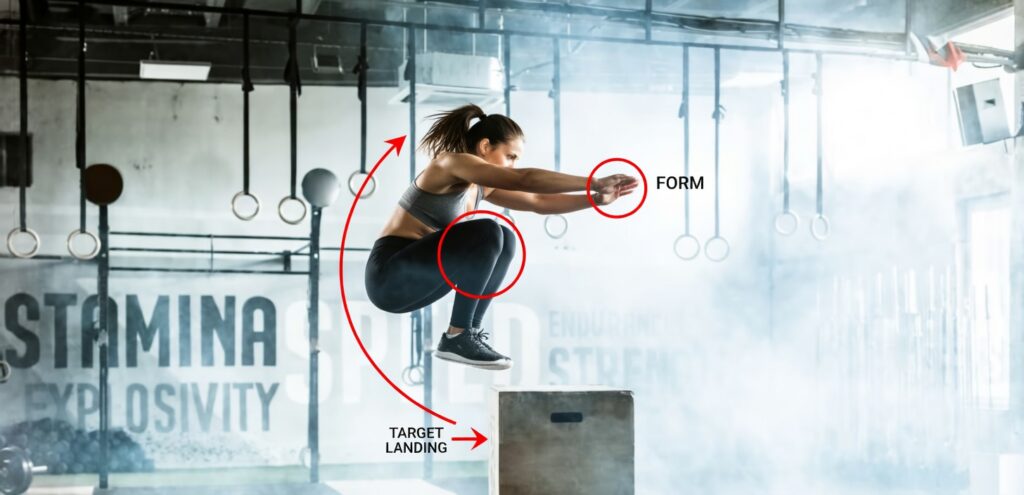
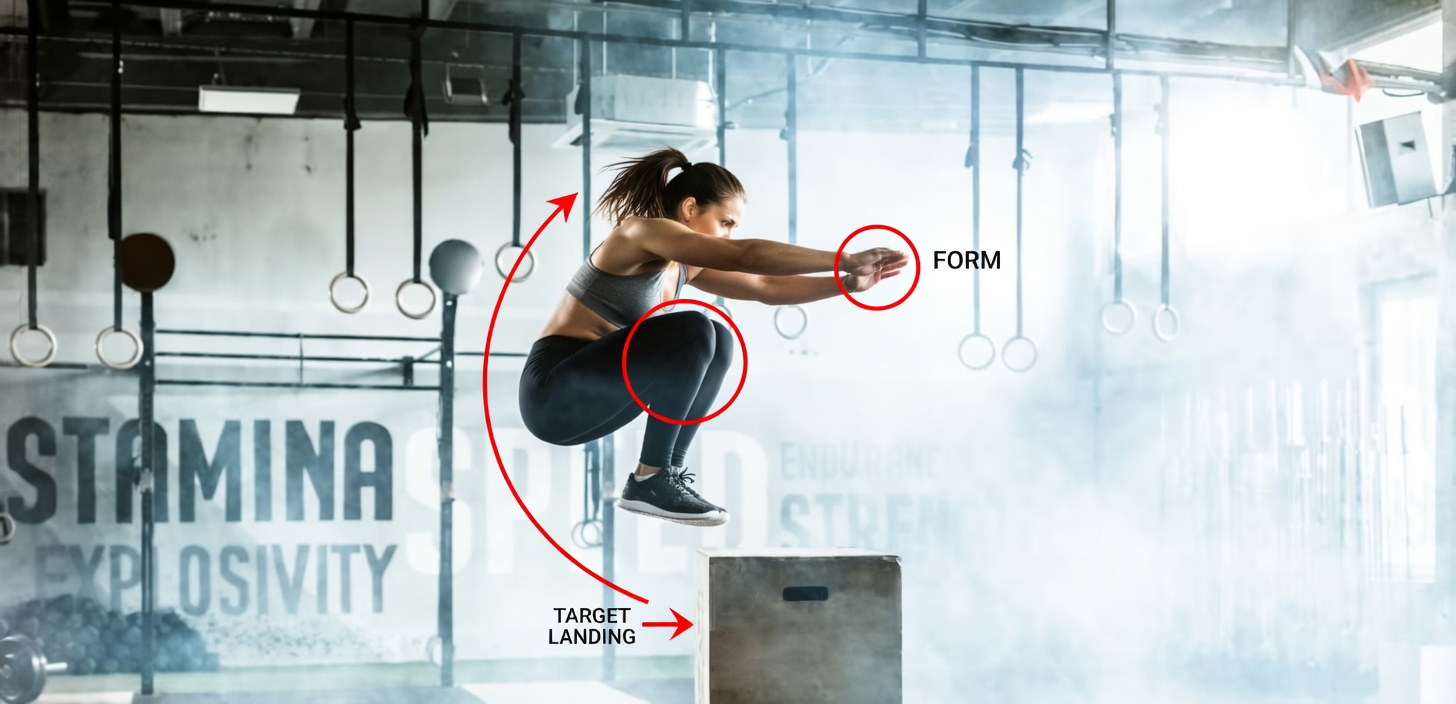
5. Box Jumps
Box jumps can improve power and athletic performance, but they come with several risks that become more important after 50.
First, there is the box itself. Missing the jump can lead to painful shin injuries, especially with wooden boxes.
Second, landing mechanics matter. A proper box jump requires a soft landing on the full foot in a squat position. In reality, many people land poorly by:
- Coming up short on the jump
- Landing on the toes
- Letting the knees cave inward
- Allowing the knees to move too far forward
Third, getting down from the box can be just as stressful. Many people rebound quickly off the box to speed up reps, which increases impact on the:
- Ankles
- Knees
- Calves
- Shins
If you are not training for a competitive sport, box jumps are usually not worth the injury risk.
6. Burpees
Burpees are popular because they train the whole body and raise the heart rate fast. But they can also be tough on the knees, especially for adults with mobility limitations.
The crouching and jumping pattern often places repeated stress on the knees. When squat mobility is poor, people tend to:
- Let the knees push too far past the ankles
- Lift the heels
- Collapse into the movement too quickly
This creates more compression in the knee joint. Since burpees are usually performed at speed, the problem often gets worse.
A better option is to use exercises that elevate the heart rate without the same joint impact. For example:
- Rowing for cardio intensity
- Push-ups for upper-body strength
- A combination of rowing and push-ups for full-body conditioning
This can deliver the cardio effect you want while reducing unnecessary stress on the knees.
7. Lifting Heavy Weights
Strength training is one of the best ways to preserve or build muscle after 50, but lifting very heavy loads is not always appropriate.
Heavy weight training places significant demand on the body, including the heart and blood vessels. If you have high blood pressure, this is especially important.
If your blood pressure is above 180/110 mmHg, speak with your doctor before doing heavy lifting.
The goal after 50 should often be:
- Safe resistance training
- Controlled form
- Steady muscle development
- Lower injury risk
8. Running on Hard Surfaces
If you are not already a conditioned runner, pounding the pavement regularly may not be the best approach.
Running on hard surfaces creates repeated impact through the joints. Over time, that can contribute to discomfort in the:
- Knees
- Hips
- Ankles
- Lower back
Softer surfaces, such as dirt paths or trails, are generally more forgiving and may reduce impact stress.
If you enjoy running, choosing a gentler surface can make it safer and more sustainable.
9. Very Intense Cardio
Extremely high levels of cardio can be problematic, and this is especially true for women in perimenopause and beyond.
Long or intense cardio sessions can sharply raise cortisol, the body’s stress hormone. Elevated cortisol may affect:
- Sleep quality
- Hormone balance
- Recovery
- Inflammation
- Fat storage around the midsection
Over time, this may contribute to issues linked with metabolic syndrome and heart disease.
For women going through hormonal changes, high cortisol can also lower progesterone, which is already decreasing during perimenopause. Since progesterone helps support mood, calmness, and mental clarity, this imbalance may increase the risk of:
- Anxiety
- Depression
- Mood swings
- Additional fat gain
Excessive exercise combined with everyday stress can make these symptoms worse rather than better.
Final Thoughts
As you get older, training smart becomes more important than training hard. Recovery takes longer, and injuries can have a much bigger impact on your quality of life.
That does not mean you should stop exercising. In fact, staying active is one of the best things you can do for your health after 50.
The key is finding the balance between fitness, safety, and long-term function. By avoiding high-risk exercises and choosing smarter alternatives, you can stay strong, mobile, and healthy for years to come.