Lower Your Blood Pressure in Minutes (Without Pills or Gadgets)
You can start lowering your blood pressure in roughly the time it takes to brush your teeth—and you don’t need medication, special devices, or drastic lifestyle overhauls to do it. As a physician, I regularly meet patients with high blood pressure who are surprised to discover how much control they actually have using simple, science-based techniques.
These are not myths or quick-fix gimmicks. They are practical, physiologically sound methods that can create real, measurable drops in blood pressure in just a few minutes. Drawing on the insights of Dr. Mitch Rice, we’ll walk through three proven strategies that quickly calm your nervous system, relax your blood vessels, and reduce your blood pressure on the spot.
High blood pressure (hypertension) is often called the “silent killer” because it usually causes no pain or obvious symptoms. Blood pressure is the force of blood pushing against the walls of your arteries. It’s reported as two numbers:
- Systolic pressure (top number): pressure when your heart contracts
- Diastolic pressure (bottom number): pressure when your heart relaxes between beats
Many things raise blood pressure—diet, genetics, lack of exercise—but in today’s world, stress is one of the biggest drivers. The three techniques below work so well because they directly target your body’s stress response and flip it into relaxation mode.
Key Takeaways
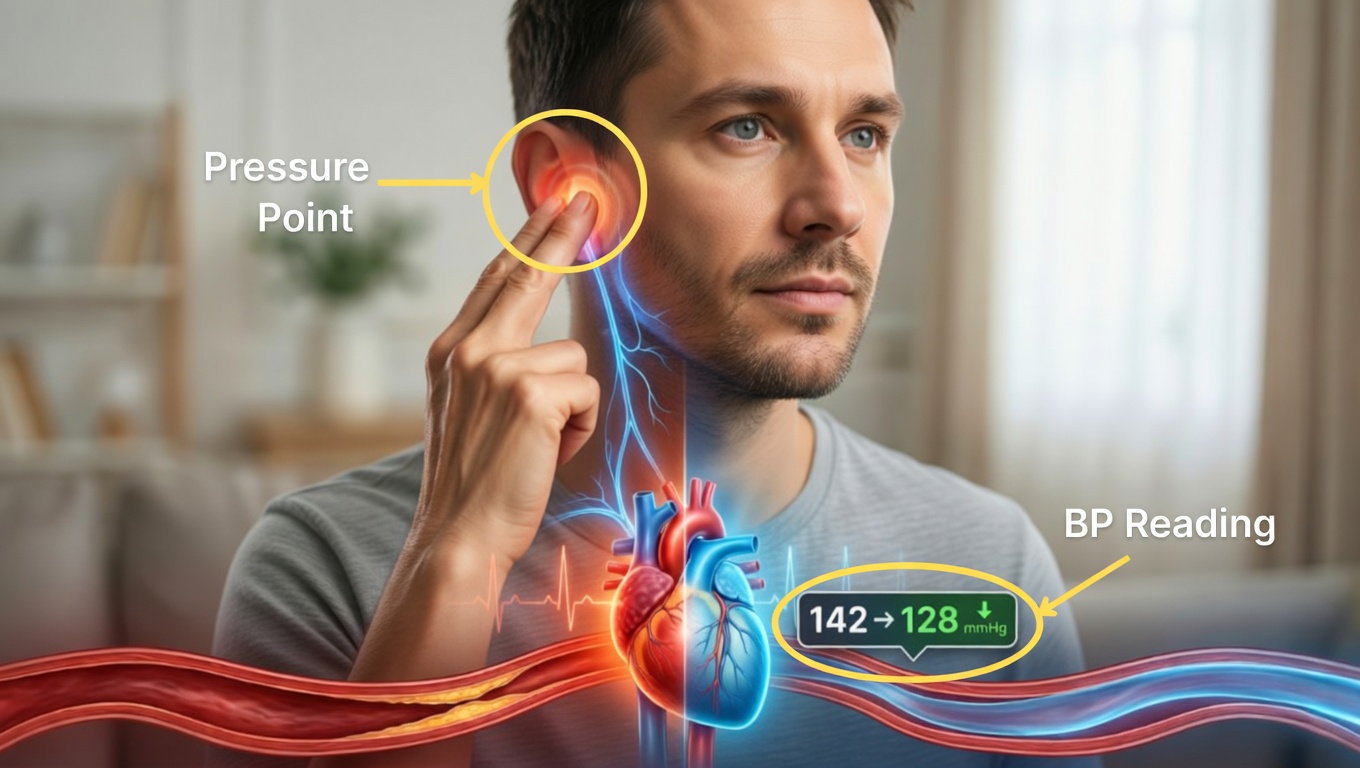
- Auricular Acupressure (Ear Massage): A 90-second massage of specific areas of the ear stimulates the vagus nerve and activates your relaxation system, often dropping systolic blood pressure by several points.
- 60-Second Guided Body Scan: A quick mindfulness scan of your body shifts you out of “fight or flight” and into “rest and digest,” prompting your blood vessels to relax and widen.
- Warm Water Foot Soak: A 10–15 minute foot soak in warm water draws blood to your lower extremities, decreasing vascular resistance and lowering blood pressure. Done regularly, it can help reduce baseline readings over time.
1. Reset Fast with an Ear Massage (Auricular Acupressure)
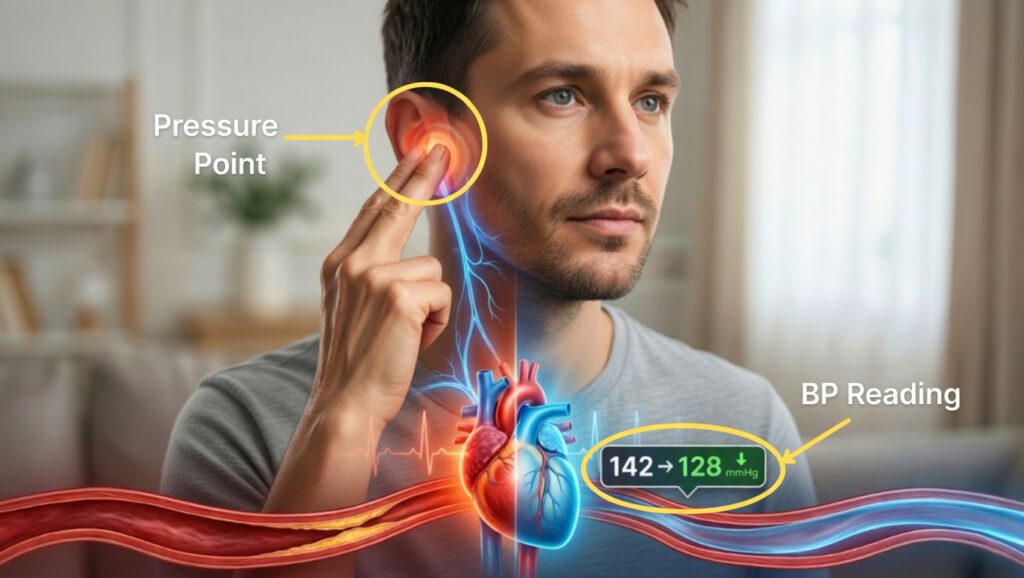
One of the quickest ways to lower blood pressure naturally is surprisingly simple: massaging your ears. This method, called auricular acupressure, is a discreet, tool-free technique you can use almost anywhere—before a stressful meeting, at your work desk, or while relaxing at home.
How to Do the Ear Massage
- Sit or stand comfortably.
- Using your thumb and index finger, gently grasp each ear.
- Focus on the inner, cartilage-heavy areas—not just the soft earlobe.
- Apply light, steady, circular pressure.
- Massage the entire ear, paying extra attention to the central, hollow area where the ear canal begins.
- Continue for about 90 seconds, working both ears at the same time.
Why Ear Massage Lowers Blood Pressure
This technique works through the vagus nerve, a major nerve that runs from your brain through your chest and abdomen. A small branch of the vagus nerve reaches your outer ear.
Your nervous system has two main modes:
- Sympathetic nervous system: the gas pedal—activates “fight or flight,” raises heart rate and blood pressure.
- Parasympathetic nervous system: the brake pedal—controls “rest and digest,” slows heart rate and promotes relaxation.
By stimulating the vagus nerve through your ear, you activate that “brake pedal.” It sends a powerful signal to your body that it’s safe to calm down. This:
- Decreases heart rate
- Relaxes and widens blood vessels
- Can lower systolic blood pressure by about 5–8 points in roughly 90 seconds for many people
It’s essentially a neuroanatomical shortcut to a calmer, lower-pressure state.
2. Use a 60-Second Guided Body Scan to Calm Your System
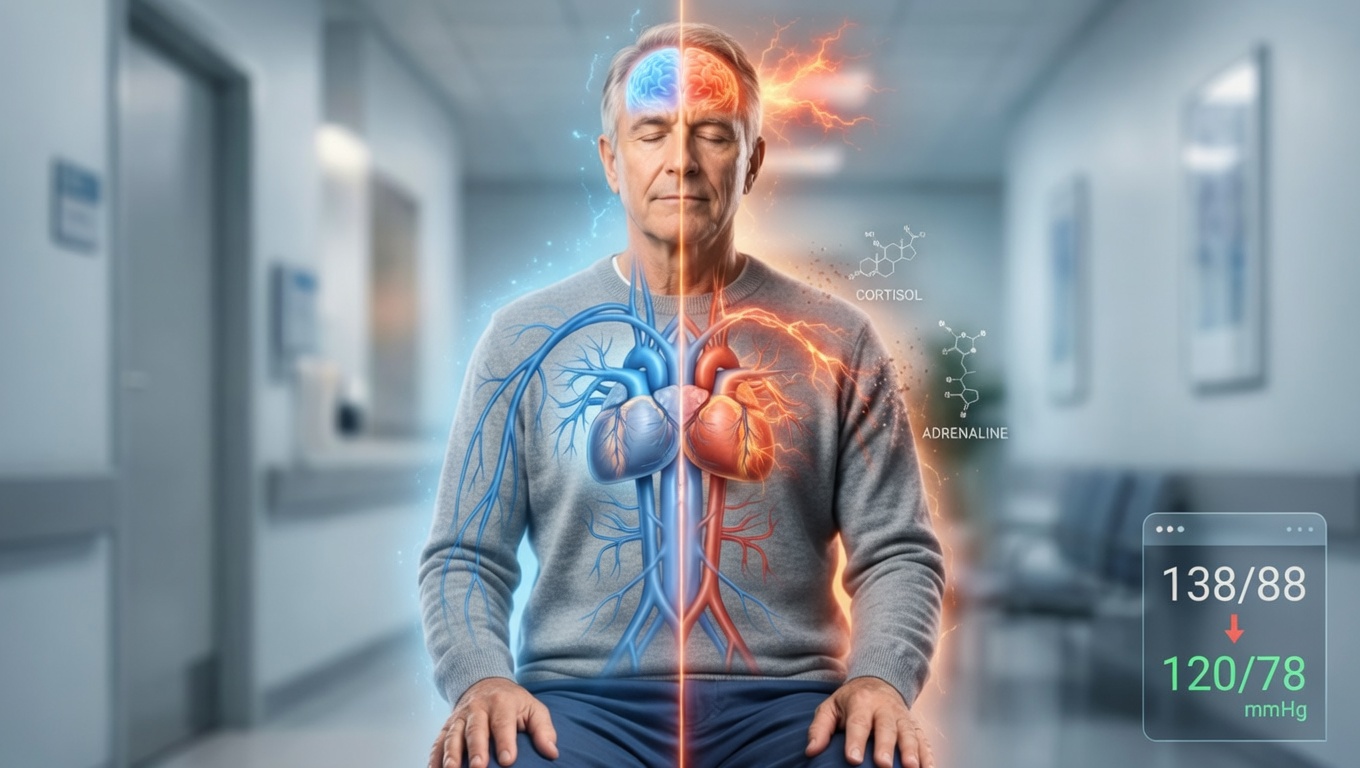
High blood pressure isn’t just about the heart and arteries; your mind plays a major role. When you feel anxious, rushed, or overwhelmed, your body releases stress hormones like cortisol and adrenaline. These chemicals constrict blood vessels and cause blood pressure to spike.
A guided body scan is a brief mindfulness technique that helps interrupt this stress cycle. You don’t need to be a meditation expert—this is a simple one-minute exercise.
How to Do a 60-Second Body Scan
- Sit upright in a chair with your feet flat on the floor.
- Close your eyes and let your hands rest comfortably.
- Bring your full attention to the soles of your feet.
- Notice where they touch the floor: heels, balls of your feet, toes.
- Imagine a warm wave of awareness around your feet.
- Slowly move your attention upward:
- Ankles → calves → knees → thighs
- Hips → abdomen → chest → shoulders
- Arms → hands → neck → jaw → face → top of your head
- At each area, simply notice sensations: tension, warmth, coolness, tingling—without judging or trying to change anything.
As your focus shifts from racing thoughts to physical sensations, your brain exits the stress loop and re-engages the parasympathetic (“rest and digest”) system.
How This Lowers Blood Pressure
This short practice:
- Reduces mental chatter and worry
- Signals safety to your nervous system
- Encourages blood vessels to relax and open
- Can lead to a measurable drop in blood pressure in a minute or two
The more often you practice, the easier and quicker it becomes. Over time, you can use a 60-second body scan anytime you feel stress building, helping prevent stress-induced spikes in blood pressure throughout the day.
3. Lower Blood Pressure with a Warm Water Foot Soak
The third technique feels more like a spa treatment than a medical therapy, yet it can have a strong effect on blood pressure: soaking your feet in warm water.
Many people associate heat with a racing heart, but localized warmth on the feet and lower legs works differently from whole-body overheating.
How to Do a Warm Foot Soak
- In the evening, fill a basin or bucket with warm (not hot) water.
- The temperature should be comfortably warm and soothing—not painful or overly hot.
- Place your feet in the water and soak for 10–15 minutes.
- For added benefit, stir in 1 cup of Epsom salts (magnesium sulfate). Magnesium helps relax muscles and may enhance the calming effect as it is absorbed through the skin.
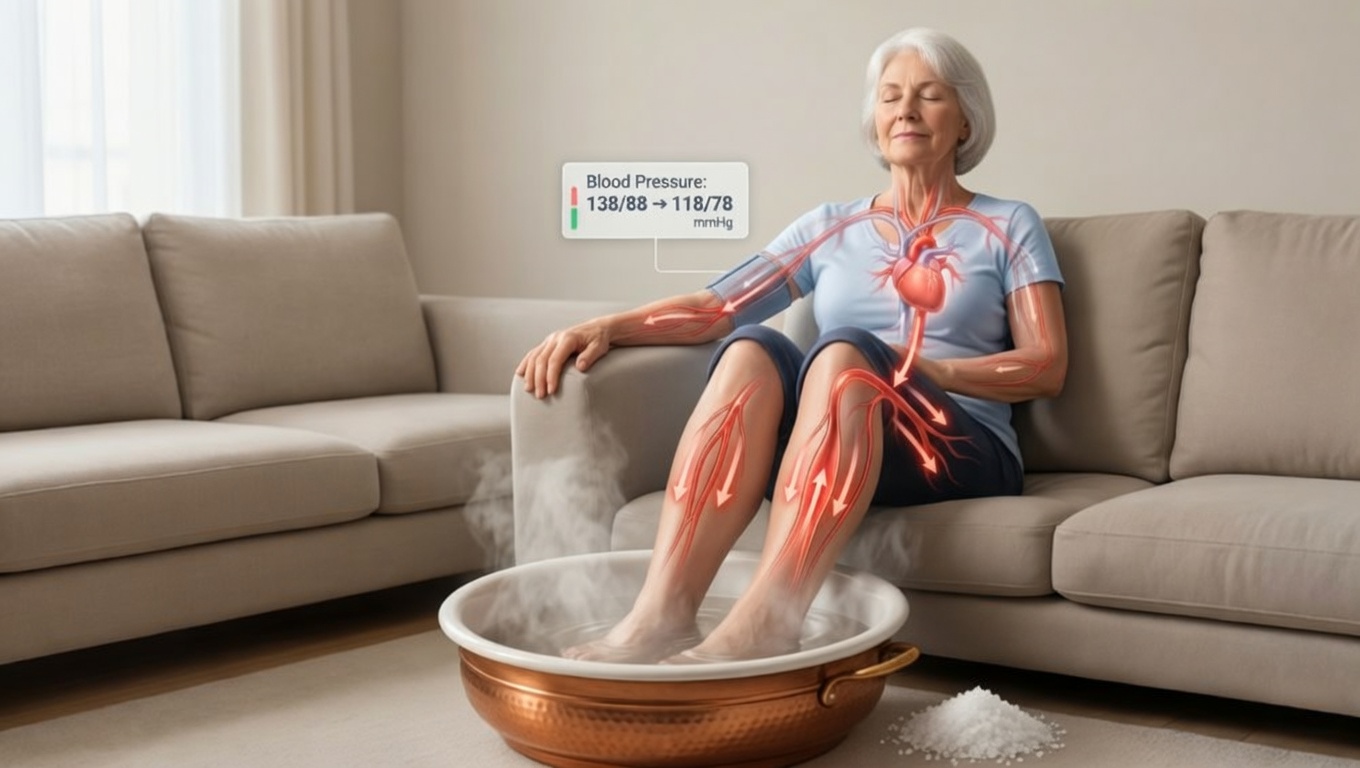
You may start to feel more relaxed and notice lower blood pressure after just a few minutes, but staying in for the full 10–15 minutes maximizes the effect.
Why a Foot Soak Helps Reduce Blood Pressure
Warm water causes the blood vessels in your feet and lower legs to dilate (widen). This:
- Draws more blood into the vessels of your extremities
- Reduces the amount of blood remaining in the central circulation
- Lowers total vascular resistance—similar to easing a traffic jam in your circulatory system
With less resistance, the pressure against artery walls decreases. This simple ritual can reduce systolic blood pressure by up to 10 points in some individuals.
Even more promising, doing this regularly—about 4–5 times per week—may support a sustained reduction in baseline blood pressure over time, especially when paired with other healthy habits.
Your Blood Pressure Is More in Your Control Than You Think
Managing high blood pressure doesn’t always have to start with a prescription. You now have three quick, practical tools you can use almost anytime:
- 90-second ear massage (auricular acupressure) to activate the vagus nerve
- 60-second guided body scan to calm your mind and nervous system
- 10–15 minute warm foot soak to reduce vascular resistance and ease pressure
Each method works by directly influencing your nervous system and the tone of your blood vessels, showing how small, targeted actions can create meaningful physiological change.
These techniques are not a replacement for medical care or prescribed blood pressure medications, but they are powerful additions to your self-care toolkit. Used consistently, they can help you smooth out stress-related spikes, support healthier readings, and give you a greater sense of control over your cardiovascular health—one simple practice at a time.