A Gut-Healing Shake That Beats Omega‑3 for Inflammation
Omega‑3 is often treated like the ultimate weapon against inflammation. People debate fish oil versus algae oil, capsules versus liquid, how many grams per day—and to be fair, the science is clear: omega‑3 fats do lower inflammation.
However, a recent human study uncovered something even more impressive—and very unexpected. A simple drink made from just two ingredient categories outperformed omega‑3 on a broad range of inflammatory markers. And the difference wasn’t small.
Even more surprising, this wasn’t a high-tech drug or experimental compound. It was basically a fermented drink combined with fiber—a synbiotic mix you can easily recreate at home.
In this guide (inspired by the insights of Felix Harder), you’ll learn:
- What the study actually did and why it matters
- How this drink targets inflammation at its root—your gut
- Who is most likely to benefit
- How to make your own version with everyday ingredients
This is not an “anti–omega‑3” argument. Omega‑3 is still very valuable. But this research highlights a deeper truth: for many people, chronic inflammation starts in the gut. Once you understand that, your whole approach to reducing inflammation can change.
Key Takeaways
-
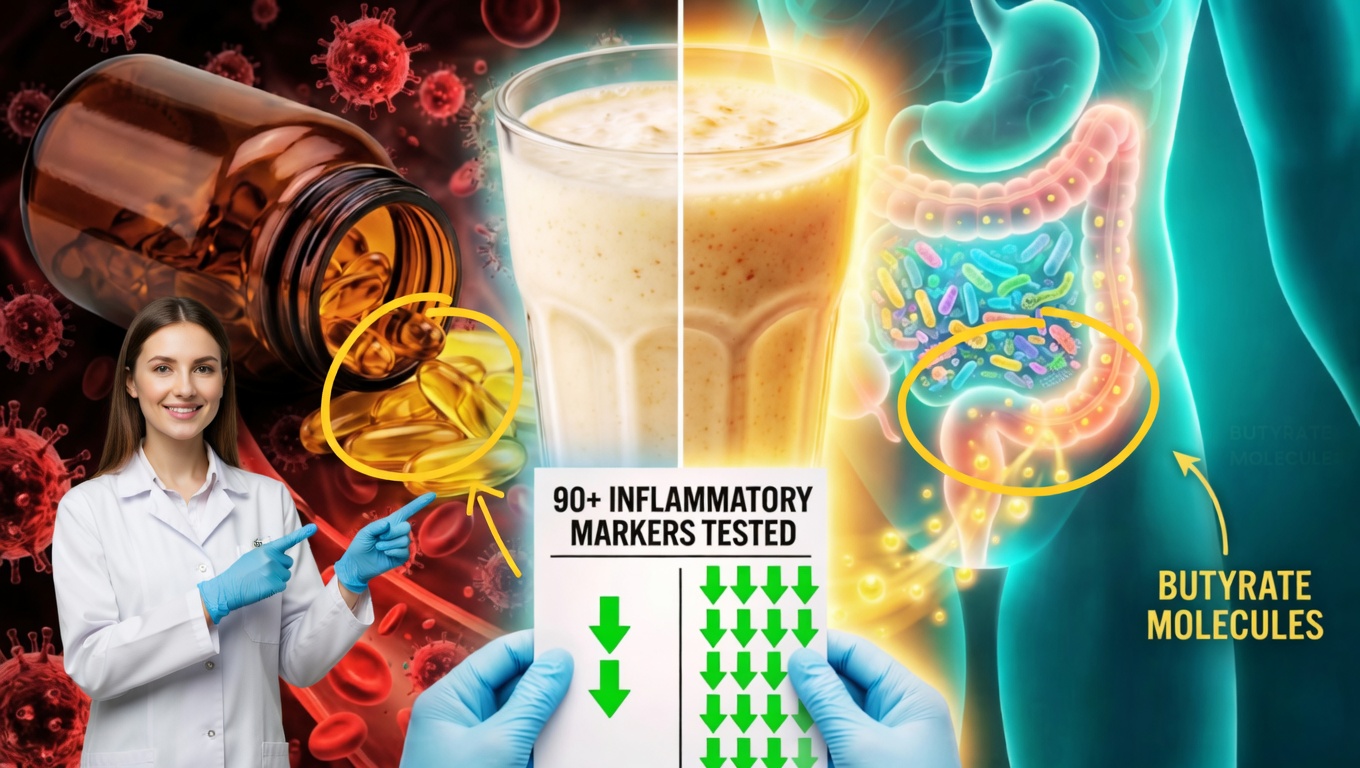
A Powerful Alternative: A new clinical trial in humans showed that a synbiotic shake (fermented kefir as a probiotic + a mix of prebiotic fibers) reduced a much wider range of inflammatory markers than a standard 500 mg dose of omega‑3.
-
Gut-First Strategy: The shake’s effectiveness comes from targeting gut health—improving the microbiome and strengthening the intestinal barrier—tackling a core source of chronic inflammation.
-
Butyrate: The Key Player: The kefir + fiber combo dramatically increased butyrate, a short-chain fatty acid that sends strong anti-inflammatory signals and helps calm an overactive immune system.
-
Simple to Make at Home: You can mimic the study protocol using plain kefir and a small blend of different prebiotic fibers. Start low and increase gradually so your digestive system can adapt.
-
Best Used Together: This is not a choice between omega‑3 and the shake. Using both can create a powerful, complementary anti-inflammatory strategy—from the gut upward and from the top down.
1. The Study: A Deep Dive into Inflammation
To understand why this trial is so important, it helps to look at how it was designed.
Researchers ran a six-week intervention with real participants and took blood samples before and after. Instead of focusing on just one or two common inflammation markers like C‑reactive protein (CRP), they used an advanced panel that tracked over 90 different inflammatory proteins at the same time.
That matters because inflammation isn’t a single marker; it’s a complex network of cytokines and signaling proteins. A broad panel gives a much clearer picture of how an intervention really affects the body.
Participants were divided into four groups:
-
Omega‑3 Group
- Took about 500 mg of omega‑3 per day (a typical supplemental dose).
-
Fiber-Only Group
- Consumed inulin, a single type of prebiotic fiber.
-
Synbiotic Shake Group
- Drank a daily shake made from fermented kefir (a probiotic-rich beverage) plus a blend of multiple prebiotic fibers.
-
Control Group
- Took no active intervention and served as the comparison baseline.
After six weeks, all three intervention groups showed some improvement compared with the control group—but one clearly stood apart.
2. The Results: Why the Synbiotic Shake Came Out on Top
The omega‑3 group did exactly what researchers expected. It lowered a small number of well-known inflammatory markers, such as TNF‑alpha. This lines up with the established benefits of omega‑3: reliable but relatively focused anti-inflammatory effects.
The fiber-only group, taking just inulin, produced a similar pattern—some improvement, but limited in scope.
The synbiotic shake group, however, produced a very different outcome:
- It reduced a much broader range of inflammatory proteins, not just a few.
- It significantly lowered immune signaling molecules tied to inflammation in the gut lining, including IL‑6.
- The changes didn’t look like a mild, general suppression—they looked like a strong, targeted calming of inflammation at the gut level.
Across nearly all measured markers, the effect size in the shake group was clearly stronger than in the omega‑3 group. This suggests the shake wasn’t just modulating inflammation somewhere downstream—it was addressing a major source of inflammatory signaling right where it begins for many people: the gut.
3. The Secret Weapon: Butyrate and Short-Chain Fatty Acids
To understand how the shake was so effective, the researchers looked at short-chain fatty acids (SCFAs) in the blood. SCFAs are produced when your gut bacteria ferment dietary fibers. One SCFA in particular—butyrate—is especially important.
After six weeks on the synbiotic shake:
- Participants’ butyrate levels rose sharply.
- There was a clear correlation: the higher a person’s butyrate went, the more their IL‑6 levels dropped.
IL‑6 is a major driver of chronic, low-grade inflammation associated with:
- Fatigue and brain fog
- Metabolic issues
- Mood disturbances
- Autoimmune tendencies
This pattern tells us something crucial: the shake was not just acting like a natural “anti-inflammatory pill.” It was reshaping the gut ecosystem, encouraging beneficial microbes to thrive and produce more butyrate.
Butyrate then acts as a powerful signal:
- Nourishing cells in the gut lining
- Reducing intestinal permeability (helping repair a “leaky” gut)
- Sending anti-inflammatory messages to the immune system
In other words, the shake was helping the body generate its own anti-inflammatory chemistry from the inside out.
4. Who Can Benefit Most? Recognizing Gut-Driven Inflammation
This kind of intervention is especially relevant for people dealing with what can be called gut-driven inflammation.
This includes:
- People with obvious digestive symptoms
- Bloating
- Food sensitivities
- IBS-type complaints
- Acid reflux
- Constipation or irregular bowel movements
But it also likely includes many people without clear gut issues who struggle with:
- Daily tiredness or low energy
- Brain fog or difficulty concentrating
- Unexplained joint or muscle pain
- Low mood or irritability
- Skin problems like acne, eczema, or rashes
Your gut houses the largest immune organ in the body. When the gut lining is irritated, overly permeable (“leaky”), or when the microbiome is out of balance, immune cells in the gut get triggered. They begin releasing inflammatory cytokines that enter the bloodstream and affect tissues throughout the body.
Omega‑3 can help dampen some of those inflammatory signals, but it does not rebuild the gut barrier or rebalance the microbiome.
The synbiotic shake, on the other hand, appears to:
- Feed beneficial bacteria
- Increase microbial diversity
- Support production of butyrate and other SCFAs
- Promote a healthier, more resilient gut lining
That’s likely why its anti-inflammatory impact was broader and stronger: it works at the level of cause, not just symptoms.
5. How to Make the Anti-Inflammatory Shake at Home
Now to the practical part: what was actually in the shake, and how can you create your own version?
The formula is surprisingly simple—just two components.

Component 1: Probiotic Base (Kefir)
In the study, participants drank 170 ml (about ¾ cup) of goat milk kefir containing 27 different strains of live bacteria.
The important idea here is microbial diversity. Real fermented foods provide a rich mix of organisms, unlike many supplements that contain only one or two strains.
For a home version, you can use:
- 150–200 ml (a small glass) of plain, unsweetened kefir, such as:
- Goat milk kefir (ideal if you tolerate it well)
- Cow milk kefir (also an excellent choice)
- If dairy-sensitive: water kefir or coconut kefir as alternatives
Aim for unflavored, unsweetened kefir to avoid added sugars that can work against your gut goals.
Component 2: Prebiotic Fiber Blend
The researchers used a commercial mix of 18 different fibers. The key principle is, again, diversity—different fibers nourish different beneficial bacteria.
You don’t need the exact product to get a similar effect. A basic DIY approach might include small amounts of multiple fibers, for example:
- ½ teaspoon of inulin powder
- ½ teaspoon of partially hydrolyzed guar gum (PHGG) or acacia fiber
- ½ teaspoon of resistant starch (such as from unmodified potato starch or green …)
The idea is to give your gut microbes a variety of fermentable fibers so they can produce more SCFAs, especially butyrate.
How to Use It Wisely
- Start low: Begin with very small amounts of fiber (even less than the amounts above) if your digestion is sensitive.
- Increase gradually: Slowly build up over days or weeks as your gut adapts.
- Combine with omega‑3: For many people, keeping their omega‑3 supplement and adding this gut-focused shake offers a powerful two-pronged approach to inflammation.
By targeting your gut microbiome and gut lining with a synbiotic kefir + fiber shake, you’re not just trying to silence inflammation—you’re working on one of its primary sources. Combined with omega‑3, this can become a robust, science-backed strategy to calm inflammation from both ends of the system.