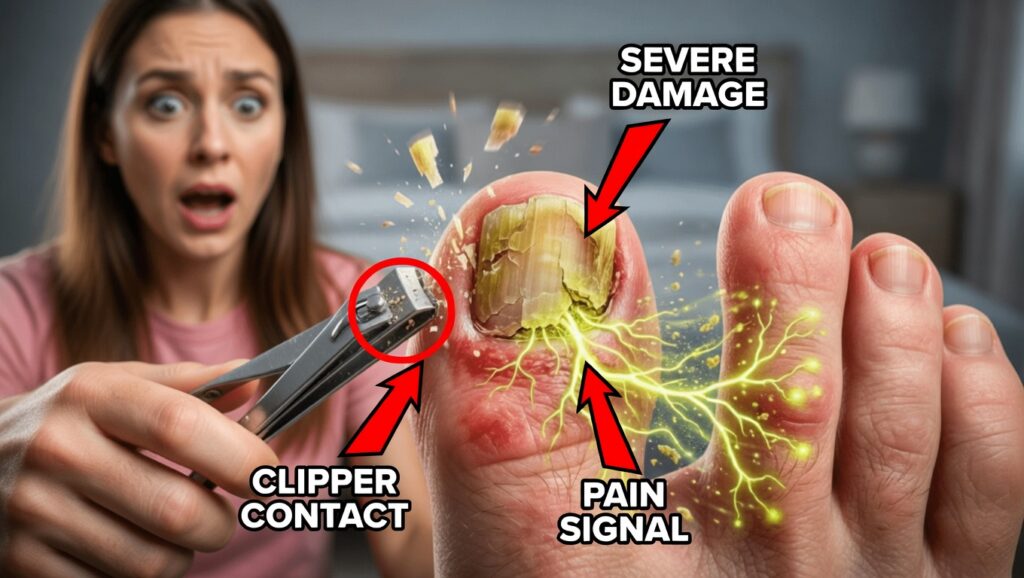
Stop Hiding Your Feet: A Simple Home Remedy for Yellow, Thick Toenails
Are your toenails yellow, thick, brittle, or crumbling when you try to cut them? Do they look dull and lifeless, making you feel self‑conscious about wearing sandals or going barefoot?
Those nails didn’t change overnight—and it’s not just “old age” or dirt. It’s an infection.
You’re most likely dealing with toenail fungus (onychomycosis). Fungus doesn’t simply disappear; it stays, spreads, and usually gets worse if you ignore it.
Based on the insights of Oswaldo Restrepo RSC, this guide will show you:
- A simple foot soak you can make at home with two very cheap ingredients that can start fighting the fungus in the first weeks.
- The common mistakes that ruin your results.
- Exactly when a home remedy is not enough and you must see a doctor.
Key Takeaways
-
The Problem:
Yellow, thick, brittle toenails are most often caused by a fungal infection that loves warm, moist, dark places—like sweaty feet inside closed shoes. -
The Home Remedy:
A daily 20‑minute foot soak in warm water, white vinegar, and baking soda helps change the nail environment, making it hard for fungus to survive. -
Critical Mistakes to Avoid:
Not drying your feet properly after the soak is the biggest error. You also need to rotate your shoes, be patient with nail growth, and never share nail tools. -
When to See a Doctor:
If the infection is severe, involves most or all nails, causes pain, or if you have diabetes or a weakened immune system, home remedies are not enough—you need medical treatment.
1. What Yellow, Thick Toenails Really Mean (Yes, It’s Fungus)
Let’s clarify what’s going on. Fungi are everywhere—on floors, in shoes, in public showers, and around swimming pools. They are microscopic organisms that don’t need sunlight to live.
When they find a place that is:
- Warm (from your body heat)
- Moist (from sweat)
- Dark (inside closed shoes)
they start to grow rapidly. Your feet in closed-toe shoes are almost the ideal habitat.
A tiny fungus can slip under your nail through:
- A small cut around the nail
- A crack or split in the nail plate
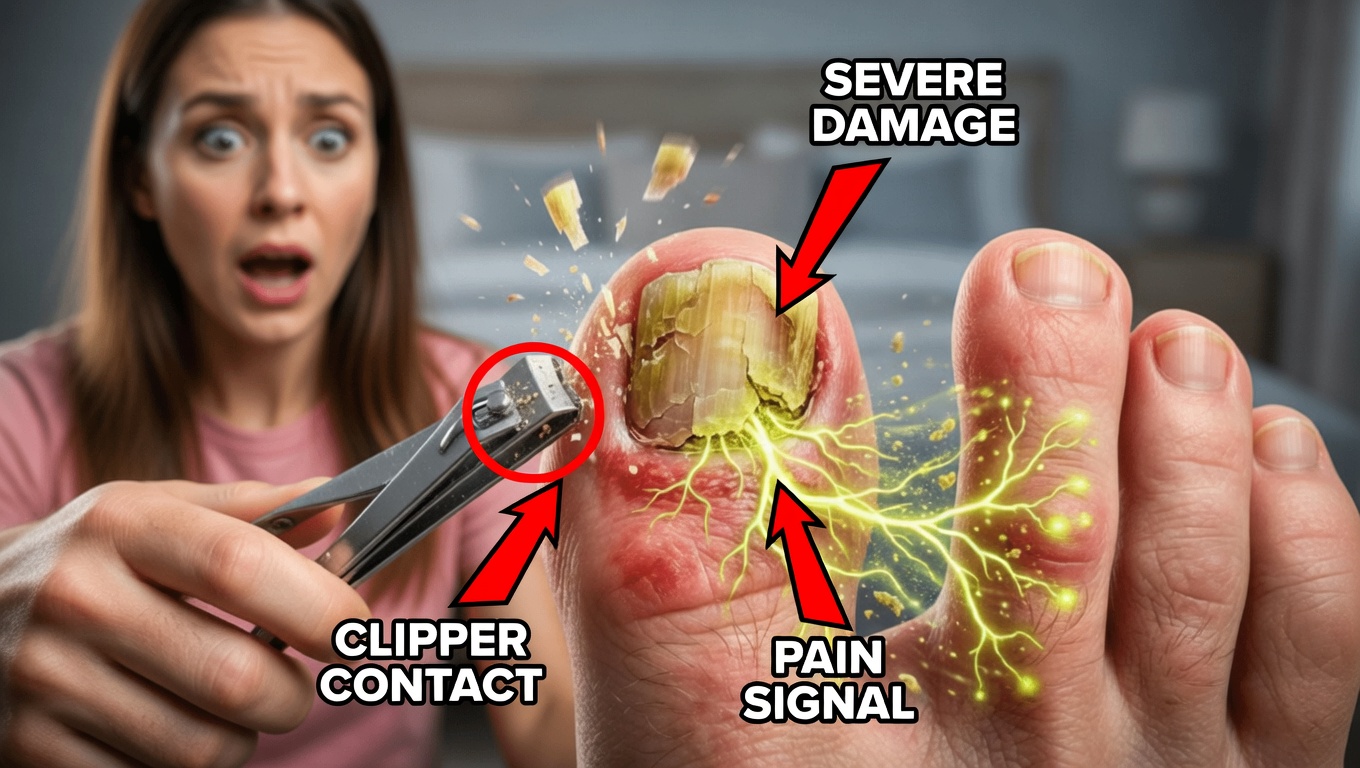
Once inside, the fungus feeds on keratin, the protein that forms your nail. As it multiplies, the nail begins to:
- Turn yellow or brownish as the fungus lives inside the nail
- Become thicker, as the nail tries to protect itself by producing more keratin
- Turn brittle and crumbly, because the fungus is breaking down the nail structure
This isn’t just a cosmetic issue. It’s a real infection that needs consistent treatment.
2. A Simple At‑Home Foot Soak for Toenail Fungus
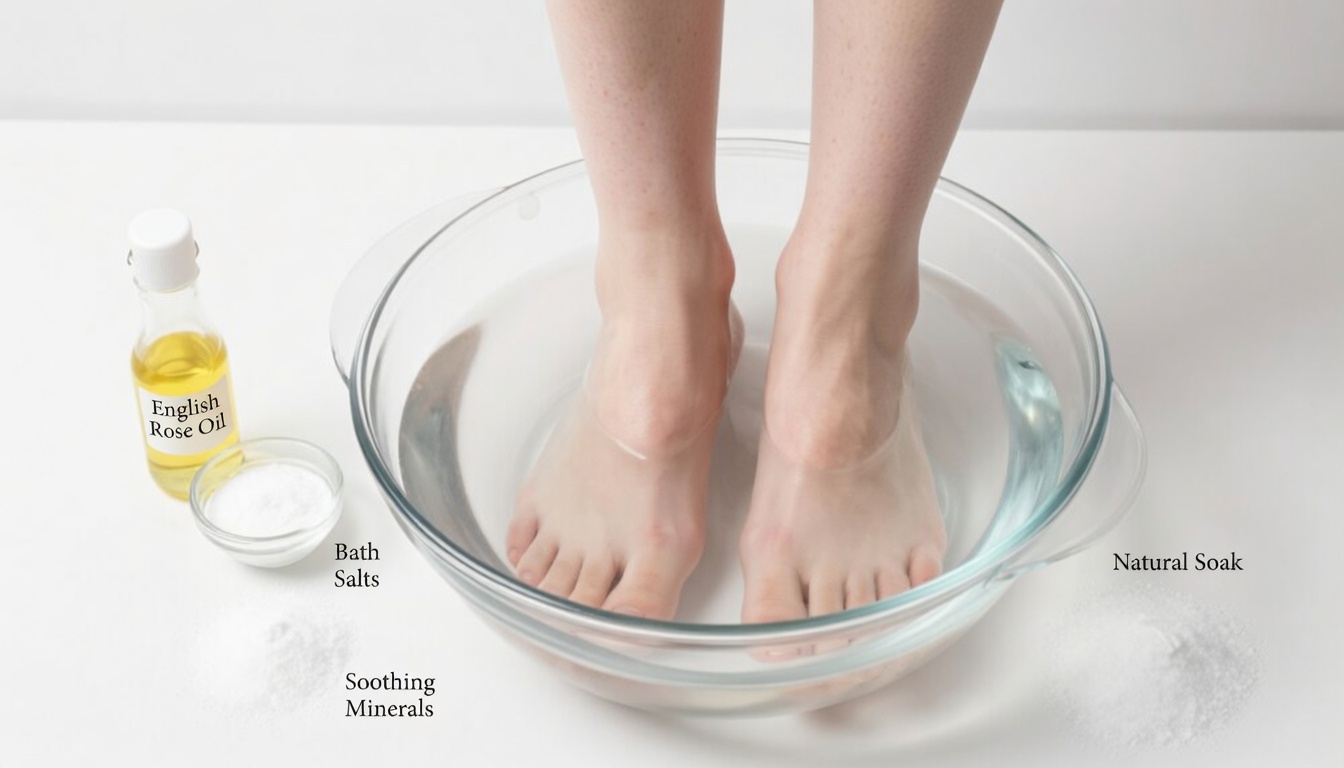
Here’s the basic, low‑cost antifungal foot soak you can prepare at home. No fancy products required.
Ingredients
- ½ liter of warm water
- ½ cup of white vinegar (regular household or cleaning vinegar)
- 2 tablespoons of baking soda
How to Use It
- Pour the warm water into a basin or bowl large enough for your feet.
- Add the white vinegar and baking soda and mix well.
- Place your feet in the solution and soak for 20 minutes.
- After soaking, dry your feet extremely well, especially:
- Between each toe
- Around and under the nails, as much as possible
Do this every day for at least four weeks.
That’s your starting formula:
Warm water + white vinegar + baking soda + 20 minutes daily.
3. Four Common Mistakes That Destroy Your Results
The soak can be very effective—but only if you avoid these frequent errors.
Mistake #1: Not Drying Your Feet Properly
This is the number one mistake.
Fungus thrives in moisture. If your feet stay damp after the soak, you’re giving the fungus exactly what it wants.
- Dry carefully between the toes.
- Use a clean, dry towel.
- Let your feet air-dry for a few minutes before putting on socks or shoes.
Mistake #2: Wearing the Same Shoes Every Day
Fungus can live inside your shoes.
If you treat your feet but immediately put them back into the same damp, contaminated shoes, you risk reinfecting yourself.
- Rotate your shoes—don’t use the same pair two days in a row.
- Allow each pair to dry completely for at least 24 hours.
- If possible, spray the inside with an antifungal shoe spray or use antifungal powder.
Mistake #3: Expecting a Miracle in One Week
Nails grow very slowly.
Even when the fungus starts dying, the damaged yellow nail will not magically disappear—it has to grow out and be trimmed off over time.
- Toenails can take months to fully grow out.
- The soak stops the infection so that new nail grows in healthier.
Be patient. Think of this as a long-term process, not a quick fix.
Mistake #4: Sharing Nail Clippers or Files
Toenail fungus is contagious.
If you use the same tools on infected and healthy nails, you can easily spread the fungus.
- Use separate clippers or files for infected and non-infected nails.
- Disinfect metal tools with alcohol after every use.
4. How Vinegar and Baking Soda Help Fight Nail Fungus
Why does this mixture help? It’s not magic; it’s chemistry. Each ingredient attacks the fungus in a different way.
How Vinegar Helps
- Vinegar is acidic.
- Fungus struggles to survive in a highly acidic environment.
- The vinegar soak lowers the pH around the nail and skin, making it harder for the fungus to grow and spread.
How Baking Soda Helps
- Baking soda is great at absorbing moisture.
- Fungus needs a damp environment to thrive.
- By helping keep the area drier, baking soda makes life difficult for the fungus.
Together, they deliver a double attack:
- Vinegar: changes the pH and disrupts the environment.
- Baking soda: reduces moisture that the fungus depends on.
5. Four Major Improvements You Can Expect
If you follow the routine consistently, you’re likely to notice several benefits.
1. The Yellowing Stops Spreading
After 2–3 weeks of daily soaks, you should see that the fungus is no longer progressing:
- The nail doesn’t get more yellow.
- The thickness stops increasing.
This is a strong sign the environment is becoming hostile to the fungus.
2. New, Healthy Nail Starts to Grow
After about one month, look at the base of the nail (near the cuticle):
- You may see clearer, healthier nail starting to grow in.
- It should look pink, smooth, and more natural.
This new growth is a sign that the fungus is being controlled and the new nail is growing in cleaner.
3. Less Foot Odor
Fungal infections often cause an unpleasant smell.
As you reduce the fungal population:
- Foot odor typically decreases significantly.
- Your feet smell cleaner and fresher.
4. Reduced Itching Between the Toes
Toenail fungus frequently appears alongside athlete’s foot (a fungal infection of the skin between the toes).
The soak can help with this too:
- Itching and burning tend to reduce.
- The skin between your toes can look less red, less flaky, and healthier.
6. Your Exact 2‑Month Toenail Fungus Protocol
Consistency is everything. Here’s a step‑by‑step plan for the first two months.
Weeks 1–4: Daily Soaks and Nail Preparation
- Every day, prepare your soak:
- ½ liter warm water
- ½ cup white vinegar
- 2 tablespoons baking soda
- Soak your feet for 20 minutes.
- Dry thoroughly afterward, especially between toes.
- Optional but helpful: after drying, apply one drop of tea tree oil to each infected nail (tea tree oil has antifungal properties for some people).
- Once or twice a week, gently file the surface of the thickened nails:
- This helps thin the nail slightly.
- It allows the vinegar solution to penetrate deeper into the nail.
Weeks 5–8: Continue the Routine and Track Progress
- Keep doing the same daily soak.
- By now, you should see clear new growth near the cuticle area.
- Stay committed until the old, infected part of the nail:
- Grows out completely
- Can be safely trimmed away
Remember: for toenails, full regrowth can take 6 months or more, depending on how fast your nails grow and how severe the infection was.
Additional Hygiene During the Whole Period
Throughout the treatment:
- Regularly disinfect your shoes with antifungal spray or powder.
- Allow shoes to dry completely before wearing them again.
- Change your socks daily, or more often if your feet sweat a lot.
- Choose breathable footwear when possible to reduce moisture.
These habits help prevent reinfection and support the progress you’re making with the soak.
When a Home Remedy Is Not Enough
While this home soak can be very helpful, it is not a replacement for medical care in certain situations. See a doctor or podiatrist if:
- The infection is severe or involves most or all toenails.
- Your nails are causing pain, swelling, or difficulty walking.
- You have diabetes, circulation problems, or a weakened immune system.
- The nails look black, very deformed, or are separating from the nail bed.
- You’ve tried home remedies for several months with no improvement.
In these cases, professional treatments—such as prescription antifungal tablets, medicated nail lacquers, or other therapies—may be necessary to fully clear the infection.
Sticking to this simple vinegar and baking soda soak, avoiding the common mistakes, and knowing when to seek professional help can put you back on the path to clearer, healthier toenails—and feet you won’t be afraid to show.