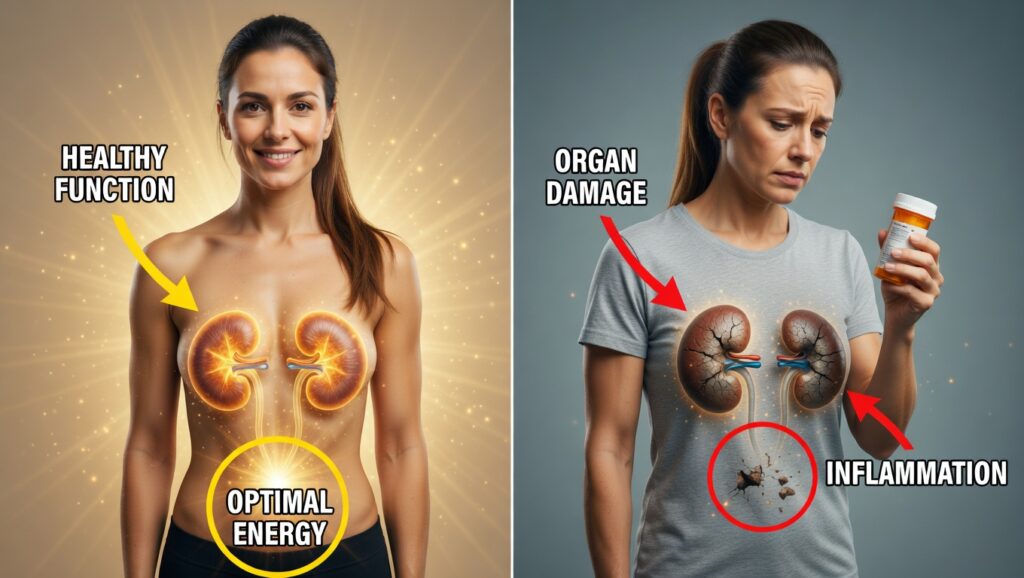
Statins, Cholesterol, and the Mitochondria Question
Have you or someone close to you been diagnosed with high cholesterol and immediately put on a statin? Statins are among the most commonly prescribed—and most profitable—medications in the world. As an MD PhD, when I was told I had high cholesterol, I received the same standard prescription: a statin.
I had reservations based on my background in biochemistry, but I also wanted to stay open-minded and evidence-based. So I did what scientists do—I turned it into an experiment on myself. I started the statin and tracked my response. Soon after, I developed muscle pain (myalgias), and my blood work showed a rise in a marker of muscle damage.
What worried me most wasn’t just the pain. It was what the pain might be signaling: stress or damage to the mitochondria—the tiny “power plants” inside our cells that generate energy for everything from muscle contraction to brain activity.
This article is not about fearmongering or telling you to throw away your prescription. It is about sharing underrecognized scientific data so you can have a truly informed discussion with your healthcare provider. We will look at new human research on how statins influence cellular energy, explore other options for managing cholesterol, and consider why this information is often overlooked.
The insights here are based on the work and experience of Dr. Nick Norwitz, MD PhD, and aim to give you the full picture: potential benefits, possible trade-offs, and the broader context—so you can make the most informed choice for your own body.
Key Takeaways
-
Statins can affect your mitochondria: These drugs may interfere with mitochondrial function, which can influence muscle health, energy levels, and possibly brain and heart function.
-
Human studies raise important concerns: A controlled clinical trial found that a commonly used statin, even at low concentrations, markedly impaired muscle metabolism and mitochondrial performance in people.
-
You are not limited to statins alone: There are other cholesterol-lowering medications, targeted supplements like Coenzyme Q10, and powerful lifestyle interventions that can support heart and metabolic health.
-
Lifestyle strongly influences mitochondrial health: Quality sleep and regular, especially high-intensity, exercise are key strategies for protecting and improving mitochondrial function.
-
Informed consent matters: Understanding both the benefits and risks of any drug, including statins, is essential. This information can help you have a more nuanced, productive conversation with your doctor.
1. When the Doctor Becomes the Patient: A Personal Statin Experience
Reading about side effects in a medical journal is very different from living through them.
When my physician prescribed a statin for my elevated cholesterol, I chose to treat it as a structured self-experiment: an “n = 1” clinical trial. The outcome was rapid and concerning. I developed significant muscle soreness (myalgias), and lab tests showed elevated levels of a marker associated with muscle damage.
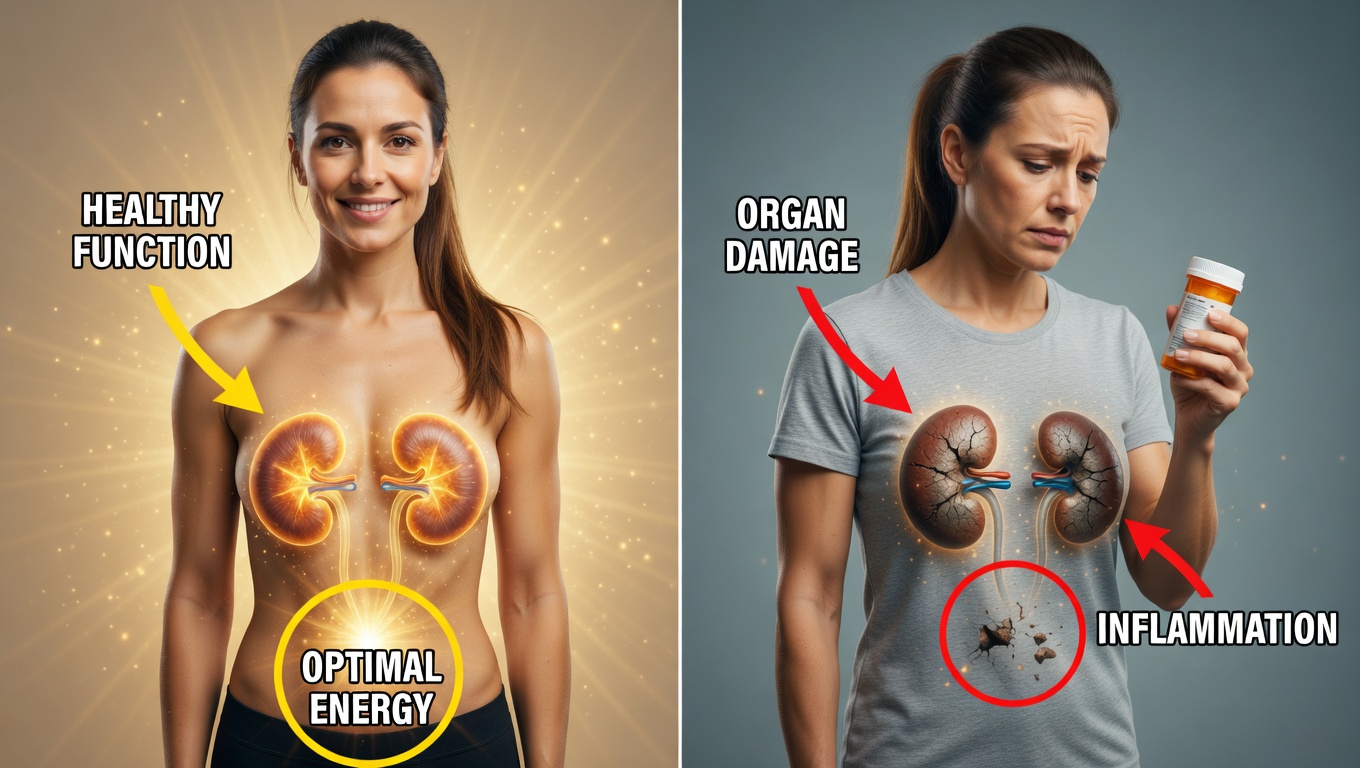
The discomfort itself was not my primary fear. The deeper issue was why this was happening. Statins are known to influence mitochondrial function—not only in skeletal muscle, but across the body, including organs like the heart and brain that are heavily dependent on efficient energy production.
If you run an experiment and the result is damaging, you don’t ignore it just because the sample size is one. You take it seriously and investigate further. This personal experience pushed me to dive back into the scientific literature and uncover research that is rarely highlighted in busy clinical settings.
2. The Science Behind Statins and Mitochondrial Damage
Let’s step away from anecdote and examine the hard data.
A study published in the Journal of Clinical Investigation investigated how statins affect muscle and mitochondrial function. Researchers recruited men and women with overweight or obesity and gave them a high dose (80 mg) of atorvastatin for 56 days.
They measured how quickly the participants’ muscles restored their oxygen levels after exercise—a direct marker of aerobic fitness and mitochondrial efficiency. This recovery rate reflects how well mitochondria can use oxygen to generate energy.
The results were striking: after only eight weeks, muscle oxygen recovery slowed by about 23%. The authors described this as a “decrease in muscle oxidative capacity.” Put simply, statin therapy impaired the muscles’ ability to generate energy efficiently.
To understand the mechanism, the researchers took muscle biopsies and tested the mitochondria directly. They found a consistent pattern: mitochondrial function declined with statin exposure. A particularly important part of the electron transport chain—complex IV—was inhibited by more than 50%, even at very low statin concentrations.
That’s like shutting down half of the critical machinery in your cells’ energy factory. When this happens in many cells at once, you can feel it as fatigue, muscle pain, or reduced exercise tolerance.
3. Beyond Statins: Other Options for High Cholesterol
The goal of sharing this information is not to leave you anxious or stuck, but to highlight that you have choices.
The toolbox for managing high cholesterol and cardiovascular risk is expanding. Statins can be very helpful for some people, especially those at high risk of heart attack or stroke. But that does not mean they are the only—or always the best—option for everyone.
Here are two other medications worth knowing about and discussing with your doctor:
Ezetimibe
- How it works: Instead of blocking cholesterol production in the liver like statins do, ezetimibe reduces cholesterol absorption in the gut. It inhibits a transporter protein in the intestinal wall, decreasing the amount of cholesterol that enters the bloodstream from food and bile.
- Effect on LDL: In response, the liver pulls more LDL (“bad”) cholesterol out of the blood, lowering LDL levels.
- Why it may matter for mitochondria: Because ezetimibe acts mainly in the intestines and not in muscle tissue, it is less likely to cause the mitochondrial or muscle-related side effects sometimes seen with statins.
Bempedoic Acid
- How it works: Bempedoic acid is a “prodrug”—inactive until it reaches the liver. Once activated, it inhibits an enzyme in the cholesterol production pathway, but a different one than statins target.
- Liver-specific action: Importantly, this drug is mainly active in liver cells and does not significantly accumulate in muscle.
- Muscle safety: Since it largely spares muscle tissue, it may carry a lower risk of muscle pain and mitochondrial disruption compared with statins.
To be clear, this is not a recommendation to start or stop any specific medication. The point is awareness. If you are experiencing side effects on a statin, or are concerned about mitochondrial health, it may be worth asking your healthcare provider whether alternatives like ezetimibe or bempedoic acid are appropriate for your situation.
4. Protecting Your Mitochondria: Practical Strategies
Regardless of whether you take a statin, supporting your mitochondria is one of the most powerful investments you can make in your long-term health.
Coenzyme Q10 (CoQ10) and Statins
Statins are known to interfere with the body’s production of Coenzyme Q10 (CoQ10), a critical molecule in the mitochondrial electron transport chain. CoQ10 works like a shuttle, carrying electrons between complexes so that energy (ATP) can be produced efficiently.
If you disrupt CoQ10 production, it’s like tripping the runner in a relay race just before they pass the baton. The entire energy-production process slows down, which can contribute to fatigue and muscle symptoms.
Supplementing with CoQ10 can help, but form matters:
- Standard CoQ10: Often poorly absorbed and not easily transported into the mitochondria where it is needed most.
- Phytosome phospholipid complex: A specialized formulation that packages CoQ10 in a lipid-based carrier. This design improves its ability to cross cell membranes and reach the mitochondria.
- Why it matters: These enhanced formulations can increase bioavailability by at least threefold compared to conventional CoQ10, meaning more of what you take actually gets used by your cells.
Lifestyle Foundations for Mitochondrial Health
Supplements are helpful, but they cannot replace the basics:
- Sleep: Deep, consistent, high-quality sleep is essential for mitochondrial repair, hormonal balance, and recovery from daily stress.
- High-intensity exercise: Short bursts of intense activity—like hill sprints, jump training, or alternating lunges—send a powerful signal to your body to build more and stronger mitochondria. This is known as mitochondrial biogenesis.
- Think “progressive overload” for your cells: Just as you get stronger by gradually lifting heavier weights, you improve mitochondrial capacity by periodically challenging your cardiovascular and muscular systems. Over time, this makes your body more efficient at generating energy and more resilient overall.
5. Why You Rarely Hear This in the Mainstream Medical System
You might be asking: if human studies show that statins can impair mitochondrial function and potentially promote issues like insulin resistance, why isn’t this top-of-mind in everyday clinical practice?
In a previous analysis, I reviewed a human trial showing that statin therapy could increase insulin resistance and lower levels of GLP-1, a hormone crucial for glucose regulation and metabolic health. One common criticism was that the study was “small,” as if that alone invalidated the findings.
But sample size does not automatically determine whether a study is meaningful. What matters is:
- Effect size: How large and consistent was the change?
- Biological plausibility: Does the result make sense based on what we know about the drug’s mechanisms?
- Replication and context: Are there other studies, case reports, or basic science findings pointing in the same direction?
When multiple lines of evidence suggest that a widely used drug class may have underappreciated downsides—especially involving fundamental systems like mitochondria—we should not dismiss the data simply because it’s inconvenient or because earlier trials were focused mostly on cardiovascular endpoints.
Several forces can contribute to this blind spot:
- Clinical time pressure: Most clinicians have limited time and rely heavily on guidelines and summaries, not deep dives into every new mechanistic study.
- Guideline lag: Medical guidelines often take years to incorporate emerging science, especially when it complicates a simple “statins for everyone with high LDL” narrative.
- Research and industry incentives: Large, expensive trials are usually funded to demonstrate benefits like reduced heart attacks, not to thoroughly explore subtle metabolic side effects.
None of this means statins are “bad” or that no one should take them. It does mean we should apply the same critical thinking to side-effect data as we do to benefit data, and respect patients’ right to understand both sides of the equation.
Making an Informed Choice
Statins have unquestionably helped many people reduce their cardiovascular risk. At the same time, research indicates they can impair mitochondrial function and energy metabolism in ways that deserve more attention.
You have the right to:
- Ask about the full risk–benefit profile of any medication you are offered.
- Discuss alternatives—pharmaceutical, supplemental, and lifestyle-based.
- Monitor and report side effects, especially muscle pain, fatigue, or changes in exercise tolerance.
- Work collaboratively with your healthcare provider to find a plan tailored to your body, your risks, and your values.
Armed with an understanding of how statins can affect your mitochondria, what other options exist, and how lifestyle can strengthen your cellular “powerhouses,” you are better equipped to make choices that truly serve your long-term health.