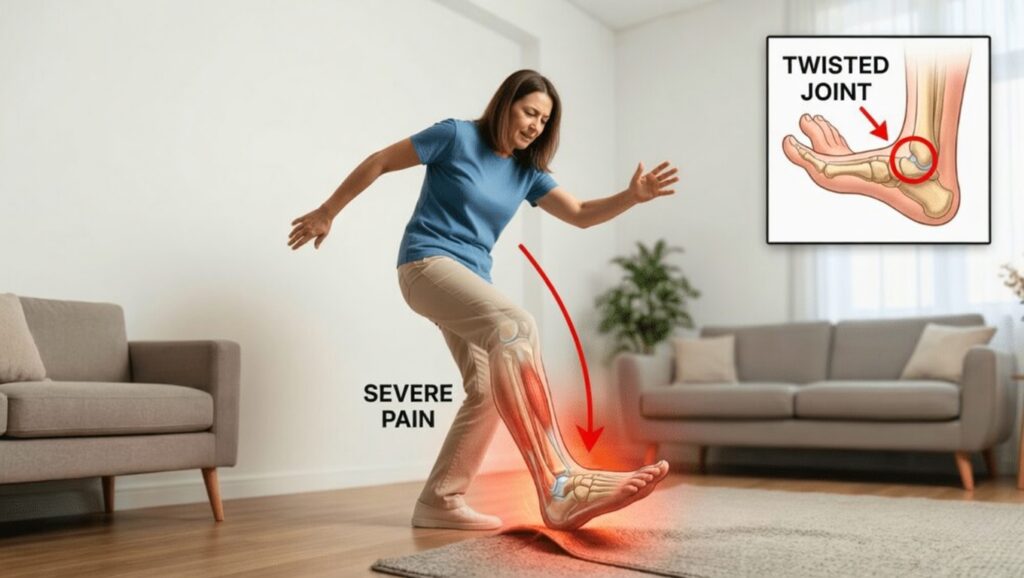
Regain Ankle Dorsiflexion: The Small Ankle Movement That Protects Your Independence
Losing just one seemingly minor ankle movement can make everyday tasks—walking, getting out of a chair, squatting to pick something up, or going up and down stairs—feel dramatically harder. Even more worrying, more than half of people over 60 have already started to lose this movement without knowing it, until their mobility and independence begin to decline sharply.
That movement is ankle dorsiflexion—the action of drawing your toes up toward your shin. It might not look like much, but it is essential for smooth, safe movement and for staying active as you age. When dorsiflexion disappears, life gets more difficult very quickly.
The positive news: you can restore this motion, often faster than you think. Based on insights from physiotherapist Will Harlow, this guide explains why ankle dorsiflexion matters so much and how to get it back with simple, targeted exercises.
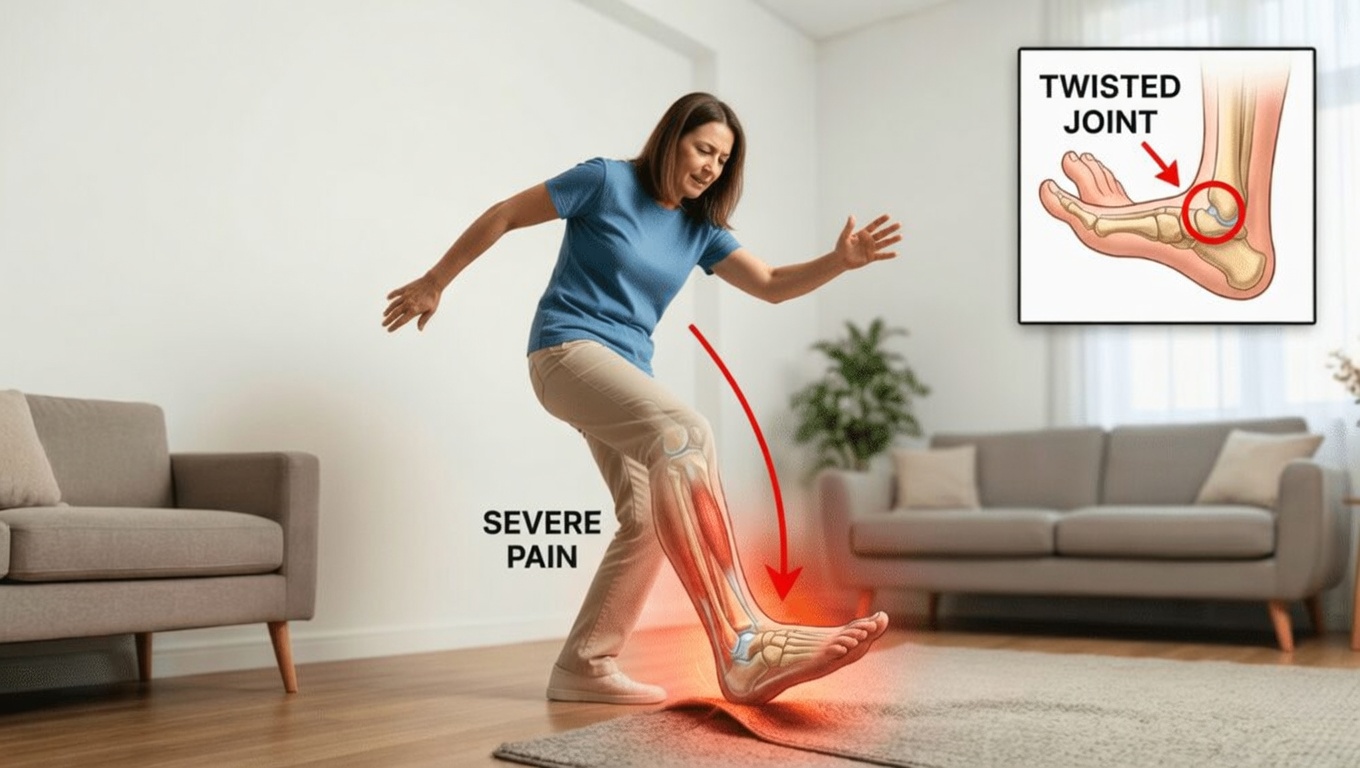
Key Takeaways
- The Key Movement: Ankle dorsiflexion—lifting your toes toward your shin—is fundamental for proper squatting, walking, and safely going downstairs.
- The Hidden Problem: Over 50% of adults over 60 have reduced dorsiflexion, which is linked to knee pain, balance problems, and a higher risk of falling.
- The Main Causes: A trio of issues—joint stiffness, tight calf muscles, and weak shin muscles (the “Evil Three”)—gradually rob you of ankle mobility.
- The Fix: You can reclaim lost ankle range of motion using a three-part strategy:
- Joint mobilization to restore movement
- Stretching to ease muscle tightness
- Strengthening to rebuild the muscles that lift your foot
1. Why Ankle Dorsiflexion Is Your Body’s Unsung Hero
Most people only think about their ankles when they sprain one. But the amount of motion available at your ankle joint heavily influences how the rest of your body moves. When you don’t have enough dorsiflexion, other joints are forced to compensate—and often pay the price.
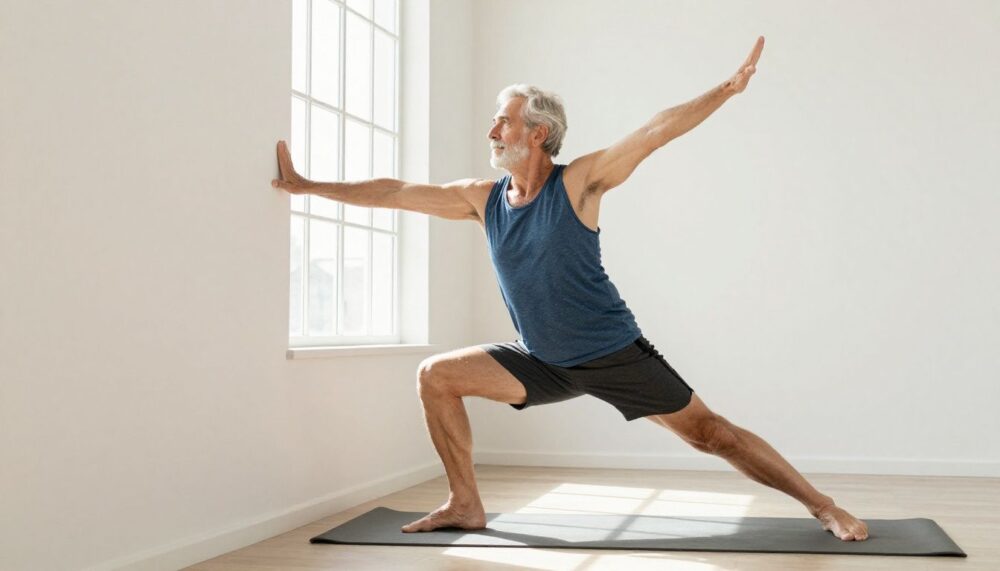
You Can’t Squat Efficiently
Consider how often you perform a squatting motion each day: sitting down and standing up, picking things up from the floor, or playing with children or grandchildren. A good squat requires your knees to move forward over your toes. Ankle dorsiflexion is the movement that makes this possible.
If your dorsiflexion is limited:
- Your heels tend to lift off the ground as you lower yourself.
- You feel unsteady and may lose your balance.
- You compensate by hinging more at the hips and rounding or straining your back.
This makes simple tasks feel awkward, inefficient, and potentially painful, especially in the lower back and hips.
Going Down Stairs Becomes Risky
Safe stair descent also depends on that knee-over-toe motion. It allows you to gently control your body weight from step to step.
With restricted dorsiflexion, your body has to find workarounds:
- Turning your feet outward
- Slapping your foot down heavily on each step
- Overloading the knee joint to absorb the impact
Research published in the European Journal of Applied Physiology shows that people with limited ankle dorsiflexion transfer significantly more stress to their knees. Over time, this can contribute to knee pain and joint degeneration.
Your Risk of Falling Increases
The most serious consequence of losing dorsiflexion is a higher likelihood of falls. Studies consistently show that older adults with poor ankle mobility:
- Fall more frequently
- Have worse balance and stability
When you walk, you need to clear your toes over the ground with every step. If your ankles are stiff and the muscles that lift your toes are weak, you are more likely to catch your foot on rugs, door thresholds, or uneven pavement. These seemingly minor trips can have major, life-changing consequences for people over 60.
2. Meet the “Evil Three”: The Main Culprits Behind Stiff Ankles
So why does ankle dorsiflexion fade as we get older? It usually isn’t one single cause. Instead, three issues tend to develop together—a combination that Will Harlow calls the “Evil Three”:
1. Joint Stiffness
This is a loss of mobility inside the ankle joint itself. Imagine a door hinge that hasn’t been used in a long time; it becomes rusty and hard to move. In a similar way:
- The joint capsule and surrounding tissues gradually tighten with inactivity.
- The bones of the ankle no longer glide smoothly.
- The joint becomes physically blocked from moving through its full range.
2. Muscle Tightness
Next are the muscles that cross the ankle joint, particularly your calf muscles. When they are chronically tight, they function like a short rope that prevents your heel from dropping and your toes from coming up.
Common contributors include:
- Long periods of sitting
- Years of wearing shoes with elevated heels
- Rarely, if ever, stretching the calves
Over time, these muscles shorten, and your dorsiflexion becomes more and more restricted.
3. Muscle Weakness
Every movement has an opposing movement. The muscle primarily responsible for lifting your toes—creating dorsiflexion—is the tibialis anterior, running along the front of your shin.
If this muscle becomes weak:
- You struggle to actively lift your toes and foot.
- Your foot may “drag” slightly as you walk.
- The risk of tripping rises substantially.
This is a classic “use it or lose it” situation. Without regular activation, the tibialis anterior weakens, and your control over the ankle diminishes.
When stiffness, tightness, and weakness are present together, many people lose almost all of their functional dorsiflexion. The good news? You can systematically address all three.
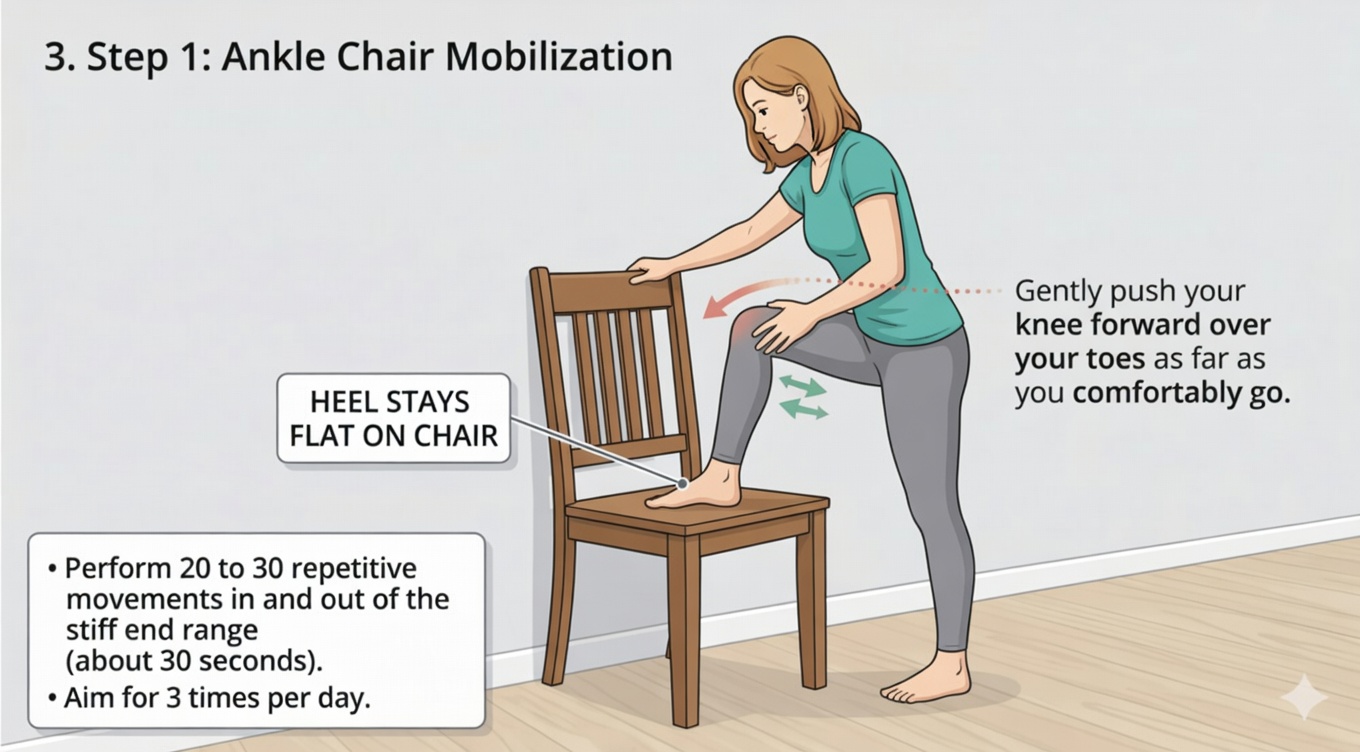
3. Step 1: Reduce Stiffness with the Ankle Chair Mobilization
To tackle joint stiffness, we use a mobilization—a controlled, repetitive movement that gently loosens the tissues around the joint and helps restore motion.
This simple chair exercise is an excellent starting point.
How to Do the Ankle Chair Mobilization
-
Set up the chair
- Choose a solid chair (such as a dining chair) and place it so the seat faces you.
- If needed, position the chair against a wall so it doesn’t slide.
-
Place your foot
- Put the foot of the leg you want to work on flat on the chair seat.
- Your heel must stay down on the seat throughout the exercise.
-
Position your body
- Sit or stand tall facing the chair.
- Place your hands on your knee or hold the back of the chair for balance.
-
Mobilize the joint
- Gently push your knee forward over your toes as far as feels comfortable, stopping just before your heel wants to lift.
- This is your current limit of dorsiflexion.
-
Move in and out of the end range
- From that position, rhythmically move your knee a little further forward and then back again.
- The motion is small—only a few inches forward and back—repeating into the stiffness, then easing off.
-
Dosage
- Perform 20–30 repetitions in one go (about 30 seconds).
- Aim for 3 sets per day on the ankle you are working to improve.
With daily practice, many people notice a meaningful increase in ankle movement within just a few weeks.
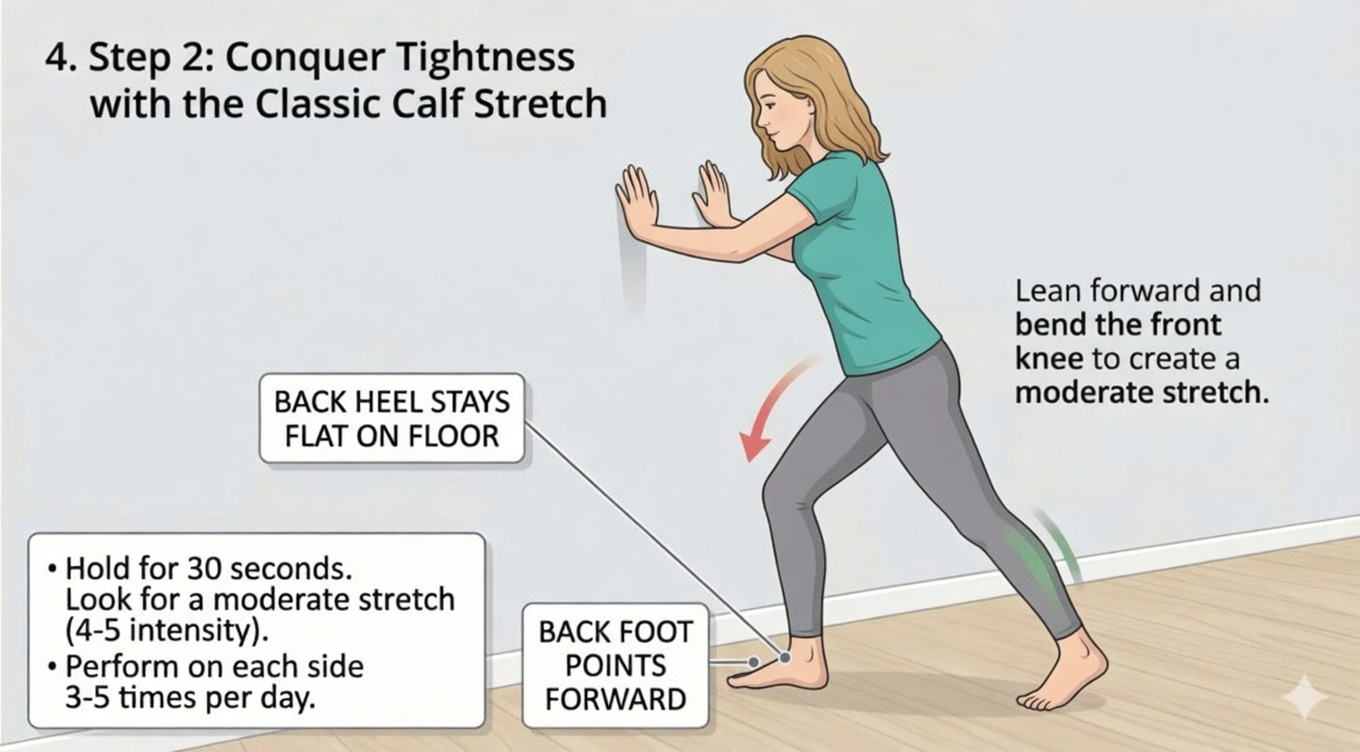
4. Step 2: Ease Tightness with a Classic Calf Stretch
Once you’ve started to free up the joint, the next step is to lengthen tight calf muscles. Regular, gentle stretching helps restore their normal length and allows the ankle to move more freely.
How to Do the Standing Calf Stretch
-
Face a support
- Stand facing a wall, kitchen counter, or the back of a sturdy chair.
- Place your hands on it for balance.
-
Step into position
- Move the leg you want to stretch straight back behind you.
- Keep the other leg bent in front of you.
-
Align your back foot
- Make sure the back foot points straight ahead, not turned out.
- Keep the entire foot, especially the heel, firmly on the floor.
-
Lean into the stretch
- Keep your back knee straight.
- Bend your front knee and lean forward until you feel a stretch in the calf of your back leg.
-
Find the right intensity
- Aim for a moderate stretch—around 4–5 out of 10 in intensity.
- Avoid forcing it; research shows that very painful stretching can be counterproductive. Gentle and consistent works best.
-
Hold and repeat
- Hold the stretch for 30 seconds. Anything shorter tends to produce only a brief change.
- Repeat on each side you want to improve.
- Return to this stretch 3–5 times per day.
Performed regularly, this simple routine can noticeably improve calf flexibility and ankle movement in 2–3 weeks.
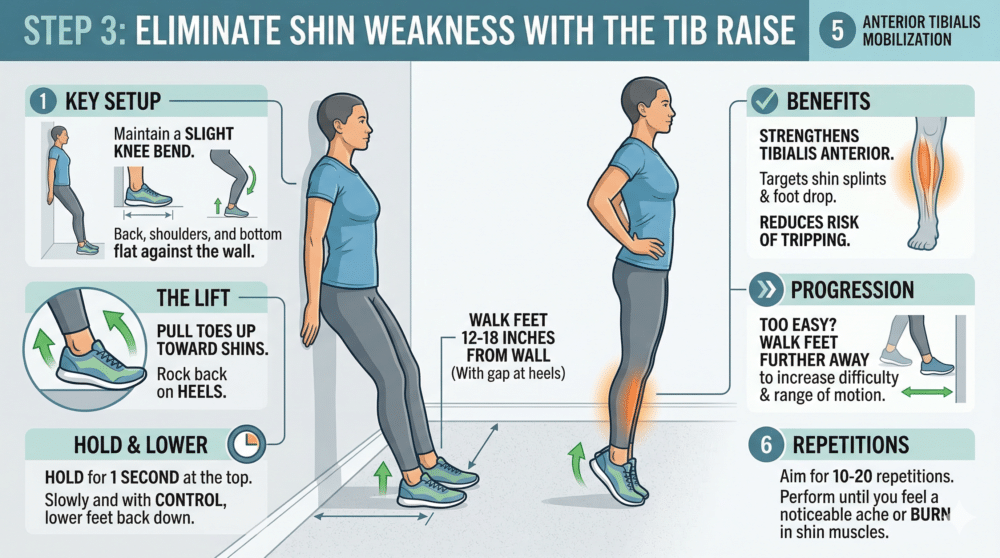
5. Step 3: Eliminate Weakness with the Tib Raise
The final piece of the puzzle is addressing weakness in the tibialis anterior, the muscle that runs along the front of your shin and lifts your toes toward your shin. Strengthening this muscle with a “tib raise” exercise helps you actively regain control of dorsiflexion and reduces your risk of tripping.