Give Your Pancreas a Break Before Bed
Before you fall asleep tonight, take a moment to think about a small, quiet organ that has an outsized impact on your health: your pancreas. Most people barely notice it—until there’s a problem. Yet this hardworking organ is constantly busy, keeping your blood sugar, metabolism, and energy in balance.
Now think back to what you ate after dinner. Did you reach for something sweet? A dessert, a bowl of cereal, or even a slice of toast? If so, you may have pushed your pancreas into high gear at the very time it was meant to be winding down.
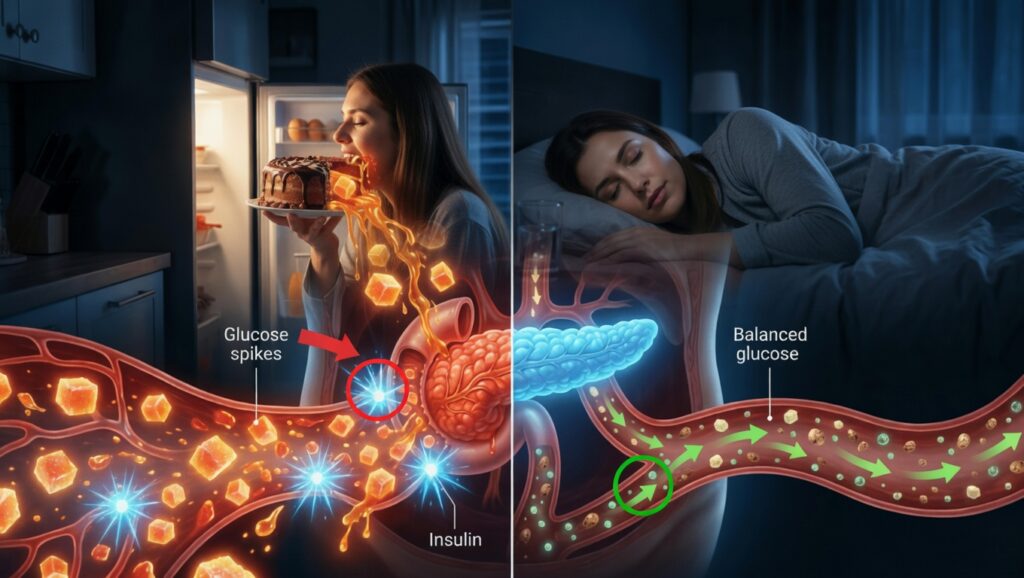
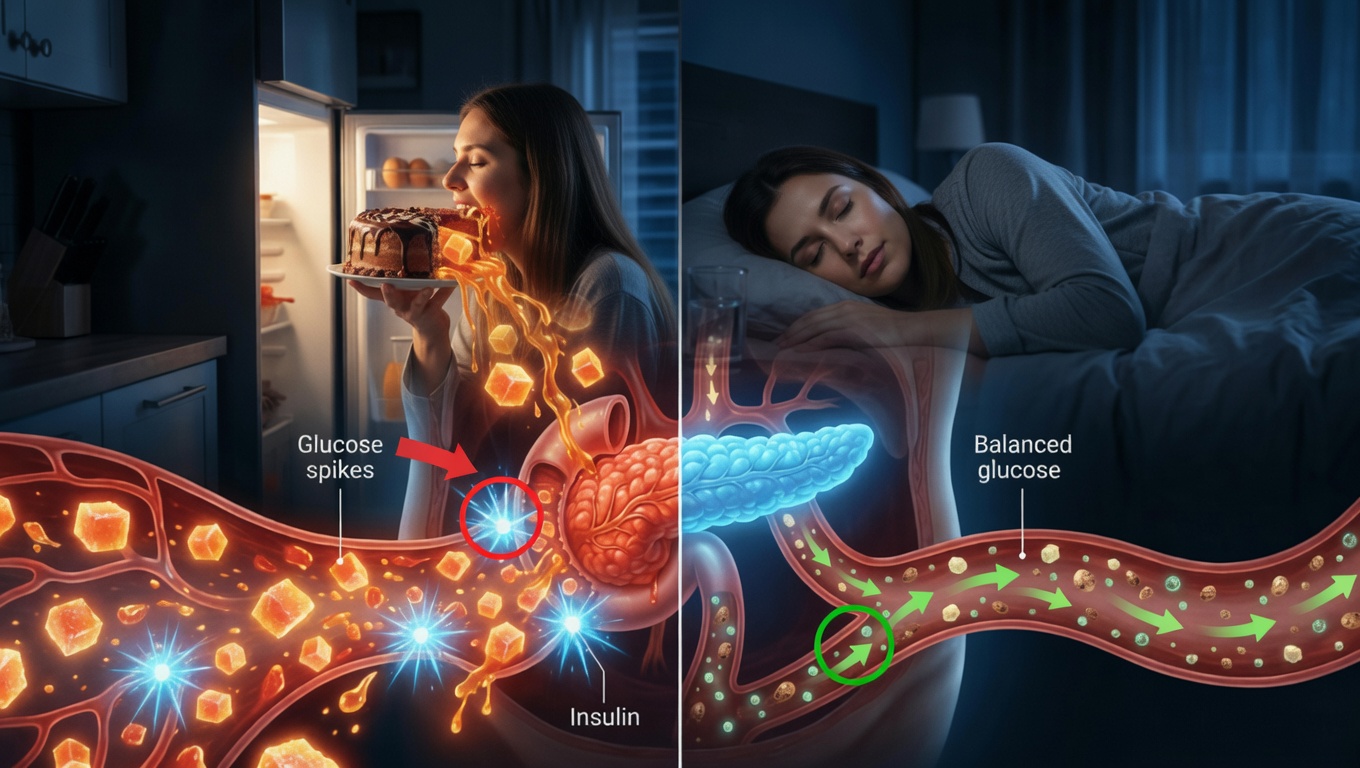
Your body is designed to transition into a fasting and repair mode in the evening. Insulin levels are supposed to drop, allowing your pancreas to rest. When you eat sugary foods or refined carbs late at night, you interrupt that process. Blood sugar rises, your pancreas has to release more insulin, and over time this extra demand can contribute to insulin resistance—where your cells stop responding properly to insulin and your pancreas must work even harder.
The encouraging news: you can change this pattern. With a few simple evening habits, you can protect your pancreas, support healthier blood sugar levels, and wake up feeling more stable and energized. (Inspired by the work of Dr. Mandell)
Key Takeaways
-
Your pancreas has a night shift: Even while you sleep, your pancreas is regulating hormones that stabilize your metabolism. What you eat and drink at night directly affects how hard it has to work.
-
Sugar before bed overloads your system: Late-night sweets and refined carbohydrates force your pancreas to produce insulin when it should be resting, raising your long-term risk of insulin resistance.
-
Small nightly habits matter: Simple changes—like going for a short walk after dinner or adding a bit of cinnamon to your evening drink—can ease the burden on your pancreas.
-
Choose the right cinnamon: Ceylon cinnamon (“true cinnamon”) is safer for regular use than Cassia cinnamon because it contains much lower levels of coumarin, a compound that can stress the liver in large amounts.
1. Learn What Your Pancreas Does While You Sleep
Picture your body as a city that never fully shuts down and your pancreas as the night-shift traffic controller. Even when you’re asleep and everything seems quiet, essential work is underway.
Your liver steadily releases small amounts of glucose into your bloodstream to fuel your brain and vital organs. Your pancreas carefully oversees this by releasing two key hormones:
- Insulin, which helps move glucose from your blood into your cells for storage or energy.
- Glucagon, which signals the liver to release more glucose when blood sugar dips too low.
All night long, these hormones work in a delicate balance to keep your blood sugar within a healthy range—preventing extreme highs and lows. When this system runs smoothly, you wake up refreshed, and your body has had time to repair and regenerate.
But if your evening routine is filled with sugar and heavy snacks, you disrupt this balance. Instead of keeping things steady in a low-power mode, your pancreas has to step in repeatedly, dealing with unnecessary blood sugar spikes. Over time, that “metabolic traffic jam” can wear it down.
2. Cut Out Late-Night Sugar and Refined Carbohydrates
If you make only one change for the sake of your pancreas, let it be this: skip sugary and refined-carb snacks before bed.
When you eat foods like desserts, candy, chips, cereal, or white bread late in the evening, you flood your bloodstream with glucose. Your pancreas must respond by producing more insulin—just when insulin levels should naturally be falling for the night.
Occasional indulgence isn’t likely to cause immediate damage, but turning this into a nightly habit can set the stage for insulin resistance. Think of insulin as someone knocking on the door of your cells. At first, they answer quickly. But if the knocking never stops—day and night—eventually they stop responding. Your cells become less sensitive to insulin, so your pancreas has to “knock louder” by releasing even more of it.
This cycle:
- Overworks the pancreas
- Promotes weight gain, especially around the abdomen
- Increases the risk of type 2 diabetes and chronic inflammation
To protect your pancreas in the hours before sleep, avoid:
- Cookies, cakes, pastries, ice cream, candy
- Sugary drinks like soda and fruit juice
- Sweetened cereals
- White bread, regular pasta, and other refined grains
Give your body time to wind down instead of asking it to manage another blood sugar surge.
3. Add a Gentle Post-Dinner Walk

One of the easiest and most enjoyable ways to support your pancreas at night is to take a short walk after dinner.
A 15–20 minute stroll is enough to make a difference. As you walk, the large muscles in your legs and glutes contract and start using glucose from your bloodstream for fuel. What’s remarkable is that working muscles can absorb glucose with very little help from insulin.
This means:
- Your blood sugar drops more smoothly after your meal
- Your pancreas doesn’t need to release as much insulin
- Your overall insulin sensitivity can gradually improve
You don’t need an intense workout. A relaxed walk around your neighborhood or even indoors is enough. This simple habit helps your body transition more easily into its overnight fasting state, lowering metabolic stress from your evening meal and giving your pancreas some much-needed relief.
4. Use Ceylon Cinnamon to Support Blood Sugar
Cinnamon is more than a warming spice—it can be a helpful ally for blood sugar control. But the type of cinnamon you use is crucial.
Most cinnamon sold in supermarkets is Cassia cinnamon, which has a strong flavor but also contains relatively high levels of coumarin, a compound that can be hard on the liver if consumed in large amounts over time.
For regular, health-focused use, choose Ceylon cinnamon, often labeled as “true cinnamon.” It has:
- A milder, more delicate taste
- Much lower levels of coumarin
- A safer profile for daily use
Cinnamon contains plant compounds (polyphenols) that appear to improve the way insulin receptors on your cells work. When these receptors function better, glucose moves into your cells more efficiently. As a result, your pancreas may not need to produce as much insulin to keep blood sugar in check.
A simple nightly ritual:
- Add about ¼ to ½ teaspoon of Ceylon cinnamon to a cup of warm, non-caffeinated herbal tea or plain warm water
- Drink it 30–60 minutes before bedtime
This allows the beneficial compounds to be absorbed as your body prepares for nighttime repair and recovery.
5. Choose Herbal Teas and Hydrate Smartly in the Evening
What you drink at night can either support or sabotage your pancreas.
Drinks to avoid in the evening include:
- Regular and diet sodas
- Fruit juices
- Sweetened beverages
- Milk and flavored milks (which still contain natural sugars)
Even natural sugars can stimulate an insulin response when your pancreas should be winding down.
Instead, focus on:
- Plain water
- Warm, caffeine-free herbal teas, such as:
- Chamomile
- Peppermint
- Ginger
These options are naturally free of sugar, can aid digestion, and may help you relax before sleep. Staying well hydrated supports your liver’s detoxification processes and your kidneys’ ability to remove waste—both critical for overall metabolic health.
By swapping sugary drinks for water or herbal tea, you avoid unnecessary blood sugar spikes and give your body the clean hydration it needs to perform its nightly maintenance.
6. Protect Your Pancreas With a Consistent Sleep Routine
Your pancreas doesn’t operate alone; it’s closely tied to your body’s internal clock—your circadian rhythm. This 24-hour rhythm influences hormone release, appetite, metabolism, and sleep-wake patterns.
An irregular sleep schedule—going to bed at wildly different times, staying up late on screens, or frequently cutting your sleep short—can disrupt that rhythm. When your circadian clock is out of sync, hormones like insulin, cortisol, and melatonin become poorly coordinated. The result can be:
- Increased evening hunger and cravings for sugary foods
- Reduced insulin sensitivity
- More stress on your pancreas to manage blood sugar at the “wrong” times
To align your pancreas with your body’s natural rhythm:
- Aim for a regular schedule: Go to bed and wake up at roughly the same times every day, including weekends.
- Prioritize enough sleep: Most adults do best with 7–9 hours of quality sleep per night.
- Dim the lights in the evening: Lowering light exposure helps melatonin rise, signaling your body that it’s time to rest.
- Limit screens before bed: Phones, tablets, and computers emit blue light that can confuse your internal clock and delay sleep.
When your sleep routine is consistent, your pancreas can better anticipate when to ramp up and when to slow down, which supports more stable blood sugar and overall metabolic health.
By respecting your pancreas’s nightly workload—avoiding late sugar, moving a little after dinner, choosing Ceylon cinnamon, drinking wisely, and honoring your sleep schedule—you give this vital organ the chance to rest and recover. Over time, these small, steady changes can translate into better blood sugar control, more energy, and a healthier metabolism.