Hair Loss Isn’t Inevitable: Start With What’s on Your Plate
Hair loss affects millions of men and women around the world. Maybe you’ve started to see more strands in the shower, your hairline is creeping back, or your ponytail feels thinner than it used to. It can be upsetting and even frightening.
The encouraging news: in many cases, hair loss is not a life sentence. You can often slow it down—and sometimes even reverse it—by addressing what’s happening inside your body. And many of the most effective solutions start in the kitchen, long before you reach for a prescription.
Key Takeaways
- It’s not all in your genes: Genetics matter, but many causes of thinning hair—like hormone imbalances, nutrient gaps, and chronic inflammation—are modifiable.
- Hormones are powerful influencers: DHT, menopausal hormone shifts, and testosterone changes can miniaturize hair follicles, but diet and lifestyle can help balance their effects.
- Your gut and your hair are linked: Poor gut health reduces nutrient absorption and fuels inflammation, both of which undermine hair strength and growth.
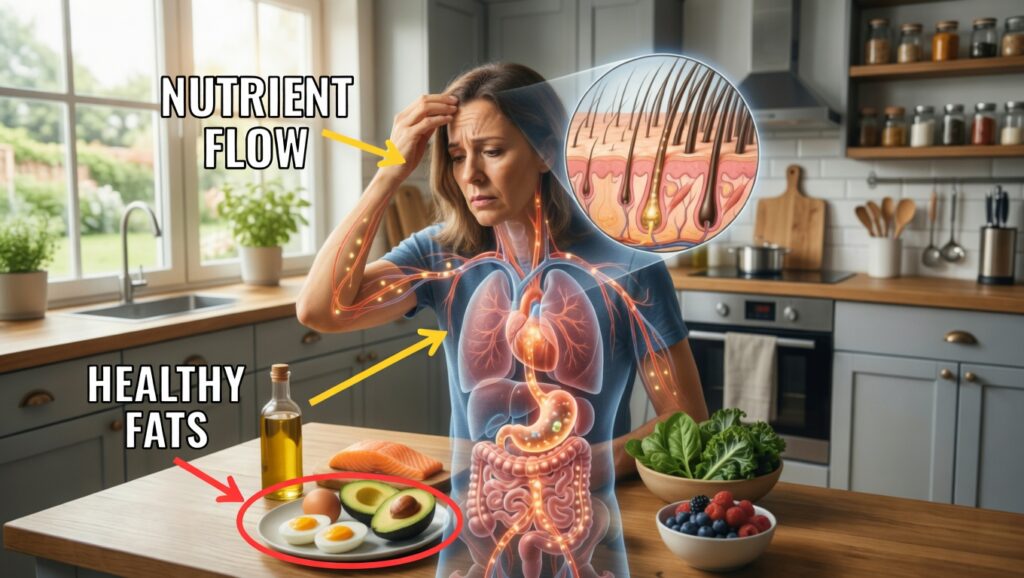
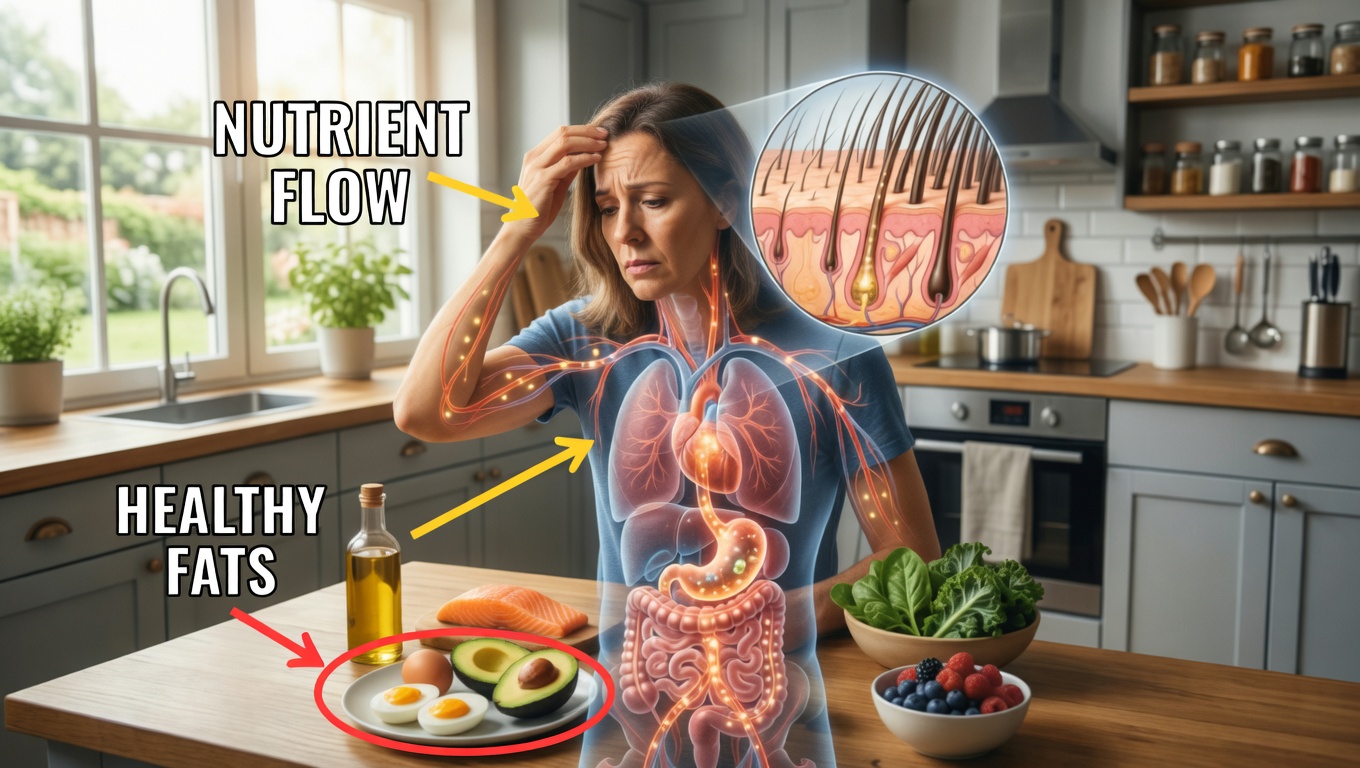
- Food should be your first treatment: A nutrient-dense diet rich in specific vitamins, minerals, proteins, healthy fats, and antioxidants supplies the raw materials hair needs.
- Stress is a major hair-loss trigger: Emotional strain, illness, surgery, and crash dieting can push hair into a shedding phase. Managing stress is essential for maintaining a fuller head of hair.
1. The Hormone Connection: DHT, Menopause & Your Hair
Any serious discussion of hair loss has to address hormones.
For many men, the main player is dihydrotestosterone (DHT), a potent derivative of testosterone. In genetically susceptible individuals, DHT binds to receptors in scalp hair follicles and gradually shrinks them. Over time, this leads to the classic pattern of male baldness: thinning at the crown, receding temples, and reduced density.
Women are not exempt from hormone-driven hair changes. During the reproductive years, estrogen generally helps protect and support hair follicles. But as women enter perimenopause and menopause, estrogen levels drop. This shift can result in:
- Overall thinning
- Increased shedding
- Loss of volume and fullness
Adipose (fat) tissue also produces both estrogen and testosterone. As estrogen declines, the relative influence of testosterone can increase. That’s why some menopausal women notice:
- More facial or body hair (chin, upper lip, arms)
- Thinner hair on the scalp
A similar pattern can occur in women using testosterone replacement therapy: scalp hair may thin while unwanted hair growth appears elsewhere. The underlying theme is hormonal imbalance—not simply “aging.”
The good news is that nutrition, body composition, stress management, and targeted medical care can all play a role in moderating these hormonal effects on your hair.
2. When Your Body Is at War: Inflammation, Autoimmunity & Hair Loss
Sometimes hair loss isn’t just about hormones—it’s your immune system misfiring.
In autoimmune disorders, the body mistakenly attacks its own tissues. When hair follicles are the target, the result can be conditions like alopecia areata, where round or patchy bald spots appear.
Another common example is hypothyroidism (an underactive thyroid), frequently caused by Hashimoto’s thyroiditis, an autoimmune disease. The thyroid gland helps regulate metabolism, energy, and hair growth cycles. When it slows down, early signs often include:
- Increased shedding
- Overall thinning
- Loss of the outer third of the eyebrows
Many people simply draw in their thinning brows, assuming it’s age-related, when it may actually be a clear sign that thyroid support and evaluation are needed.
The Iodine Connection
In many regions, a major driver of low thyroid function is inadequate iodine intake. Iodine is essential for making thyroid hormones. Historically, governments introduced iodized table salt to prevent widespread deficiency.
However, with the popularity of Himalayan salt and natural sea salts—which are tasty and mineral-rich but naturally low in iodine—some people have unintentionally reduced their iodine intake.
Fortunately, this is often easy to correct:
- Choose iodized sea salt or iodized Himalayan salt
- Ensure you have reliable sources of iodine in your diet (under medical guidance if you have thyroid issues)
Addressing inflammation and autoimmune activity with the help of a healthcare professional can significantly influence hair health and regrowth.
3. The Building Blocks: Are You Missing Key Hair Nutrients?
Hair is made primarily of keratin, a structural protein. To build and maintain it, your body needs a steady supply of nutrients. When you’re deficient, your hair is often one of the first places the problem shows up.
Nutrient shortfalls strongly associated with hair loss include:
- Iron: Low iron (especially in menstruating women) is a well-known cause of thinning hair and excessive shedding.
- Zinc: Supports protein synthesis and cell division, both crucial for healthy follicles.
- Vitamin D: Plays an important role in hair follicle cycling and immune function.
- B vitamins (especially biotin): Involved in energy production and keratin formation.
Silica: The Overlooked Structural Mineral
Another often-missed mineral is silica. Think of silica as part of the “scaffolding” that gives hair its strength and resilience. While you certainly shouldn’t eat sand, some people benefit from liquid silica supplements, which can be added to water, tea, or coffee.
Together with a balanced diet, these nutrients help:
- Support new hair growth
- Improve hair strength
- Reduce breakage and brittleness
If you suspect deficiencies, it’s wise to work with a practitioner to test and address them appropriately rather than guessing with high-dose supplements.
4. Stress, Crash Diets & Sudden Shedding
If you’ve ever gone through a particularly intense period—grief, illness, surgery, major life changes—and noticed significant hair shedding a few months later, you’re not imagining it.
Both physical stress (such as infections, operations, or serious illness) and emotional stress can push a large number of follicles into a resting phase called telogen. Several months later, those hairs shed all at once, a phenomenon often referred to as telogen effluvium.
Your body is designed to prioritize survival. When it perceives a threat—whether that’s:
- A severe emotional shock
- A major medical event
- An extreme low-calorie diet or prolonged fasting
—it interprets this as an emergency or famine. In that state, the body essentially decides:
“Hair and nails are optional. Keeping your heart, brain, and vital organs functioning is not.”
So, resources are diverted away from hair production.
This also explains why people often panic when they start a rapid weight-loss program and notice hair falling out. In many cases, this is temporary. Once:
- Your body adjusts to a healthier, stable weight, and
- The stress or starvation signal subsides
hair growth often resumes, and density gradually improves.
The key is to pursue sustainable, nutrient-dense weight loss and effective stress management rather than aggressive diets that shock your system.
5. It All Starts in Your Gut: The Gut–Hair Connection
If your hair is thinning and obvious causes don’t seem to fit, it’s time to look at your gut health.
Conditions like “leaky gut” (increased intestinal permeability) can drive chronic, low-grade inflammation throughout the body. This inflammation harms your hair in at least two major ways:
- Reduced nutrient absorption: Even if you’re eating well, a compromised gut may not effectively absorb key vitamins, minerals, and amino acids needed for hair growth.
- Constant state of alarm: Inflammation signals danger. Just like with stress, your body diverts energy away from “nonessential” functions—such as hair production—toward dealing with perceived threats.
A useful way to think about it: the lining of your gut is essentially your skin turned inward. What’s happening in your digestive tract often shows up on your skin, scalp, and hair.
Some people even see bald spots or significant thinning improve after:
- Healing their gut
- Reducing inflammatory foods
- Supporting a healthy microbiome
You can speak with your doctor about lab markers such as high-sensitivity C-reactive protein (hs-CRP) and other inflammatory indicators to see if systemic inflammation might be contributing to your hair loss.
6. Fuel Your Follicles: Foods That Fight Hair Loss
To grow stronger, thicker hair, you need to feed your follicles from the inside out. The best place to start is with whole, nutrient-dense foods that support hormone balance, gut health, and circulation.
Here are some hair-supportive foods to prioritize:
Leafy Greens & Cruciferous Vegetables
- Examples: Spinach, kale, Swiss chard, broccoli, Brussels sprouts, cauliflower
- Benefits:
- Rich in folate and vitamin C
- Packed with antioxidants that protect follicles from oxidative damage
- Support collagen production and healthy blood flow to the scalp
Avocados & Extra-Virgin Olive Oil
- High in monounsaturated fats that support hormone production and cell membranes
- Contain vitamin E, which helps defend hair follicles from oxidative stress
- Olive oil is abundant in polyphenols that nourish beneficial gut bacteria and reduce inflammation
Pasture-Raised Eggs
- Excellent source of biotin, choline, and high-quality protein
- Supply the amino acids your body needs to build keratin, the primary protein in hair
Wild-Caught Fatty Fish
- Examples: Salmon, sardines, mackerel, anchovies
- Rich in omega-3 fatty acids, which are anti-inflammatory and support scalp circulation
- Provide vitamin D, important for hair follicle cycling and immune balance
Polyphenol-Rich “Power Foods”
- Examples: Berries, pomegranates, dark grapes, green tea
- Loaded with polyphenols, which:
- Combat oxidative stress
- Feed beneficial gut microbes
- Support a healthier internal environment where hair can thrive
Building meals around these foods consistently provides your scalp and follicles with the essential building blocks for stronger, healthier hair over time.
7. A Helping Hand: Strategic Supplements for Stronger Hair
While a balanced diet should always be your foundation, supplements can offer targeted support when used wisely.
Collagen Peptides
Collagen peptides supply specific amino acids (such as glycine, proline, and hydroxyproline) that support:
- The structure of hair, skin, and nails
- Collagen production in the scalp and around follicles
- Overall hair strength and resilience
Adding a high-quality collagen powder to your coffee, smoothie, or tea can be an easy way to boost your intake of these critical building blocks—especially if your diet is low in slow-cooked meats or bone broth.
Targeted Nutrient Support (When Needed)
In addition to collagen, some people may benefit from supplementing nutrients discussed earlier—such as iron, zinc, vitamin D, biotin, or silica—particularly if lab tests show deficiencies. This should be done under professional guidance to avoid over-supplementation or interactions with medications.
By addressing hormones, inflammation, nutrient status, stress, and gut health—starting with what you put on your plate—you give your body the best possible chance to slow hair loss and support thicker, healthier growth over the long term.