The Hidden Reason Your Vitamin D Levels Stay Low
What if the real reason your vitamin D levels never seem to budge has less to do with sunshine and supplements—and more to do with a problem deep inside your digestive system?
Emerging research suggests that for many people, the pancreas, not the sun, may be the missing piece of the vitamin D puzzle.
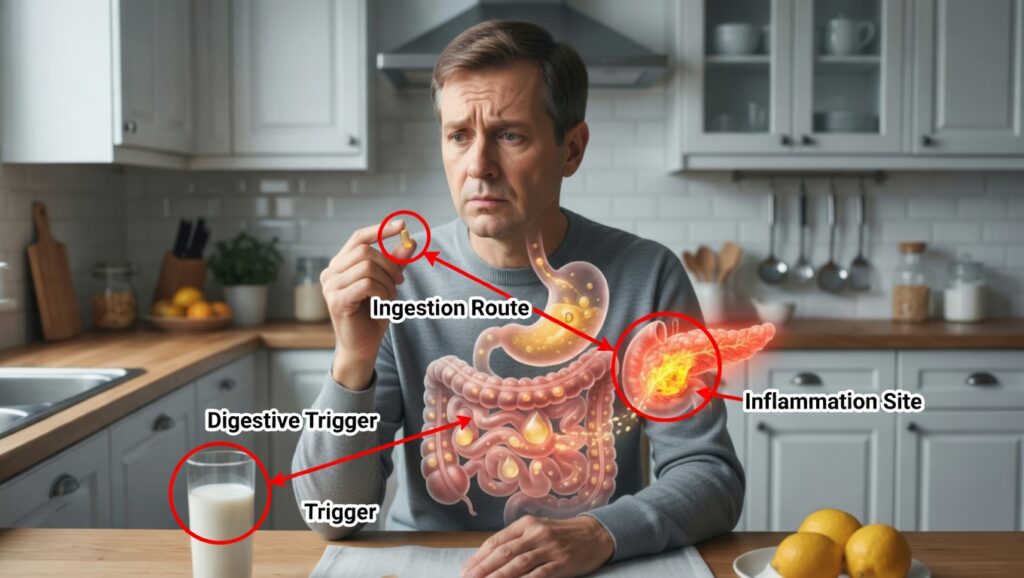
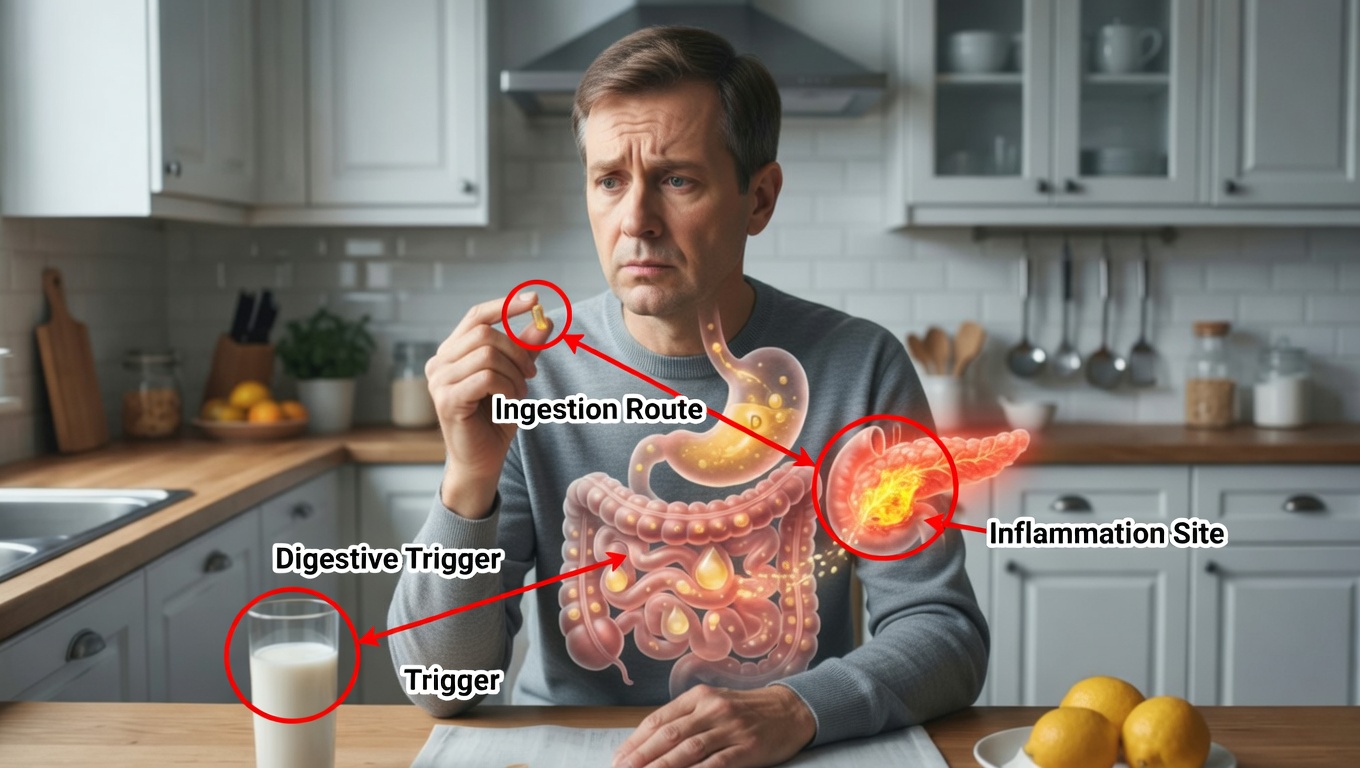
Most of us know the pancreas for its role in producing insulin and regulating blood sugar. That is a major job—but it has another equally important role: making digestive enzymes. These enzymes help you break down the food you eat, especially dietary fats.
Here is where the link to vitamin D becomes critical: vitamin D is a fat-soluble vitamin. If you are not digesting fats properly because your pancreas is not producing enough enzymes, your body cannot effectively absorb vitamin D from food or supplements, regardless of how much you take. This condition—called exocrine pancreatic insufficiency (EPI)—may be silently blocking your ability to use fat-soluble nutrients.
Key Points at a Glance
- Vitamin D depends on fat digestion: Because vitamin D is fat-soluble, poor fat digestion can lead directly to low vitamin D levels.
- Pancreas = enzyme factory: The pancreas creates the enzymes needed to break down fats. When it underperforms, absorption of vitamins A, D, and E is compromised.
- Inflammation disrupts enzyme production: Even mild, chronic inflammation in the pancreas can impair enzyme output, contributing to EPI.
- Liver and pancreas are closely linked: An overworked, inflamed liver can promote oxidative stress and inflammation in the neighboring pancreas.
- Fixing vitamin D is a whole-body issue: Long-term improvement often requires supporting pancreatic and liver health, not just increasing vitamin D intake or sun exposure.
1. The Pancreas–Vitamin D Connection You Probably Never Considered
You do not need a formal diagnosis of pancreatitis to have a compromised pancreas. Many people live with low-grade, ongoing pancreatic inflammation driven by factors such as:
- Ultra-processed foods and poor diet
- Chronic stress
- Metabolic issues like insulin resistance or obesity
This constant strain can weaken the pancreas’ ability to perform its digestive role, especially the production of enzymes needed to break down fats.
A study in the journal Pancreas examined people with varying degrees of pancreatitis and made a striking finding:
- 84% of participants had some level of exocrine pancreatic insufficiency (EPI)—they were not producing enough digestive enzymes.
- Among those with EPI:
- Over 62% were deficient in vitamin D
- About 35% were deficient in vitamin A
These are all fat-soluble vitamins. Vitamin D can come from sunlight, but vitamins A and E are obtained almost exclusively from food. Seeing deficiencies across several fat-soluble vitamins strongly suggests the core issue is impaired fat digestion, not just lack of intake.
In other words, if your pancreas cannot produce enough enzymes, your body struggles to extract vitamin D (and other fat-soluble nutrients) from both food and supplements.
2. Lighten the Load on Your Liver to Help Your Pancreas
No organ operates alone. The liver and pancreas sit side by side and share blood flow and biochemical pathways. When one is under stress, the other often pays the price.
Research published in Scientific Reports shows that when the liver is overwhelmed—by poor diet, toxins, alcohol, or chronic inflammation—it experiences oxidative stress. This leads to elevated liver enzymes such as ALT and AST, classic markers of liver strain. That same oxidative stress can extend to the pancreas, fueling inflammation there as well.
How to Support Your Liver (and Indirectly Your Pancreas)
One of the most effective strategies is to increase your body’s ability to produce glutathione, a major internal antioxidant involved in detoxification and cellular protection.
Key ways to do this include:
-
N-acetylcysteine (NAC):
- NAC is a precursor to the amino acid cysteine, which is the rate-limiting building block for producing glutathione.
- Studies show NAC can lower elevated liver enzymes, suggesting it improves liver resilience and helps clear oxidative stress.
- A less burdened liver means less inflammatory “crossfire” directed at the pancreas.
-
Cruciferous vegetables for sulforaphane:
- Foods like broccoli, broccoli sprouts, Brussels sprouts, and kale provide sulforaphane, which supports detoxification pathways and antioxidant defenses.
-
Garlic for allicin:
- Fresh chopped or crushed garlic contains allicin and related sulfur compounds that can support liver function and antioxidant status.
By improving liver health, you reduce systemic and local inflammation, giving the pancreas a better environment in which to recover and function properly.
3. Calm Pancreatic Stress with Targeted Antioxidants
In addition to supporting the liver, you can take steps to directly protect the pancreas from oxidative damage and inflammation.
A study in PLOS ONE explored the impact of green rooibos tea on pancreatic health. Rooibos is rich in flavonoid antioxidants, and researchers observed several benefits:
- Reduced stress on pancreatic cells associated with diabetes
- Decreased apoptosis (programmed cell death) of pancreatic beta cells
While beta cells are responsible for insulin secretion (the endocrine function of the pancreas), lowering overall stress and oxidative damage benefits the entire organ. A healthier pancreas is better able to:
- Produce digestive enzymes
- Break down fats efficiently
- Support absorption of fat-soluble vitamins like A, D, and E
Practical strategies to support pancreatic antioxidant defenses include:
- Drinking green rooibos tea regularly
- Eating a variety of colorful plant foods rich in polyphenols and flavonoids (berries, green tea, herbs, spices)
By easing inflammation and oxidative damage, you give the pancreas a chance to restore its enzyme-producing capacity—key for normal vitamin D absorption.
4. Use Nutrient Synergy: Vitamins A, D, and Omega-3 Fats
If your body cannot absorb fats properly, simply increasing your vitamin D dosage will not solve the problem. The goal is to tackle the inflammation and digestive dysfunction at the root.
A powerful way to do this is through nutrient synergy, particularly:
- Vitamin A
- Vitamin D
- Omega-3 fatty acids (EPA and DHA)
These nutrients work together to form specialized pro-resolving mediators—compounds that actively help the body switch off inflammation rather than letting it smolder chronically.
A review in the journal Nutrients analyzed eight randomized controlled trials of omega-3 supplementation in people with acute pancreatitis. The results were compelling:
- Lower mortality rates
- Shorter hospital stays
- Fewer complications
- Reduced inflammatory markers
This highlights the strong anti-inflammatory potential of omega-3 fats in pancreatic conditions.
Why Cod Liver Oil Can Be Especially Helpful
High-quality cod liver oil is a unique option because it naturally contains:
- Vitamin A – often low when the pancreas is inflamed and fat absorption is poor
- Vitamin D – crucial for bone health, immunity, and overall metabolic function
- Omega-3 fatty acids – powerful anti-inflammatory agents
By providing all three synergistic nutrients in one source, cod liver oil can:
- Help correct deficiencies in fat-soluble vitamins
- Support resolution of inflammation in the pancreas and elsewhere
- Improve the environment needed for proper digestion and nutrient absorption
Always consult a healthcare professional before starting new supplements, especially if you have existing liver or pancreatic conditions.
Conclusion: Rethinking Persistent Vitamin D Deficiency
If you are taking vitamin D supplements, getting regular sun, and still seeing low readings on your blood tests, it may be time to stop viewing vitamin D deficiency as the core problem and start seeing it as a warning sign.
Low vitamin D can be a reflection of:
- Poor fat digestion
- Subtle or chronic pancreatic inflammation
- An overburdened liver
- Broader metabolic stress
By:
- Supporting your liver with NAC and sulfur-rich foods
- Calming pancreatic stress with antioxidants like those in green rooibos and plant foods
- Leveraging the synergy of vitamins A and D with omega-3 fats (e.g., from cod liver oil)
you address the underlying issues that prevent your body from absorbing and using vitamin D effectively.
Improving liver and pancreatic health does more than raise a lab value—it helps restore your body’s ability to extract and utilize the nutrients it depends on for long-term health and resilience.