Strong Legs, Longer Life: Why Squats Are a Lifesaving Habit
People with weak legs tend to die younger than those with strong legs. That’s not an exaggeration or a scare tactic—it’s a pattern seen again and again in research.
From the perspective of an emergency medicine doctor, the story plays out daily. An older adult arrives in the emergency department after a fall. The real problem usually isn’t the fall itself; it’s the decades of slow, unnoticed muscle loss that made the fall almost unavoidable.
This is a story about the muscles surrounding your thigh bone, the strength that lets you stand up from a chair without using your hands, and the precious tissue many of us lose each year without realizing it. It’s less about “doing more exercise” and more about what happens when you don’t—and how one simple movement can dramatically change your future.
That movement is the squat. This basic, bodyweight exercise is one of the most underappreciated health tools we have. By the end of this article, you’ll see why keeping your legs strong might be one of the single best investments you can make in your long-term health, affecting everything from your metabolism and brain function to your balance and independence.
(Inspired by the work of Dr. Alex Wibberley.)
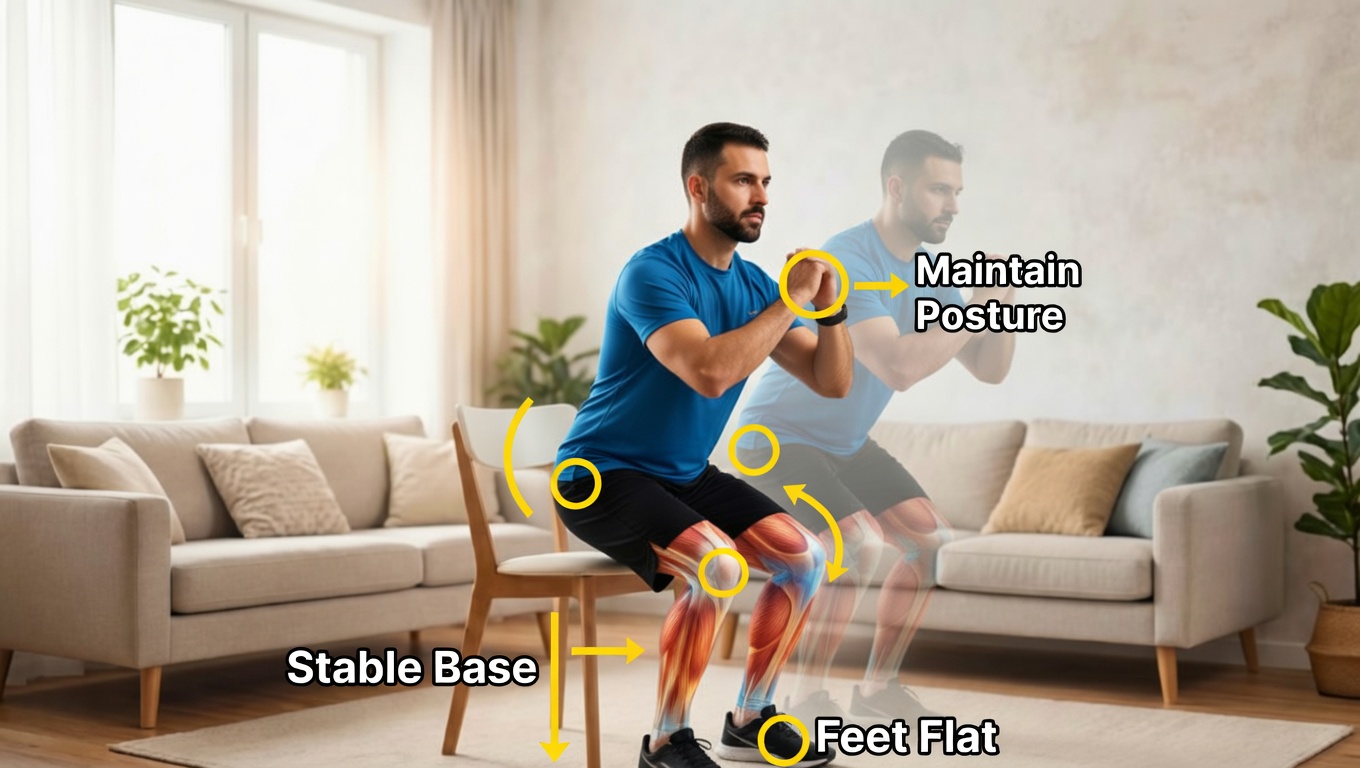
Key Takeaways
- Leg strength predicts lifespan and healthspan. Studies consistently show that stronger legs are linked with a longer, healthier life.
- Age-related muscle loss (sarcopenia) is common but preventable. It starts in your 30s and accelerates after 40, but you can slow it down—and even reverse it.
- Squats are a powerful, equipment-free exercise. They build foundational strength, boost metabolism, and help protect brain and nervous system function.
- Consistency beats intensity. Small efforts repeated regularly matter more than occasional, all-out workouts.
- You can start at any age. A simple sit-to-stand exercise from a chair is enough to begin, no matter your current fitness level.
1. The Silent Thief: What Is Age-Related Muscle Loss (Sarcopenia)?
Muscle mass reaches its peak in your mid-20s to early 30s. After that, if you’re not actively maintaining it, you gradually lose around 1–2% of your muscle each year.
That number seems small until you project it forward. Over 20 years, you could lose 20–40% of your muscle. Over 30 years, the picture is even more concerning—and the decline usually speeds up after around age 40. This process is called sarcopenia, and it remains one of the most overlooked health issues in modern medicine.
Sarcopenia is the difference between:
- Standing up easily from a low chair
- And needing help—or using your arms—to do it
Its consequences are anything but theoretical. Muscle loss leads to:
- More falls
- More fractures
- More hospital admissions
- Loss of independence
- Higher risk of early death
In the emergency department, I often see the final stage of this process. An older person slips, loses balance, and lands awkwardly. The obvious problem is the fall, but the true cause stretches back years: shrinking muscles, weaker bones, and a nervous system that no longer reacts quickly enough to catch a misstep.
That seemingly small stumble can turn into a hip fracture, which carries a staggering one-year mortality rate of about 30%. The tragedy is that most people in their 40s and 50s aren’t thinking about this when they decide whether or not to exercise. That lack of awareness is part of the problem—and also where opportunity lies.
2. More Than Muscle: How Your Legs Protect Your Brain
Most people think of muscle as just “meat on the bone” that moves your body. In reality, muscle is part of a sophisticated communication network between your body and your brain.
Every time you contract a muscle, signals travel:
- From your brain
- Down your spinal cord
- Out to specific muscle fibers
At the same time, sensory nerves send information back to your brain about joint angles, tension, and motion. It’s a continuous, two-way conversation.
Your brain doesn’t just command your muscles; it relies on them to stay finely tuned. The cerebellum—the area responsible for balance and coordination—constantly processes input from your legs and feet to figure out where you are in space.
When you stop moving regularly:
- These signals weaken
- The pathways that control movement become less efficient
- Your nervous system follows a strict rule: “use it or lose it.”
Move less, and your brain becomes worse at organizing and controlling movement. That’s why when you return to exercise after a long break, the first changes you feel are often neurological, not muscular.
In the first couple of weeks of doing squats:
- Your muscle size hasn’t changed much
- But your nervous system becomes more efficient at recruiting muscle fibers
Your brain is getting better at firing the right muscles at the right time. That improved coordination is real progress—even if you don’t see visible changes in the mirror yet.
3. Your Legs: The Metabolic Engine You’re Overlooking
Beyond strength and balance, your leg muscles play a crucial role in your metabolism.
Large muscle groups—especially in your legs and glutes—are the main destination for glucose (blood sugar) after you eat carbohydrates. You can think of your leg muscles as a giant storage and usage system for sugar.
When you have plenty of active, healthy muscle:
- Glucose is absorbed efficiently
- Blood sugar is used for energy
- Insulin can do its job effectively
But if you lose a lot of muscle over time, this system starts to fail:
- Your body struggles to clear sugar from your bloodstream
- Your cells become less responsive to insulin
- Insulin resistance develops quietly over years
This is the foundation for type 2 diabetes and other metabolic disorders.
By building and preserving leg muscle, you:
- Improve insulin sensitivity
- Help regulate blood sugar
- Reduce your risk of metabolic disease
It’s not just about appearance or athletic performance. Strong legs help keep your internal systems running smoothly.
4. Why the Squat Is a Powerful Health Intervention
Why focus on squats specifically?
Because the squat is one of the most complete, functional movements the human body can perform without any equipment. When you squat, you work:
- Quadriceps (front of your thighs)
- Glutes (your buttocks)
- Hamstrings (back of your thighs)
- Calves
- Hip flexors
- A wide range of core muscles
Few other exercises activate so many major muscle groups at once with zero setup.
Try standing up and performing a gentle squat. You’ll notice:
- Multiple muscles firing together to lower you down
- The same muscles working to bring you back up
This movement develops the kind of strength you need for everyday life:
- Getting out of a chair or car
- Picking something up from the floor
- Climbing stairs
- Stabilizing yourself when you trip
In other words, squats help build a more capable, resilient body—the kind that keeps you independent for longer.
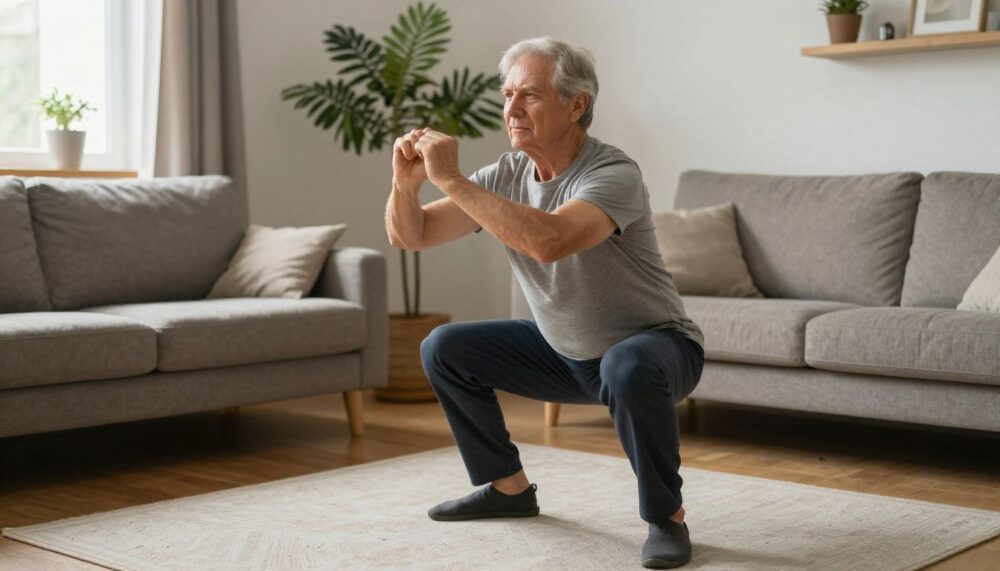
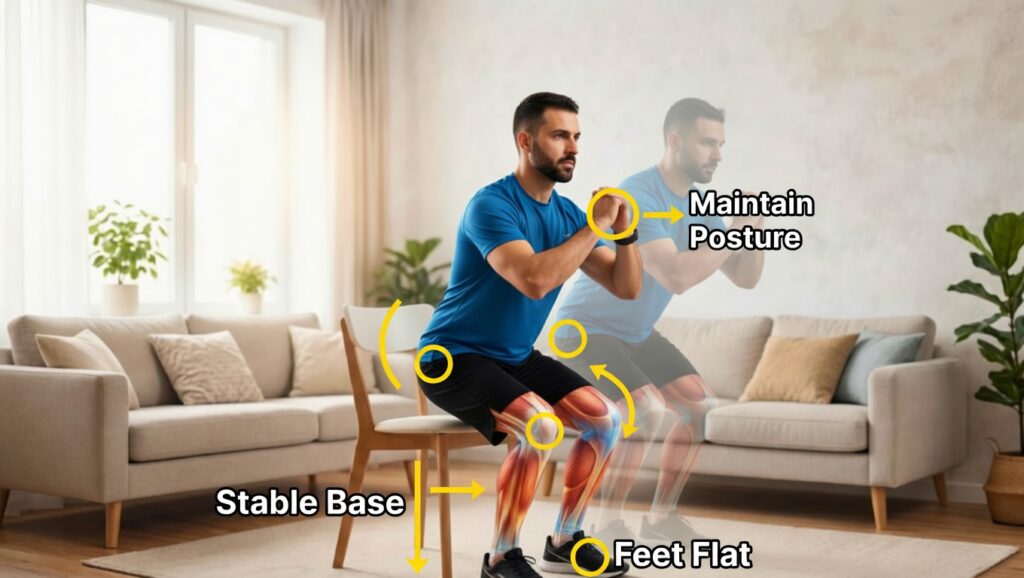
5. How to Squat Safely and Effectively
Many people avoid squats because they’re worried about knee pain. In reality, well-performed squats can protect your knees. It’s poor technique, repeated over time, that tends to cause problems.
Here’s how to get the movement right.
5.1 Stance
- Stand with your feet slightly wider than shoulder-width apart.
- Turn your toes out a bit, roughly 30–45 degrees.
- Adjust until the position feels natural for your hips.
5.2 Knee Alignment
This is the most important rule for knee safety.
- As you lower into the squat, your knees should follow the same direction as your toes.
- Do not allow your knees to cave inward.
- Imagine gently pressing your knees outward as you descend.
5.3 Weight Distribution
- Keep most of your weight through your heels, not your toes.
- Aim for about two-thirds of your weight in your heels.
- A useful cue: at the bottom of the squat, you should be able to wiggle your toes.
This shifts effort to your glutes and hamstrings and reduces stress on the front of your knees.
5.4 Back and Core Position
- Maintain a neutral spine—no excessive rounding or arching.
- A slight forward lean from the hips is normal, but your chest should not collapse downward.
- Brace your core as if someone is about to poke you in the stomach; this helps protect your lower back.
By understanding how and why leg strength matters—and by practicing a simple, safe squat—you’re not just working out. You’re actively investing in your brain, metabolism, balance, and long-term independence.