
Exhausted No Matter How Much You Sleep?
Do you lie in bed for 30 minutes or more every night, waiting for sleep that never seems to come? Or do you wake up like clockwork at 3 a.m., staring at the ceiling while your thoughts go into overdrive? Maybe you do manage to sleep, yet still get up in the morning feeling more drained than before you went to bed.
This isn’t just about feeling a bit foggy or needing an extra cup of coffee. Persistent sleep problems are a serious threat to your long-term health.

Insomnia is one of the most widespread but overlooked health issues of our era, affecting more than 40% of people worldwide. And the impact goes far beyond a “bad night.” Chronic sleep deprivation can:
- Increase your risk of diabetes by roughly 50%
- Double your chances of developing chronic illnesses
- Triple your risk of becoming obese
- Quadruple your risk of depression
Poor sleep is not a minor inconvenience—it’s dangerous. Night after night, it quietly shortens your life expectancy.
To make matters worse, many popular solutions do more harm than good. Prescription sleeping pills can be habit-forming and interfere with your brain’s natural sleep cycles, while many “natural” remedies simply don’t work.
What follows is a different approach: a science-based, natural protocol that targets the real, underlying causes of insomnia. These insights are based on the work of Oswaldo Restrepo RSC.
Key Takeaways
-
The Real Problem: Insomnia is not just “in your head.” It is often driven by three key physiological factors: neurotransmitter imbalances, elevated cortisol, and silent brain inflammation.
-
A Natural Sleep Formula: A simple, three-ingredient infusion—chamomile, passionflower, and magnesium—can help calm your brain, lower stress hormones, and reduce inflammation, supporting deep, restorative sleep.
-
Habits Matter Just as Much: This infusion is most effective when combined with solid sleep hygiene. Consistent routines and a healthy sleep environment are essential if you want to resolve insomnia for good.
-
The Worst Sleep Habit: The single most destructive behavior at night is checking your phone when you wake up. It almost guarantees you will struggle to fall back asleep.
1. The Three Real Causes of Your Insomnia
Before you can fix your sleep, you need to understand what’s actually going wrong. If you only treat the symptoms and ignore the root causes, no supplement, pill, or tea will deliver lasting results.
Many people assume insomnia is purely psychological—stress, anxiety, or racing thoughts. While your mental state certainly plays a role, there are deeper biological mechanisms at work. In most cases, three key physiological problems are involved, and you likely experience all of them to some degree.
Cause #1: Imbalanced Neurotransmitters
Your brain communicates using chemical messengers known as neurotransmitters. Two of the most important for sleep are GABA and serotonin.
- GABA acts like your brain’s brake system. When GABA levels are adequate, your mind slows down, your nervous system relaxes, and drifting off to sleep becomes much easier.
- Serotonin is a building block for melatonin, the hormone that tells your body it’s time to sleep.
If your GABA is too low or your serotonin is out of balance, your brain cannot “switch off,” no matter how physically tired you feel. Your body may be exhausted, but your mind keeps running.
These imbalances are often fueled by:
- Chronic stress
- Poor nutrition (especially low intake of magnesium and vitamin B6)
- Overexposure to screens and artificial light, particularly in the evening
Cause #2: High Nighttime Cortisol
Cortisol is commonly called the stress hormone. In a healthy daily rhythm, cortisol should:
- Peak in the morning to help you wake up and feel alert
- Drop to low levels at night to allow your body to relax and sleep
However, when you are under ongoing stress, your body may keep releasing cortisol all day and night. Instead of dropping in the evening, cortisol stays elevated, leaving you in a state of hyper-alertness—exactly the opposite of what you need for restful sleep.
Your body interprets this as a signal that there is some danger or threat, so it keeps you awake and on guard. You cannot simply “relax harder” to fix this. Bringing cortisol back into balance usually requires targeted biochemical and lifestyle support.
Cause #3: Hidden Brain Inflammation
This third factor is rarely mentioned, yet it is crucial: brain inflammation.
Just like your joints or muscles, your brain can become inflamed. When that happens, normal brain function is disrupted. The production of neurotransmitters is affected, and the delicate signaling systems that control your sleep-wake cycle become distorted.
Common drivers of brain inflammation include:
- Diets high in sugar and refined carbohydrates
- A lack of healthy omega-3 fats
- Exposure to environmental toxins and pollutants
To truly resolve chronic insomnia, you must:
- Support GABA and serotonin
- Reduce cortisol, especially at night
- Calm brain inflammation
There is a specific three-part natural infusion that helps tackle all three of these issues at once.
2. The Three-Ingredient Natural Infusion for Deep Sleep
The following infusion combines three well-researched ingredients—chamomile, passionflower, and magnesium—that work together to support healthy sleep from multiple angles.
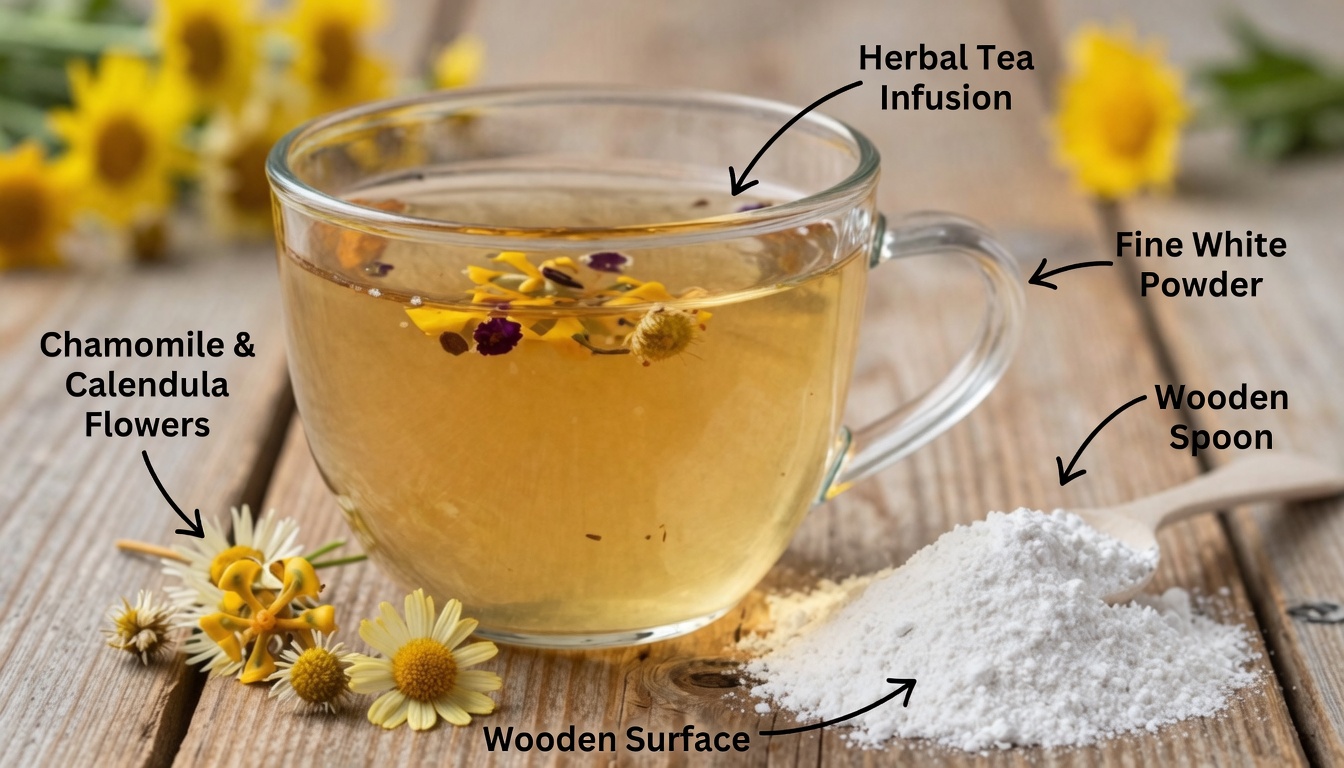
Ingredient #1: Chamomile
Chamomile is far more than a traditional “relaxing tea.” It is a scientifically recognized anxiolytic, meaning it helps reduce anxiety.
Its key compound, apigenin, binds to GABA receptors in your brain. This action mimics and enhances the calming effects of your own GABA, helping to quiet mental chatter and soothe the nervous system.
Research has shown that chamomile extract can:
- Reduce anxiety by up to 50%
- Improve overall sleep quality
- Help lower cortisol, supporting a more natural day–night rhythm
Ingredient #2: Passionflower
Passionflower is less famous than chamomile, but it is a powerful ally for insomnia.
It also influences GABA activity, but in a different way. Instead of directly stimulating the receptors, passionflower slows the breakdown of GABA already present in your brain. This allows GABA to remain active longer and work more effectively.
Clinical studies comparing passionflower to standard sleep medications have found:
- Very similar improvements in sleep quality
- None of the typical side effects such as grogginess or dependency
In addition, passionflower contains antioxidants that help reduce brain inflammation, addressing one of the deeper root causes of insomnia.
Ingredient #3: Magnesium
Magnesium is arguably the most important mineral for healthy sleep, yet an estimated 70% of people do not get enough of it.
For sleep, magnesium:
- Activates GABA receptors
- Supports melatonin production
- Helps lower cortisol
- Relaxes muscles and the nervous system
Without adequate magnesium, achieving deep, restorative sleep becomes extremely difficult.
When you combine chamomile, passionflower, and magnesium, you create a synergistic formula that:
- Balances neurotransmitters
- Reduces stress hormones
- Calms brain inflammation
This makes it a powerful natural tool for overcoming insomnia.
3. How to Prepare and Use the Sleep-Enhancing Infusion
To get the maximum benefit, it’s important to use high-quality ingredients and follow the preparation steps carefully.
What You Need
- Organic dried chamomile flowers
- Dried passionflower herb
- Magnesium glycinate powder
(Magnesium citrate is an acceptable alternative, but avoid magnesium oxide, as it is poorly absorbed.) - Filtered water
Step-by-Step Recipe
- Bring 500 ml (about 2 cups) of water to a boil.
- Turn off the heat and let the water cool for about 2 minutes.
- Add:
- 2 heaping teaspoons of dried chamomile flowers
- 1 heaping teaspoon of dried passionflower
- Cover the pot and let the herbs steep for 10 minutes.
- Less than 10 minutes may not extract enough active compounds.
- More than 15 minutes can make the taste uncomfortably bitter.
- Strain the infusion into a mug or glass jar.
- When the tea is warm (not hot), stir in 300–400 mg of magnesium glycinate powder until it dissolves completely.
- If you like, add a small teaspoon of raw honey for flavor. Do not add sugar.
How to Take It
- Drink about half of the infusion (200–250 ml) one hour before bedtime.
This allows enough time for the active compounds to be absorbed and start working before you lie down. - Store the remaining half in the refrigerator and use it the following night.
Consistency is essential. This is not a one-night miracle cure. For best results, drink the infusion daily for at least 2–3 weeks to help reset your sleep cycle and support long-term improvements.
4. The Sleep Hygiene Protocol: Essential Habits You Cannot Skip
The infusion is a powerful natural support, but it cannot compensate for poor sleep habits. If your environment and routines are working against you, even the best remedy will have limited impact.
“Sleep hygiene” refers to the behaviors, settings, and routines that shape your sleep quality—things like light exposure, screen use, bedtime rituals, and room conditions. Most people unknowingly get these fundamentals wrong, and those mistakes can completely undermine your progress, no matter what else you try.