How Pesticides Build Up in Your Body (and How to Help Remove Them)
Have you ever wondered what might be hiding in your meals, your drinking water, or even the air around you? If you’ve ever eaten conventionally grown produce, sprayed your home or garden for bugs, or lived near agricultural land, you’ve been exposed to pesticides. In today’s world, avoiding them completely is virtually impossible.
Even with a careful lifestyle, these chemical compounds find their way into the environment and, eventually, into your body. Over time they can accumulate in your tissues—especially in body fat and the liver—adding a heavy load to your detox systems.
Many of the most commonly used pesticides are fat-soluble, which means they:
- Easily pass through cell membranes
- Can cross the blood–brain barrier
- Tend to store in fatty tissues and organs
Once inside, they can disrupt your nervous system, interfere with hormones, and force your liver’s detox pathways to work overtime. The upside: your body is equipped with an intelligent, multi-step detoxification system. When you understand how it works, you can support it in a safe and targeted way.
This guide, drawing on insights from Felix Harder, explains the three-phase detox process your body uses to deal with pesticides and how to strengthen each phase for a more effective, gentle detox.
Key Takeaways
-
Pesticide exposure is widespread: Chemicals such as glyphosate, atrazine, and other agricultural pesticides are common in food, water, and soil. They can build up in body fat and the liver, disturb hormone balance, and stress your detox organs.
-
Detox happens in 3 phases: Your body clears toxins using a three-step system:
- Phase 1 – Activation
- Phase 2 – Conjugation
- Phase 3 – Elimination
-
Sequence is crucial: The safest, most efficient way to support detox is to work backwards:
- First, support Phase 3 (Elimination)
- Then, support Phase 2 (Conjugation)
- Lastly, gently enhance Phase 1 (Activation)
-
Elimination comes first: Before mobilizing stored toxins, make sure your body can actually remove them. Prioritize hydration, daily bowel movements, and healthy bile flow so pesticides aren’t reabsorbed.
-
Conjugation is your safety shield: Once elimination is working well, focus on Phase 2—especially raising glutathione, your body’s “master antioxidant,” which helps neutralize many pesticides.
1. How Your Body’s 3-Phase Detox System Works
Think of detoxification as a high-tech factory assembly line. When a toxin like a pesticide enters your system, it must pass through several stages before it is safely removed. Most of this work happens in the liver, which processes toxins in three main phases: Phase 1, Phase 2, and Phase 3.
If any stage slows down or becomes overloaded, the entire line backs up, and partially processed toxins can accumulate and cause symptoms.
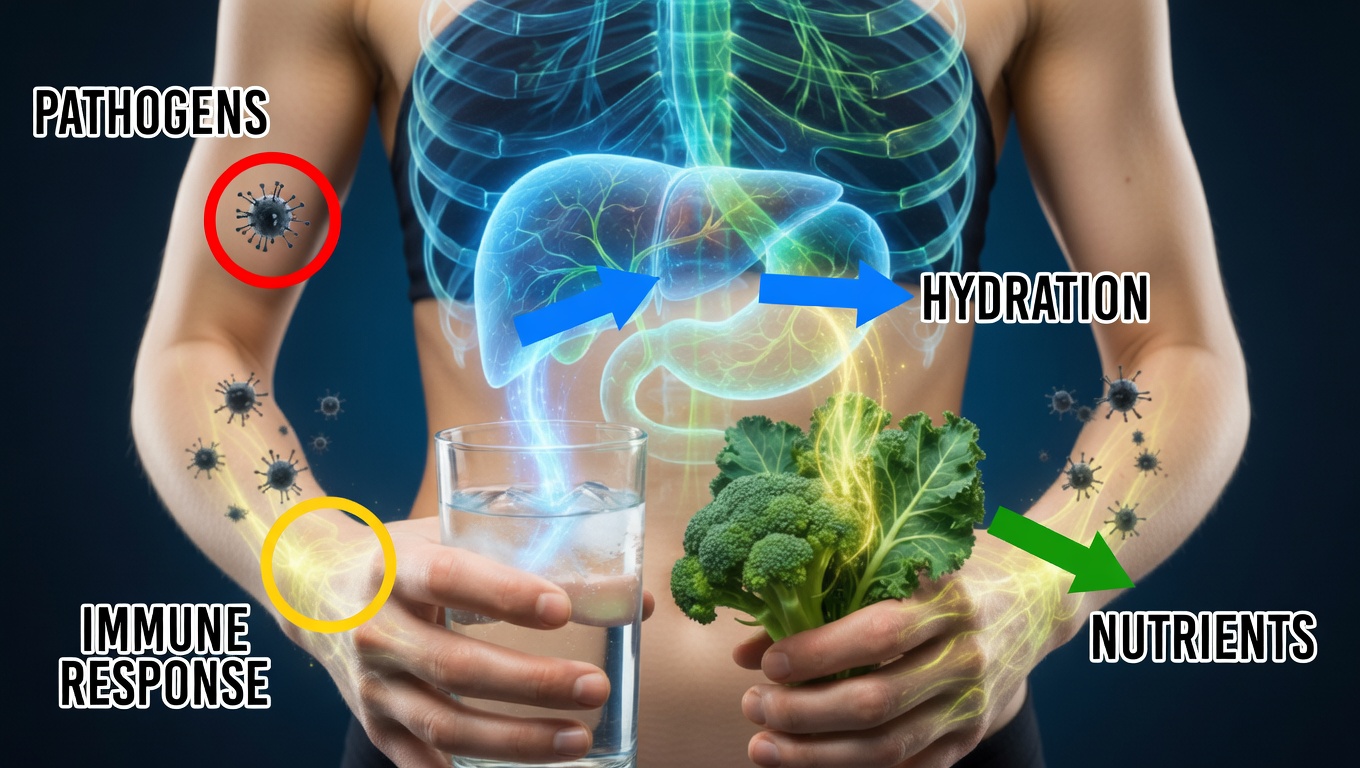
Here’s how each phase works:
Phase 1: Activation
In Phase 1, your liver:
- Detects the pesticide or other toxin
- Uses a family of enzymes known as cytochrome P450 enzymes
- Chemically alters the toxin, making it more reactive and ready for the next step
This activation is necessary, but it also creates highly reactive intermediate compounds that can be more harmful than the original toxin if not quickly dealt with.
Phase 2: Conjugation
Phase 2 is your liver’s neutralization phase. Here, the activated toxin is:
- Combined (or “conjugated”) with another molecule
- Rendered less reactive and more stable
- Converted into a water-soluble form
Common conjugation processes use compounds such as glutathione, sulfate, and various amino acids. Once conjugated, the toxin is far easier for your body to excrete.
Phase 3: Elimination
In Phase 3, your body moves the now water-soluble toxin out:
- Into bile, which flows from the liver to the gallbladder and then into the intestines, where it’s removed via stool
- Into the bloodstream to be filtered by the kidneys and excreted through urine
For pesticide detoxification to work effectively, all three phases must be functioning, but supporting them in the right order is key.
2. Why an Unbalanced Detox Can Backfire
Many people approach detox by grabbing a random “detox supplement” and expecting it to flush out toxins. The problem: a large number of these products mainly stimulate Phase 1.
Imagine trying to clear a clogged sink by turning the tap on full blast. If the drain is blocked, you’ll just overflow the sink. The same thing happens in your body when:
- Phase 1 is pushed to work faster
- Phase 2 and Phase 3 are not adequately supported
You end up generating a surge of reactive intermediate toxins. If Phase 2 can’t neutralize them quickly, and Phase 3 can’t remove them from the body, these compounds accumulate and circulate.
This can trigger the classic “detox symptoms,” such as:
- Headaches
- Fatigue or feeling wiped out
- Brain fog and difficulty concentrating
- Skin rashes or breakouts
- General malaise or flu-like symptoms
These are not signs of a “good detox”; they indicate that toxins are being stirred up more quickly than your body can safely process and eliminate them.
The smarter strategy is the reverse:
- Start with Phase 3 (Elimination): Open the exit routes.
- Then support Phase 2 (Conjugation): Strengthen your neutralizing systems.
- Finally, gently enhance Phase 1 (Activation): Once the rest of the pathway can handle the increased load.
3. Step 1: Open the Elimination Pathways (Support Phase 3)
Before mobilizing stored pesticides from tissues, you must make sure the body has clear and efficient exits. If your elimination routes are sluggish, toxins that reach the intestines can be reabsorbed back into circulation through a process called enterohepatic recirculation.
When this happens, your liver is forced to detoxify the same toxins repeatedly, creating a cycle of chronic overload. That’s why Phase 3 support is the first priority.
Here’s how to enhance elimination:
Stay Well Hydrated
Your kidneys filter water-soluble toxins from the blood and excrete them in urine.
- Drink plenty of clean, filtered water throughout the day
- Aim for pale-yellow urine as a general hydration guide
Good hydration helps your kidneys flush out pesticide metabolites effectively.
Maintain Regular Bowel Movements
Daily bowel movements are essential for removing toxins carried out in bile.
- Aim for at least one complete bowel movement per day
- Increase dietary fiber, especially from a variety of vegetables
- If needed, consider magnesium citrate (as directed by a professional), which pulls water into the colon and supports motility
Chronic constipation is a major obstacle to detox; stool lingering in the colon increases the chance of toxin reabsorption.
Support Healthy Bile Flow
Bile is a critical transport medium for many conjugated toxins, including pesticides.
To promote robust bile production and flow:
- Include bitter herbs such as dandelion root or artichoke extract
- Ensure adequate intake of taurine and choline (choline is abundant in lecithin-rich foods)
These nutrients help the liver produce bile and keep it moving through the gallbladder and intestines.
Consider Toxin Binders (Optional)
For extra support, you can use binders that travel through the gut and attach to toxins so they are less likely to be reabsorbed.
Common options include:
- Chlorella
- Zeolite clay
- Modified citrus pectin (MCP)
These substances can help “trap” pesticides and other toxins in the intestines, assisting their removal via stool. Use binders away from medications and supplements and under appropriate guidance.
4. Step 2: Build Your Defenses (Support Phase 2)
Once you have strong elimination in place, it’s time to reinforce Phase 2 conjugation. This is where your liver transforms reactive compounds from Phase 1 into safer, water-soluble molecules.
If Phase 2 is sluggish:
- Activated toxins from Phase 1 hang around longer
- Oxidative stress increases
- Cells and tissues, including the liver and brain, may be damaged
For pesticides, glutathione conjugation is one of the most critical Phase 2 pathways.
Boost Glutathione Levels
Glutathione is often called the body’s “master antioxidant.” It:
- Neutralizes many pesticide-related free radicals
- Directly binds certain toxins so they can be excreted
- Protects cells from oxidative stress
To support glutathione production, focus on:
- Key amino acids: Your body makes glutathione from cysteine, glycine, and glutamine.
- A high-quality protein source such as whey protein can supply these building blocks.
- N-acetylcysteine (NAC) is a popular supplement form of cysteine. Typical supportive doses range around 600–1,200 mg per day, as commonly used in research and practice.
- Selenium: This mineral helps enzymes recycle glutathione so it can be used repeatedly.
- Many people aim for about 100–200 mcg per day, either from a supplement or from foods like Brazil nuts.
Support Other Conjugation Pathways
Although glutathione is central, your body relies on multiple Phase 2 routes to handle a variety of toxins:
-
Sulfation:
- Eat sulfur-rich foods such as garlic, onions, eggs, and cruciferous vegetables (broccoli, cauliflower, Brussels sprouts, kale).
- These foods provide sulfur compounds that support sulfation pathways used in detoxification.
-
Methylation:
- Ensure adequate intake of B vitamins, especially vitamin B6, vitamin B12, and folate.
- These nutrients help power methylation, another key conjugation process that assists in processing toxins and supporting overall metabolic health.
By first opening your elimination routes (Phase 3) and then strengthening your neutralization capacity (Phase 2), you create a solid foundation for dealing with pesticide exposure. Only after these two phases are working well should you consider gently enhancing Phase 1 activation—so that when toxins are mobilized, your body is ready to neutralize and remove them efficiently.