Sleeping Well After 55: Why It Gets Harder and What Really Helps
Once you’re past 55, getting solid, uninterrupted sleep often becomes more challenging. Hormonal shifts, sudden cortisol surges that wake you up at odd hours, plus new aches and pains can turn the night into a struggle.
You may have already experimented with popular options like melatonin or magnesium. While those can certainly help, they don’t always address the specific sleep problems that become more common with age. The real goal isn’t just “take a sleep aid” — it’s to use targeted supplements that match the exact sleep issue you’re dealing with.
Before you add anything new, ask yourself a key question:
- Is your main problem falling asleep?
- Do you keep waking up throughout the night?
- Or is it a restless, anxious mind that will not switch off?
The smartest strategy is to identify your primary sleep complaint, choose one supplement that fits that issue, use it consistently for about two weeks, and track the results.
What follows is a guide to several powerful, often overlooked sleep supplements that can be especially effective for people over 50, drawing on the work of sleep expert Dr. Michael Breus.
Key Takeaways
-
Targeted supplementation: Start by pinpointing your main sleep problem (trouble drifting off, frequent awakenings, early morning waking, racing thoughts) and select a supplement designed to address that specific pattern.
-
More than melatonin: Melatonin is widely used, but it’s not a universal fix. Nutrients like glycine, L‑theanine, and magnolia bark can tackle deeper age-related issues such as poor temperature regulation, overactive thinking, and cortisol spikes.
-
Body and mind together: The best sleep support typically calms both the nervous system and the body. Some supplements cool your core temperature, others promote relaxing brain waves or smooth out stress hormone rhythms.
-
Safety first: Always speak with your healthcare provider before starting any new supplement, especially if you take prescription medications for blood pressure, anxiety, depression, pain, or sleep.
1. Glycine: Cooling the Body and Rebuilding Deep Sleep
Glycine is one of the most underrated sleep supplements for people over 50. It pulls double duty: it supports better sleep and has benefits for healthy aging. Glycine is a simple amino acid your body makes on its own, but production tends to decline over time — some researchers estimate that older adults may be short by several grams a day.
Why glycine helps aging sleep
Glycine is particularly helpful because it tackles two big age-related sleep problems:
-
Core body temperature regulation
To fall asleep — and stay asleep — your core temperature must drop by about 1°C (roughly 1–2°F). As you get older, and especially during and after menopause, your internal thermostat can become less efficient. You may stay too warm, wake up hot, or have night sweats.Glycine promotes peripheral vasodilation — it helps open small blood vessels in your hands and feet. This draws heat away from your core and releases it through the skin, gently cooling you down and signaling to your brain that it’s time to sleep.
-
Restoring deep (slow‑wave) sleep
Deep sleep, also called slow‑wave sleep, is the phase where your body repairs tissues, your immune system resets, and your brain performs important “clean‑up” processes. With age, this stage often shrinks.Research published in the Journal of Sleep and Biological Rhythms has shown that glycine can improve sleep architecture by enhancing slow‑wave sleep — and importantly, it does this without causing morning grogginess.
How to use glycine
- Form: Bulk glycine powder is cost‑effective and easy to use.
- Taste: It has a naturally sweet flavor, similar to sugar.
- How to take it:
- Mix about 3 grams (roughly a heaping teaspoon) into a cup of chamomile tea or any non‑caffeinated evening drink.
- Take it about 60 minutes before bedtime.
- Caution: Glycine can increase the effects of sedatives, anti‑anxiety medications, and muscle relaxants. If you use any of these, talk to your doctor before adding glycine.
2. L‑Theanine: Quieting the “Tired but Wired” Mind
If glycine is the “body cooler,” L‑theanine is the “mind calmer.” This amino acid, naturally found in green tea, is especially useful when your body feels worn out, but your brain keeps spinning — the classic “tired but wired” insomnia.
Why L‑theanine is useful as you get older
There are two main reasons L‑theanine can be a game‑changer for older adults:
-
Slower caffeine metabolism
After 50, your liver often clears caffeine more slowly. That coffee you drank at 1:00 p.m. could still be stimulating your nervous system late in the evening. L‑theanine helps soften this lingering stimulation, making it easier for your nervous system to relax at night. -
Reducing racing thoughts (“monkey mind”)
L‑theanine easily crosses the blood–brain barrier and has been shown, in studies published in Nutrients and other journals, to increase alpha brain waves. Alpha waves are associated with calm, wakeful relaxation — similar to what you experience during meditation.By boosting alpha activity, L‑theanine helps slow that mental checklist, ease worry, and create a mental environment where your natural sleep systems can take over.
How to use L‑theanine
- Form: Capsules are the most convenient form.
- Dose:
- Start with 200 mg taken about 60 minutes before bed.
- In cases of intense, persistent racing thoughts, studies have used up to 400 mg, but it’s best to increase gradually and under medical guidance.
- Caution: L‑theanine can slightly lower blood pressure. Use extra caution if you are on blood pressure medications or beta‑blockers and discuss it with your physician.
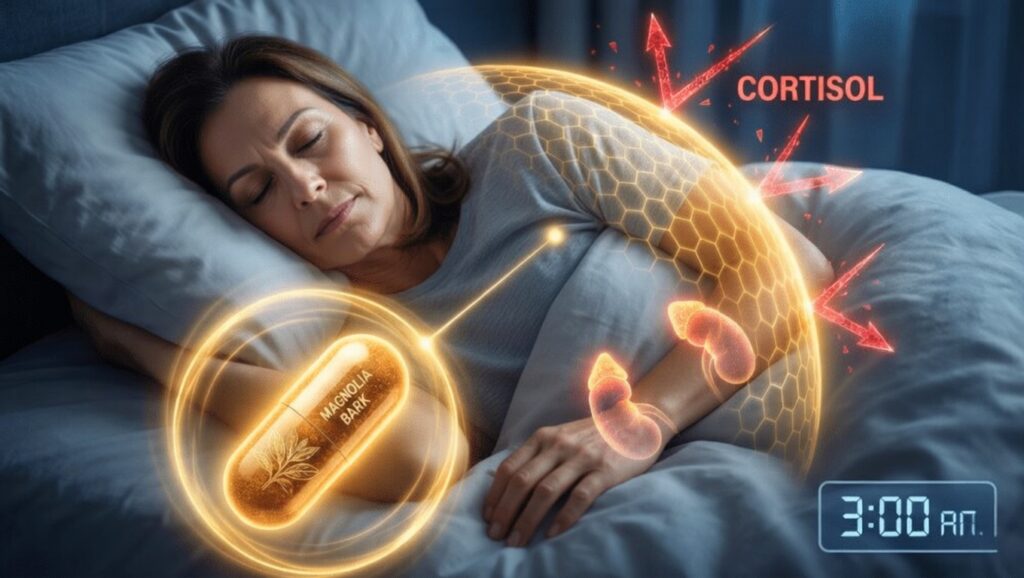
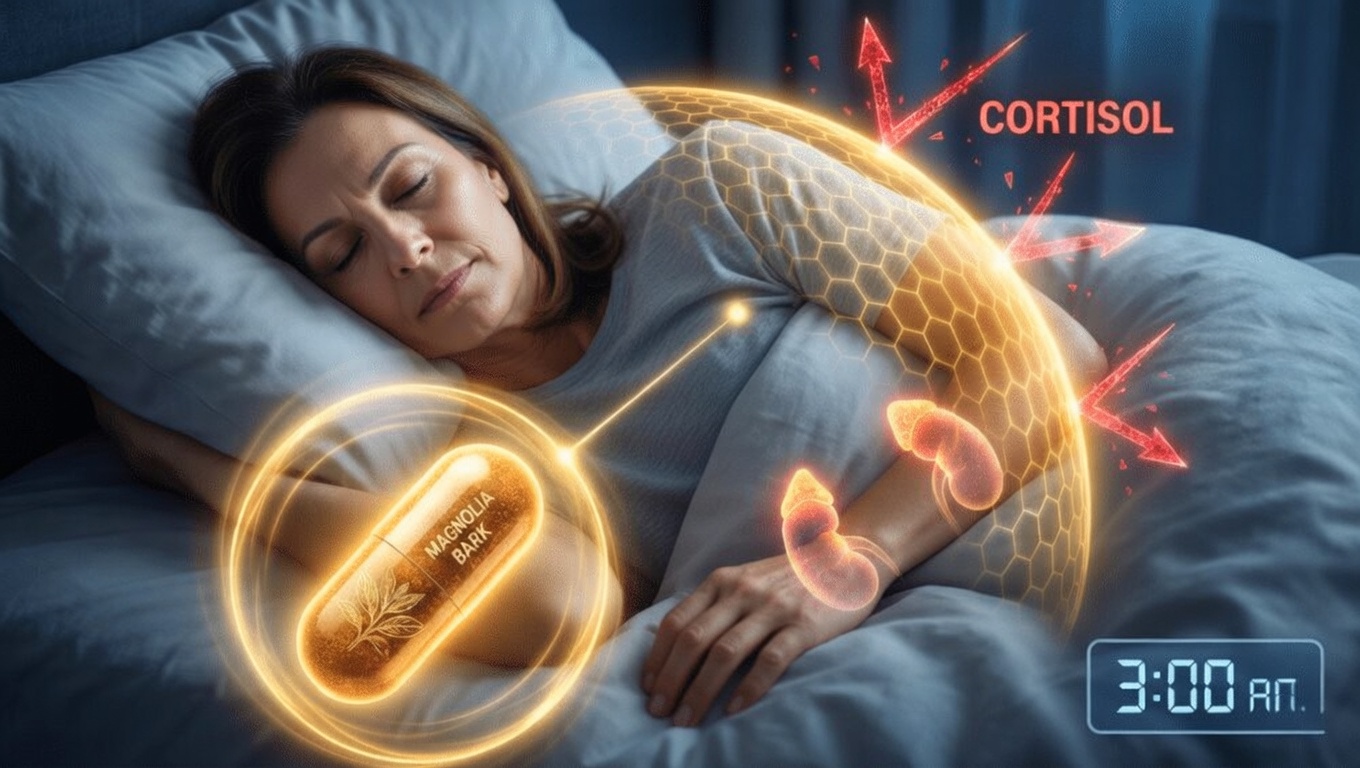
3. Magnolia Bark: Blocking the 3 A.M. Cortisol Wake‑Up
If you regularly bolt awake around 2–4 a.m. and can’t fall back asleep, magnolia bark may be worth exploring. Used in Traditional Chinese Medicine for centuries, magnolia bark extract contains two key compounds: honokiol and magnolol.
How magnolia bark supports sleep in older adults
-
GABA support (calming the nervous system)
Research in Neuropharmacology indicates that magnolia bark influences GABA receptors, the same calming receptors targeted by drugs like Valium. However, magnolia is much milder and is not associated with the same level of motor impairment or addiction risk as benzodiazepines. -
Taming nighttime cortisol spikes
In younger, healthy adults, cortisol — the main stress hormone — is usually at its lowest around 3 a.m. As we age, this rhythm can become disrupted, and cortisol may spike in the middle of the night, waking you up abruptly.Magnolia bark appears to help reduce evening and nighttime cortisol levels, acting like a “bodyguard” against those 3 a.m. alertness surges.
-
Protecting the aging brain
Honokiol, one of the active compounds in magnolia bark, is also a strong antioxidant. It helps combat inflammation and oxidative stress in the brain, which is particularly relevant as we get older.
How to use magnolia bark
- Form:
- Avoid powders — they have a strong, unpleasant taste (often compared to cleaning fluid and dirt).
- Choose capsules instead.
- Quality: Look for a standardized extract with around 90% active ingredients (this should be clearly listed on the label).
- Dose:
- Take 200–400 mg about one hour before bedtime.
- Caution: Magnolia bark can strongly interact with sedatives and other central nervous system depressants. Consult your doctor if you are taking sleep medications, anti‑anxiety drugs, or other sedatives.
4. Valerian Root & Hops: The Relaxation and Gentle Sedation Duo
Sometimes you don’t just need to relax — you also need a subtle push toward sleep. That’s where the combination of valerian root and hops can be especially helpful.
- Valerian helps calm the central nervous system and relax muscles.
- Hops supports the brain’s transition into a sleep‑ready state.
Together, they have a synergistic effect: each works better in the presence of the other.
Why this combo is helpful with age
Research published in the journal Molecules suggests that valerian plus hops may work, in part, by acting similarly to adenosine, a chemical that builds up in your brain throughout the day to create “sleep pressure” — the natural drive to fall asleep.
Caffeine is well known for blocking adenosine, which is one reason coffee keeps you alert. The valerian–hops combination appears to support the opposite: enhancing adenosine’s sleep‑promoting signal so you feel more ready to drift off.
How to use valerian and hops
- Form: Often sold together in capsules or liquid extracts formulated specifically for sleep.
- Typical use:
- Follow the manufacturer’s instructions; many products provide a combined dose taken 30–60 minutes before bed.
- If using tinctures, they can be mixed into a small amount of water or herbal tea.
- Caution:
- Both valerian and hops have mild sedative effects.
- Avoid combining them with prescription sleeping pills, alcohol, or other sedatives unless your healthcare provider has cleared it.
- Some people may feel groggy the next morning with higher doses; start low and adjust slowly.
Final Thoughts: Match the Supplement to Your Sleep Problem
For adults over 50, better sleep rarely comes from a one‑size‑fits‑all pill. Instead, it’s about:
- Identifying your main sleep challenge
- Choosing one targeted supplement that fits that pattern
- Using it consistently for at least two weeks while monitoring your response
- Working closely with your healthcare provider, especially if you take other medications
Whether you need to cool your body (glycine), quiet your mind (L‑theanine), stop 3 a.m. cortisol spikes (magnolia bark), or gently increase sleep pressure (valerian plus hops), targeted supplementation — guided by data and used safely — can be a powerful tool for restoring restorative, age‑resilient sleep.