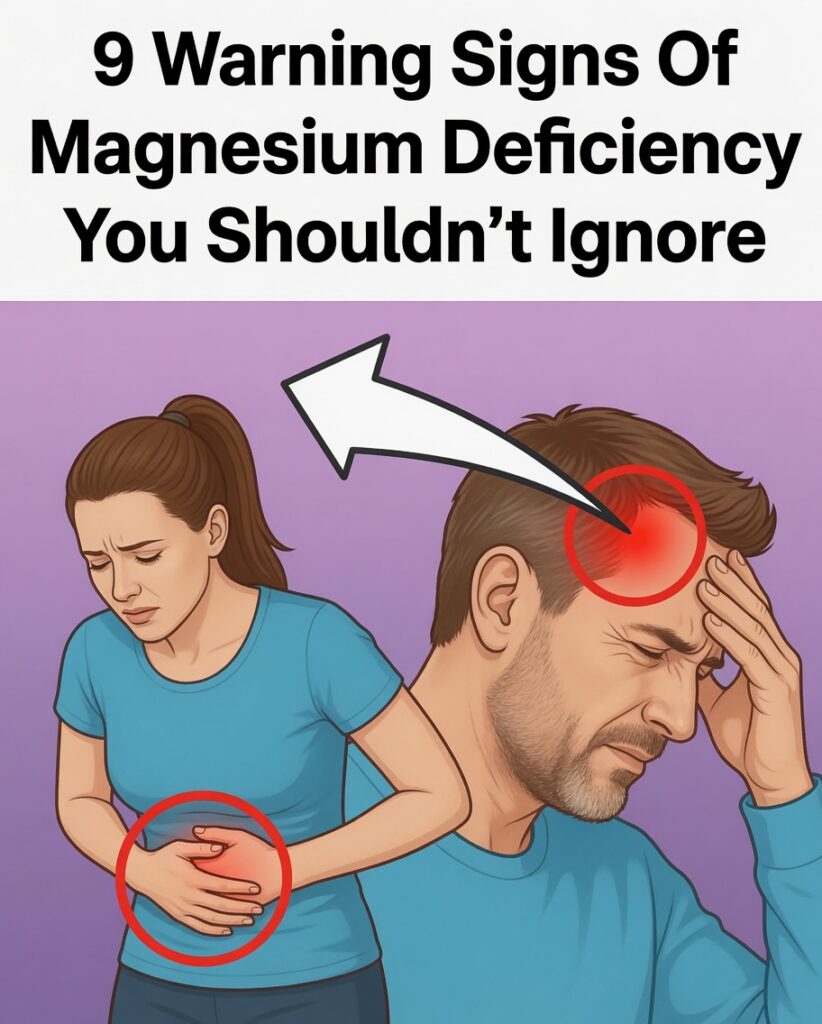
Magnesium Deficiency: 9 Warning Signs You Shouldn’t Ignore
Magnesium is an essential mineral involved in more than 300 biochemical processes in the human body. Despite its importance, magnesium deficiency is common and often goes unnoticed—until symptoms start affecting daily life. Below are nine common signs of low magnesium, what they can look like, and why they matter for your health.

1. Frequent Muscle Cramps, Twitching, or Spasms
What you may notice
- Sudden, unexplained muscle cramps
- Twitching or spasms, especially in the legs or back
- Nighttime cramping that interrupts sleep
Why it matters
Magnesium supports muscle relaxation. When levels are low, muscles may contract more easily, leading to cramping and spasms.
2. Ongoing Fatigue and Low Energy
What you may notice
- Feeling tired most of the time
- Low stamina or motivation
- Exhaustion even after a full night of sleep
Why it matters
Magnesium plays a key role in energy production at the cellular level. Inadequate magnesium can disrupt normal metabolism, leaving you feeling persistently drained.
3. Insomnia and Poor Sleep Quality
What you may notice
- Trouble falling asleep
- Waking up frequently during the night
- Light, restless, or unrefreshing sleep
Why it matters
Magnesium helps regulate neurotransmitters involved in relaxation and sleep. Low magnesium may contribute to sleep disturbances and insomnia-like symptoms.
4. Anxiety, Irritability, and Mood Changes
What you may notice
- Increased nervousness or tension without a clear reason
- Irritability or emotional ups and downs
- Low mood or depressive symptoms
Why it matters
Magnesium supports brain function and mood regulation. When magnesium is insufficient, neurotransmitter balance can be affected, potentially worsening anxiety and mood instability.
5. High Blood Pressure or Irregular Heart Rhythm
What you may notice
- Higher-than-usual blood pressure readings
- Heart palpitations
- An irregular or “skipping” heartbeat sensation
Why it matters
Magnesium helps relax blood vessels and supports a steady heart rhythm. Low levels may increase cardiovascular strain and contribute to blood pressure changes.
6. Frequent Headaches or Migraines
What you may notice
- Recurring headaches
- Migraine episodes
- Sensitivity to light or sound during headaches
Why it matters
Magnesium is involved in nerve signaling and blood flow regulation in the brain. Research has linked low magnesium levels with a higher likelihood of headaches and migraines.
7. Nausea, Reduced Appetite, or Digestive Discomfort
What you may notice
- Ongoing mild nausea
- Less interest in food
- Digestive upset or irregular bowel habits
Why it matters
Magnesium contributes to normal digestive function. Deficiency can disturb gastrointestinal processes and may lead to nausea or appetite changes.
8. Tingling or Numbness (“Pins and Needles”)
What you may notice
- Tingling in the hands, feet, or face
- Numb patches or unusual sensations
- “Pins and needles” without an obvious cause
Why it matters
Magnesium is vital for healthy nerve function. Low magnesium can increase nerve irritability, which may show up as tingling or numbness.
9. Bone Weakness and Higher Osteoporosis Risk
What you may notice
- Signs of reduced bone strength
- Frequent fractures or slow recovery from bone injuries
- Family history of osteoporosis
Why it matters
Magnesium supports bone formation and helps manage calcium balance. Over time, magnesium deficiency may reduce bone density and increase the risk of osteoporosis.
How to Improve Magnesium Levels
If several symptoms sound familiar, it may be worth reviewing your magnesium intake. Here are practical steps many people consider:
1. Eat more magnesium-rich foods
- Leafy greens (spinach, kale)
- Nuts and seeds (almonds, pumpkin seeds)
- Legumes (beans, lentils)
- Whole grains
- Dark chocolate (in moderation)
2. Consider supplements carefully
- Magnesium supplements can help when diet falls short
- Speak with a healthcare professional for the right type and dose—especially if you take medications or have health conditions
3. Support magnesium with lifestyle habits
- Exercise regularly
- Manage stress (chronic stress can affect magnesium levels)
- Aim for a balanced, nutrient-dense diet
Final Thoughts
Low magnesium can show up in many ways—from muscle cramps and fatigue to concerns involving sleep, mood, heart rhythm, nerves, and bone health. If you recognize several of these warning signs, improving your magnesium intake through food and healthy habits may make a meaningful difference in how you feel.