Build a Stronger Back as You Age
Your back is one of the most important muscle groups to protect over time. It supports posture, helps stabilize the upper body, and plays a major role in daily movement. A strong back can also help reduce injury risk and lower back pain.
Dumbbells are especially useful for back training because they make it easier to move through different planes and work through a full range of motion. That matters because your back is involved in almost everything you do during the day.
When the back becomes weak or unbalanced, pain and dysfunction can follow, and those issues can be difficult to overcome.
The Problem: Back Pain Is Extremely Common
Back pain is a widespread issue. Nearly 80% of all Americans will deal with back pain at some point in life.
That number becomes even more striking when you consider that many cases are linked to weakness and poor posture. If the muscles that support your spine are not doing their job well, the body can drift into positions that place extra stress on the back.
The Cause: Weak Back Muscles and Poor Posture
Posture matters whether you are sitting, standing, walking, or exercising. The body relies on key back muscles to help keep you out of harmful positions.
Important muscles for posture and spinal health include:
- Posterior deltoids
- Rhomboids
- Traps
- Lats
When these muscles are not strong enough, posture often suffers. Over time, that can lead to pain.
Sitting Posture
Think about a typical desk setup. Many people spend hours sitting in a slumped position with a noticeable curve in the spine.
For short periods, this usually is not a major issue. But when that posture is repeated for 8 hours or more each day over many years, the back muscles can become very weak. Once those muscles lose their ability to support healthy alignment, back pain often starts to appear.
Standing and Walking Posture
Your back muscles also need to stay active when you are upright. If they are weak, standing and walking can become uncomfortable.
That discomfort may then cause changes in the way a person moves. Those compensations can create dysfunction and pain in other areas of the body. In some situations, even a knee injury may trace back to a weak back.
Posture During Exercise and Activity
Back strength is just as important during workouts. No matter which muscles you are trying to train, your back needs to provide support and stability.
Take the deadlift as an example. Although it is mainly used to strengthen the legs, a weak back can make it hard to stay stable during the lift. That can also reduce exercise performance.
The Solution: A Dumbbell Back Workout at Home
Your training plan should always match your individual goals. If your main goal is building strength and bigger back muscles, use these guidelines:
- Perform 3 to 5 sets of each exercise
- Rest 30 to 90 seconds between sets
- Aim to reach fatigue and loss of form in about 8 to 12 reps per set
If you want a more time-efficient workout, circuit training may be a better fit. In that case, move from one exercise to the next and rest only after you complete the full round.
Keeping rest minimal between circuits can create a slight cardiovascular response while also giving your back muscles a serious pump.
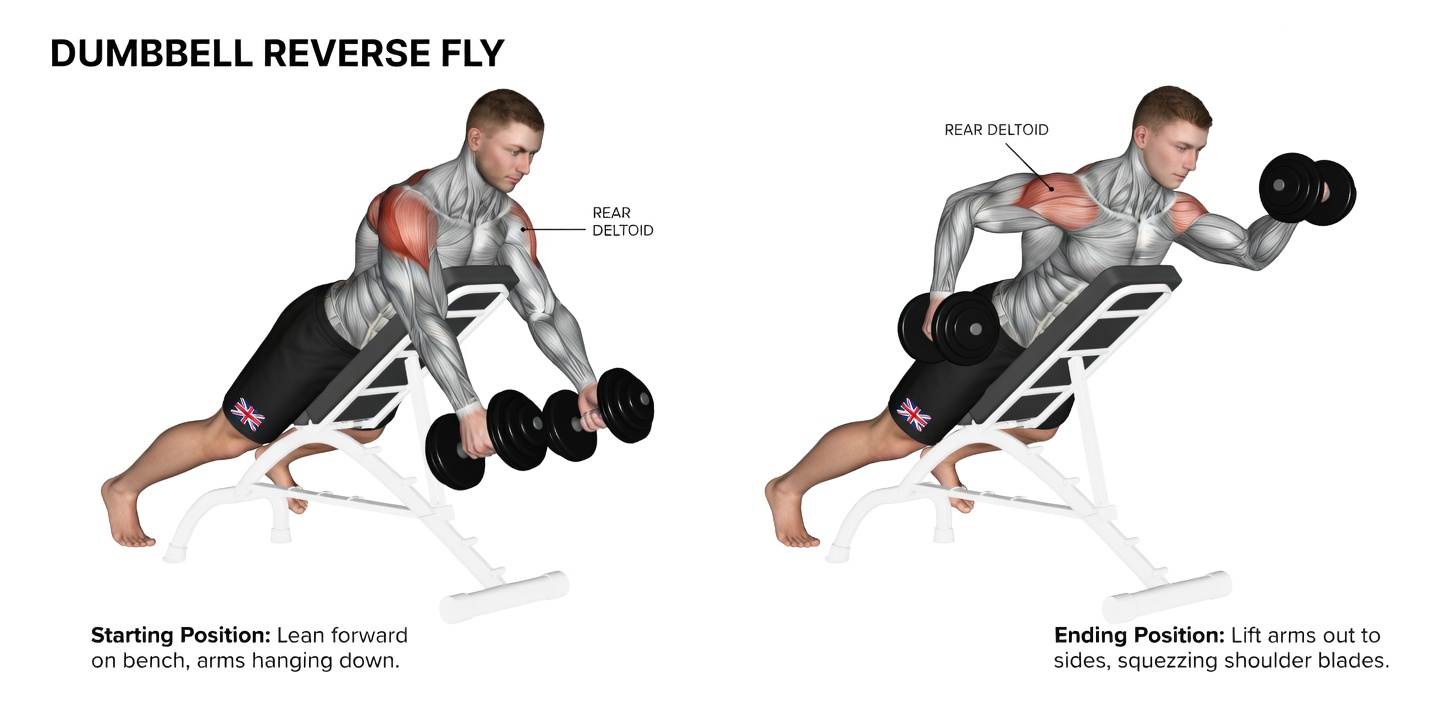
1. Bent-Over Reverse Fly
This movement challenges the upper back and shoulders while helping correct the slumped-forward position so many people fall into during the day.
Target muscles:
- Rhomboids
- Mid-traps
- Posterior deltoids
Reps: 8 to 15
Sets: 3 to 5
Rest:
- In a circuit: move directly to the next exercise
- In a traditional workout: rest 30 to 90 seconds between sets
How to do it
- Hold dumbbells and hinge at the waist until your upper body is parallel with the floor.
- Let the dumbbells hang toward the ground.
- Raise the weights out to the sides and up toward the ceiling while keeping the elbows straight.
- Squeeze the shoulder blades together.
- Slowly lower back to the starting position and repeat.
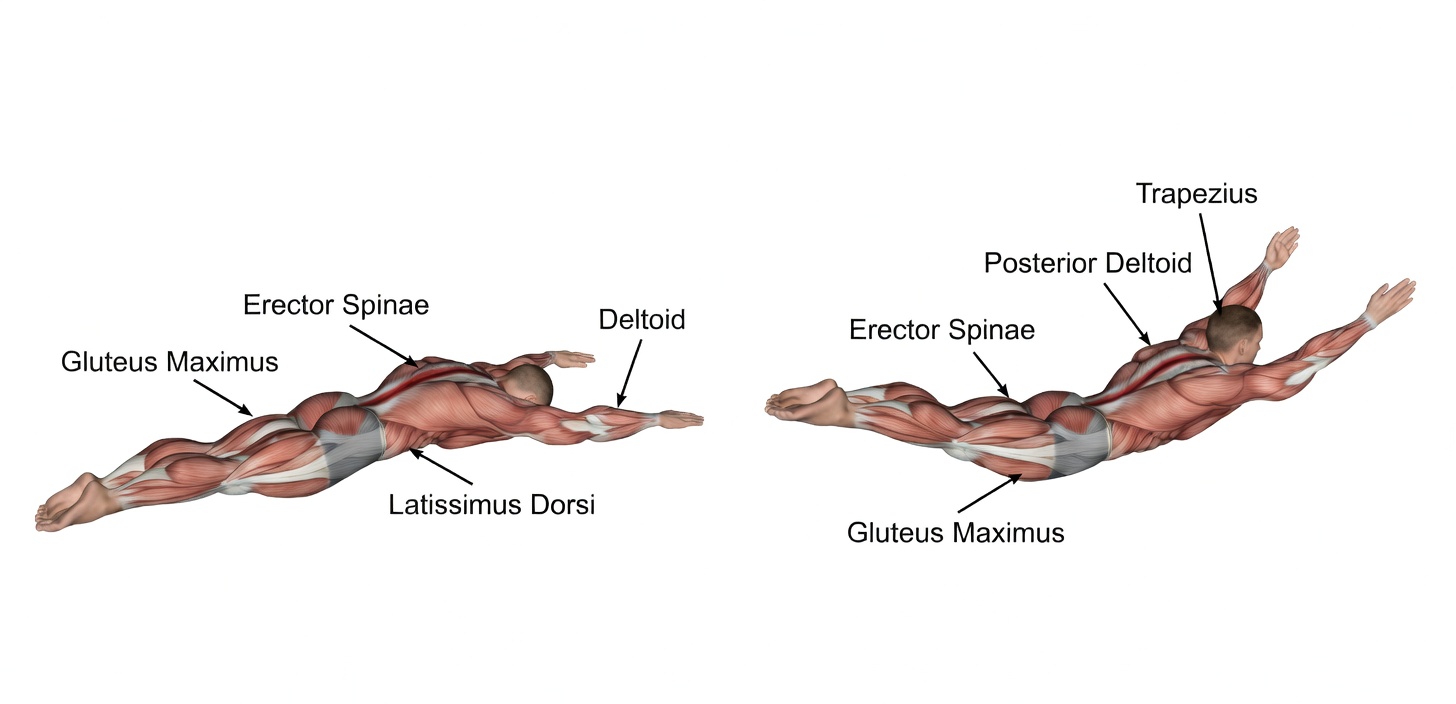
2. Supermans
Supermans are highly adaptable, which makes them useful for many people. If moving into hyperextension causes discomfort, you can place padding under your hips and waist and extend only to neutral. If you want more challenge, you can hold dumbbells.
Target muscles:
- Erector spinae
- Glutes
- Hamstrings
- Low traps
- Mid traps
Reps: 8 to 15
Sets: 3 to 5
Rest:
- In a circuit: move directly to the next exercise
- In a traditional workout: rest 30 to 90 seconds between sets
How to do it
- Lie flat on your stomach.
- Reach your arms forward above your head, with or without dumbbells.
- Lift both your arms and legs off the ground.
- Hold for 3 seconds.
- Lower slowly and repeat.
3. Bird Dogs
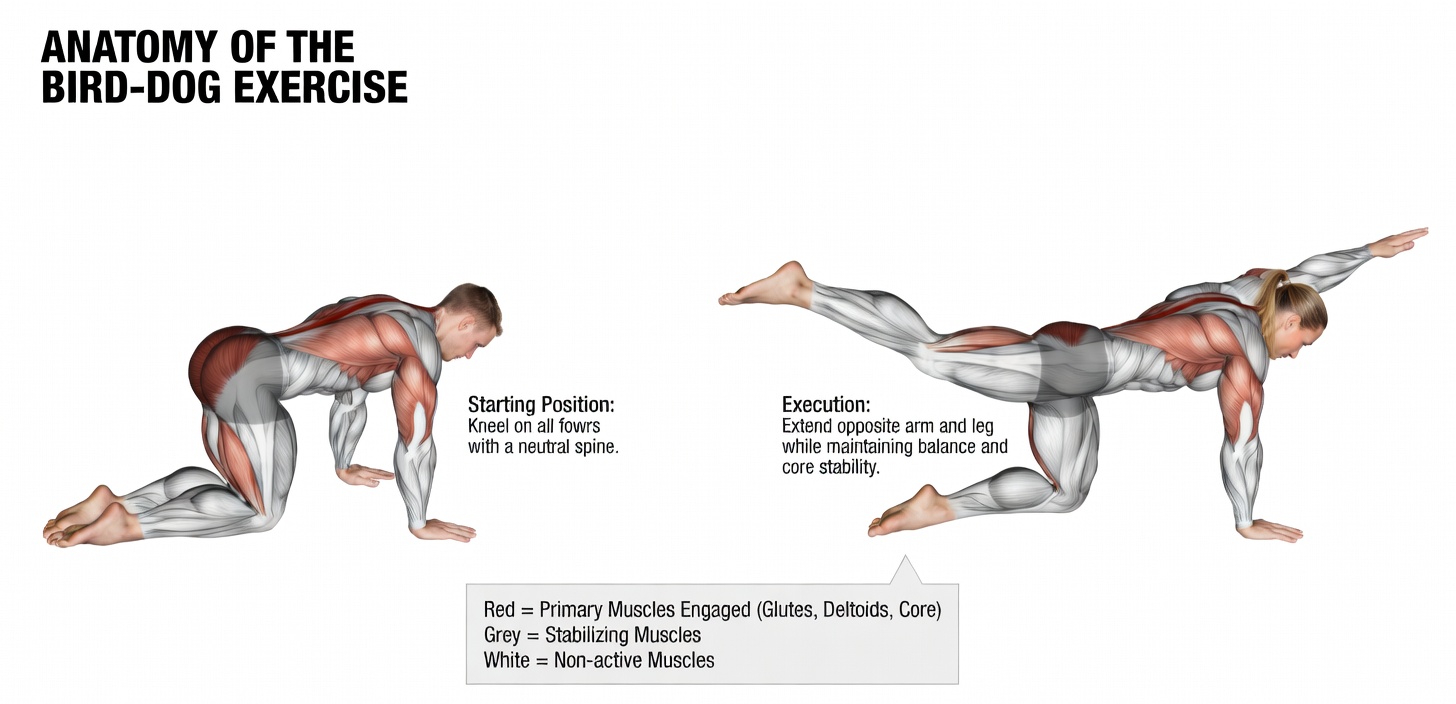
Bird dogs help train the small muscles between the spinal segments, called the multifidi. Even though they are small, they play a major role in both mobility and stability.
Target muscles:
- Multifidi
- Many of the stabilizers of the back and core
- Various shoulder muscles
Reps: 10 to 15 per side
Sets: 3 to 5
Rest:
- In a circuit: move directly to the next exercise
- In a traditional workout: rest 30 to 90 seconds between sets
How to do it
- Start on your hands and knees, holding dumbbells if desired.
- Extend one arm straight forward overhead.
- At the same time, extend the opposite leg behind you.
- Return to the starting position.
- Alternate sides each rep, or finish all reps on one side before switching.
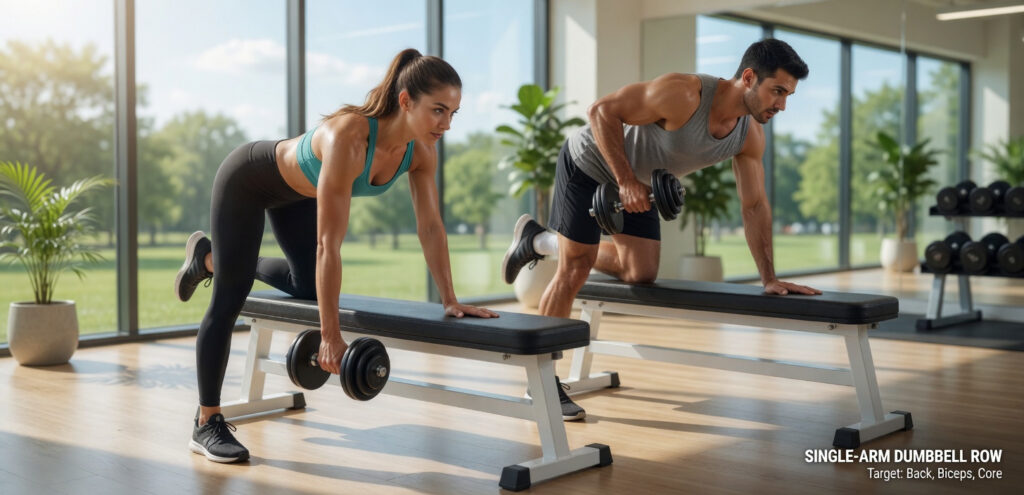
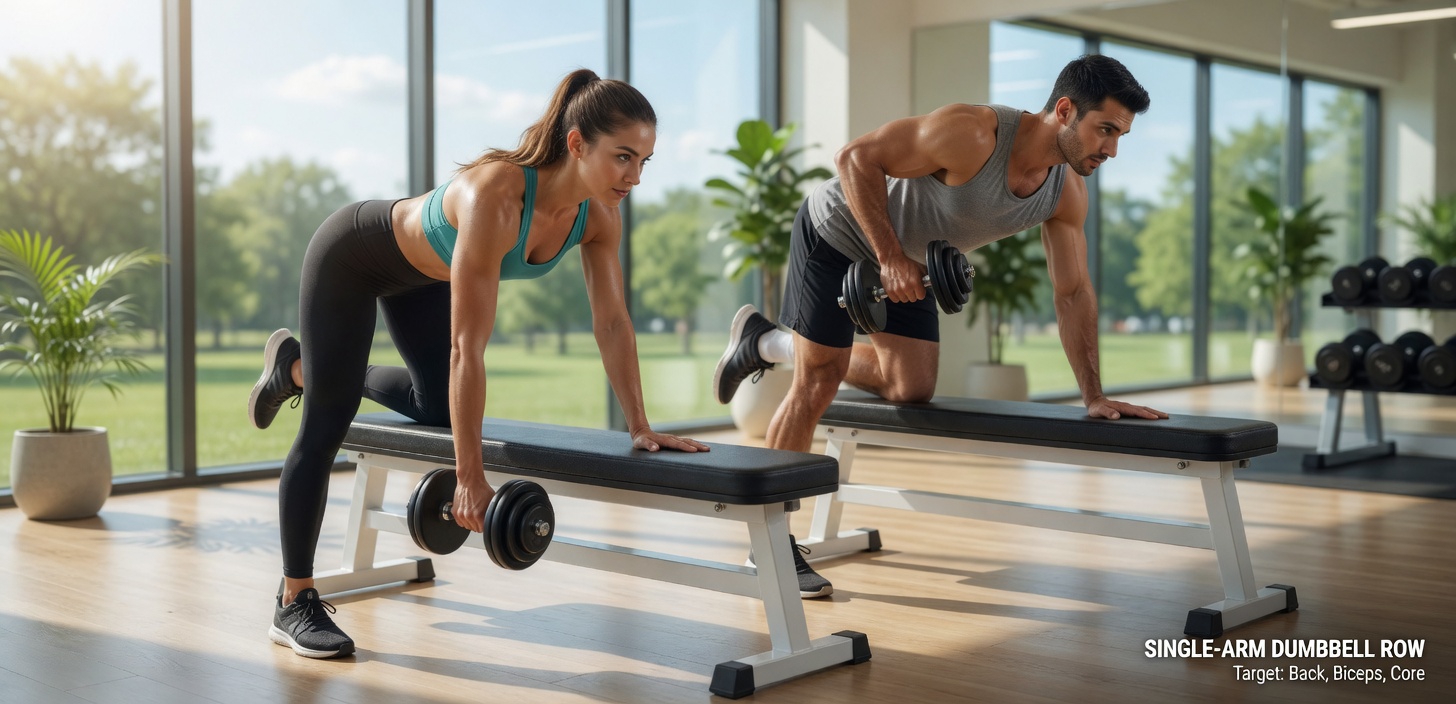
4. Single-Arm Bent-Over Row
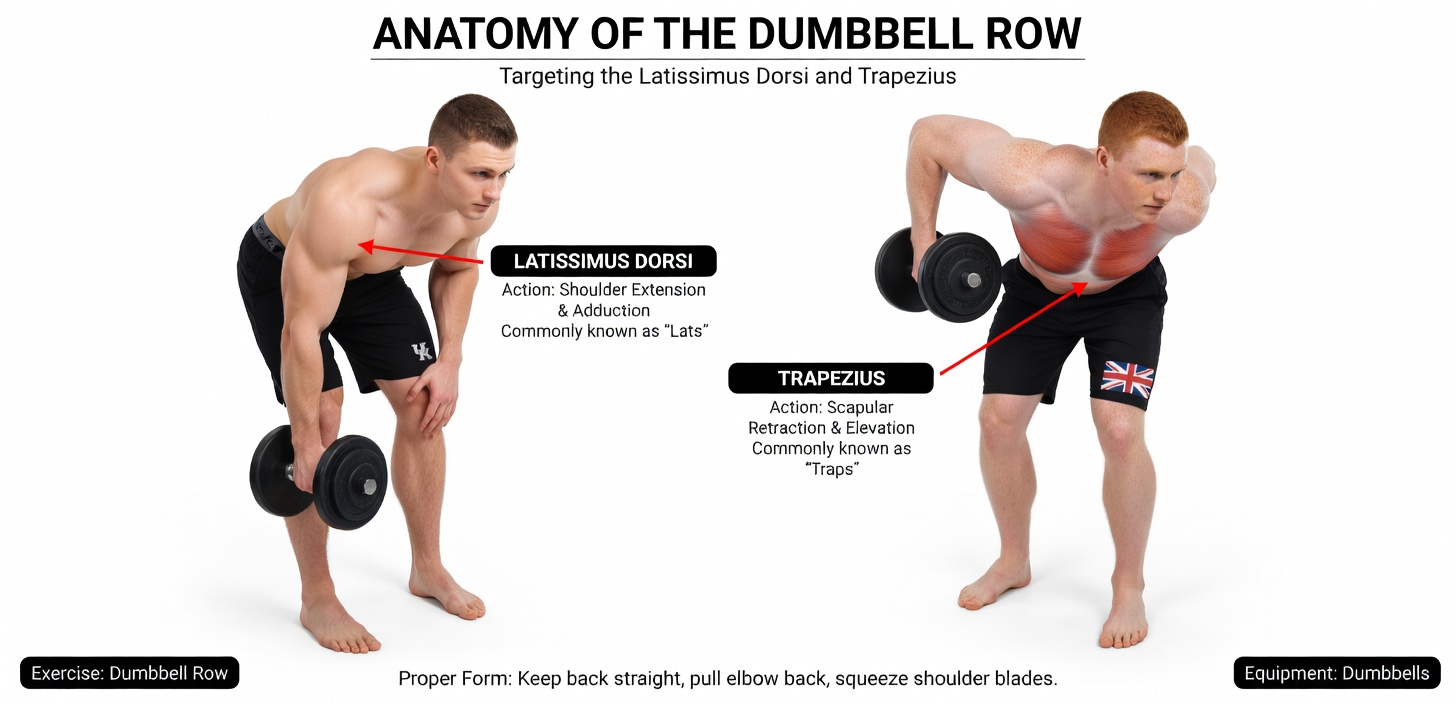
Among dumbbell back exercises, this is one of the best options if your goal is to use heavier weight. It can be performed safely with more resistance as long as you support yourself on a stable surface and keep a neutral spine.
Target muscles:
- Rhomboids
- Biceps
- Traps
- Lats
Reps: 8 to 15
Sets: 3 to 5
Rest:
- In a circuit: move directly to the next exercise
- In a traditional workout: rest 30 to 90 seconds between sets
How to do it
- Hold a dumbbell in one hand.
- Place the other hand on a bench or another stable surface for support.
- Hinge forward at the waist until your upper body is nearly parallel with the floor, keeping your spine neutral.
- Let the dumbbell hang toward the ground.
- Pull the weight toward your chest and ribs, keeping your elbow close to your side.
- Lower slowly, complete your reps, and then switch sides.
5. Prone Snow Angels
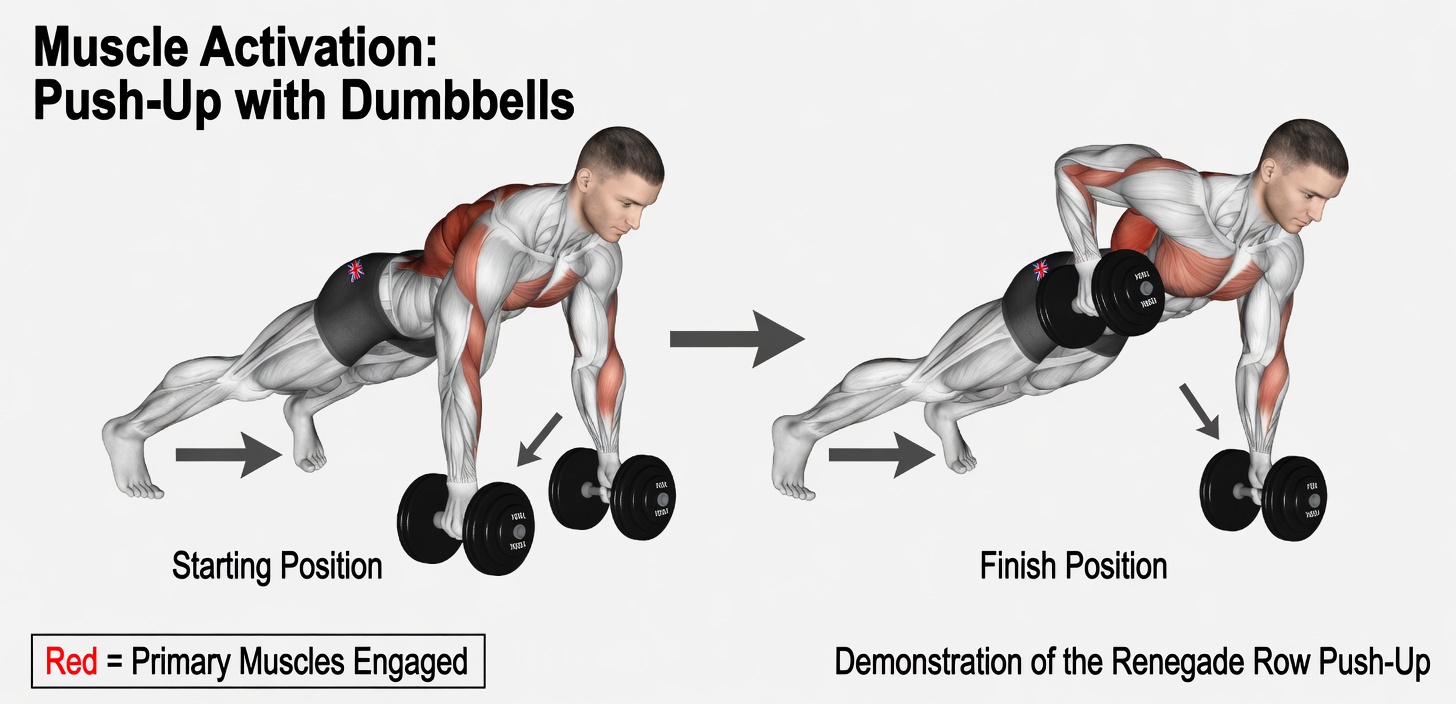
This exercise does not require much weight to be challenging. It is a strong choice for shoulder stability and shoulder strength. It is especially useful for overhead athletes, but it also suits anyone who uses their arms regularly.
Final Thoughts
A healthy back supports posture, movement, and exercise performance. It also helps protect the body from pain and compensation patterns that can affect other areas.
By strengthening the rhomboids, traps, lats, posterior deltoids, erector spinae, and other stabilizers, you give your body more support in everyday life. Whether you sit at a desk, spend a lot of time on your feet, or want to feel stronger during workouts, consistent dumbbell back training can make a meaningful difference.
Consult a healthcare professional before making changes.