Introduction to Flaxseed
Flaxseed (also called linseed) may be tiny, but it delivers impressive nutritional value. Adding just one tablespoon of flaxseed per day can support your cardiovascular system and may help lower the risk of blood clots, heart attacks, and strokes. Here’s why this simple habit can make a meaningful difference.
Rich in Omega-3 Fatty Acids
One of the biggest flaxseed benefits is its high level of omega-3 fatty acids, especially ALA (alpha-linolenic acid). These healthy fats are widely linked to heart protection because they can:
- Help reduce inflammation in the body
- Support healthier triglyceride levels
- Promote balanced blood pressure
By improving these key markers, omega-3s also help reduce conditions that contribute to clot formation, which is a major factor behind heart attacks and strokes.
High in Fiber for Heart and Digestive Health
Flaxseed is also a strong source of dietary fiber, providing both soluble and insoluble types:
- Soluble fiber helps support healthy cholesterol by binding to bile acids and helping remove them from the body, which can reduce cholesterol circulating in the bloodstream.
- Insoluble fiber supports digestion by encouraging regular bowel movements and helping prevent constipation.
Together, these fibers contribute to better heart health while also improving overall digestive function.
Antioxidant Powerhouse: Lignans
Flaxseed contains lignans, plant-based compounds known for their antioxidant activity. These antioxidants support cardiovascular health by:
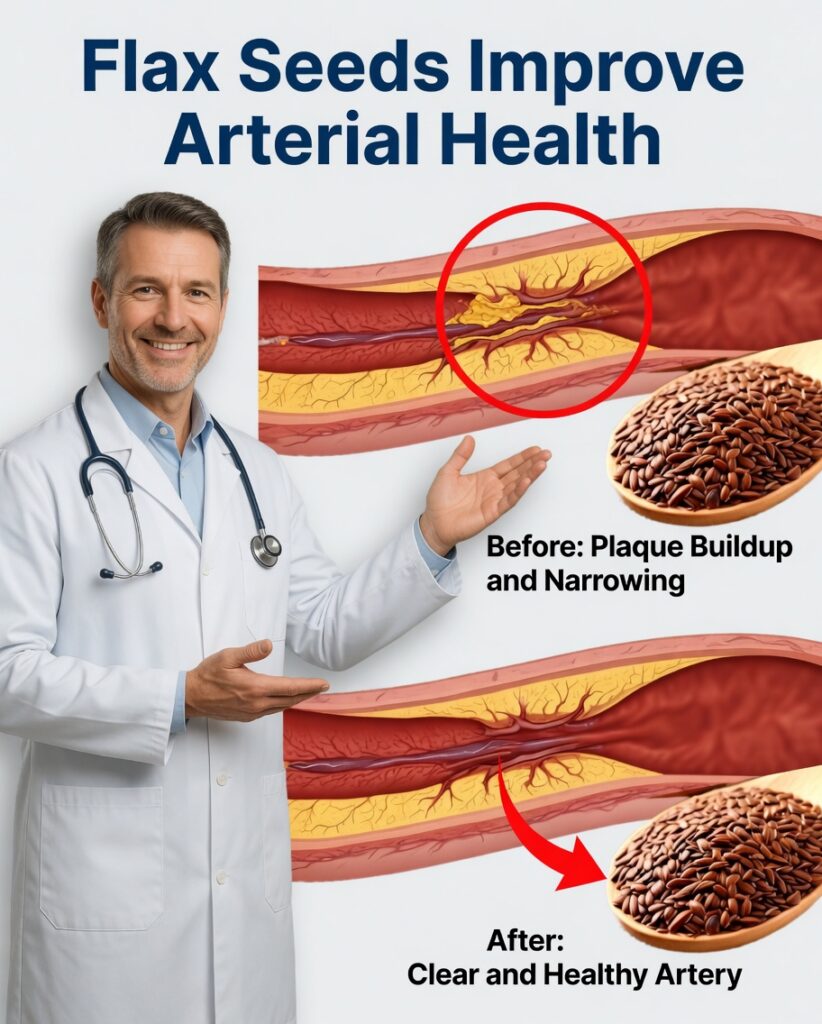
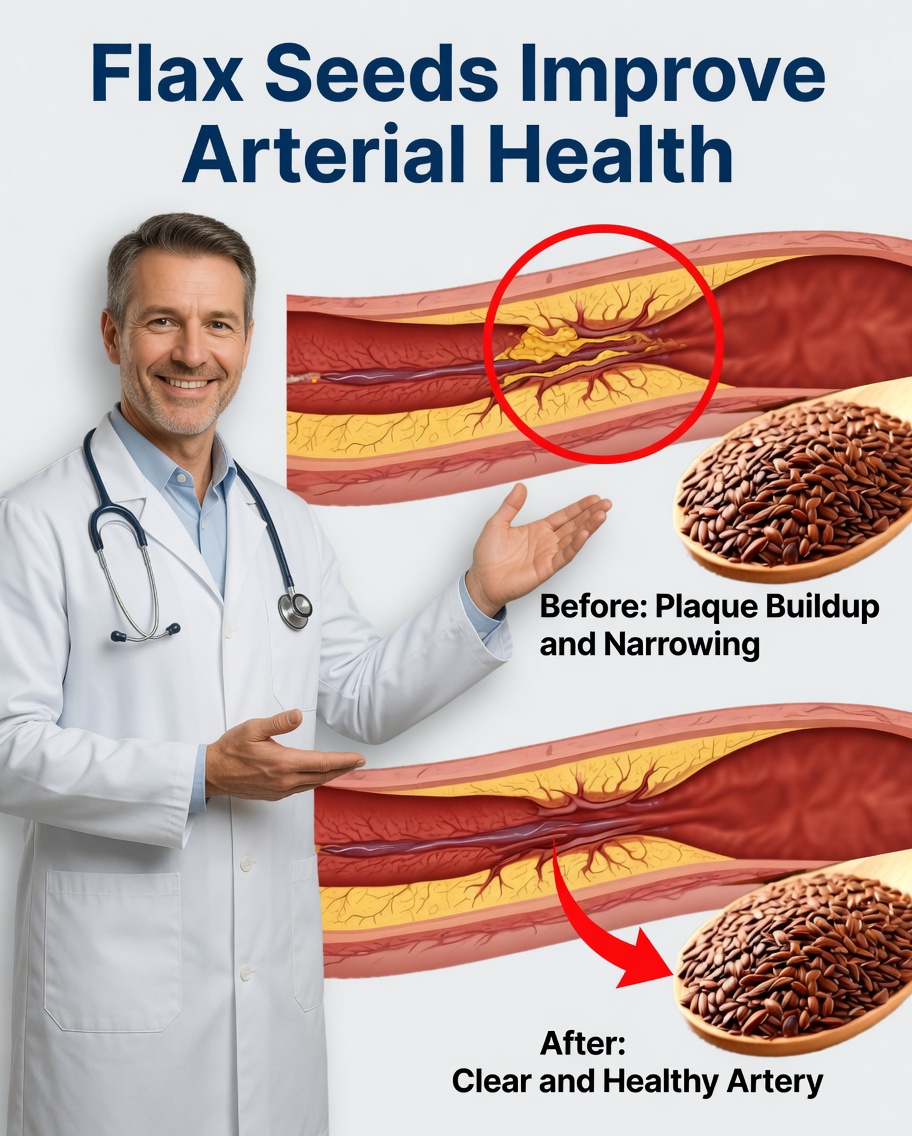
- Helping reduce plaque buildup in arteries
- Supporting arterial function and circulation
- Combating oxidative stress that can damage blood vessels
This matters because plaque buildup can lead to atherosclerosis, a condition where arteries narrow, increasing the risk of heart attacks and strokes.
How to Incorporate Flaxseed Daily
Adding flaxseed to your meals is simple and flexible. For best absorption, choose ground flaxseed rather than whole seeds, since whole flaxseed can pass through the digestive system without releasing all its nutrients.
Easy ways to use ground flaxseed include:
- Stir it into cereal, oatmeal, or yogurt
- Blend it into smoothies
- Mix it into baked goods like muffins, pancakes, or bread
Conclusion
Making flaxseed a daily habit—as little as one tablespoon a day—can be a practical step toward better heart health. With its combination of omega-3 fatty acids, fiber, and antioxidants, flaxseed supports circulation and helps reduce factors linked to blood clots, heart attacks, and strokes. Small changes can add up, and flaxseed is an easy place to start.