Upper Back, Neck, and Shoulder Tension: Why It Happens and How to Relieve It
Sitting for long hours, typing, and looking down at a phone can leave your shoulders, neck, and back feeling tight. Over time, that tightness can turn into ongoing aches and pain.
If you feel like you are physically carrying the weight of the world on your shoulders, built-up tension may be the reason.
Upper back pain is becoming more common as more people spend their days hunched over a phone or seated at a desk.

What Causes Upper Back and Neck Pain?
Spending too much time in a hunched-back posture can cause tension and stress to build in the neck, shoulders, and upper back.
As this continues, it may lead to:
- An achy back
- Stiff shoulders
- Potentially bad headaches
- Poor posture
The upper back begins at the base of the neck, so tightness in this area can affect everything from the neck down to the mid-spine.
A Simple Solution: Foam Rolling Exercises
The good news is that restorative exercises can help reverse these dysfunctions and ease the damage that leads to pain.
These foam rolling movements can help release tension in the neck, shoulders, and upper back. They can also help you relax and de-stress.
Try spending a few minutes on these exercises 3-4 times a week to reduce upper back pain and ease tension in the area.
Best Exercises for Upper Back and Neck Pain Relief
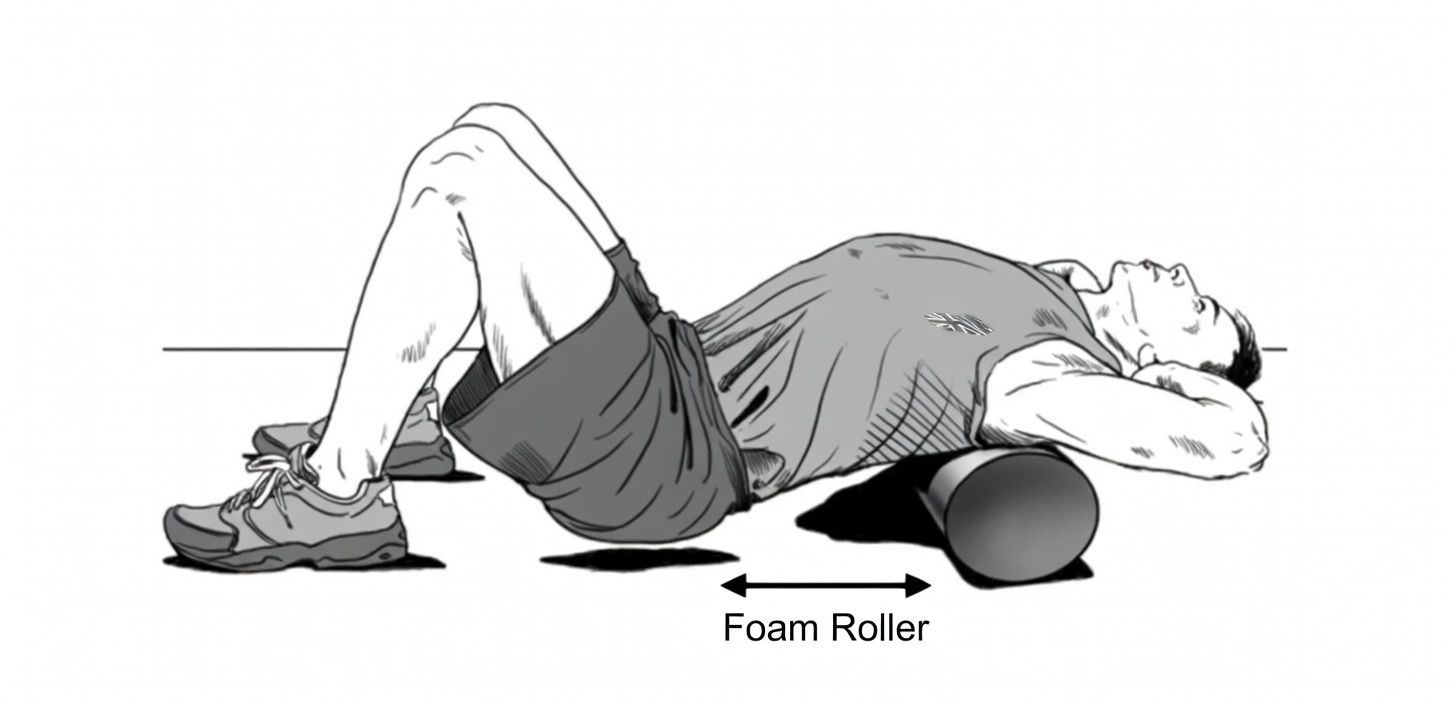
1. Foam Roll Upper Back Extensions
This move helps lengthen and stretch the muscles in the upper and mid-back. It also supports movement in the thoracic spine of the mid-back.
How to do it:
- Lie face up on the floor with the foam roller placed horizontally under your body.
- Put your hands behind your head to support your neck and hold the weight of your head.
- Lift your hips off the floor and keep them in line with your upper back.
- Slowly and gently roll along the spine from the mid-back up to the upper back, near the base of the neck.
- Repeat 8-10 times.
2. Foam Roll Mid-Upper Back
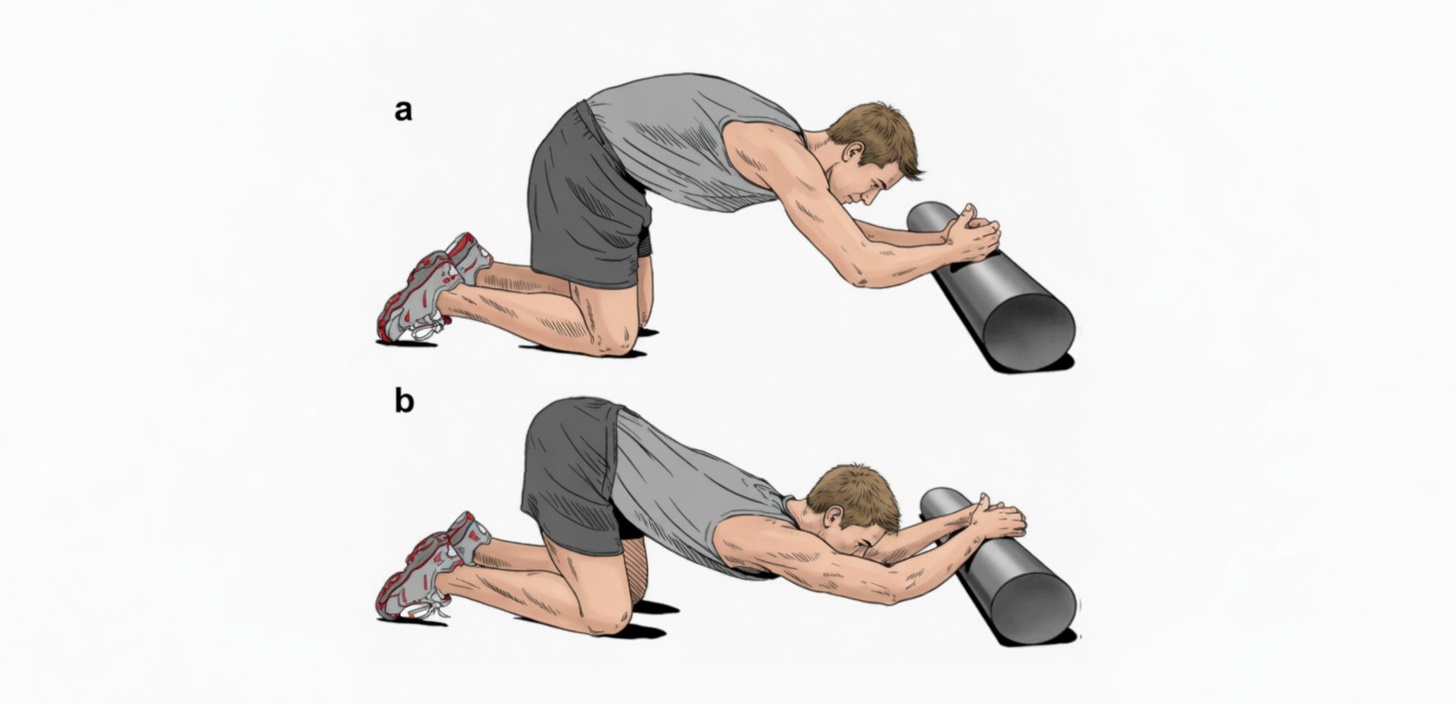
This exercise stretches the chest and helps open the shoulders. If you are feeling a lot of tension in your shoulders, this is a helpful one to include in your routine.
How to do it:
- Kneel on the floor with both hands in front of your body.
- Place a foam roller under your forearms.
- Inhale and round your back to begin.
- Exhale and lower your mid-back toward the floor, similar to cat and cow in yoga.
- Feel the stretch through your mid-back.
- Continue for 10 repetitions to stretch the chest and mid-back.
3. Foam Roll Spine
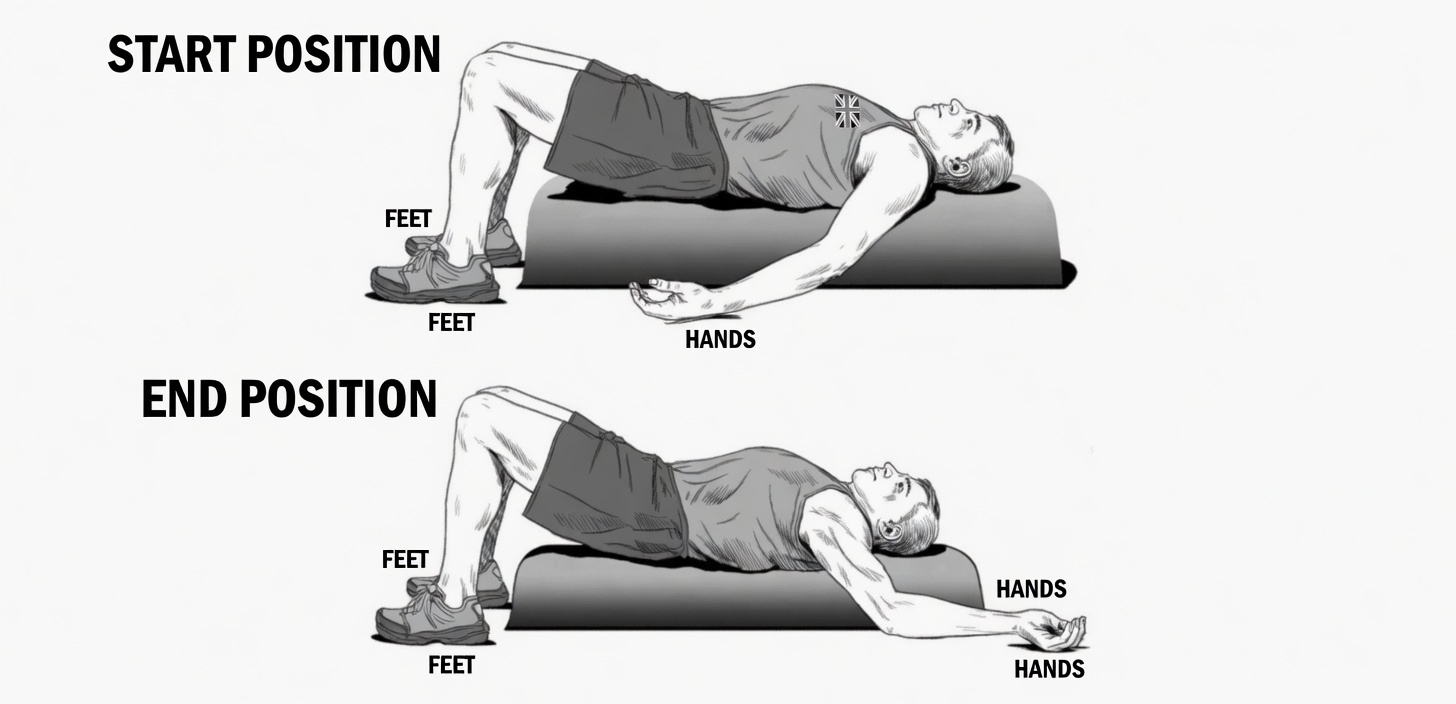
This is a relaxing stretch that can help improve posture while stretching tight shoulders and pecs.
How to do it:
- Lie on your back vertically along the foam roller.
- Plant your feet on the floor for balance and support.
- Rest your hands by your sides with your palms facing up.
- Tuck your chin to stretch the back of your neck.
- Gently press your mid-back into the roller to avoid creating a curve in your back.
- To open your chest, inhale and open your lungs. Exhale and gently press your back into the foam roller.
- To open your shoulders, raise your arms above your head.
- Bring your shoulder blades together, then release.
- Repeat 8-10 times until you feel the stretch from your upper back into your neck.
Final Takeaway
When tightness from sitting, typing, and hunching forward starts to build up, it can affect your neck, shoulders, and upper back in a big way. The main cause is often too much time spent in a hunched posture, but simple foam rolling exercises can help release tension, improve movement, and support better posture.
Consult a healthcare professional before making changes.