Why Balancing on One Leg While Brushing Your Teeth Can Help Your Health
Many people think multitasking helps them get more done, but most research points in another direction: the brain does not truly work that way. Even those who believe multitasking exists generally agree that it does not improve productivity.
Still, there is one simple habit that combines a daily task with a physical challenge in a useful way: standing on one leg while brushing your teeth. This small change can support several areas of health in the short time you already spend at the sink each day.
The Problem: Everyday Weaknesses, Poor Balance, and Aging Changes
Many of us move through life with small imbalances in the body. You may have weakness or pain in one leg, for example, and that can cause a limp. Over time, this may lead to one leg becoming stronger while the other becomes weaker.
Balance can also become more important with age. Falls in your 60s, 70s, and 80s can be especially serious and may trigger a chain of events that ends in death.
Bone strength and posture can also decline over time. Bones often weaken as we get older, and when we stand on two feet, it is easier to settle into less-than-ideal posture without noticing it.
The Cause: The Body Adapts to How We Move
The body and brain are closely connected, and how we move affects both. When one side of the body does more work than the other, asymmetries can develop. Bilateral exercises like squats can help, but unilateral exercises such as single-leg standing are often more effective for correcting these differences.
Balance work also challenges the brain. When you stand on one leg, your body has to make constant posture corrections to keep you upright. That process activates many parts of the brain involved in coordination and other movement skills.
At the same time, single-leg standing reduces your base of support. That narrower stance forces you to stand taller and work harder to stay stable.
The Solution: Practice a Single-Leg Stand During Tooth Brushing
A simple way to build this habit is to balance on one leg while brushing your teeth. This easy routine may lead to several benefits.
1. Reduced Body Asymmetries
If one leg is weaker than the other, single-leg standing can help address that imbalance. Because you are training one side at a time, this kind of movement may be more useful than exercises where both legs work together.
2. Better Balance
Single-leg balancing is one of the best ways to improve stability and balance. Practicing it regularly throughout life may help lower the chance of falling later on.
3. Support for Brain Health
Balance exercises and one-sided movements seem to have a strong effect on brain health. They require your brain to respond quickly, correct your posture, and coordinate movement across the body.
4. Stronger Bones
Bones provide structure, help us move, and protect important organs. While certain diets may support bone strength, exercise also plays a major role in keeping bones sturdy throughout life. Walking and lifting weights are helpful, and even balancing on one leg can help increase and maintain bone density.
5. Improved Posture
Standing on one leg makes it harder to rely on poor posture. Because your base of support is smaller, you are encouraged to stand upright. With regular practice, this can improve posture over time.
How to Start If It Feels Difficult
If balancing on one leg while brushing your teeth feels challenging right now, that is completely fine. You can make the movement easier with a few simple adjustments:
- Hold onto a steady surface with your free hand. If your sink is secure, use a fingertip or your full hand for support. As you improve, try to depend on it less.
- Keep your abs tight. A strong core helps with stability and alignment, and better core stability is associated with better balance.
- Shorten the time. You do not have to do the full tooth-brushing routine on one leg right away. Start with part of the time and gradually build from there.
How to Progress If It Feels Too Easy
If this balance exercise already feels simple, you can increase the challenge with these progressions:
- Close your eyes. Vision plays a major role in balance, so removing it makes the exercise much harder. Be careful if you try this.
- Stand on a pillow or soft surface. A softer surface makes balancing more difficult.
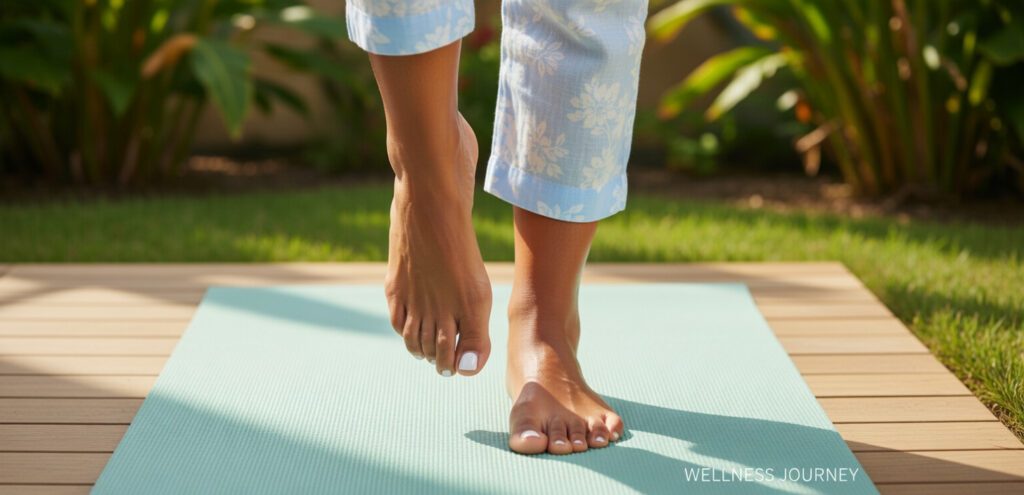
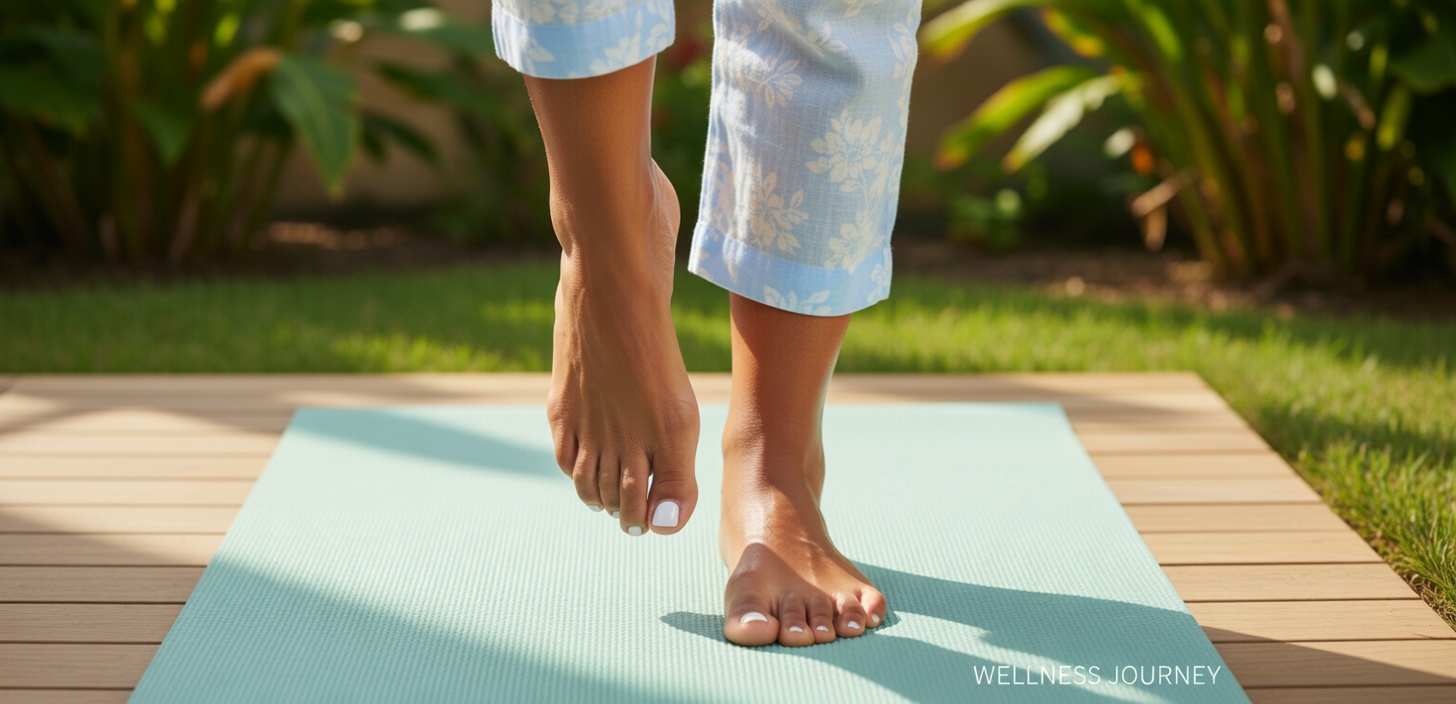
- Rise onto your toes. This further narrows your base of support and increases the challenge. It also gives your calves a strong workout.
Final Thoughts
Standing on one leg during your morning or evening brushing routine is a simple habit with a wide range of possible benefits. It may help with asymmetries, balance, brain function, bone strength, and posture, all while fitting into something you already do every day.
Try it at your own level and see how steady you are today. With practice, you may notice real improvement over time.
Consult a healthcare professional before making changes.