
Why High Blood Pressure Matters
Most people know that strength training helps major muscle groups such as the glutes, core, and quads. What many people do not realize is that the muscles involved in breathing may be just as important to strengthen.
New research suggests that training the diaphragm and other breathing muscles every day may support heart health and help reduce high blood pressure.
Blood pressure, pulse, respiration rate, and temperature are the four main vital signs. These basic measurements reveal a lot about overall health. Among them, blood pressure is especially important because it can signal how likely someone may be to experience a heart attack or stroke.
Because of this, researchers continue looking for ways to help patients lower elevated blood pressure.
A Possible Cause: Weak Breathing Muscles May Be Overlooked
It may come as a surprise that many of the muscles used for breathing are skeletal muscles. These are the same general type of muscles as the calves, triceps, and biceps. And just like those muscles, breathing muscles can be trained using resistance.
To build strength in the pecs and lats, people use weights or resistance bands. In a similar way, breathing muscles can be strengthened by adding resistance to the breath itself.
This idea has led to devices designed specifically for respiratory muscle training, including a small handheld product called PowerBreathe.
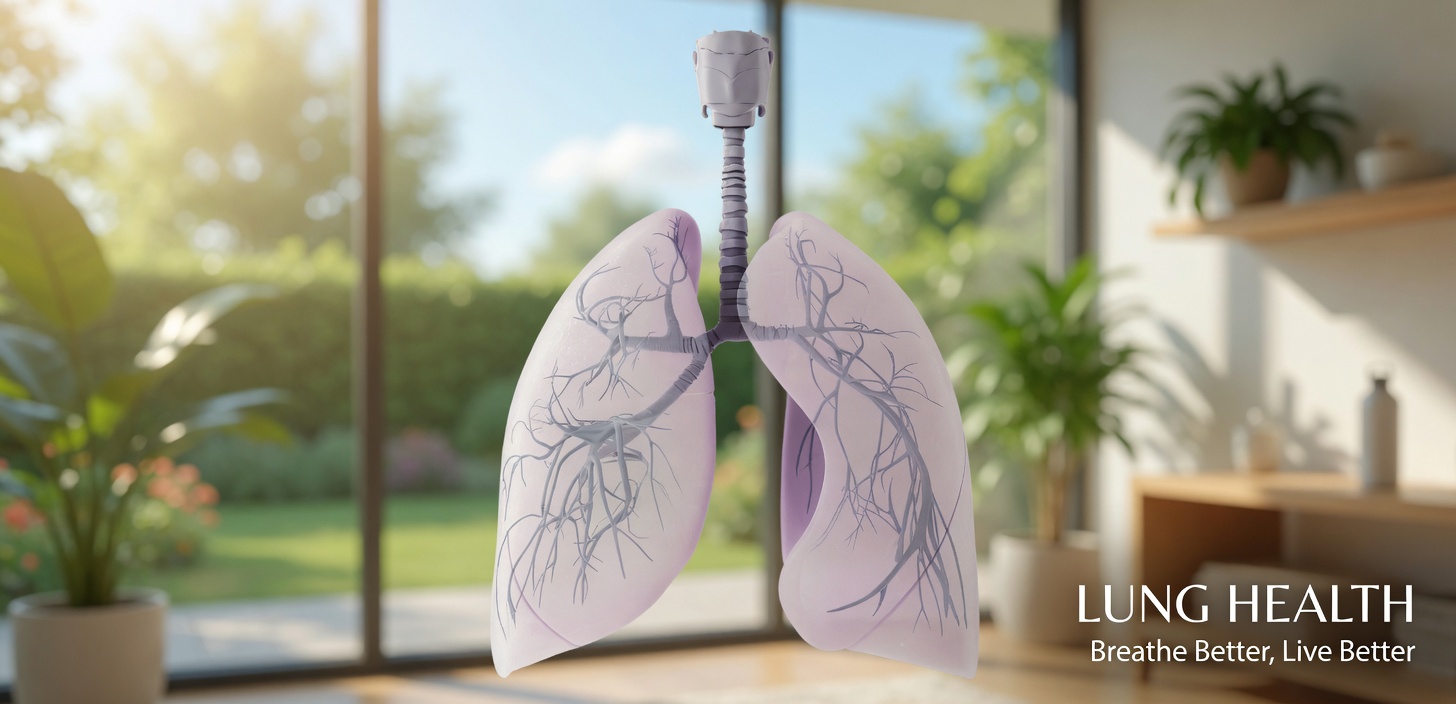
The Solution: Breath Training With Resistance
PowerBreathe is a compact device, about the size of an inhaler, that creates resistance when a person inhales. The user places it in the mouth, and the device makes each deep breath in more challenging.
This simple form of breath resistance training has been linked with meaningful blood pressure improvements.
In one study of the device, researchers reported:
- 30 breaths per day for six weeks led to an average 9 mmHg reduction in blood pressure
- That level of improvement was comparable to the decrease seen with blood pressure drugs
- That drop in blood pressure was associated with more than a 30% lower stroke risk
These results are notable. A reduction of this size may be enough to move someone from a hypertensive range into a normal blood pressure range.
Understanding Normal and High Blood Pressure
For a long time, normal blood pressure has been considered below 120/80 mmHg. Readings above that level are considered hypertensive, although some classifications break it down further:
- Prehypertensive: systolic >120 mmHg, <130 mmHg** and/or diastolic **>80 mmHg, <90 mmHg
- Hypertensive stage I: systolic >130 mmHg, <140 mmHg** and/or diastolic **>90 mmHg, <100 mmHg
- Hypertensive stage II: systolic >140 mmHg and/or diastolic >100 mmHg
There is no single defined cutoff for low blood pressure. That diagnosis is usually based more on symptoms than on the numbers alone.
Can Breath Training Help Prevent Hypertension?
Breath training may do more than reduce the severity of high blood pressure. It may also help prevent hypertension from developing in the first place.
Some researchers believe this type of training may create physiologic effects similar to aerobic exercise. At this point, the available data does not strongly support that claim. Still, it makes sense that stronger breathing muscles could play a preventive role.
That said, breath training should not be viewed as a replacement for aerobic exercise. Activities like walking and biking offer many other benefits, including improved strength and muscular endurance throughout the body.
A better approach may be to use breath training alongside aerobic activity rather than instead of it.
Who Might Benefit From Breath Training?
Breath training appears to be a promising option not only for people with hypertension or lung disease, but also for many others, including:
- Athletes
- Younger adults
- Older adults
- Virtually everyone else
Athletes may be especially interested, since there is some evidence that breath training can improve cardiovascular endurance.
No matter a person’s age, fitness level, gender, or background, respiratory muscle training may be a useful tool.
Final Thoughts
New discoveries continue to reshape how we think about health and the body. One of the more interesting recent findings is that strengthening breathing muscles may offer real benefits.
Daily breath training with resistance devices such as PowerBreathe has been associated with:
- Lower blood pressure
- Support for heart health
- Improved endurance
If you are dealing with high blood pressure or similar concerns, it may be worth discussing breath training with your doctor. Consult a healthcare professional before making changes.