Dowager’s Hump: Why It Happens and 9 Exercises That May Help
A Dowager’s hump is a posture change that many people notice right away, either in someone else or in themselves.
For a lot of people, this upper-back and neck change feels like an unwanted physical feature. Some even dislike their Dowager’s hump enough that they want to do whatever they can to get rid of it.
The reality is that you may not be able to fully reverse a Dowager’s hump. Still, there are exercises and simple movement techniques that may help reduce how noticeable it is.
In this article, you’ll find 9 exercises that can help lessen the severity of a Dowager’s hump.
You may also like:
- How To Fix Forward Head Posture: 3 Stretching Exercises to Try
- 5 Best Exercises That’ll Help Protect Your Back and Correct Posture
What Contributes to a Dowager’s Hump?
Poor posture through the neck, shoulders, and upper back is closely linked with this issue.
A slumped upper back and rounded shoulders often go along with weakness or instability in muscles such as the rhomboids, lower traps, middle traps, rotator cuff, serratus anterior, and other stabilizers that support healthy posture.
Because of this, exercises that improve strength, stability, and mobility in these areas can be helpful.
9 Exercises to Help Reduce the Severity of a Dowager’s Hump
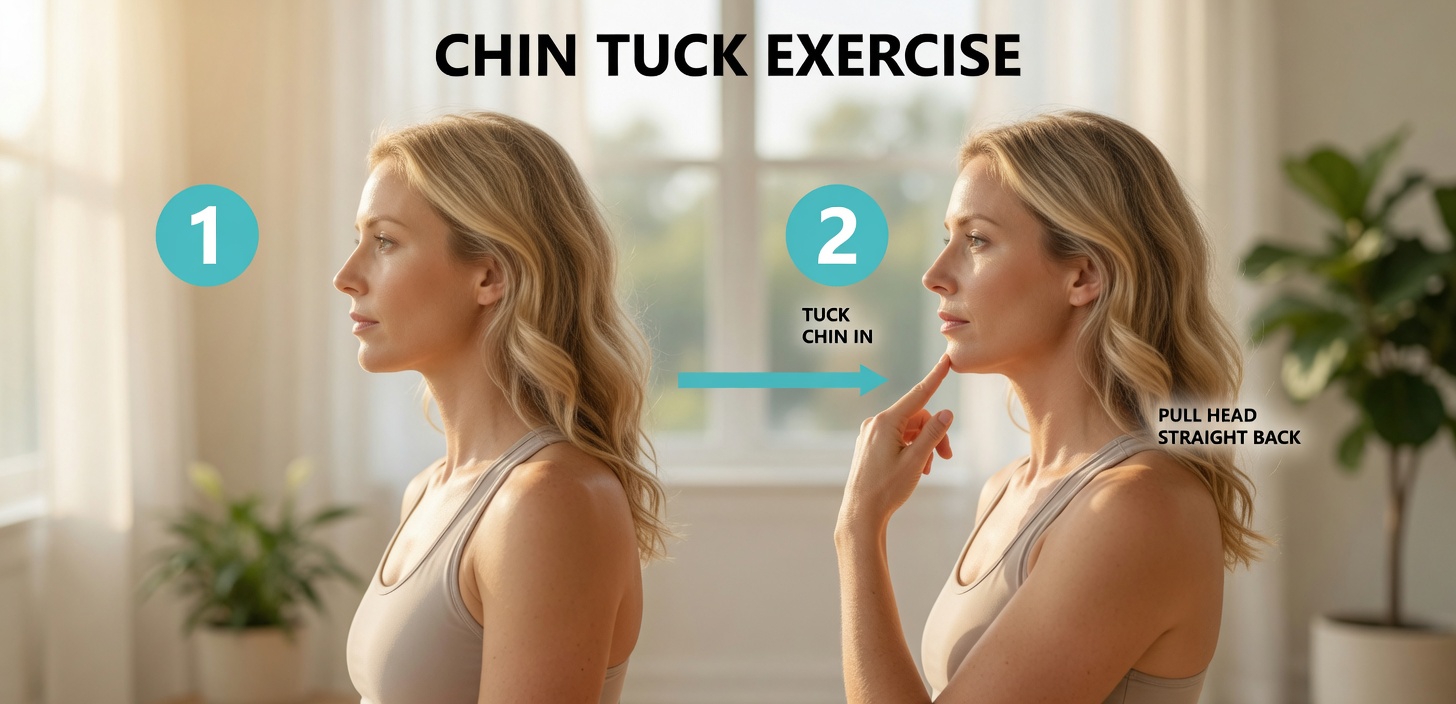
1. Seated Chin Tucks
Chin tucks are one of the best exercises for people who spend a lot of time sitting, especially office workers. They can be done seated, lying on your back, or lying on your stomach.
Doing chin tucks regularly helps strengthen and stabilize the deep cervical flexors, which can improve neck posture.
How to do it:
- Sit on a firm, stable surface.
- Lengthen your spine and sit as tall as you can.
- Gently draw your chin straight backward, as if it is moving along a line parallel to the floor.
- Do not let your head tip forward or backward.
- Hold for 10 seconds.
- Relax and repeat 10 times every day.
As this gets easier, you can try the same movement while lying on your back. Later, you can progress to doing it while lying on your stomach.
2. Scapular Retractions
Rounded shoulders and poor upper-back posture are often tied to a Dowager’s hump. In many cases, weakness and lack of stability in the rhomboids play a role.
This exercise targets those upper-back muscles.
How to do it:
- Sit upright with a straight back.
- Draw your shoulder blades back and down.
- Think about gently squeezing a pencil between your shoulder blades.
- Hold for 10 seconds.
- Repeat 10 times, once per day.
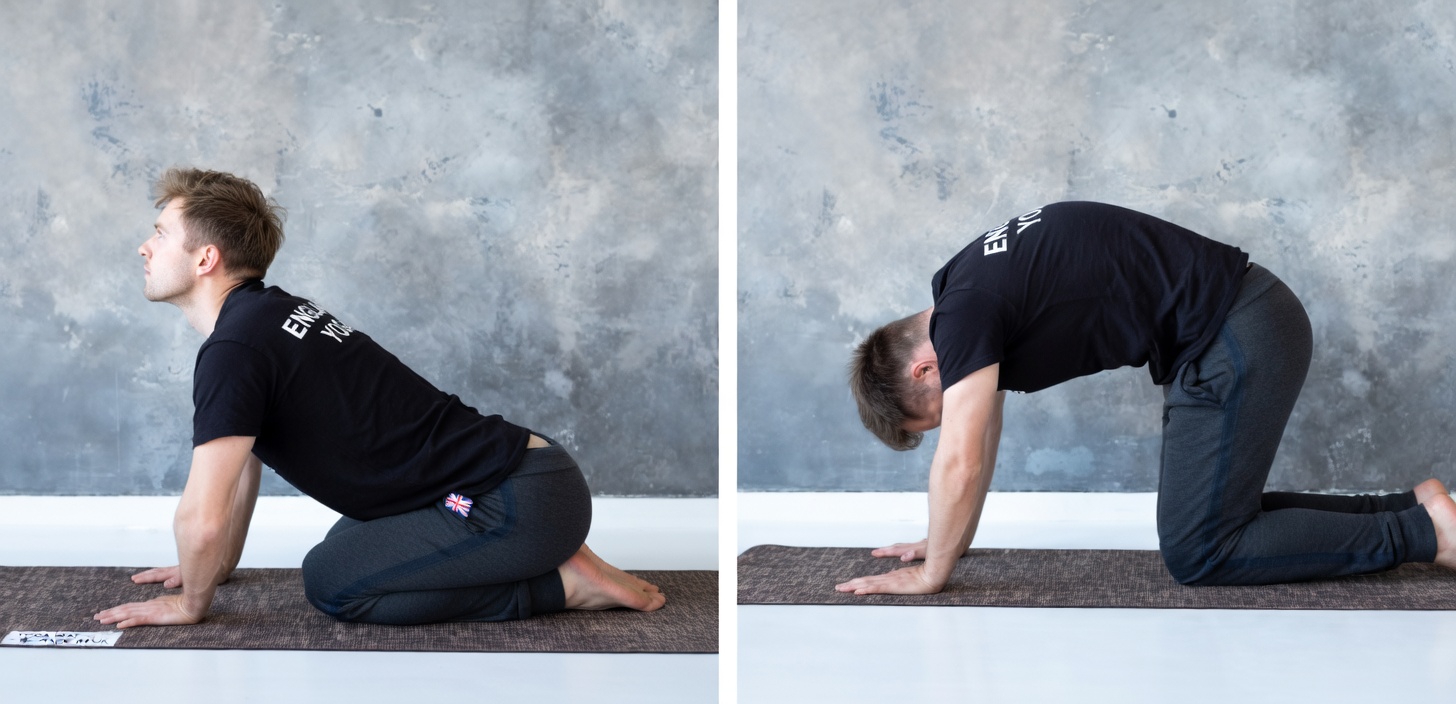
3. Cat-Camel
Cat-camel is a favorite in yoga for good reason. It feels great for many people and helps stretch the back, neck, and much of the upper spine.
How to do it:
- Place your hands on the floor about shoulder-width apart.
- Position your knees on the floor directly under your hips.
- Let your hips and low back move downward toward the floor while lifting your head and looking forward.
- Hold for 10 seconds.
- Then reverse the movement by rounding your back like a hissing cat and bringing your chin toward your chest.
- Hold again for 10 seconds.
- Alternate between the two positions 10 times, once per day.
4. T’s, Y’s, and I’s
The rotator cuff and lower trapezius are very important for shoulder health, yet many people are weak in this area. T’s, Y’s, and I’s are excellent exercises for building strength there.
These are usually done while lying face down, though they can also be performed standing with resistance bands instead of weights. It is best to begin face down without any weight.
How to do the “I” motion:
- Lie on your stomach.
- Keep your arms straight by your sides with your palms facing your pockets.
- Lift your arms off the floor toward the ceiling.
- Hold for 10 seconds.
- Lower down and repeat 10 times.
How to do the “T” motion:
- Stay lying on your stomach.
- Bring your arms straight out to the sides with palms facing the floor.
- Lift the backs of your hands toward the ceiling.
- Hold for 10 seconds.
- Return to the floor and repeat 10 times.
How to do the “Y” motion:
- Move your arms overhead.
- Point your thumbs toward the ceiling.
- Raise your arms toward the ceiling.
- Hold for 10 seconds.
- Repeat 10 times.
Perform all three movements once per day.
5. Snow Angels on the Wall
This move may look simple, but it can be surprisingly challenging. By the end of a set, many people feel tired and sweaty.
Snow angels work the rotator cuff, rhomboids, and the middle and lower traps.
How to do it:
- Stand with your back against a wall.
- Keep the back of your head, most of your spine, and your heels touching the wall.
- Raise your arms into a “W” shape.
- Slide your hands upward along the wall toward the ceiling.
- Then slide them back down to the starting position.
- Keep the backs of your hands and forearms in contact with the wall the whole time.
- Perform 10 repetitions, once per day.
6. Golden Dragon
In tai chi, golden dragon is a standing position that emphasizes ideal posture.
This exercise focuses on standing tall with a straight back and lifted head. It can help reinforce better posture during daily life.
How to do it:
- Stand with your feet about hip-width apart.
- Let your arms rest loosely by your sides.
- Reach the crown of your head gently toward the ceiling.
- Hold this posture for 2 minutes, once per day.
7. Pushup Plus
The serratus anterior is a key shoulder muscle, but it is often overlooked in many training programs.
Pushup plus can help improve posture and upper-body stability.
How to do it:
- Start in a pushup position with your hands and toes on the floor.
- Round your shoulders forward so that your mid-back rises upward.
- Hold for 10 seconds.
- Return to the starting position.
- Repeat 10 times, once per day.
8. Banded Horizontal Abduction
Resistance bands are especially useful because they create a different kind of resistance through the movement than typical dumbbell exercises.
Bands are affordable, last a long time, and can offer many benefits during exercise.
This movement works the rhomboids, middle traps, and other shoulder stabilizers.
How to do it:
- Stand while holding a band with both hands.
- Raise your arms to 90 degrees.
- Keeping your arms in that position, move your hands apart.
- Pull the band as far apart as you can.
- Slowly return to the starting position.
- Repeat 10 times, once per day.
9. Child’s Pose on a Ball
Swiss balls are another useful piece of exercise equipment. They come in different shapes and sizes and can support improvements in stability, strength, and mobility.
A child’s pose on the ball is a helpful stretch for the upper back, shoulders, and other parts of the spine.
How to do it:
- Kneel on the floor.
- Place both elbows on the swiss ball.
- Keep your elbows and upper arms on the ball.
- Slowly rock backward, trying to sit your buttocks on your heels.
- Hold for 10 seconds.
- Repeat 10 times per day.
Final Thoughts
If you want to reduce the appearance or severity of a Dowager’s hump, these exercises may help by improving posture, strength, stability, and mobility through the neck, shoulders, and upper back.
You may not completely reverse a Dowager’s hump, but practicing these movements consistently can be a useful step in the right direction.
Consult a healthcare professional before making changes.