Resveratrol and Weight Loss: Benefits, Research, Dosage, and Safety
You have probably heard that red wine may support heart health. What many people do not realize is that one of the main compounds behind this reputation is a plant antioxidant called resveratrol.
Resveratrol belongs to a group of protective compounds known as polyphenols, which are naturally present in certain fruits, plants, and plant-based foods. It became especially popular after the idea of the French Paradox gained attention in the early 1990s.
The French Paradox refers to the observation that people in France seemed to experience relatively low rates of heart disease, even though their diet was often high in fat. Researchers suggested that moderate red wine consumption, which provides resveratrol, might help explain this effect.
But the potential benefits of resveratrol may go far beyond cardiovascular health. It has been linked in research to a range of promising effects, including:
- Anti-inflammatory activity
- Healthy aging support
- Antibacterial properties
- Antiviral potential
- Heart-protective effects
- Neuroprotective benefits
Even so, it is important to keep expectations realistic. Much of the excitement around resveratrol comes from laboratory and animal studies, while human research is still limited. More clinical studies are needed before firm conclusions can be made.
One of the most interesting areas of current research is the possible relationship between resveratrol and weight loss. Scientists are investigating how this compound may influence metabolism, fat storage, and body composition.
What Is Resveratrol?
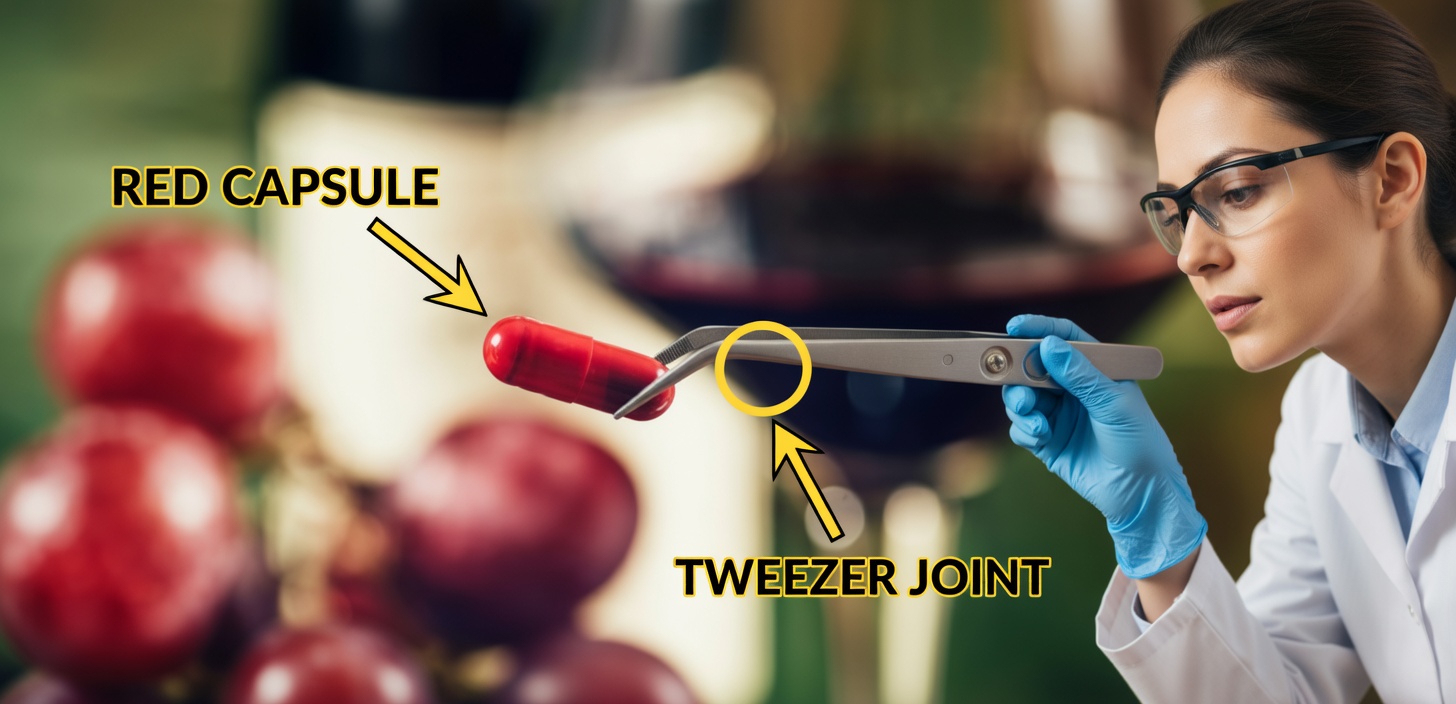
Resveratrol is a natural antioxidant polyphenol found in more than 70 plant species. It is produced by plants as a protective substance and is present in foods such as:
- Grapes
- Apples
- Peanuts
- Soy
- Blueberries
It is also found in products made from these foods, especially red wine.
A major challenge with resveratrol is that the body does not absorb it very efficiently. In other words, it has poor solubility and low bioavailability, which makes it harder to use effectively as a supplement.
Researchers know that resveratrol exists in two main forms:
- Cis-resveratrol
- Trans-resveratrol
Among the two, trans-resveratrol is considered the more bioavailable form, meaning it is easier for the body to absorb and utilize.
Because of these absorption issues, scientists are developing better delivery methods. One promising option is sublingual absorption, where the supplement is taken under the tongue to improve uptake.
Can Resveratrol Mimic Calorie Restriction?
One theory behind the resveratrol-weight loss connection is that it may act like a calorie restriction mimetic. This means it could trigger some of the same biological pathways associated with eating fewer calories.
Calorie restriction has long been studied for its ability to:
- Slow certain aging processes
- Improve metabolic health
- Delay the onset of obesity-related diseases
Some research has suggested that resveratrol may produce similar effects.
In one well-known study from Harvard Medical School, resveratrol helped extend the lifespan of mice fed a high-calorie diet. The researchers also found that it appeared to reduce some of the harmful consequences of overeating, including effects associated with:
- Diabetes
- Heart disease
- Obesity-related conditions
However, later studies have produced mixed and sometimes conflicting results. While the idea is promising, experts still do not fully agree on how reliably resveratrol can mimic calorie restriction in humans.
Resveratrol and Weight Loss
A scientific review of randomized controlled trials reported that resveratrol supplementation was associated with improvements in several body composition markers. According to that review, taking resveratrol significantly reduced:
- Body weight
- Body mass index (BMI)
- Waist circumference
- Fat mass
It also appeared to increase lean mass.
Animal studies have shown similar promise, suggesting that resveratrol may help with:
- Blood sugar regulation
- Obesity prevention
- Metabolic health support
Still, the evidence is not yet definitive. While the results are encouraging, especially in animal research, human studies remain inconsistent. At this stage, resveratrol should not be viewed as a guaranteed weight loss solution, but rather as a compound with potential that deserves more investigation.
How to Take Resveratrol
Current research suggests that a commonly accepted safe dosage range for resveratrol is between 100 mg and 1,000 mg per day.
Studies have reported that 500 mg daily was generally well tolerated and not associated with significant adverse effects in healthy adults.
Higher doses, especially around 2.5 to 5 grams per day, may lead to mild or moderate digestive side effects, such as gastrointestinal discomfort.
Who Should Avoid Resveratrol?
Resveratrol is not appropriate for everyone. In particular:
- Pregnant women should avoid it
- Breastfeeding women should avoid it
As with any supplement, it is best to speak with a qualified healthcare professional before starting resveratrol, especially if you take medication or have an existing health condition.
Where to Buy Resveratrol
Resveratrol supplements are widely available in:
- Health food stores
- Supplement shops
- Online retailers
When buying resveratrol, choose a trusted, high-quality manufacturer to help ensure product safety, purity, and accurate labeling.
Summary
Resveratrol is a widely studied plant compound found in red wine, grapes, peanuts, soy, apples, and blueberries. It has attracted attention for its possible role in supporting heart health, reducing inflammation, promoting healthy aging, and improving metabolic function.
Research on resveratrol for weight loss is especially interesting, with some studies suggesting benefits for body weight, waist size, fat mass, and lean muscle. However, the scientific evidence in humans is still developing, and more high-quality studies are needed.
For now, resveratrol appears to be generally safe and well tolerated at doses up to 1,000 mg per day. Before adding any new supplement to your routine, it is always wise to consult your doctor.
References
- Zhang, L. X., et al. (2021). Resveratrol (RV): A pharmacological review and call for further research. Biomedicine & Pharmacotherapy, 143, 112164.
- Li, L. (2021). Advance on the preparation, physiological function and nanocarriers of resveratrol. E3S Web of Conferences, 233, 02047.
- Scapagnini, G., et al. (2014). Dose response biology of resveratrol in obesity. Journal of Cell Communication and Signaling, 8(4), 385-391.
- Vesely, O., et al. (2021). Enhancing bioavailability of nutraceutically used resveratrol and other stilbenoids. Nutrients, 13(9), 3095.
- Sergides, C., et al. (2016). Bioavailability and safety study of resveratrol 500 mg tablets in healthy male and female volunteers. Experimental and Therapeutic Medicine, 11(1), 164-170.
- Timmers, S., et al. (2011). Calorie restriction-like effects of 30 days of resveratrol supplementation on energy metabolism and metabolic profile in obese humans. Cell Metabolism, 14(5), 612-622.
- Baur, J. A., & Sinclair, D. A. (2006). Therapeutic potential of resveratrol: The in vivo evidence. Nature Reviews Drug Discovery, 5(6), 493-506.
- Baur, J. A., et al. (2006). Resveratrol improves health and survival of mice on a high-calorie diet. Nature, 444(7117), 337-342.
- Tabrizi, R., et al. (2020). The effects of resveratrol intake on weight loss: A systematic review and meta-analysis of randomized controlled trials. Critical Reviews in Food Science and Nutrition, 60(3), 375-390.
- Meng, T., et al. (2021). Anti-inflammatory action and mechanisms of resveratrol. Molecules, 26(1), 229.
- Zhou, D. D., et al. (2021). Effects and mechanisms of resveratrol on aging and age-related diseases. Oxidative Medicine and Cellular Longevity, 2021, 9932218.
- Abedini, E., et al. (2021). A comprehensive study on the antimicrobial properties of resveratrol as an alternative therapy. Evidence-Based Complementary and Alternative Medicine, 2021, 8866311.
- Bostancıeri, N., Elbe, H., Eşrefoğlu, M., & Vardı, N. (2021). Cardioprotective potential of melatonin, quercetin and resveratrol in an experimental model of diabetes. Biotechnic & Histochemistry.
- Chung, J. H., et al. (2012). Resveratrol as a calorie restriction mimetic: Therapeutic implications. Trends in Cell Biology, 22(10), 546-554.