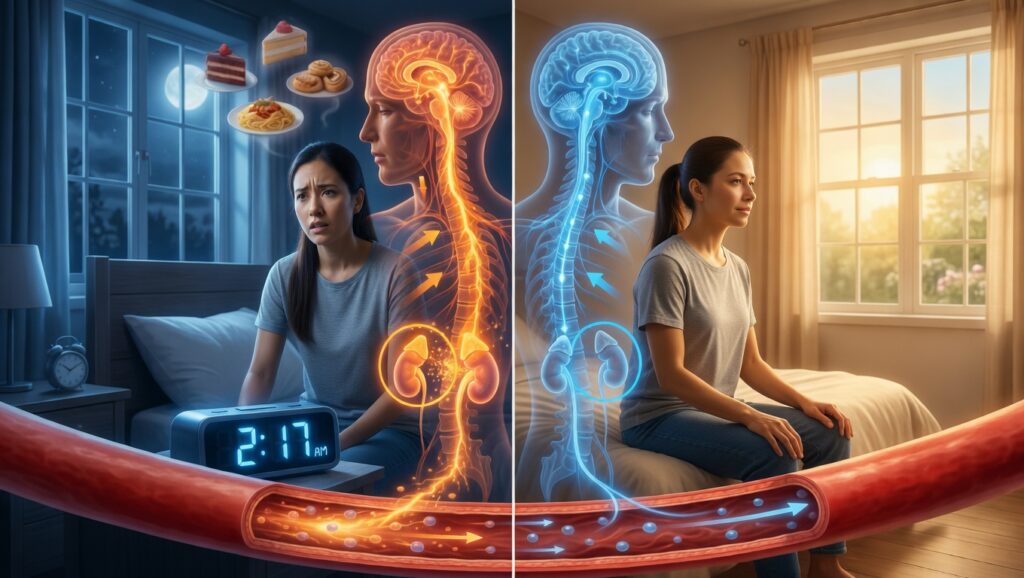
Why You Keep Waking Up Between 2 and 3 AM (and How to Stop It)
You bolt awake in the middle of the night, glance at the clock, and there it is again: 2:30 AM. You’re not cold, you don’t need the bathroom, you’re not even especially thirsty—but you feel completely awake. You toss, turn, and your thoughts start racing. Sometimes you drift off again after an hour or two; other times, that’s it for the night.
If this pattern feels all too familiar, it’s not random, and it’s not just “normal insomnia.” Your body is sending a very specific message.
Something in your internal system is becoming activated at that exact time and disrupting your sleep. The encouraging part is that once you understand why this is happening, you can often fix it with a few simple changes. Below, you’ll learn what may be going on inside your body and two practical steps that can help you sleep through the night—often in less than a week.
(Based on the insights of Dr. Oswaldo Restrepo.)
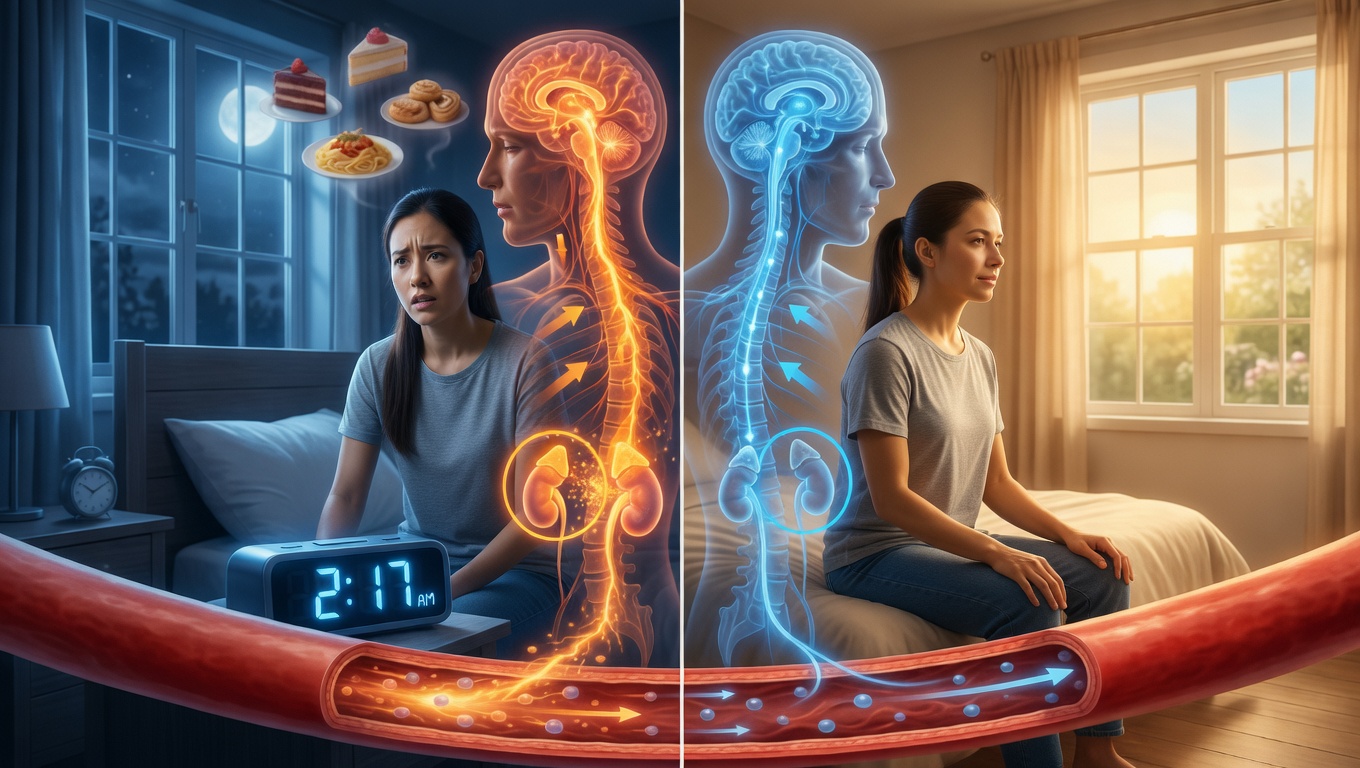
Key Takeaways
- It’s a Message, Not a Coincidence: Waking up around the same time every night is usually a signal from your body, not random bad luck.
- Liver Peak Time (1–3 AM): In Traditional Chinese Medicine (TCM), these hours are when the liver is most active. An overburdened liver can disturb your sleep.
- Modern Triggers: Stress-related cortisol spikes, blood sugar crashes, and heavy digestion are common scientific explanations for 3 AM awakenings.
- Simple, Natural Fixes: Supporting your liver (for example, with artichoke tea) and eating a lighter, earlier dinner can often end these wake-ups.
- When to Seek Medical Advice: Persistent night awakenings can also be linked to conditions such as sleep apnea, thyroid problems, or other health issues that require professional evaluation.
1. Why Waking Up at 2–3 AM Is Not Just Random Insomnia
Your body runs on a finely tuned internal 24-hour cycle called the circadian rhythm. This “master clock,” located in the brain, coordinates hormone production, body temperature, digestion, and your sleep–wake pattern.
Traditional Chinese Medicine adds another layer with the concept of the organ clock. According to this model, your body’s vital energy (Qi) circulates through different organs at specific times of day and night.
Between 1 AM and 3 AM, the organ clock assigns center stage to the liver. During this period, the liver is thought to be:
- Cleansing the blood
- Processing toxins
- Supporting detoxification and metabolic functions
If your liver is functioning well and not overloaded, this work happens quietly while you stay in deep, restorative sleep. But when the liver is stressed—by poor diet, toxins, or overall overload—it has to work much harder.
TCM describes this as an accumulation of internal “heat” or excess energy. That excess can “rise” and disturb the Shen (often translated as spirit or mind), leading to sudden wakefulness right in the middle of the night.
2. Four Main Reasons Your Sleep Keeps Getting Interrupted
While the TCM view is centuries old, modern physiology supports many of the same ideas. Here are four common, science-aligned explanations for waking up between 2 and 3 AM.
1) An Overloaded Liver
Your liver is your primary detox and filtration organ, processing:
- What you eat and drink
- Medications and alcohol
- Environmental toxins and chemicals
When you eat a heavy, fatty, processed, or late meal—or drink alcohol in the evening—you’re handing your liver a big job right when it’s scheduled to do its nightly “deep clean.”
This extra workload can disturb sleep, much like trying to sleep while a noisy machine is running in your room. The increased metabolic activity and heat can nudge you out of deeper sleep stages and wake you up.
2) The Cortisol Spike (Stress Hormone Disruption)
Cortisol is best known as a stress hormone, but it also plays a key role in your natural wake-up process. Under normal circumstances:
- Cortisol is lowest around midnight
- It starts to rise slowly in the early morning hours
- It peaks between roughly 6–8 AM to help you feel alert and awake
Chronic stress—whether emotional, mental, or physical—can disrupt this pattern. When your stress system is overactive, your body may release a premature cortisol surge around 2 or 3 AM.
That spike acts like an internal alarm or a strong coffee: your heart rate may increase, your mind becomes alert, and you wake up abruptly, even if you’re still exhausted.
3) Blood Sugar Crashes (Nighttime Hypoglycemia)
A dinner heavy in simple carbohydrates and sugars—such as white bread, pasta, white rice, sweets, or sugary drinks—can send your blood sugar soaring shortly after eating. In response, your pancreas releases insulin to lower blood glucose.
Sometimes the insulin response overshoots, and a few hours later your blood sugar drops too low (hypoglycemia). Your body sees this low level as a potential emergency and responds by releasing:
- Cortisol
- Adrenaline and other stress hormones
These hormones quickly raise blood sugar, but they also make you feel alert, jittery, or anxious—exactly the opposite of sleepy. This is a common reason people wake up in the early morning hours with their heart racing or mind spinning.
4) Digestive Overload
Digestion is energy-intensive, requiring:
- Increased blood flow to the digestive tract
- Activation of multiple organs (stomach, pancreas, intestines, liver)
If you go to bed with a heavy, late meal sitting in your stomach, your body is forced to keep working hard at a time when it should be winding down. This can:
- Raise your core body temperature
- Elevate your heart rate
- Interfere with deep, restorative sleep cycles
For many people, the peak of digestion for a late, heavy dinner lines up with 2–3 AM, creating enough internal “noise” to push you out of sleep.
3. A Simple Two-Step Plan to Sleep Through the Night
Once you understand what’s likely behind your 3 AM wake-ups, you can make targeted changes. Here are two straightforward strategies that often make a difference within days.
Step 1: Drink Artichoke Tea Before Bed
It may sound unusual, but artichokes are excellent allies for liver health. They contain compounds such as:
- Cynarin – supports bile production and fat digestion
- Silymarin – an antioxidant complex known to protect liver cells
These substances can help the liver detoxify more efficiently and reduce the sense of being “overloaded” at night.
How to prepare artichoke tea:
- Take two fresh or dried artichoke leaves.
- Boil them in one cup of water for about 10 minutes.
- Strain the liquid.
- Drink the warm tea roughly one hour before bedtime.
By giving your liver gentle support in the evening, you may reduce the internal strain that leads to those early-morning awakenings.
Step 2: Have a Light, Early Dinner
This step is often the real game changer.
Aim to finish your last meal by 6–7 PM at the latest, and keep it:
- Light
- Easy to digest
- Low in sugar and refined carbohydrates
Good options include:
- Vegetable-based soups
- Salads with healthy fats (olive oil, avocado)
- Steamed or lightly cooked vegetables
- Small portions of lean protein such as grilled fish, chicken, or tofu
Try to avoid:
- Heavy, greasy, or fried foods
- Large portions of red meat late at night
- Sugary desserts and refined carbs (cakes, pastries, white bread, etc.)
By easing the workload on your digestive system and liver, you give your body the best chance to stay in deep sleep instead of waking up in the middle of the night.
4. Four Common Mistakes That Keep You Waking Up at 3 AM
As you adjust your evening routine, watch out for these frequent pitfalls that can sabotage your progress.
Mistake #1: Ignoring the Pattern
Treating your night-time awakenings as vague “bad sleep” means you miss the most important clue: the timing. Waking up consistently between 1–3 AM is often a specific signal related to:
- Liver overload
- Blood sugar fluctuations
- Stress hormone imbalances
Acknowledging the pattern is the first step toward solving it.
Mistake #2: Late Caffeine or Alcohol
Both caffeine and alcohol can seriously disturb your sleep architecture, especially in the second half of the night.
-
Alcohol:
- May help you fall asleep faster initially
- Disrupts deep sleep and REM sleep later on
- Burdens the liver, which is already working hard between 1–3 AM
-
Caffeine:
- Has a half-life of about 5–6 hours
- A coffee at 2 PM can still affect your nervous system in the evening
To protect your sleep:
- Avoid caffeine after 2 PM
- Skip alcohol in the evening, especially if you’re already waking at 2–3 AM
Mistake #3: Staying in Bed Tossing and Turning
If you wake up and can’t fall back to sleep within about 20 minutes, lying in bed frustrated does more harm than good. Over time, your brain starts to associate your bed with:
- Wakefulness
- Worry
- Restlessness
Instead, get up quietly, keep the lights dim, and do something calming—like gentle stretching or reading a physical book—until you feel sleepy again. Then return to bed. This trains your brain to reconnect your bed with sleep, not stress.
By paying attention to the timing of your wake-ups, supporting your liver, stabilizing blood sugar, and lightening your evening meals, you can often break the 2–3 AM wake-up pattern. If the problem persists despite these changes—or if you suspect issues like sleep apnea, thyroid disorders, or other medical conditions—consult a healthcare professional for a thorough evaluation.