A Real-Life Dilemma: Wait for Tooth Regrowth or Get Implants?
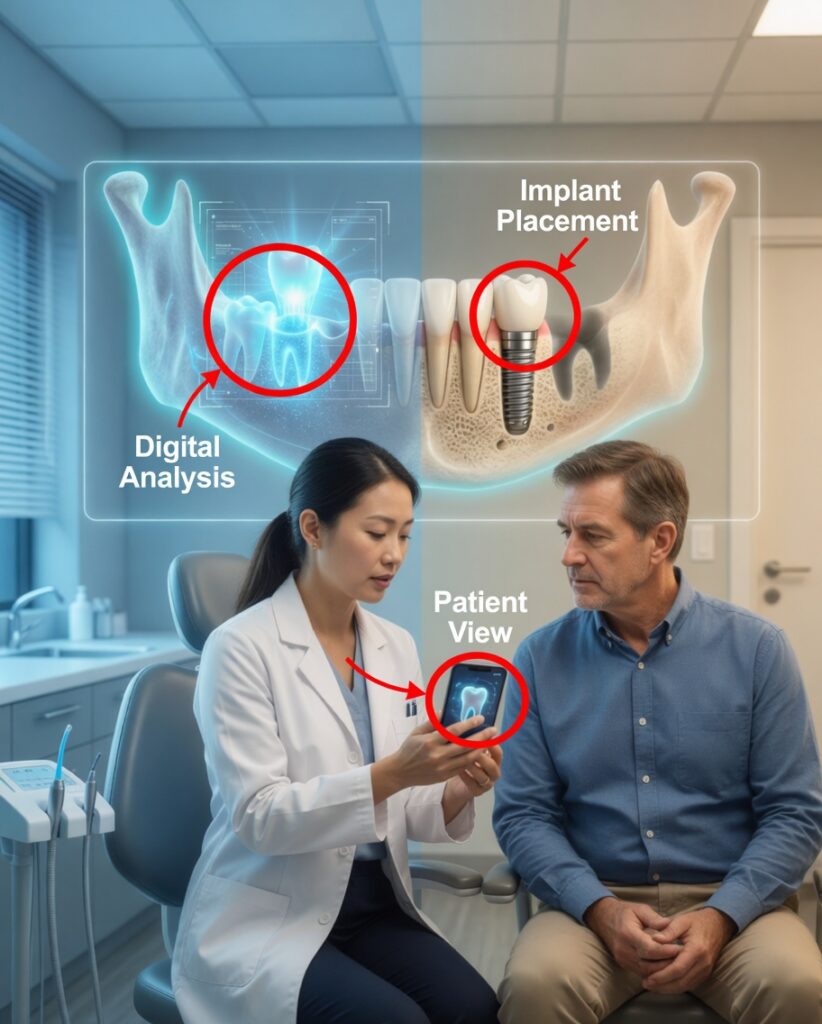
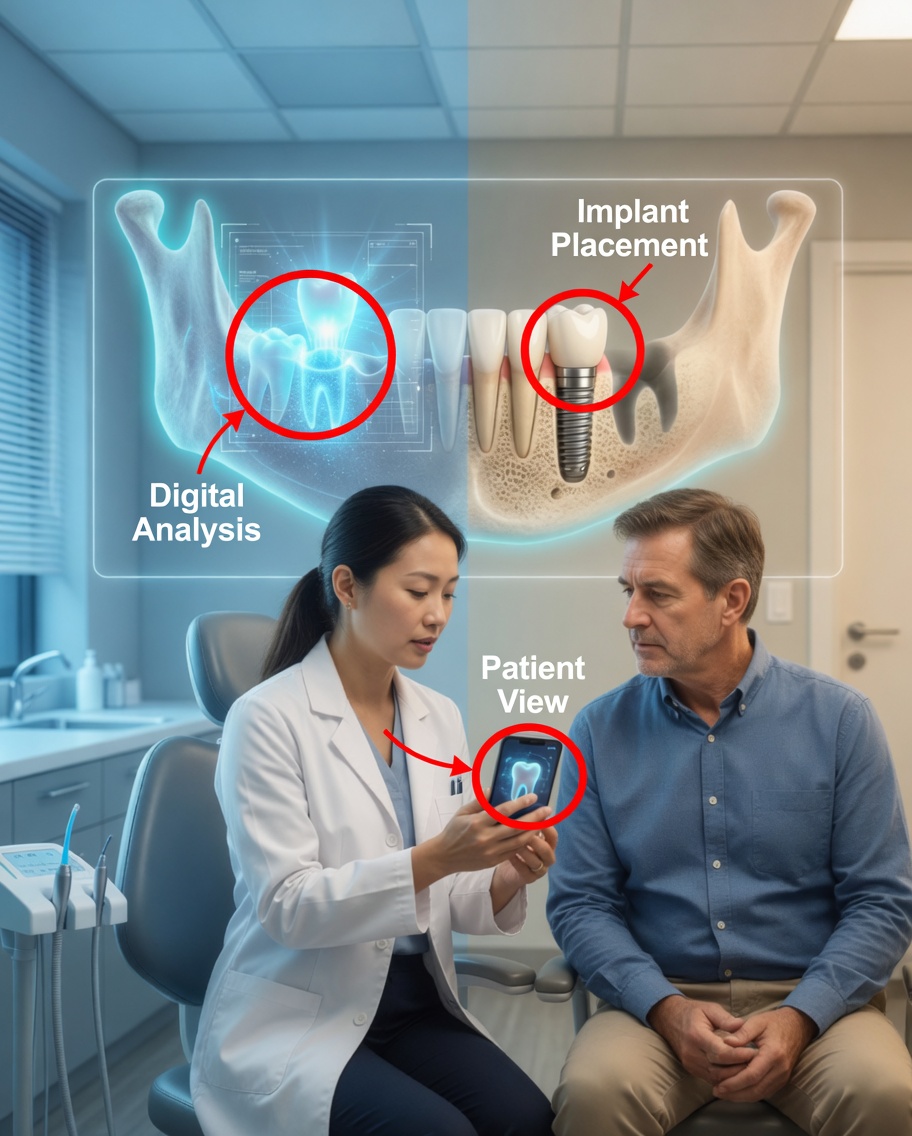
Picture this: a 64-year-old man who has already lost three teeth to gum disease is scheduled for dental implants. The day before surgery, he shows his dentist a viral video on his phone. In it, a Japanese researcher claims to be working on a drug that can make teeth grow back naturally.
He looks at his dentist and asks bluntly:
“Doctor, should I wait, or should I go ahead with the implants tomorrow?”
This is not a theoretical scenario. Many people are now asking this exact question, and there is a science-based way to answer it.
A real clinical trial is underway for a medication that activates a dormant biological mechanism in the jaw. A Japanese research group has successfully triggered this mechanism in animals—but one crucial detail will determine whether it can ever work for you personally.
In this article, based on the analysis of Dr. Alberto Sanagustín, we’ll look at:
- The protein that shuts down tooth growth as you age
- What Dr. Katsu Takahashi and his team in Japan have actually achieved
- Who might realistically benefit from this treatment—and who probably won’t
Understanding this can help you avoid serious mistakes with your dental health.
Key Takeaways
-
A pioneering tooth-regrowth drug is in human trials.
Researchers are testing a medication designed to regenerate lost teeth by activating dormant “tooth buds” in your jaw. -
It works by blocking a specific protein.
The drug is an antibody that inhibits a protein called USAG-1, which normally acts as an “off switch” for tooth development. -
It won’t help everyone.
The treatment can only work if a viable “tooth bud” (or “tooth seed”) is still present in your jawbone. If that structure has disappeared, there is nothing for the drug to activate. -
It’s still years from the dental clinic.
The medication is in Phase 1 clinical trials, which focus on safety, not effectiveness. Even with an optimistic schedule, it likely won’t reach the market until around 2030 or later. -
You should not postpone current dental treatment.
Waiting for a future technology while your oral health worsens is risky. The smartest move is to protect and strengthen your jaw and gums now so you’re in the best possible condition if and when this therapy becomes available.
1. The Hidden Potential in Your Jaw: What Are Latent Tooth Buds?
To understand this new drug, you first need to understand something surprising about your own anatomy: your jaw contains latent tooth buds—structures that are essentially on standby.
These tooth buds are like seeds buried in the soil. During childhood and adolescence, they receive signals to develop into baby teeth and then adult teeth. After the final permanent teeth emerge, those signals stop. The remaining buds stay dormant, like seeds that never get the order to sprout.
This is not just a metaphor; it’s how your jaw is actually built.
So why don’t these extra buds ever become new teeth?
Because your body has installed a biological “gatekeeper”: the USAG-1 protein. USAG-1’s job is to send a very specific message to these buds—“We’re done; no more teeth needed.”
You can think of it like the main power switch in a newly built house. Once construction is complete, the electrician flips the main breaker. The system is intact, but the current is no longer flowing because it’s no longer required. In humans, USAG-1 is that breaker for tooth development. Once your permanent teeth are in place, the switch is flipped off and stays off for the rest of your life.
By contrast:
- Sharks and crocodiles never really flip that switch. They grow and replace teeth continuously.
- Elephants cycle through several sets of molars as they age.
Human evolution, however, favored a “two sets of teeth” system. Living to 80–100 years with perfect dentition simply wasn’t a priority for our ancestors. Still, those dormant “seeds” remain in the jaw—silent but not meaningless.
2. The Japanese Breakthrough: Reactivating the “Tooth Seeds”
For about 15 years, Dr. Katsu Takahashi and his team in Japan have focused on one central question:
Can we flip the switch back and make new teeth grow?
In animal experiments, they found a promising way to do exactly that.
In studies involving mice and ferrets, a single dose of an antibody drug was enough to:
- Block the USAG-1 protein
- Reactivate the dormant tooth buds
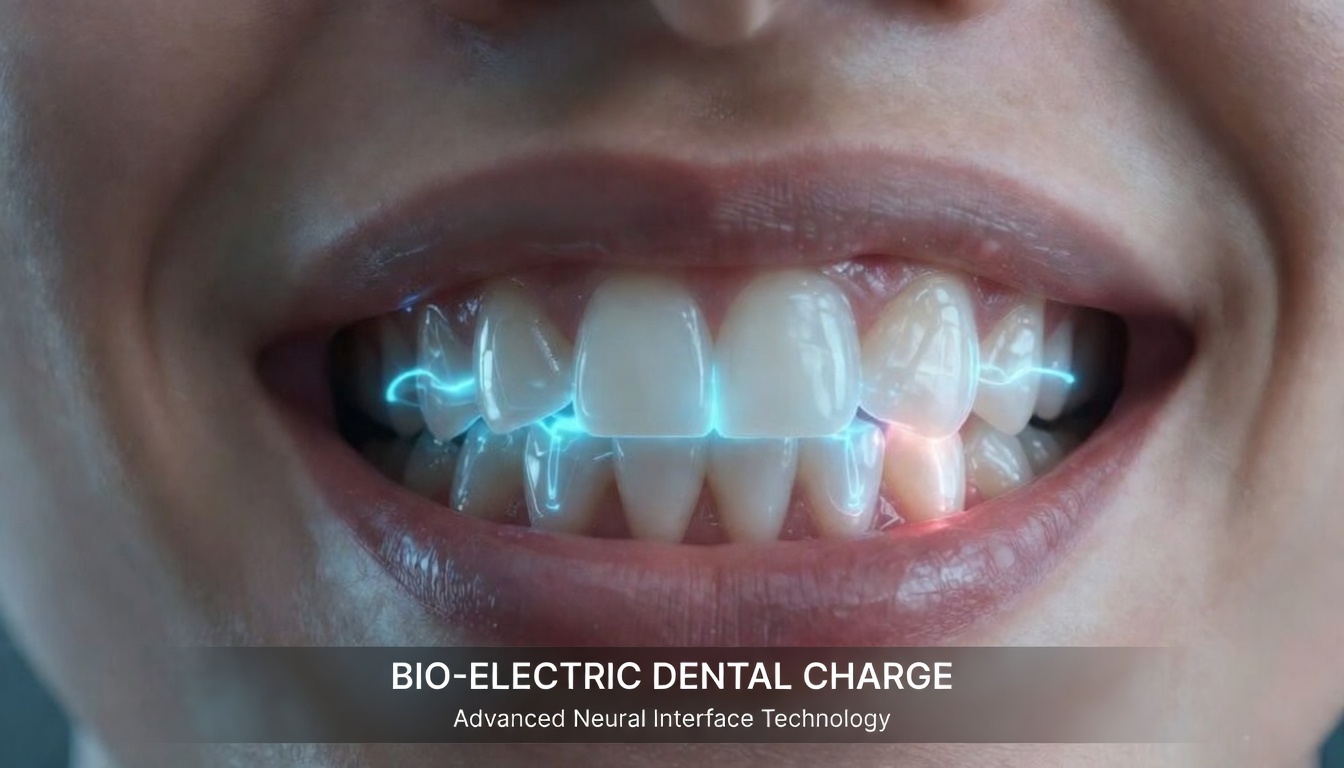
- Trigger the formation of new, fully functional teeth made from the animal’s own tissue
No implants. No 3D-printed or lab-grown teeth. The body itself produced a new tooth, guided by its natural genetic blueprint.
However, here is the critical point often missing from viral videos and sensational headlines:
- The drug can turn the switch back on,
- But a tooth can only grow if the “seed” is still in the ground.
If the latent tooth bud has been lost or destroyed, no drug—no matter how advanced—can make a tooth appear from nothing. This single detail completely changes who might benefit and who might not, depending on your bone structure and dental history.
3. From Lab to Clinic: How Far Along Are Human Trials?
In September 2024, Dr. Takahashi’s group reached a historic milestone in regenerative dentistry: the first human clinical trial of a tooth-regrowth drug began at Kyoto University Hospital.
This initial trial includes men aged 30 to 64 who have lost at least one tooth. But it’s crucial to understand what a Phase 1 trial is designed to do:
- It does not aim to prove that the drug can regrow teeth in humans.
- Its primary goal is to evaluate safety—to detect any serious side effects, toxicity, or unexpected health problems.
So far, no major safety concerns have been reported, which is encouraging. But this only tells us that we can continue testing. It does not confirm that the drug actually works in people.
The path ahead still includes:
- Phase 2 trials – to see whether the drug effectively regrows teeth in a limited group of patients.
- Phase 3 trials – larger studies to confirm effectiveness and monitor side effects in a broader population.
- Regulatory approval – government agencies must review the data and authorize clinical use.
A useful analogy: think of renovating a house.
- Phase 1 is like verifying that the foundation is solid and not contaminated.
- You still don’t have walls, a roof, or permission to move in.
The Japanese tooth-regrowth drug has passed the “foundation check,” but the house is far from finished.
As for timing, the research team itself has mentioned 2030 as an optimistic target for clinical use. It may arrive around then—or it could take significantly longer.
4. The Crucial Question: Will This Tooth-Regrowth Drug Work for You?
The real issue is not whether this drug is innovative—it absolutely is. The question that matters to you is:
When this treatment finally arrives, will you be a good candidate—or not?
The answer depends on:
- The condition of your jawbone
- How long you’ve been missing the tooth
- Your overall oral health, especially your gums and bone support
The drug can only activate latent tooth buds. For that to happen, the bud must still be present in the alveolus—the socket in your jawbone where the tooth once was.
After a tooth is lost, two things happen:
- The alveolar bone begins to shrink and recede over time, a process known as bone resorption.
- As the bone disappears, the environment needed for a latent tooth bud to survive can vanish as well.
In other words: the drug is like water, but it can’t make a plant grow if the seed is no longer there.
Who Is Most Likely to Benefit?
People with the highest chance of success are those who:
- Recently lost a tooth due to trauma, deep decay, or fracture
- Still have good bone volume in the area
- Have healthy gums and no active periodontal infection
In these cases, the latent tooth bud may still exist, and the jawbone has not yet undergone severe resorption.
Another promising group is patients with congenital hypodontia—a genetic condition where some teeth never develop. These individuals often have intact tooth buds that simply never received the right developmental signals. In fact, upcoming trials are expected to focus on children with hypodontia, because their buds are structurally present and potentially easier to activate.
Who Is Least Likely to Benefit?
Your chances are much lower if:
- You’ve had a tooth missing for many years, especially without any prosthetic replacement
- You suffer from advanced periodontitis (severe gum disease) with significant bone loss
- The area has undergone extensive resorption or infection over a long period
If you lost teeth due to uncontrolled gum disease and the infection is still active, the drug would be ineffective. It’s similar to installing a new component in an engine that is overheating because nobody fixed the cooling system—the new part will fail again.
5. What You Must Do Now: Don’t Just Sit and Wait
Let’s go back to our 64-year-old patient.
After examining his mouth, his dentist told him something like this:
“You actually have an excellent profile for this future treatment—your bone is strong, your gums are healthy, and your tooth loss is recent. But the drug is not available yet, and right now you have a real problem that is harming your bite and your jaw every day you wait.”
The professional recommendation was clear:
Go ahead with the dental implants.
In four or five years, they could review the scientific progress and see if new options had emerged. This is how responsible medicine works: it does not sacrifice your current health in exchange for uncertain future promises.
The biggest mistake people make is not “failing to wait” for a miracle drug—it’s allowing their oral health to deteriorate so badly that, when the drug finally exists, their jaw is no longer a viable candidate.
Your jaw is like a classic car:
If you maintain it—regular check-ups, cleanings, treating gum disease early, replacing missing teeth promptly—it remains solid and usable for decades. If you neglect it, let it rust, and ignore warning signs, no future technology will fully restore what’s been lost.
Bottom line:
- Take care of your teeth and gums now.
- Follow your dentist’s recommendations for implants, bridges, or other necessary treatments.
- See this future tooth-regrowth drug as a potential opportunity, not a reason to postpone essential care.
By protecting your oral health today, you give yourself the best chance to benefit from regenerative dentistry tomorrow.