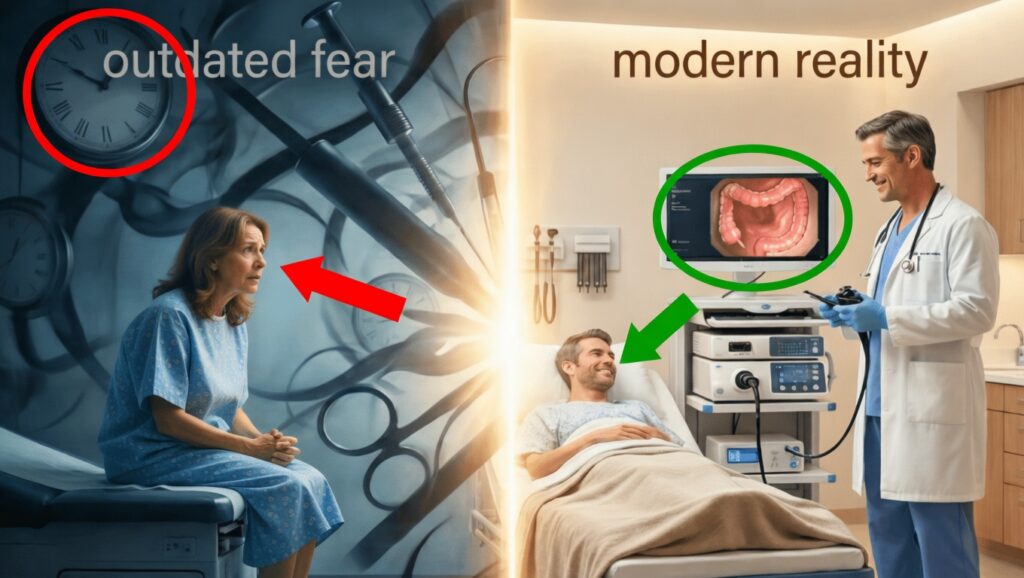
Colonoscopy 101: A Simple, 20-Minute Test That Can Save Your Life
Imagine a quick, 20-minute exam that you sleep through completely—yet it could literally save your life. That’s what a colonoscopy is. Still, many people put off this vital screening because of fear, embarrassment, or confusion about what really happens.
Colonoscopy has a reputation for being uncomfortable, mostly because of the preparation, but the actual procedure is far easier than its myths suggest. It is one of the most effective tools we have to detect and prevent colon cancer, a disease that is highly curable when caught early. The American Cancer Society now recommends that most adults begin colon cancer screening at age 45, making it more important than ever to know what to expect.
Based on the expertise of Dr. David Purow of Northwell Health, this guide walks you step by step through the entire experience—from prep to recovery—so you can approach your colonoscopy informed, calm, and confident.
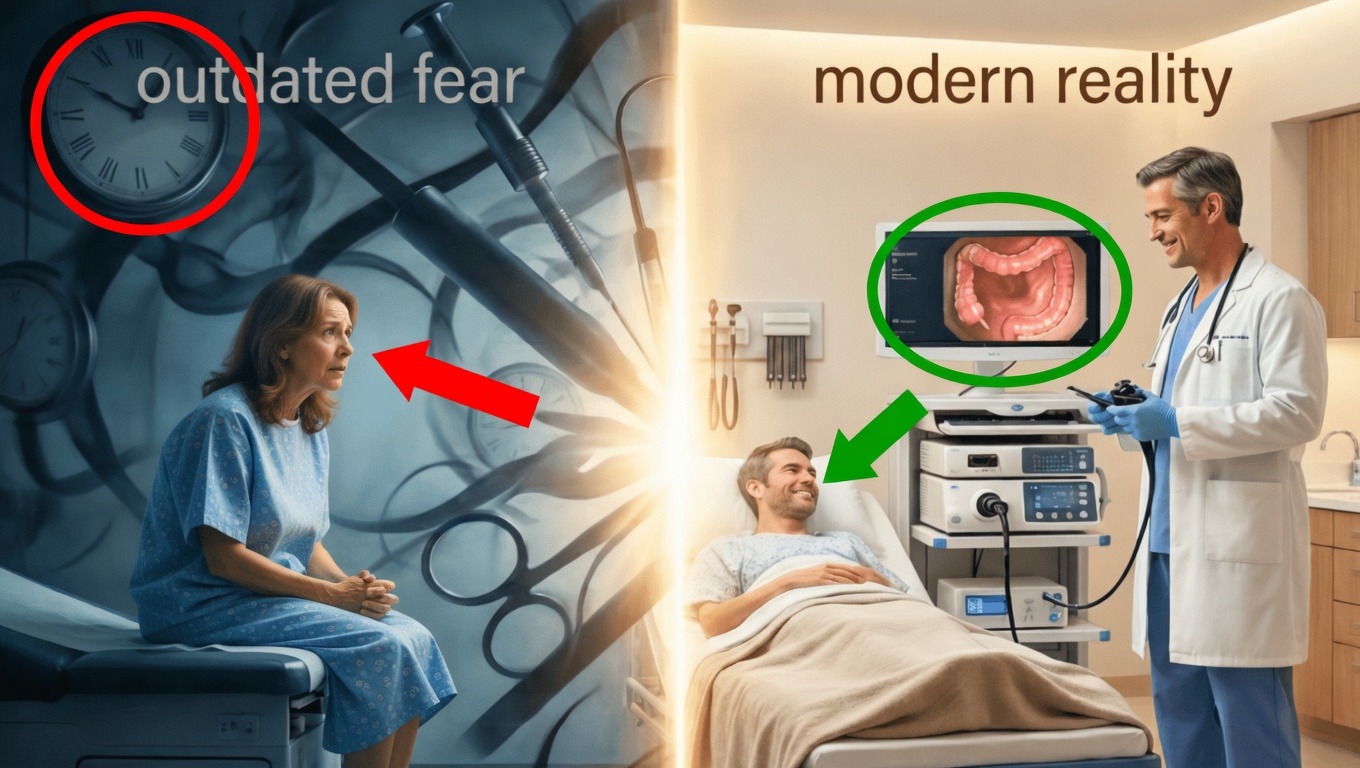
Key Takeaways About Colonoscopy
- Prep is short-term, prevention is long-term: The bowel preparation isn’t fun, but it lasts only about a day and is absolutely crucial for an accurate exam.
- You’ll be asleep and comfortable: Colonoscopies are done under deep sedation. You will be asleep, feel no pain, and remember nothing about the procedure itself.
- The exam is fast: The actual colonoscopy usually takes just 15–20 minutes.
- Recovery is brief: You typically wake up within minutes of the procedure and will review initial results with your doctor before heading home.
- Passing gas is expected: The gas used to inflate your colon has to come out. Passing gas afterward is normal, healthy, and encouraged.
1. The Prep: Cleaning Your Colon for a Clear View
Let’s start with the part everyone talks about: the bowel prep. No one calls it enjoyable, and many joke that it’s the hardest part of the entire process. But it’s also the most important step for a high-quality colonoscopy.
The goal of the preparation is to empty and clean your colon so the doctor can clearly see the lining of the bowel. If stool is left behind, small growths called polyps can easily be hidden and missed—exactly what colonoscopy is designed to find and remove.
Prep usually involves:
- Following a clear liquid diet the day before (broth, clear juices, sports drinks, tea, etc.).
- Drinking a special laxative solution as instructed, often split into doses (one the evening before and one the morning of the procedure).
This solution triggers multiple bowel movements to flush your system. It’s inconvenient and may keep you near the bathroom for several hours, but it lasts only a short time. Think of it as one uncomfortable day in exchange for powerful protection against colon cancer.
2. Arrival and Check-In: Starting Your Visit
When you arrive at the endoscopy center or hospital, the process will feel familiar—much like checking in for any medical procedure.
You can expect:
- Registration: You’ll check in at the front desk. Many centers allow you to complete forms online in advance to save time.
- Review of your health history: A nurse will carefully go over your:
- Medical conditions
- Past surgeries
- Allergies
- Current medications and supplements
They’re looking for anything that might affect your sedation or the procedure, such as blood thinners, heart or lung issues, or previous reactions to anesthesia. This is also a good moment to ask any remaining questions about what will happen.
3. Getting Ready: Changing and Getting Settled
Once the initial review is complete, you’ll be taken to a pre-procedure area to get ready.
Here’s what typically happens:
- Changing into a gown: You’ll be given a hospital gown and a private space to change. Remember, the opening goes in the back.
- Getting comfortable in a bed: After changing, you’ll lie down on a stretcher or bed.
- IV placement: A nurse will place a small IV line in your arm or hand. This is how your sedation medication and fluids will be given.
The nursing staff does this every day and is skilled at easing anxiety. They know many patients feel nervous and will explain each step, answer questions, and help you feel as relaxed as possible before the procedure begins.
4. Meeting the Anesthesia Team: Ensuring Your Comfort and Safety
Before going into the procedure room, you’ll meet the anesthesia professional—either an anesthesiologist or a certified nurse anesthetist.
They will:
- Review your medical, surgical, and social history, including:
- Heart or lung conditions
- Previous anesthesia experiences
- Alcohol, tobacco, or drug use, which can affect how your body responds to sedation
- Explain the type of sedation you’ll receive.
For a colonoscopy, patients typically receive deep sedation (sometimes called “monitored anesthesia care”), not full general anesthesia. That means:
- You continue to breathe on your own.
- You are in a deep, restful sleep.
- You do not feel pain or discomfort.
- You will not remember the procedure afterward.
You’ll also receive a small amount of oxygen through a soft tube under your nose (a nasal cannula) to keep your oxygen levels optimal during the exam.
5. Entering the Procedure Room: Meeting Your Care Team
When it’s time, you’ll be rolled into the endoscopy or procedure room. You’ll notice that it’s a team effort.
The typical team includes:
- The gastroenterologist (the specialist performing the colonoscopy)
- The anesthesiologist or nurse anesthetist
- An endoscopy nurse
- An endoscopy technician
They will attach monitors to track your:
- Heart rate
- Blood pressure
- Oxygen levels
Before you are sedated, the team will help you lie on your left side with your knees slightly bent. This position makes it easier for the doctor to gently guide the scope through the natural curves of your colon. Once everything is ready, the anesthesia team will give your medication through the IV, and you’ll drift off into a deep, comfortable sleep.
6. The Colonoscopy Itself: What Happens While You Sleep
Once you are fully sedated and asleep, the actual colonoscopy begins.
Step by step, here’s what the doctor does:
- Brief exam: The doctor performs a quick digital rectal exam to check for any immediate issues.
- Inserting the colonoscope:
A thin, flexible tube called a colonoscope—about the width of a finger—is gently inserted into the rectum. It has a tiny camera and light at the tip. - Inflating the colon:
The doctor introduces carbon dioxide (CO₂) through the scope to carefully expand the colon. This:- Unfolds the natural bends and folds
- Improves visibility
- Helps reveal small polyps or abnormalities that might otherwise be hidden
- Careful inspection:
The camera sends high-definition images to a monitor. The doctor slowly advances and then withdraws the scope, examining the entire colon lining in detail. - Removing polyps:
If a polyp is found, the doctor can pass tiny instruments through the scope to:- Snip off the polyp
- Cauterize the area if needed
This is painless—you are asleep and the colon does not feel sharp pain in the same way skin does.
- Sending tissue to the lab:
Removed polyps or tissue samples are collected and sent to a pathology lab to check for precancerous changes or cancer.
From start to finish, the colonoscopy portion usually takes about 15–20 minutes, though it may vary slightly based on what is found.
7. Waking Up: The Recovery (and “Farting”) Room
After the colonoscopy is finished, you’ll be taken to a recovery area while the sedation wears off.
In recovery, you can expect:
- Monitoring: Nurses will keep an eye on your vital signs—heart rate, blood pressure, breathing—while you wake up. This usually takes 15–20 minutes.
- Mild bloating or cramping: You may feel pressure, fullness, or mild cramping in your abdomen. This is due to the carbon dioxide used to expand the colon.
- Passing gas: The best way to relieve that discomfort is to let the gas out. It is completely normal—and encouraged—to pass gas in the recovery area. The staff sees this every day and understands it is a healthy sign that your body is returning to normal.
Many people are surprised by how quickly they feel awake and how little they remember of the procedure itself.
8. Results, Follow-Up, and Your Well-Earned Snack
Once you are alert, your gastroenterologist will come and review the findings with you.
They will typically explain:
- Whether the exam was normal
- If any polyps were found and removed
- If biopsies were taken
- When you should return for your next colonoscopy, based on the results and your personal risk factors
Because you may still feel a bit drowsy from the sedation, it’s very helpful to have your designated driver, partner, family member, or friend present to listen and help remember the details and instructions.
After the discussion, you’ll be offered a light snack and something to drink—often crackers, cookies, or juice. After fasting and drinking only clear liquids, this simple snack can feel surprisingly satisfying.
You cannot drive or operate heavy machinery for the rest of the day, so your companion will drive you home. Most people spend the remainder of the day resting and resume normal activities by the next day.
Your Health Is Worth It
A colonoscopy is:
- Quick: The procedure itself is usually under 30 minutes.
- Painless: You’re deeply sedated, so you don’t feel or remember it.
- Powerful: It not only detects colon cancer early but can also prevent it by removing precancerous polyps before they turn into cancer.
While the prep can be inconvenient, it lasts only a short time and opens the door to a screening that can literally save your life. If you’re approaching 45—or older and have not yet been screened—talk with your healthcare provider about scheduling a colonoscopy.
Your comfort is a priority, the procedure is safe and routine, and the peace of mind you gain is invaluable. Your future self will thank you for taking this important step in protecting your health.