The Great Unlearning: A New Way to Do Health
For more than three decades, I’ve been deep in the wellness world, handing out rules. Eat this, avoid that. Fast this way, never fast that way. I believed the right set of protocols could unlock perfect health.
But I’ve realized something important: many of these “rules” have become shackles. The relentless drive to be perfect—to track, measure, optimize, and quantify every move—is driving up your cortisol, exhausting your nervous system, and actually keeping you from feeling truly well.
It’s time for a different paradigm. I call it “the great unlearning.”
I’m reprogramming how I relate to my body and my health. I’m stepping away from a lifestyle built on rigid “shoulds” and stepping into one guided by ease, flow, and genuine joy. This isn’t about neglecting your health; it’s about cultivating a deeper, more intuitive, and sustainable relationship with it.
Instead of forcing your body into submission, this approach is about being present with the experience of living in a healthy body. I want to help you release the guilt, shame, and self-criticism that come from chasing the impossible standards of modern wellness culture.
If you’re ready to let go of the obsession and return to yourself, come unlearn with me.
(Inspired by the work and insights of Dr. Mindy Pelz.)
Key Takeaways
-
Trust Intuition Over Numbers
Move away from obsessive tracking—calories, macros, biometrics—and reconnect with your body’s built-in signals. -
Choose Joyful, Functional Movement
Let go of workouts you dread. True fitness is practical, sustainable, and woven into activities you love. -
Own Your Time and Pace
Stop living in “everyone else’s urgency.” Slowing down and being fully present is essential for a calm, regulated nervous system. -
Make Health the Foundation, Not a Bonus
Your well-being is not optional or secondary. Build your life around your health, not the other way around. -
Reduce Information Overload
Shift from scattered, surface-level learning to deep, focused study. Protect your mind from constant stimulation to restore clarity and peace.
1. I’m Done with Counting
For years, I told you to ditch calorie counting and focus on macros instead. Then we started tracking everything—protein grams, blood sugar readings, ketone levels, sleep scores.
Yes, these tools can be helpful, especially at the beginning. They act like “metabolic training wheels”, giving you feedback and structure. But many of us stayed dependent on them for far too long. We’ve become so addicted to data that we’ve forgotten how to tune into the most advanced tracking system we will ever have: our own bodies.
I remember wearing my continuous glucose monitor and checking it constantly, waiting for the moment I would hit ketosis. Over time, I realized I didn’t need a device to tell me. There’s a very specific “click” you can feel—mental clarity sharpens, hunger drops away, focus locks in. Your body announces it.
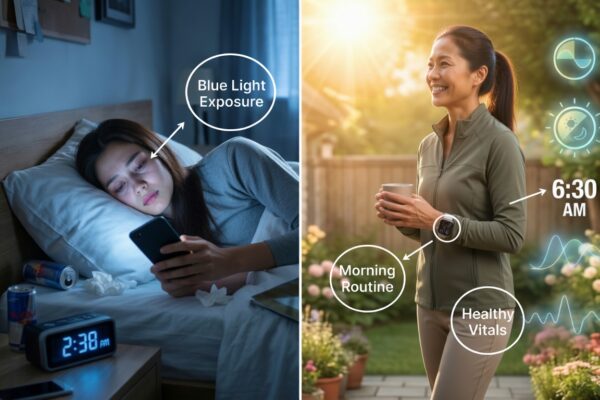
The same is true for sleep. I don’t need a ring to inform me whether I slept well; I can feel the difference between deep rest and a restless night when I wake up.
And the scale? That number can dictate your mood before the day has even begun. One disappointing reading can spiral into self-criticism, restriction, or defeat. Counting nearly always leads to comparison and judgment—and those are breeding grounds for suffering.
I’m choosing a different path:
- Less tracking, more awareness
- Fewer numbers, more sensation
- Less obsession, more trust
I’m shifting into an intuitive way of living, allowing my body’s signals—not a screen—to guide my choices.
2. I’m Breaking Up with the Gym
When study after study started confirming the importance of strength training for women in midlife and beyond, I took it seriously. I hired a trainer, joined a gym, and lifted weights consistently for two years.
Did I get stronger? Absolutely.
Did I enjoy it? Not at all.
I’m someone who thrives in open spaces and natural environments. Being indoors, under fluorescent lights, surrounded by machines, never felt aligned with who I am.
In the past, I would have pushed through and asked, “What do I need to do to look good?”
Now, I ask a very different question: “What do I want to do so I actually enjoy moving my body?”
My focus has shifted to functional fitness—movement that helps me live well as I age. I think about my father in his 80s, struggling to lift himself from a chair after knee surgery. What he really needed was tricep strength.
We all need:
- Squat strength to get up and down with ease
- Grip strength, a powerful predictor of longevity
- Core stability for balance and posture
Instead of forcing myself into workouts I dread, I build strength through things I love:
- I hang from a bar for a minute or two each day to build grip and upper-body strength.
- I cook—whisking, chopping, kneading—which naturally strengthens my hands and forearms.
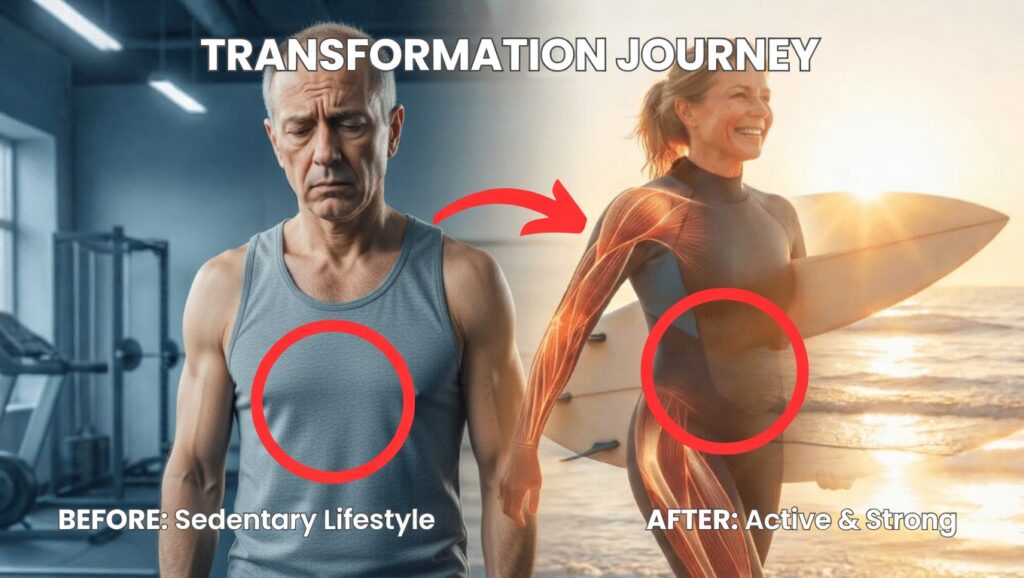
- My latest obsession is surfing. Paddling works my upper body and core, the extension is incredible for posture, and being in the ocean lights up my brain with dopamine and serotonin.
I’m getting fitter, stronger, and more resilient—not by suffering through gym sessions, but by engaging in activities that feel like play and that I’m excited to repeat.
So yes, gym: it’s not you, it’s me. Actually, it is you. We’re done.
3. I’m Not in Anyone Else’s Hurry
One day, I pulled into a yoga studio parking lot and saw a bumper sticker that stopped me in my tracks:
“I am not in your hurry.”
That single sentence hit me like a revelation. I realized I had spent my entire life operating on other people’s timelines—clients’ deadlines, society’s expectations, the constant ping of notifications.
Think about this scenario: you’re in a conversation, and a text appears on your phone. Who gets your attention—the human being in front of you, or the alert demanding an instant reply? For years, I allowed the digital world to win that battle.
This perpetual rush keeps your nervous system stuck in fight-or-flight mode. When your body is constantly braced for the next demand, it’s incredibly difficult to lose weight, heal, or feel at peace.
So I’ve made a deliberate choice to embrace radical presence. My new philosophy is:
“What’s here now?”
Practically, that looks like:
- Not answering every text, email, or message the moment it arrives
- Allowing myself to respond on my own timeline
- Choosing to be fully with what’s in front of me
Even in traffic, I’ve rewired my internal script. Instead of stewing in anxiety, I repeat, “I’m not in a hurry.” That one thought has become one of my most powerful tools for soothing my nervous system.
Reclaiming your time is not just about scheduling; it’s about refusing to let the world’s frantic pace dictate your inner state. You are allowed to slow down. You are allowed to move at the speed that supports your health.
4. I’m No Longer Putting Productivity Above My Health
For much of my life, work wasn’t just important—it was a full-blown addiction. I placed productivity above almost everything: relationships, movement, rest, even the very healthy habits I recommended to others.
A packed, hyper-productive day gave me a rush—but the cost was high. Other areas of my life quietly fell apart.
At 56, I’ve decided I’m finished sacrificing my body and my joy at the altar of productivity. I refuse to keep treating my health as something I’ll “get to” after everything else.
Now, my calendar reflects a completely different set of priorities:
- Movement, nature time, and practices that balance my hormones go in first.
- Friendships and meaningful conversations get actual space in my schedule.
- Work is arranged around these pillars, not the other way around.
That looks like:
- Getting morning sunlight to support my circadian rhythm
- Building in slow, spacious moments to activate my parasympathetic (rest-and-digest) nervous system
- Setting aside time to talk with my aging parents, uninterrupted and unhurried
I might decline a late-night work event so that I can protect my morning routine—the one that nourishes my mind, body, and spirit.
For many of us, this kind of reordering feels radical. But it’s essential. Your health is not one more item on your to‑do list. It is the foundation that everything else rests on.
5. I’m Opting Out of Information Overload
I’m deeply curious by nature, and I truly love learning. But somewhere along the way, learning turned into overconsumption.
I’d go for a walk and feel compelled to listen to a podcast.
I’d sit at a red light and automatically open social media.
If I had a spare hour, I’d dive into research or online content.
My brain never got a moment of genuine quiet. It became so overstimulated that if I woke up at 2 a.m., my mind would immediately start solving problems—and falling back asleep became almost impossible.
So I’m stepping off the hamster wheel.
I’m intentionally creating space for boredom and stillness:
- Staring at trees.
- Watching waves.
- Sitting without a screen, without an agenda.
I’m also changing how I learn. Most of us are stuck in “horizontal learning”—we skim a little bit of information on a lot of topics. One 90‑second video tells you to eat breakfast, the next says to skip it, and you’re left confused and bouncing between conflicting advice.
Instead, I’m choosing to go “vertical and deep.” I pick a single topic that genuinely matters to me and immerse myself in it:
- Books
- Long-form articles and interviews
- In-depth courses or in-person classes
This slower, deeper approach helps rebuild critical thinking. It allows you to sort out what’s actually right for your unique body and life, instead of being tossed around by the latest trend or headline.
A New Way Forward
My health strategy for 2026 and beyond is not about adding more hacks, more tools, or more rules. It’s about subtracting—peeling away the noise, the pressure, and the perfectionism that keep us disconnected from ourselves.
The great unlearning is an invitation to:
- Trust your inner wisdom
- Move in ways that feel natural and joyful
- Live at your own pace
- Protect your well-being above your to‑do list
- Nourish your mind with depth instead of distraction
From here on, health isn’t a performance. It’s a relationship—with your body, your time, your attention, and your life.