3 Powerful Supplements to Boost Brain Health, Energy, and Cognitive Performance
What if three simple, affordable supplements could sharpen your thinking, defend your brain against aging, and give you more energy than you’ve had in years? It can sound unrealistic, but a growing body of research suggests otherwise. Diet, sleep, exercise, and stress management are still the foundation of good health—but the right supplements can significantly upgrade how your brain performs and recovers.
Most people have heard of these compounds, yet many use them incorrectly or underestimate what they can actually do.
In this guide, we’ll break down three evidence-based brain supplements: Omega-3 fatty acids, Vitamin D, and Creatine. You’ll learn what they do, how to choose high-quality products, how to take them for maximum cognitive benefit, and why they matter if you care about long-term brain health. These insights are inspired by the work of neurophysiologist and cognitive performance specialist Louisa Nicola.
Key Takeaways
-
Omega-3:
- Essential for brain structure and anti-inflammatory protection.
- Most fish oil supplements are oxidized (rancid) and may do more harm than good.
- Choose third-party tested (NSF-certified) products and store them in the refrigerator to protect their potency.
-
Vitamin D:
- Acts more like a hormone than a vitamin and is critical for brain function.
- Deficiency is strongly associated with a higher risk of dementia.
- Optimal blood levels (around 60 ng/mL) are linked with a dramatically lower risk of Alzheimer’s disease.
-
Creatine:
- One of the most underrated supplements for the brain—not just for athletes.
- Safely boosts cellular energy, supports cognition under stress, reduces brain fog, and may protect against brain injury.
- Higher daily doses (10–20 g) appear necessary for significant brain benefits.
1. Omega-3: The Brain’s Essential Fat (and Why Most People Use It Wrong)
Your brain is approximately 60% fat by weight, and a large part of that fat is DHA, an omega-3 fatty acid. Omega-3s are foundational to brain health: they help keep cell membranes flexible, support efficient communication between neurons, and are deeply involved in learning, memory, and mood regulation.
Think of omega-3s as the premium oil that keeps your neural “hardware” running smoothly.
Why Omega-3s Are Critical for Brain Health
- Membrane fluidity: Omega-3s help your brain cells maintain flexible, healthy membranes, which improves signaling between neurons at synapses.
- Cognition and memory: Adequate omega-3 levels support processes involved in learning, memory, and overall mental clarity.
- Anti-inflammatory power: Omega-3s exert strong anti-inflammatory effects, often compared to nonsteroidal anti-inflammatory drugs (NSAIDs)—but without their typical side effects.
Chronic inflammation accelerates brain aging and contributes to neurodegenerative diseases; omega-3s help counteract this.
The Hidden Problem: Rancid Fish Oil
Here’s the catch: many omega-3 supplements are oxidized by the time they reach you. One alarming analysis found that up to 95% of popular omega-3 products exceeded normal oxidation thresholds. Oxidized (rancid) oil can generate harmful free radicals rather than delivering benefits.
You wouldn’t cook with rancid cooking oil—so you definitely don’t want rancid oil feeding your brain.
How to Choose and Store Omega-3 for Maximum Benefit
To truly benefit from omega-3 supplementation:
-
Choose a trustworthy brand
- Look for NSF-certified or similar third-party testing.
- This verifies label accuracy, purity, and acceptable oxidation levels.
-
Treat your omega-3 like a delicate oil
- Heat, light, and oxygen are the enemies of these fragile fats.
- As soon as you buy your omega-3 supplement, store it in the refrigerator.
- Keep it tightly sealed and away from direct sunlight to reduce oxidation.
-
Consider form and source
- High-quality fish oil, krill oil, or algae-based DHA/EPA can all be effective.
- Prioritize brands that are transparent about sourcing and testing.
Used correctly, omega-3s act as a powerful, foundational tool to support brain structure, reduce inflammation, and maintain cognitive vitality over time.
2. Vitamin D: The Sunshine Hormone for Cognitive Protection
Vitamin D is best known for its role in bone health, but its importance for the brain is just as profound. Technically, Vitamin D behaves more like a hormone than a typical vitamin, influencing hundreds of processes throughout the body—including your nervous system.
Your brain is rich in Vitamin D receptors, especially in areas tied to memory and cognition, such as the hippocampus. When Vitamin D levels are optimal, these receptors help regulate gene expression, inflammation, and neuronal function.
How Vitamin D Supports Brain Health
- Neuroprotection: Vitamin D helps protect neurons from damage and oxidative stress.
- Cognitive performance: Adequate levels are associated with better memory, processing speed, and overall cognitive function.
- Inflammation control: Low Vitamin D is linked with increased inflammation, a driver of dementia and brain aging.
Vitamin D and Dementia Risk
Research connecting Vitamin D status with dementia is striking:
- Studies of female centenarians (women living to 100+) found that those who maintained cognitive function and avoided Alzheimer’s typically had higher Vitamin D levels.
- Being Vitamin D deficient has been associated with roughly a 40% increased risk of all-cause dementia.
- Maintaining a high-normal level of Vitamin D in the blood (around 60 ng/mL) has been correlated with up to an 80% reduction in the risk of Alzheimer’s disease.
This isn’t a small tweak—it’s a potentially massive protective effect.
What You Should Do
- Get your levels tested: Ask your healthcare provider for a blood test to check your 25(OH)D (25-hydroxyvitamin D) levels.
- Supplement as needed: If you’re low, a tailored Vitamin D3 supplement regimen—ideally supervised by a professional—can help bring you into an optimal range.
- Don’t rely on sun alone: Many people, especially those living in higher latitudes, spending most time indoors, or with darker skin tones, struggle to maintain adequate levels from sunlight alone.
Correcting Vitamin D deficiency is one of the simplest and most impactful steps you can take to protect your brain as you age.
3. Creatine: The Overlooked Brain Fuel
Creatine has long been marketed to athletes and bodybuilders for muscle strength and power. But its benefits extend far beyond the gym. For the brain, creatine is a highly researched, low-cost, and generally safe molecule with impressive potential.
Debunking Common Creatine Myths
Two major myths often scare people away from creatine:
-
“Creatine damages your kidneys.”
- Creatine supplementation can raise creatinine, a breakdown product of muscle metabolism.
- Elevated creatinine does not automatically mean kidney damage; it is expected when muscle mass or creatine intake increases.
- A more precise marker for kidney function is cystatin C. If you’re concerned, ask your doctor to include this in your labs.
-
“Creatine causes hair loss.”
- The idea that creatine leads to hair loss is not supported by robust, consistent scientific evidence.
- Current data do not justify avoiding creatine solely for this reason.
How Creatine Powers Your Brain
Creatine’s main role is to help your cells recycle energy in the form of ATP (adenosine triphosphate). This is vital because your brain is an energy-demanding organ. When you’re under stress—whether from:
- Sleep deprivation
- Concussion or head injury
- Chronic stress
- Intense mental workloads
your brain can enter an energy crisis, leading to brain fog, fatigue, slower thinking, and impaired focus.
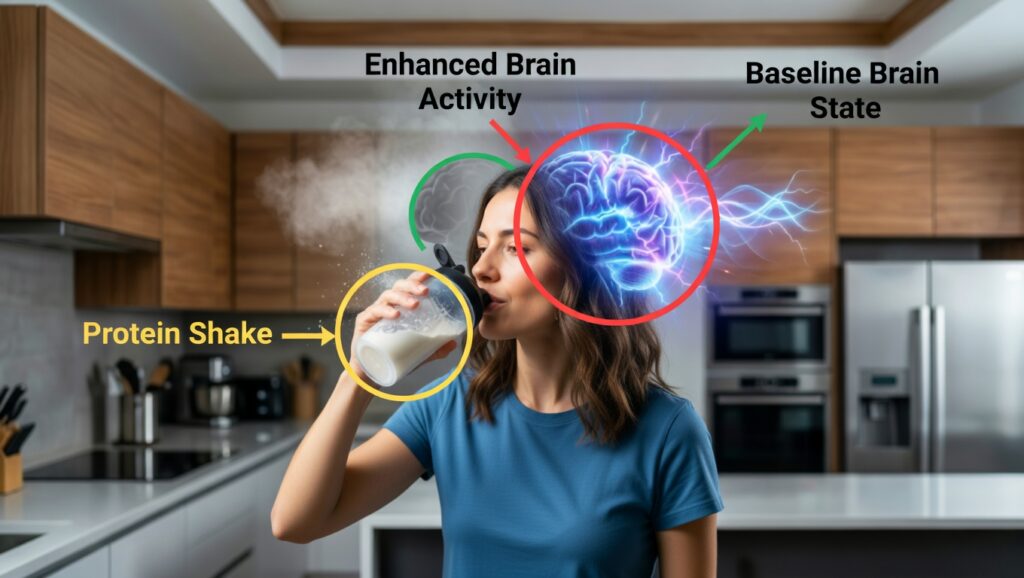
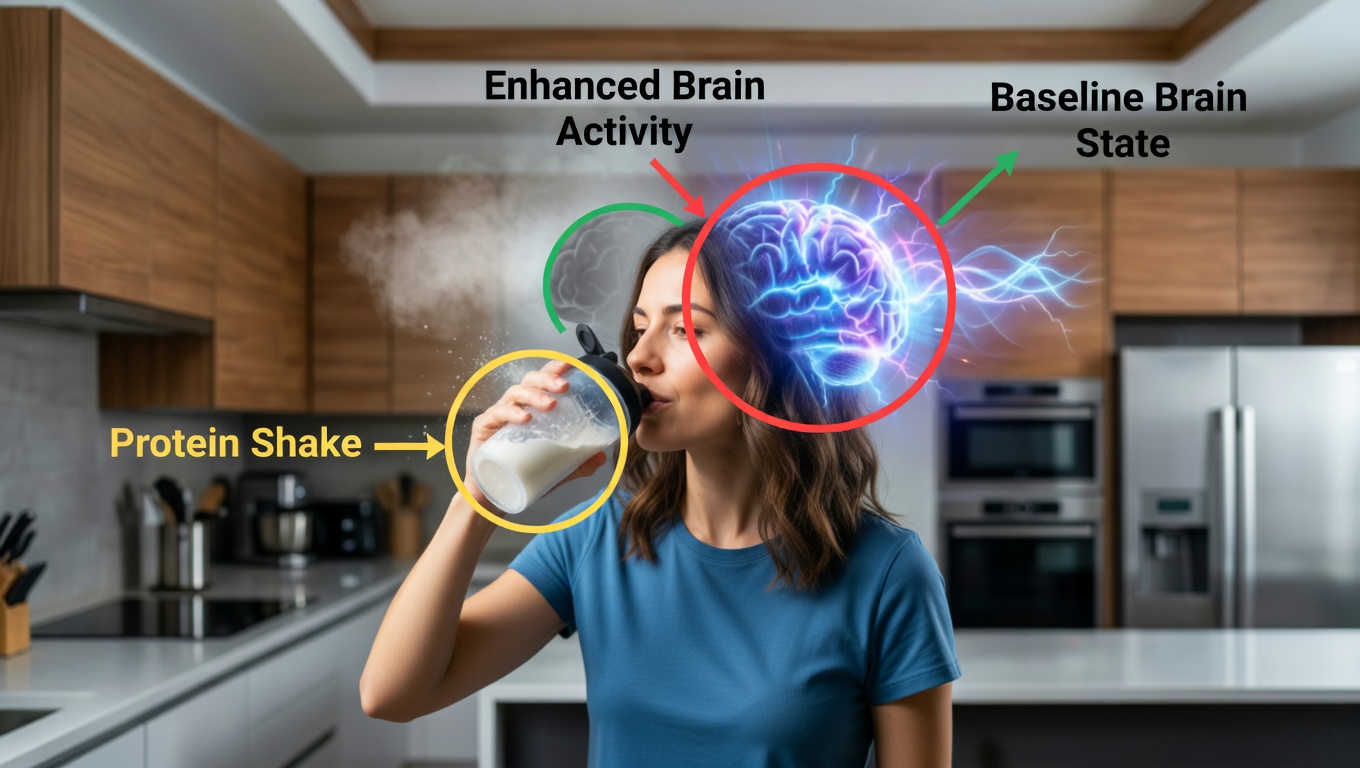
Creatine acts as an energy buffer, increasing your brain’s capacity to maintain performance even under demanding conditions.
Evidence-Based Brain Benefits of Creatine
Research suggests that higher doses of creatine can be particularly powerful:
- Neuroprotection: Doses around 20–30 g per day have shown protective effects in contexts like concussion and even stroke, helping reduce damage by supporting cellular energy.
- Sleep deprivation: Studies indicate that 15–20 g per day can counteract many of the cognitive impairments caused by lack of sleep, improving alertness and mental performance.
- Alzheimer’s disease: A pilot study in people with Alzheimer’s—whose brains are in a constant energy deficit—found that 20 g of creatine daily helped preserve cognitive function and improved physical energy.
- Cancer risk: Higher dietary creatine intake has been associated in some research with a lower risk of certain cancers, although more studies are needed.
- Mood and menopause: Emerging evidence suggests creatine may help stabilize mood and support cognition in menopausal women.
How Much Creatine Do You Need for Brain Health?
The traditional dose of 5 g per day is adequate for muscle saturation, but appears too low to fully saturate the brain.
For cognitive benefits, consider:
- 10–20 g per day, divided into smaller doses (e.g., 5 g taken 2–4 times daily) to improve absorption and minimize stomach discomfort.
- Consistency matters—creatine works by gradually increasing cellular stores over time.
Always discuss higher doses with a healthcare professional, especially if you have any existing medical conditions.
Choosing the Right Creatine
When buying creatine, look for:
- NSF certification or similar third-party testing for purity and safety.
- The term “Creapure” on the label.
- Creapure is a high-quality, German-manufactured form of creatine monohydrate, considered the gold standard for purity.
- Some products add fillers or blending agents to improve mixability, but a pure creatine monohydrate powder is ideal.
Used intelligently, creatine is one of the most effective and underrated tools to support brain energy, mental clarity, and resilience under stress.
Conclusion: A Simple Strategy to Supercharge Your Brain
The supplement world can feel overwhelming, but you don’t need dozens of products to meaningfully improve your brain health. Focusing on three well-studied, high-impact compounds—Omega-3 fatty acids, Vitamin D, and Creatine—is a powerful and straightforward strategy.
By:
- Choosing high-quality, third-party tested supplements
- Storing and dosing them correctly
- Pairing them with a solid lifestyle foundation (sleep, nutrition, exercise, stress management)
you give your brain the structural support, hormonal balance, and cellular energy it needs to perform at its best.
You’re not just fighting brain fog or afternoon fatigue—you’re actively investing in long-term cognitive resilience, protecting your memory, and unlocking higher levels of mental and physical energy.
Take control of your brain health now so you can think clearer, feel better, and stay sharper for years to come.