Aspirin and Your Circulation: Powerful Ally or Serious Threat?
If you’re worried about heart attack, stroke, or thrombosis and have ever considered taking a daily aspirin on your own “just in case,” pause right now. What you’re about to learn about aspirin and your cardiovascular system may surprise you—and it could literally save your life.
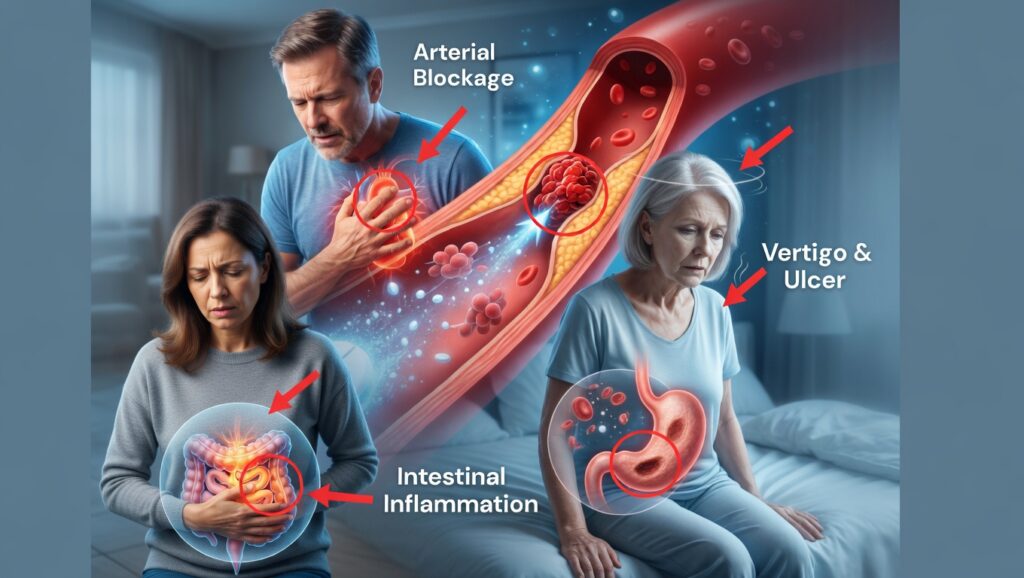
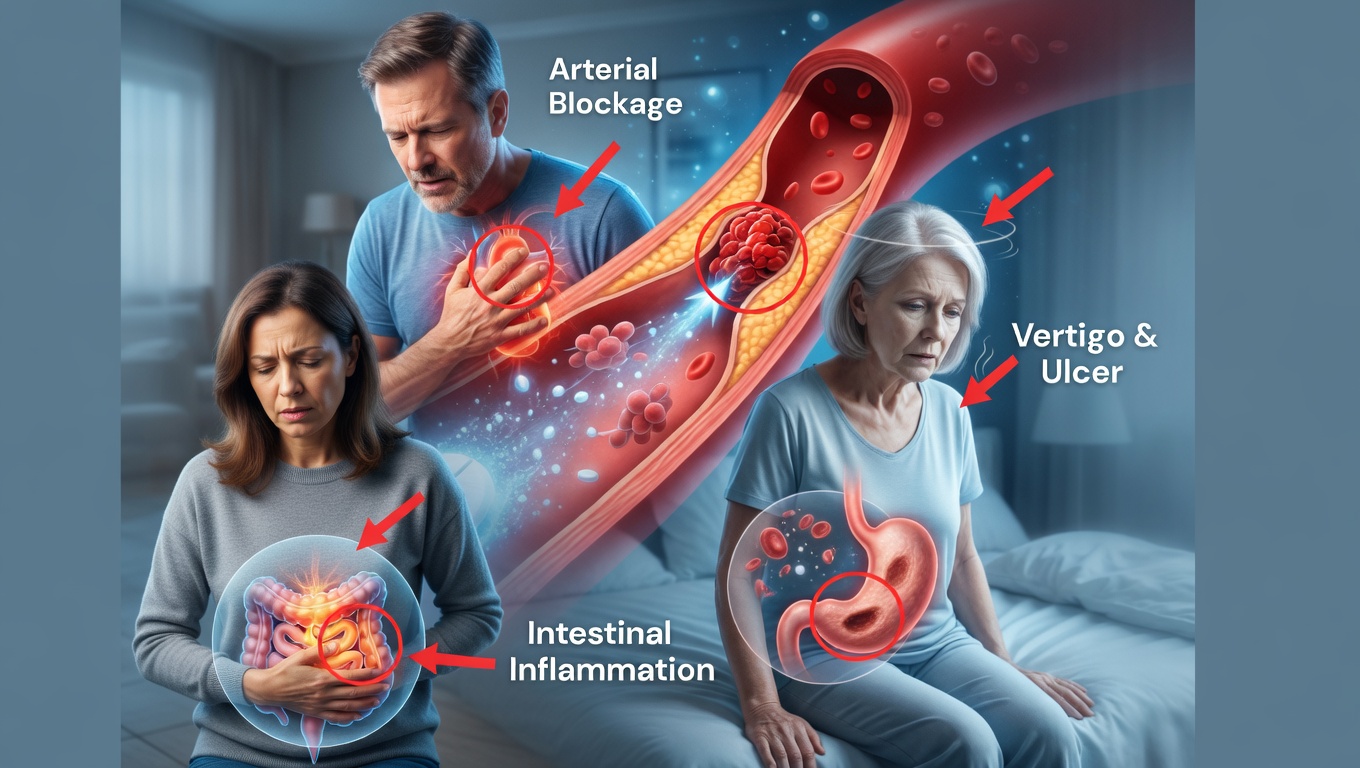
I’m a vascular surgeon with more than two decades of experience, and one patient story shows this risk clearly. A 62‑year‑old woman came to my clinic after taking aspirin every day for three years without any medical advice. She said, “Doctor, my friend uses it and never had heart trouble. I thought I was protecting myself.”
When I ordered tests, we found a bleeding stomach ulcer that had been silently draining her blood. She was severely anemic and needed a transfusion. Her attempt to prevent a heart attack had instead put her life in danger.
In this guide, you’ll learn six scenarios in which aspirin truly saves lives—and four situations where it can be harmful or even deadly. This will completely change how you look at that small, seemingly harmless tablet.
One of the most dangerous misconceptions is that aspirin protects everyone from heart attacks. The reality is very different: aspirin is highly effective, but only for people who genuinely need it. For those at low risk, the bleeding risk can outweigh any benefit.
The crucial concept is understanding the difference between primary prevention (preventing a first event) and secondary prevention (preventing another event after something has already happened). Once you understand this distinction, your decisions about aspirin will be much clearer.
(Based on the insights of Dr. Alexandre Amato.)
Key Takeaways About Aspirin and Heart Health
-
Aspirin is not a universal preventive pill. In people with low cardiovascular risk, the chance of dangerous bleeding often outweighs the protective effect against heart attacks or strokes.
-
It can be life‑saving for secondary prevention. If you’ve already had a heart attack, ischemic stroke, or serious arterial disease, aspirin is often a crucial part of treatment and can significantly reduce the risk of another event.
-
Aspirin does not actually “thin” the blood. It works by making platelets (the cells that help blood clot) less sticky, reducing the likelihood of clot formation inside your arteries.
-
Never start or stop aspirin on your own. The decision to use aspirin must be individualized and made with a physician who understands your full risk profile.
-
Bleeding is the main danger. Signs such as black or tarry stools, vomiting blood, or unusual bruising can indicate serious bleeding and require urgent medical attention.

6 Situations Where Aspirin Truly Saves Lives
1. You Have Already Had a Heart Attack
If you’ve suffered a heart attack (medically called a myocardial infarction), your coronary arteries have already shown they are prone to blockage. In this setting, we are talking about secondary prevention—using treatment to prevent a second event.
For these patients, low‑dose aspirin is almost always recommended. By reducing platelet clumping, aspirin decreases the risk of new clots forming and blocking the coronary arteries again.
Large clinical trials involving millions of people have shown that aspirin can lower the risk of a second heart attack by up to 28%. The usual dose is a “baby” or low dose, around 100 mg per day, typically continued long‑term or even for life—always under medical supervision.
2. You Have Had an Ischemic Stroke
Not all strokes are the same. An ischemic stroke happens when a clot blocks an artery in the brain and cuts off blood supply. A hemorrhagic stroke happens when a blood vessel ruptures and causes bleeding in the brain.
For patients who have had an ischemic stroke, aspirin is a key medication to prevent another one, reducing the risk of recurrence by around 20–25%.
However, giving aspirin during a hemorrhagic stroke is extremely dangerous because it can intensify the bleeding and worsen brain damage. This is why you must never take aspirin on your own when stroke symptoms appear (sudden weakness, facial droop, trouble speaking, loss of vision, etc.).
Doctors use imaging tests, such as a CT scan or MRI, to determine the type of stroke before choosing treatment. Only then can aspirin be used safely when appropriate.
3. You Have a Stent or Have Undergone Bypass Surgery
If you’ve had:
- A coronary stent placed (a small metal mesh tube inserted into a narrowed artery), or
- Coronary artery bypass surgery (where veins or arteries are used to bypass blocked coronary vessels),
you are at particularly high risk for clot formation shortly after the procedure.
The body can “see” the stent or bypass graft as foreign and may respond by forming clots. Aspirin is critical in this phase, cutting the risk of the stent or graft closing off again by 40–50%.
Often, aspirin is combined with another antiplatelet drug for 6 to 12 months after the procedure. After that, many patients continue with aspirin alone.
Never discontinue aspirin or other antiplatelet drugs on your own—even for minor procedures like dental work—without talking to your cardiologist or surgeon first.
4. You Have Peripheral Arterial Disease (PAD)
Peripheral Arterial Disease (PAD) is the narrowing or blockage of arteries in the legs. It can cause:
- Pain or cramping in the calves when walking (called intermittent claudication)
- Cold feet
- Wounds on the legs or feet that heal poorly or not at all
If you have been diagnosed with PAD, aspirin is a fundamental part of your treatment plan. It helps slow disease progression and significantly lowers the chance of severe complications, including the need for amputation.
Symptoms such as calf pain that appears with walking and improves with rest are classic warning signs of PAD. If this sounds familiar, you should consult a vascular surgeon.
Remember, aspirin is only one piece of the puzzle. Management of PAD also requires:
- Regular exercise
- Stopping smoking
- Strict control of diabetes, blood pressure, and cholesterol
5. You Have a High Calculated Cardiovascular Risk
Here we enter the area of primary prevention—trying to prevent a first heart attack or stroke.
For most people without prior cardiovascular events, routine daily aspirin is not recommended. However, in some individuals with a very high calculated risk, the benefit may outweigh the bleeding risk.
Doctors estimate your 10‑year risk of heart attack or stroke using:
- Age and sex
- Blood pressure
- Cholesterol levels
- Smoking status
- Presence of diabetes and other conditions
If your calculated 10‑year risk of a cardiovascular event is greater than about 10%, your physician may consider prescribing low‑dose aspirin.
You should never start aspirin just because you’re aging. Bleeding risk increases with age as well, and only a professional evaluation can determine whether aspirin is appropriate for you.
6. You Recently Had Vascular Surgery
After vascular procedures—such as:
- Bypass grafts in the legs
- Angioplasty (balloon dilation of narrowed arteries)
- Aneurysm repair
the risk of clot formation at the site of the repair is elevated. Aspirin is often used to keep the treated vessel open by preventing thrombosis (clotting) where the surgery was performed.
In many cases, aspirin is started before the operation and continued for months or even indefinitely afterwards, depending on the type of procedure and your overall risk.
It is crucial to follow your surgeon’s instructions precisely. Different surgeries have different protocols, and changing the dose or stopping aspirin on your own can jeopardize the success of the operation.
4 Situations Where Aspirin Can Be Dangerous—or Deadly
1. You Take Aspirin for Prevention Without Any Prior Cardiovascular Problems
This is the single most common—and one of the most dangerous—errors people make with aspirin.
Recent large studies have shown that in low‑risk individuals (no history of heart disease, stroke, or major vascular problems), daily aspirin often causes more harm than benefit.
The numbers look like this:
For every 1,000 low‑risk people who take aspirin daily for five years:
- About 4 heart attacks are prevented, but
- About 8 serious bleeding events occur (such as gastrointestinal bleeding that requires hospital treatment)
In other words, more people are harmed than helped.
If you are otherwise healthy, do not have diabetes, and do not have a strong family history of early cardiovascular disease, you should not start aspirin on your own.
Do You Actually Need Aspirin? Quick Self‑Check
Take a piece of paper and answer “yes” or “no” to each question below.
Give yourself 2 points for every “yes.”
- Have you ever had a heart attack or an ischemic stroke?
- Do you currently have a coronary stent or have you undergone coronary bypass surgery?
- Do you have diabetes plus at least two of these risk factors: high blood pressure, high cholesterol, or smoking?
- Have you been diagnosed with peripheral arterial disease (PAD)?
- Have you had any vascular surgery in the last two years?
Your score:
- 0 points: You probably do not need aspirin for prevention—but you should confirm this with your doctor.
- 2–4 points: This is a borderline zone. Your doctor should calculate your formal cardiovascular risk before deciding.
- 6–8 points: You are quite likely to benefit from aspirin as part of your treatment plan.
- 10 points: Aspirin is almost certainly indicated and may be essential for you.
Always discuss the result of this self‑check with your physician. It is a guide, not a diagnosis.
2. You Have an Active Gastric Ulcer
Remember the 62‑year‑old patient from the beginning of this article? Her case highlights a critical point: aspirin and active stomach (gastric) or duodenal ulcers are a dangerous combination.
Aspirin irritates the stomach lining and interferes with clot formation. If you already have an ulcer, aspirin can:
- Trigger fresh bleeding
- Turn a small, unnoticed bleed into a life‑threatening hemorrhage
- Lead to severe anemia and the need for blood transfusions
Symptoms of a bleeding ulcer can include:
- Black, tar‑like stools
- Vomiting blood or material that looks like coffee grounds
- Weakness, dizziness, or fainting
If you have a known ulcer, a history of gastrointestinal bleeding, or symptoms suggesting stomach problems, you must not start aspirin without specialist evaluation. Your doctor may need to treat the ulcer first, prescribe protective medications, or choose a different strategy altogether.