Conventional Deadlift Guide: Muscles Worked, Benefits, Form, and Grip
At first glance, the conventional deadlift looks like a very simple strength exercise. You pick a weight up from the floor by hinging at the hips and standing tall.
Even the name sounds straightforward. A deadlift is exactly that: lifting a dead weight from the ground.
Yet this classic compound lift has remained a cornerstone of strength training for generations for a reason.

The deadlift is one of the best exercises for building total-body strength, adding muscle mass, and developing athletic power. If you want a stronger back, more resilient shoulders, and a powerful posterior chain, the conventional deadlift deserves a place in your workout routine.
The barbell deadlift is also one of the most rewarding lifts in the gym. It may not attract as much attention as Olympic lifts, and it may not dominate social media like squats often do, but the conventional deadlift has a unique appeal. When performed correctly, it trains multiple major muscle groups at once, especially the muscles responsible for hip extension.
Muscles Worked in a Conventional Deadlift
The traditional deadlift primarily targets your back and posterior chain.
Your posterior chain includes the muscles running along the back of your body, from your upper spine down through your glutes, hamstrings, calves, and toward your heels. These are some of the largest and strongest muscles you have, and they play a major role in posture, lifting performance, and athletic movement.
If your training focuses only on upper-body pressing exercises like the bench press, you may be missing one of the most effective full-body strength movements available.
Main Muscles Used in the Deadlift
-
Trapezius (traps)
The traps are the large muscles of the upper back. They help control shoulder blade movement and support the position of the neck and head. -
Rhomboids
Located underneath the traps, the rhomboids help pull the shoulder blades together and stabilize the upper back. -
Deltoids
The deltoids are the muscles around the shoulder joint. They work with the upper back to help support the bar and maintain posture. -
Triceps brachii
This muscle runs along the back of the upper arm. Its main role is elbow extension, but it also helps stabilize the shoulder during heavy lifts. -
Latissimus dorsi (lats)
The lats are the largest muscles in the back. They play a major role in keeping the bar close to the body and supporting strong pulling mechanics. -
Erector spinae
These deep spinal muscles run along your vertebral column. Their job is to keep the spine extended and stable during the lift. -
Spinal erector groups
The erector spinae include:- Spinalis
- Longissimus
- Iliocostalis
Together, these muscles help support and extend the spine.
-
Gluteus maximus (glutes)
This powerful hip muscle is essential for standing upright and driving the hips forward at the top of the deadlift. -
Adductors
These muscles help control the femur at the hip and assist with leg stability and thigh movement. -
Hamstrings
The hamstrings include:- Biceps femoris
- Semitendinosus
- Semimembranosus
These muscles work with the glutes to extend the hips and support the lower body during the pull.
-
Soleus
Part of the calf complex, the soleus contributes to lower-leg stability and movement.
Why the Deadlift Is So Effective
One of the biggest benefits of the deadlift is that it strengthens nearly the entire back side of the body in a single movement. It also challenges your grip strength in a way few other exercises can.
In fact, the deadlift quickly exposes weak points. If your grip is not strong enough, or if your posterior chain lacks strength, the bar simply will not leave the floor.
That is part of what makes this lift so valuable.
Deadlifts are not only for powerlifters and bodybuilders. Anyone who wants a stronger back, better posture, and improved total-body strength can benefit from including deadlifts in their training plan.
Certain deadlift variations, such as the sumo deadlift or trap bar deadlift, also place more emphasis on the quadriceps. Along with the hamstrings, glutes, and calves, these muscles help build explosive strength and athletic power.
Why Good Deadlift Technique Matters
Although the deadlift may look easy, it is a technically demanding movement. Because it involves so many major muscle groups, poor form can lead to injury, especially in the lower back.
Bad lifting mechanics can place excessive stress on the lumbar spine. That is why beginners should always start with light weight and increase the load only after they can maintain proper form throughout every repetition.
What You Need for a Conventional Barbell Deadlift
The conventional deadlift is most commonly done with a barbell, but you can also perform similar movements using:
- Dumbbells
- Kettlebells
For beginners, a PVC pipe can be a great tool for learning the movement pattern safely. It helps you practice setup, hip hinge mechanics, and spinal alignment before adding load.
Helpful Accessories
Since grip strength often limits how much weight you can lift, some lifters use:
-
Chalk
Chalk helps absorb sweat and improves your hold on the bar. -
Lifting straps
Straps can help secure your grip during high-volume sets or very heavy lifts.
How to Do a Conventional Deadlift Step by Step
Follow these steps to perform a conventional deadlift with proper technique:
-
Set up with your feet hip-width apart
Stand close to the barbell so it nearly touches your shins. The bar should be positioned over the middle of your feet, roughly above your shoelaces. -
Hinge at the hips and grip the bar
Reach down and place your hands just outside your legs. -
Bend your knees and lower your hips slightly
Push your hips back while keeping your spine neutral. Your shoulders should be a little in front of the bar, and the bar should stay close to your shins. -
Brace your body
Tighten your core, squeeze your glutes, and keep your chest up. -
Begin the pull
Take a deep breath, press your feet into the floor, and start lifting the bar while keeping your chest proud. -
Drive through the middle of the lift
As the bar passes your knees, push your hips forward. -
Stand tall at lockout
Finish in an upright position with your hips and knees fully extended. -
Lower the bar under control
Reverse the movement and return the weight to the floor. -
Drop the bar only if appropriate
After your final rep, you may let the bar drop if your equipment and gym environment allow it.
Conventional Deadlift Form Tips
If you want to lift heavier while staying safe, focus on these important deadlift tips.
1. Turn your feet slightly outward
In the starting position, a small outward angle in the feet can help create a more natural stance and better hip alignment.
2. Keep the bar close to your body
The bar should stay very near your shins and legs throughout the lift. A straight bar path improves efficiency and reduces unnecessary stress on the lower back.
3. Raise your hips and chest together
Your body should move as one unit. Do not let your hips shoot up faster than your torso. The hips and chest should rise at the same time.
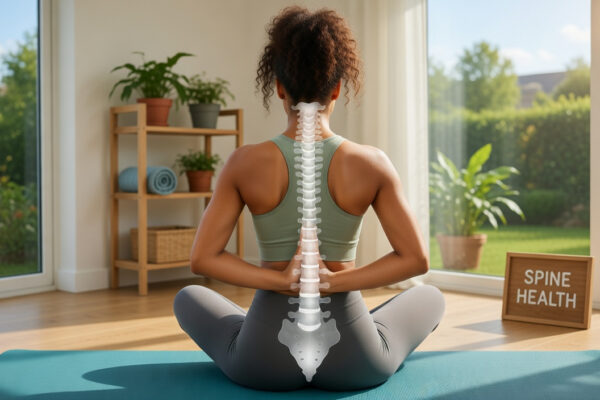
4. Maintain a neutral spine
A straight back is essential. If your lower back rounds during the lift, known as lumbar flexion, it places extra load on your lumbar spine and increases injury risk.
A simple cue is to brace your core before the bar leaves the floor and keep that tension throughout the movement.
5. Do not squat too low
The deadlift is not a squat. Your hips should generally stay higher, and your shins should remain close to perpendicular to the floor. This position gives you better leverage and allows for a more vertical bar path.
6. Keep your arms straight
Your elbows should remain locked and your arms fully extended. Think of your arms as hooks or straps connecting your body to the bar. The lift should come from your legs, hips, and back, not your biceps.
7. Avoid over-leaning at the top
At lockout, stand tall with a neutral spine. Do not throw your shoulders too far back or lean excessively into hyperextension.
Deadlift Grip Styles
Once your form is solid and the weight gets heavier, grip strength often becomes the limiting factor. That is why learning different deadlift grip styles can be useful.
Overhand Grip
With the overhand grip, both palms face toward your body, and both thumbs and fingers wrap over the bar. Your hands should be about shoulder-width apart or just outside your legs.
This is the most basic grip option and is usually the best place for beginners to start. It is simple to learn and helps build natural grip strength as you progress.
Final Thoughts on the Conventional Deadlift
The conventional deadlift is one of the most effective exercises for building strength, muscle, grip, and total-body power. It trains your back, glutes, hamstrings, spinal erectors, and many other important muscles in one efficient movement.
While it may appear simple, it demands proper technique and body awareness. Start light, master your form, and gradually increase the weight over time.
If your goal is a stronger back, a more powerful posterior chain, and better overall performance, the conventional deadlift is a lift worth mastering.