Ridges on Fingernails: What They Mean and When to Worry
Noticed fine lines or grooves on your fingernails? While nails are often treated as a beauty detail—shaped, polished, and kept tidy—they can also reflect what’s happening inside your body. Nail ridges are common, but their direction, depth, and accompanying symptoms can offer helpful clues about your overall health.
What Are Nail Ridges?
Nail ridges are raised lines or indentations that form on the nail plate. They usually appear in one of two patterns:
- Vertical ridges (from cuticle to tip)
- Horizontal ridges (from side to side)
Many ridges are harmless, but some can signal an interruption in nail growth or an underlying medical issue.
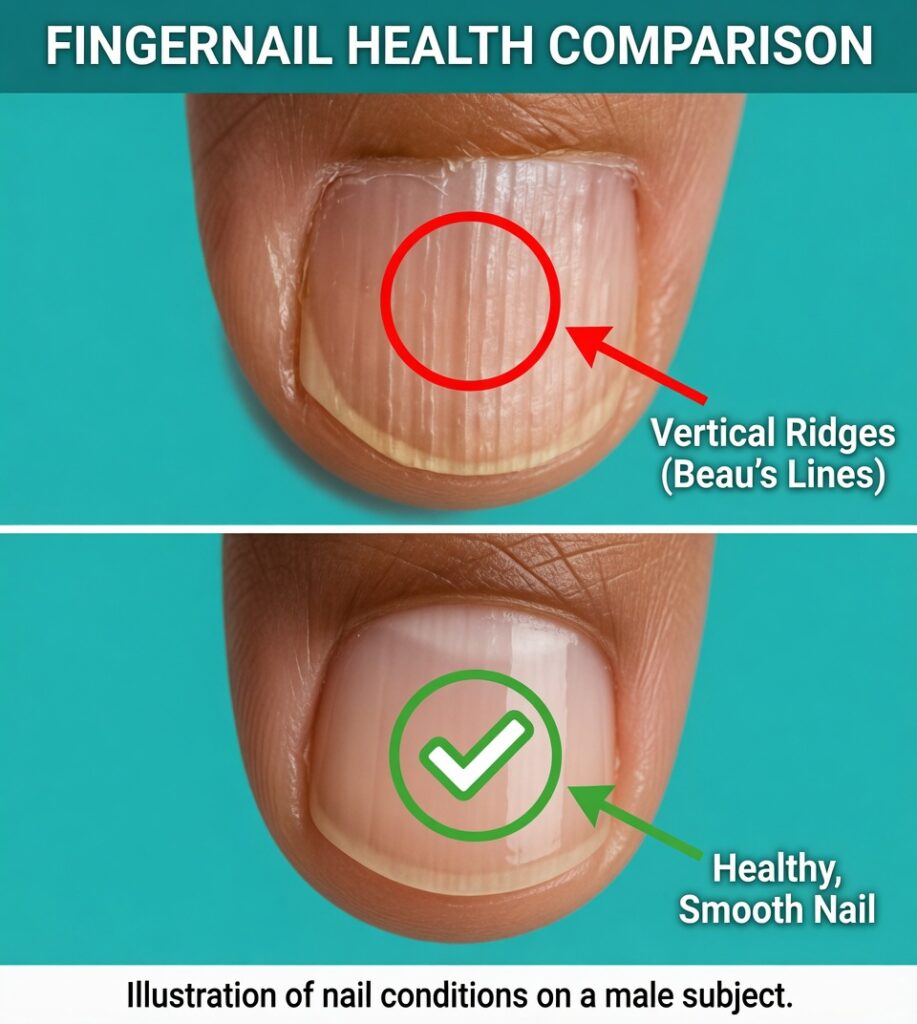
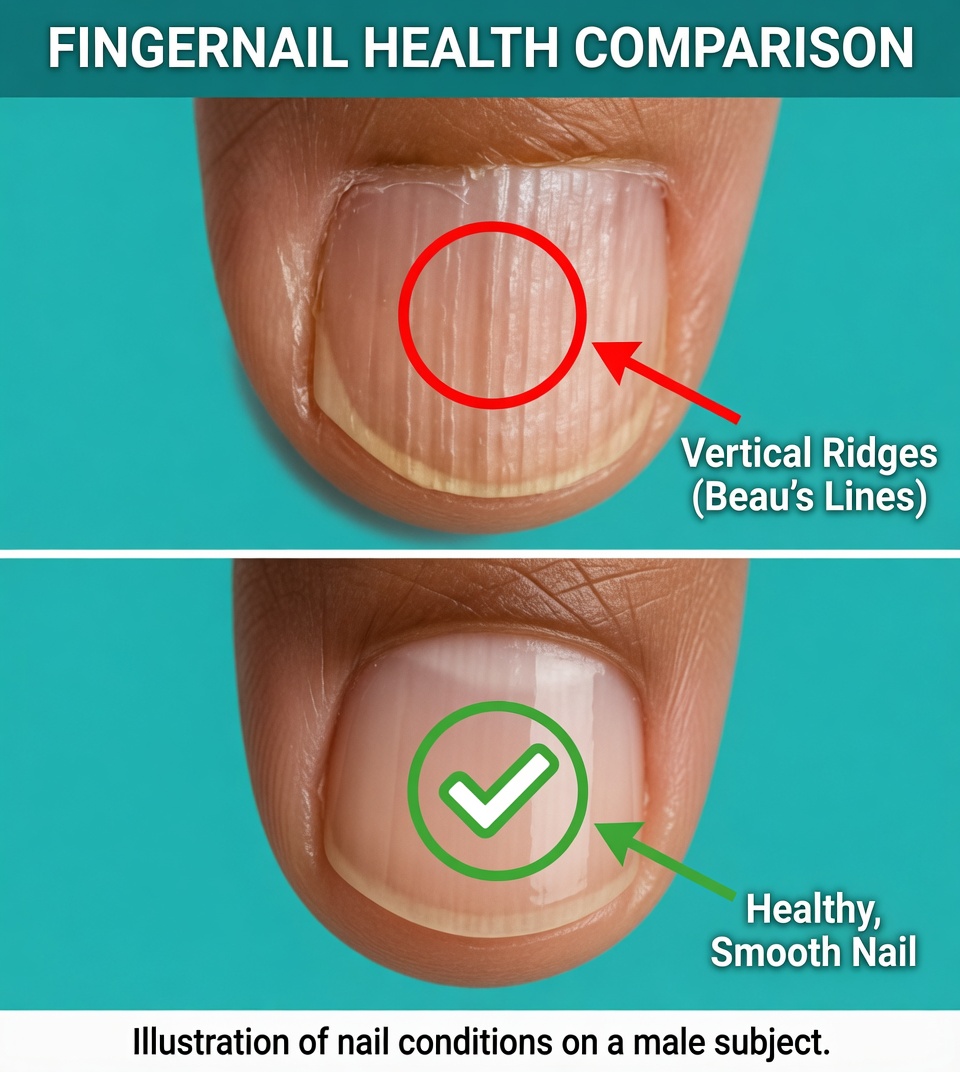
1. Vertical Ridges (Longitudinal Ridges): Common and Often Harmless
Vertical ridges are the most frequently seen type and, in many people, they’re simply a normal change over time.
Typical causes
- Aging: Natural moisture and oil production can decrease, leaving nails drier and more ridged.
- Dehydration or dry skin: Low moisture levels can make ridges more noticeable.
- Possible nutrient gaps: Low vitamin B12 or minerals such as magnesium may contribute to nail texture changes.
When vertical ridges may need attention
Consider medical advice if ridges come with other changes, such as:
- new discoloration
- splitting or excessive brittleness
- thickening or distortion
In some cases, these combinations may be linked to issues like anemia or thyroid disorders.
2. Horizontal Ridges (Beau’s Lines): Often a Bigger Warning Sign
Horizontal ridges—commonly called Beau’s lines—run across the nail and may suggest that nail growth temporarily slowed or stopped.
Possible causes
- Serious illness or major physical stress: High fever, severe infections, or surgery can interrupt nail growth.
- Nail trauma: An injury to the nail bed can leave a line that grows out over time.
- Significant nutritional deficiency: Severe lack of zinc or protein may contribute.
- Chronic health conditions: Conditions such as diabetes, psoriasis, or circulation problems may be involved.
- Chemotherapy: Cancer treatments can affect fast-growing cells, including nail-forming cells.
When to see a healthcare professional
Seek medical guidance if:
- multiple nails develop deep horizontal grooves
- lines appear suddenly without an obvious illness or injury
- ridges worsen quickly or occur alongside other symptoms
3. Ridges Plus Nail Discoloration: What Different Colors Can Suggest
When ridges occur together with a color change, it may point to something beyond normal aging or dryness.
- Yellow or brown nails: Often linked to fungal infection, but can also be associated with certain lung or thyroid problems.
- Blue or purple nails: May indicate poor circulation or low oxygen levels.
- White nails with ridging: Sometimes connected to liver-related conditions, including hepatitis.
Because color changes can have many causes, it’s worth getting persistent or unexplained changes checked.
4. How to Support Strong, Healthy Nails
If ridges are mild and linked to dryness, age, or everyday wear and tear, simple habits can improve nail health.
- Hydrate and moisturize: Drink enough water and apply cuticle/nail moisturizer regularly.
- Improve nutrition: Focus on foods with biotin, iron, zinc, and omega-3s (leafy greens, nuts, seeds, fish).
- Protect your hands: Wear gloves for cleaning or chemical exposure and limit harsh nail products.
- Go easy on buffing: Over-filing and aggressive manicures can weaken nails and make ridges more noticeable.
When Should You See a Doctor About Nail Ridges?
Most nail ridges are not dangerous, but it’s smart to get medical advice if you notice:
- sudden, deep grooves or rapid changes
- ridges with pain, swelling, or discoloration
- horizontal ridges on several nails
- major changes in thickness, texture, or shape
- the nail lifting or separating from the nail bed
Final Takeaway
Fingernail ridges can be purely cosmetic—especially vertical ridges that appear gradually with age. However, horizontal ridges, sudden changes, or ridges paired with unusual color shifts can sometimes signal a health issue worth investigating.
If you’re unsure, or if nail changes appear alongside other symptoms, checking in with a healthcare professional is the safest next step.