Nancy’s Story: How One Woman Started to Reverse Severe Metabolic Disease With Lifestyle Changes
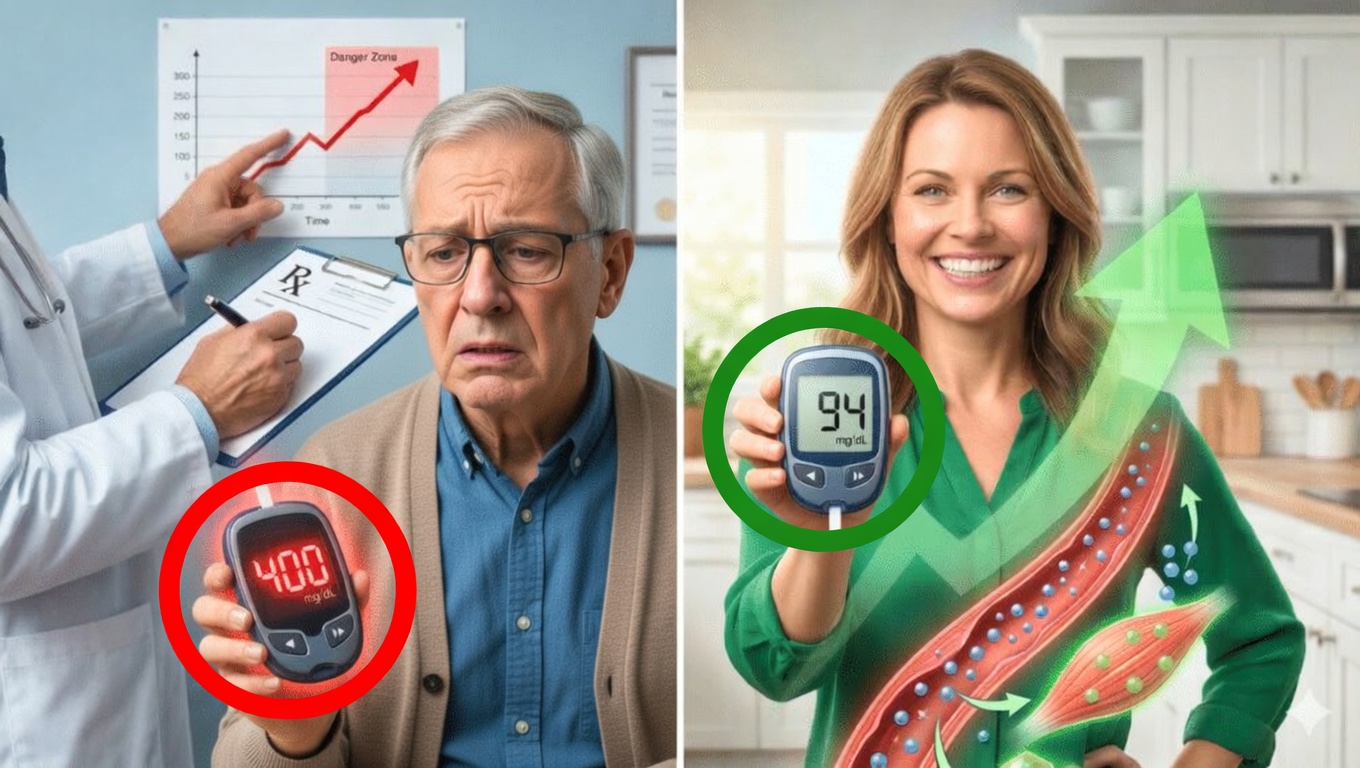
Imagine sitting in your doctor’s office and hearing that your blood sugar is close to 400, your triglycerides are above 700, and you have advanced fatty liver disease. For many people, it would feel like a life-long sentence.
For Nancy, a 41-year-old professional who had been sacrificing her health to keep up with a demanding job, this was not a theoretical scenario—it was her reality.
Confronted with the prospect of multiple daily medications and the possibility of lifelong insulin injections, Nancy made a different choice. She decided not just to “manage” her conditions, but to search for the underlying cause and reclaim her health. Her experience, inspired by the work of Dr. Antonio Cota, shows how powerful targeted lifestyle changes can be in dramatically improving metabolic markers.
This is not a story about miracle teas or gimmicky cures. It’s about learning how your body works, taking responsibility for your daily habits, and using food as medicine. If you’ve ever felt paralyzed by a diagnosis or confused by conflicting medical advice, Nancy’s journey offers a clear, practical framework for healing.
Key Takeaways From Nancy’s Transformation
-
Your body sends warnings. Unexplained weight loss, constant thirst, extreme fatigue, and frequent urination are serious red flags, not “normal” signs of being busy or stressed.
-
You are more than your lab numbers. Elevated blood sugar, high triglycerides, and fatty liver often point to one primary issue: underlying metabolic dysfunction, not a collection of unrelated diseases.
-
Food can act like powerful medicine. A diet built on whole foods—high in fiber and protein, and low in refined carbohydrates—can profoundly shift your metabolic health, often more effectively than multiple medications.
-
“No time for health” is a dangerous illusion. Being “too busy to cook” is often about priorities, not actual time. Preparing your own food is a crucial investment in your long-term wellbeing.
-
Healing takes time. Years of metabolic damage cannot be undone overnight. Real recovery requires consistency, patience, and a willingness to build a new, healthier identity.
1. The Wake-Up Call: When Subtle Symptoms Turn into a Crisis
For months, Nancy’s body had been trying to get her attention.
She started losing weight unexpectedly—around one kilogram per week—despite not changing how she ate or moved. She was endlessly thirsty, getting up multiple times a night to urinate. She noticed foam in her urine. Yet, like many people, she brushed off these symptoms as “just stress” and kept pushing through her hectic schedule.
The breaking point came when she felt an odd pressure in her chest that made deep breaths difficult. Worried about a lung problem, she finally decided to see a doctor.
The test results were shocking:
- Her A1c—which reflects average blood sugar over about three months—was 13% (normal is below 5.7%).
- Her blood glucose measured 372 mg/dL.
- Her triglycerides were an alarming 740 mg/dL.
- An ultrasound confirmed Stage 3 fatty liver disease.
Nancy wasn’t just “a little off.” She was in a dangerous metabolic crisis. Her story is a powerful reminder: when your body whispers, listen—because if you ignore it, those whispers can become screams.
2. Prescription Overload: A Medication for Every Symptom
Nancy left her appointments with an armful of prescriptions:
- Antibiotics for a urinary tract infection
- Metformin to lower blood sugar
- Atorvastatin for cholesterol
- Fenofibrate for triglycerides
- And, from a third doctor, the recommendation to start insulin injections immediately
Going from zero medications to almost seven different drugs at once was overwhelming. It clashed with Nancy’s belief that the human body, when supported properly, has a strong capacity to heal.
This situation reflects a common pattern in modern healthcare: each abnormal lab value gets its own pill.
- High triglycerides? One medication.
- High blood glucose? Another.
- Liver fat? Maybe something else.
While medications can be essential and even life-saving—especially in emergencies—they often focus on controlling symptoms rather than resolving the root cause.
Nancy sensed that if she followed this path without question, she might become dependent on these drugs for the rest of her life, never truly giving her body a chance to recover. That fear pushed her to look for a different approach.
3. The Turning Point: Discovering the Real Root Cause
In the middle of the chaos, Nancy had a crucial realization: she did not have five or six separate diseases. She had one major problem with her metabolism, showing up in multiple ways—high blood sugar, high triglycerides, fatty liver, and rapid weight loss.
The diagnosis that scared her most was Stage 3 fatty liver disease. A quick online search revealed that, if untreated, it can progress to:
- Cirrhosis
- Liver failure
- Even liver cancer
This knowledge became her wake-up call. Nancy decided to focus her efforts on healing her liver, reasoning that if she addressed the core metabolic dysfunction, her other conditions—blood sugar, triglycerides, and overall energy—would improve as well.
This mindset shift is powerful. When you see your health problems as connected pieces of one bigger puzzle, you stop chasing individual symptoms and start addressing the central system: your overall metabolic health.
For Nancy, that meant taking a hard look at her diet, stress levels, and lack of self-care—and committing to change them.
4. Food as Medicine: Simple Changes With Massive Impact
Motivated by both fear and hope, Nancy turned to nutrition as her primary tool. With guidance from a nutritionist—and despite it being the holiday season—she made sweeping changes right away. Her plan was straightforward, but highly targeted:
-
She dramatically cut refined carbohydrates.
Foods like bread, white rice, tortillas, pasta, and potatoes were sharply reduced. These rapidly convert to sugar in the bloodstream, placing heavy stress on the liver and pancreas. -
Vegetables became the base of every meal.
Breakfast, lunch, and dinner all centered around high-fiber vegetables. This approach:- Delivers essential vitamins and minerals
- Slows down sugar absorption
- Increases satiety, making it easier to eat less overall
-
Protein became a non-negotiable.
Alongside vegetables, high-quality protein was added to each meal to support muscle mass, stabilize appetite, and promote steady energy. -
She started cooking at home.
This may have been the most transformative step. Nancy had long claimed she was “too busy to cook,” relying on convenience foods and restaurant meals. Faced with a serious diagnosis, she realized she could not afford that excuse anymore.She discovered that preparing simple, whole-food meals—like eggs with sliced jicama and cucumber—didn’t require an hour in the kitchen. By cooking for herself, she controlled:
- The ingredients
- The portion sizes
- The added sugars and unhealthy fats
In taking control of her kitchen, she took control of her metabolism.
5. One Month Later: Stunning Results From Consistent Effort
Nancy didn’t have to wait long to see the impact of her new lifestyle. Just one month after her diagnosis, she repeated her blood tests.
The changes were dramatic:
- Her fasting glucose fell from the high 300s to 94 mg/dL—solidly within the normal range.
- Her triglycerides dropped by more than 500 points, reaching 235 mg/dL.
- Her A1c decreased from 13% to 8.6%—a reduction of over 4 points in about a month, a shift that can take many people a year or more to achieve with medication alone.
Equally important, her symptoms resolved:
- The unquenchable thirst disappeared.
- The frequent nighttime urination stopped.
- The crushing fatigue lifted.
- The rapid, unhealthy weight loss stabilized.
Nancy continued to lose weight, but this time at a slow, steady pace, preserving muscle and primarily losing fat.
She achieved all of this while taking only one of the prescribed medications—metformin—and allowing her new way of eating and living to do most of the work.
6. The Journey Continues: Healing Takes Time
Although Nancy’s first month brought extraordinary progress, her journey is far from complete.
Her fasting blood sugar still hovers slightly above 100 mg/dL at times, and she is still working to completely reverse her fatty liver disease. She’s also exploring how chronic stress and elevated cortisol may have contributed to her metabolic breakdown.
This is an essential reality check: healing is not a quick fix.
You are often trying to undo years—or decades—of:
- Poor sleep
- Ultra-processed foods
- Chronic stress
- Sedentary habits
Progress can be uneven. There will be plateaus. There may be days when the scale doesn’t move or the numbers don’t improve as quickly as you want.
Instead of demanding instant change from your body, the real work is to:
- Show up consistently
- Honor the process
- Keep choosing the habits that support who you want to become
For Nancy, that means continuing to eat real, nutrient-dense food, prioritizing movement and rest, managing stress, and seeing herself not as a “sick person,” but as someone actively rebuilding her health.
Her story is proof that even in the face of terrifying lab results—blood sugar near 400, triglycerides over 700, advanced fatty liver—you are not powerless. By addressing the root causes of metabolic dysfunction and using food as medicine, you can dramatically change the trajectory of your health.