
Why Your Heart Is Most Vulnerable in the Morning
Videos that blame icy morning showers for triggering heart attacks usually get one thing partly right: a sudden shock, like stepping under freezing water, can be dangerous if your heart and arteries are already in bad shape. If you live with coronary artery disease, previous heart attacks, or arrhythmias, adding a strong stressor is never a good idea.
But focusing only on cold showers misses the real issue.
Every morning, your body switches on a built‑in biological program that quietly raises your heart attack risk—whether or not you ever touch cold water. It happens to everyone, every day, and you barely notice it.
Imagine your arteries have a round‑the‑clock cleaning crew that dissolves tiny clots before they cause trouble. Around dawn, just when your circulation becomes most unstable, that crew is ordered to stop working. If a blockage appears at that moment, there may be no system in place to clear it.
This helps explain why most heart attacks occur between 6 a.m. and 10 a.m. In this guide, inspired by the explanations of Dr. Alberto Sanagustín, you’ll see:
- What your body is doing at dawn.
- Why this ancient survival program can backfire today.
- How a very simple action—something you can keep beside your bed—can help your heart during this high‑risk window.
Key Takeaways
-
Morning is Prime Time for Heart Attacks: Most heart attacks happen between about 6 a.m. and 10 a.m. because multiple biological changes converge at once.
-
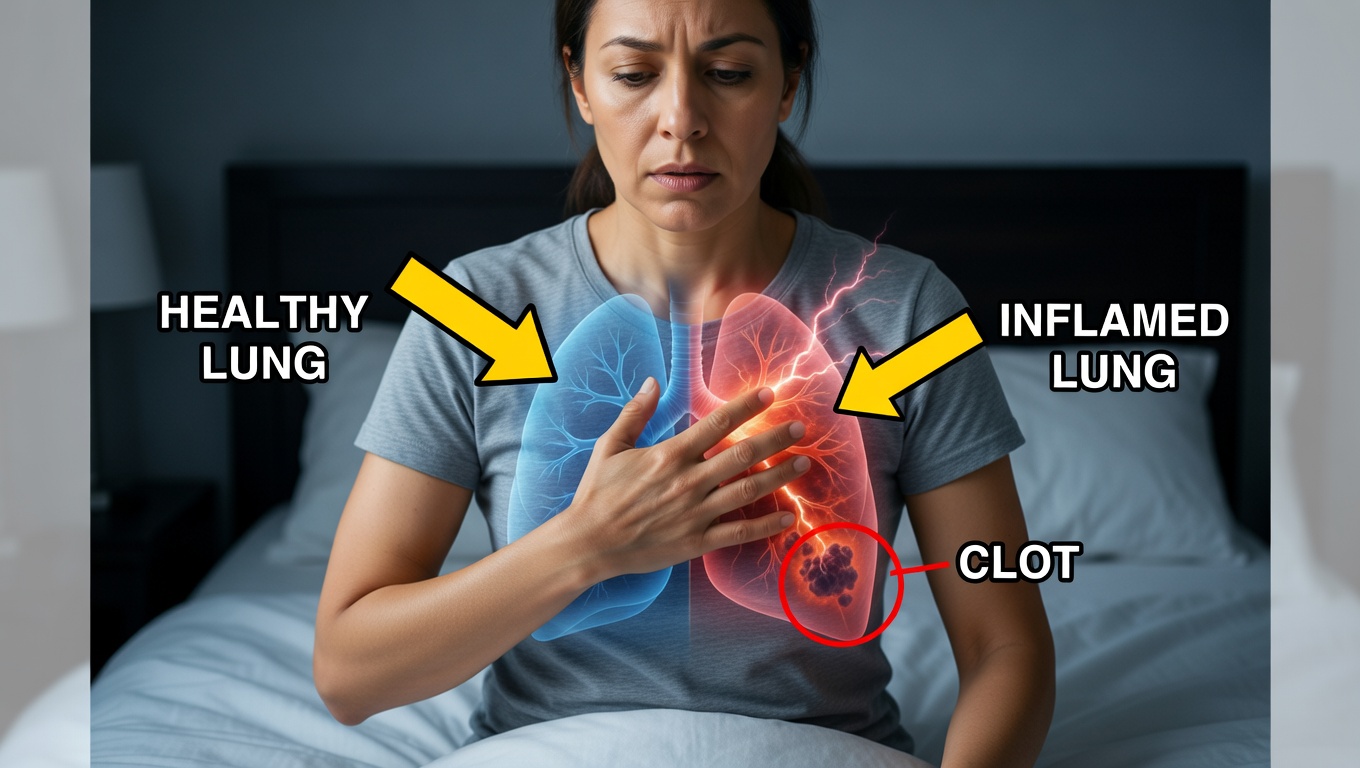
A “Perfect Storm” in the Arteries: Stress hormones, thicker blood from nighttime dehydration, and a temporarily disabled clot‑dissolving system create a highly dangerous environment inside your blood vessels.
-
Evolution, Not a Defect: This morning program evolved to protect our ancestors from bleeding to death after injuries at daybreak. In arteries narrowed by age and plaque, the same mechanism can be harmful.
-
Hidden Nighttime Stressors: Uncontrolled high blood pressure and sleep apnea keep your body under stress all night, sharply amplifying your morning heart attack risk.
-
A Simple Protective Habit: Drinking a glass of room‑temperature water as soon as you wake—before you even get out of bed—can help prepare your circulation for the day and reduce some of that morning strain.
1. The Dawn “Perfect Storm” Inside Your Arteries
Think of your body as a car left outside overnight in winter. The oil is thick, the engine is cold, and then you suddenly slam your foot on the accelerator.
That’s essentially what happens when you wake up.
As soon as your brain registers that you’re awake, it releases stress hormones—mainly cortisol and adrenaline. This is a normal “fight‑or‑flight” response designed to get you ready for action: stand up, move, face the day.
But this comes with side effects:
- Arteries stiffen and tighten. The blood vessels narrow and lose some flexibility.
- Heart rate and force increase. Your heart, which was beating calmly, is ordered to pump harder and faster.
- Blood pressure rises sharply. The blood hits your artery walls with more force.
If your blood pressure is already high or your arteries contain cholesterol plaques and calcification, that surge can act like a sudden pressure spike in an old, rusty pipe—making it easier for plaque to crack or rupture.
And that’s only part of the problem.
After six to eight hours without drinking, you’re mildly dehydrated. Your blood behaves less like water and more like a thicker fluid. Thicker blood:
- Flows more slowly.
- Is more prone to clumping and clotting.
So, at dawn you often have:
- Rigid, narrowed arteries
- Thicker, more clot‑prone blood
- A powerful pressure surge
That alone is dangerous—but what makes this truly risky is what happens next: your body intentionally turns off its main clot‑dissolving system.
2. The Ancient Survival Switch That Backfires Today
Why is a clot that forms in the morning often more dangerous than one at other times of the day?
Picture your bloodstream as a busy highway system. All day long, a maintenance crew patrols the roads, clearing minor accidents and keeping traffic moving. Inside your body, this “crew” is your fibrinolytic system—the mechanism responsible for breaking down small clots.
At dawn, a strict supervisor shows up: PAI‑1 (Plasminogen Activator Inhibitor‑1). Its job is to tell the cleanup crew to stand down.
- PAI‑1 blocks the enzymes that dissolve clots.
- It is naturally highest in the early morning hours.
- It effectively disables your clot‑busting system right when stress hormones and thick blood are already raising the risk of clot formation.
Here’s what can happen:
- A cholesterol plaque in a coronary artery cracks due to the morning pressure surge.
- Your body quickly forms a clot to “repair” the damage.
- Because PAI‑1 is high, the clot‑dissolving system is suppressed.
- The clot can keep growing until it blocks the artery completely—causing a heart attack.
You might ask: if PAI‑1 can be so dangerous, why does the body release it?
Because originally, this was about survival, not heart disease.
- Thousands of years ago, people were most active—and most likely to be injured—shortly after dawn.
- To prevent someone from bleeding to death after a cut or wound, the body intentionally reduced its clot‑breaking activity so clots would form quickly and stay put.
- In a young, healthy person with clean arteries, this is an excellent defense mechanism.
In a 60‑ or 70‑year‑old with plaque‑lined arteries, however, this same “quick‑setting cement” can turn a small plaque rupture into a complete and deadly blockage.

3. Morning Blood Pressure Surges: The Misleading Calm at Midday
Many people tell their doctor, “My blood pressure is sky‑high when I wake up, but by lunchtime it looks fine.” That pattern is more concerning than it seems.
In a healthy system, your blood pressure drops at night. This “dipping” phase is like parking a car in the garage and idling the engine so it can cool down and rest.
If you have poorly controlled hypertension, that doesn’t happen:
- Your pressure stays elevated during the night.
- Your heart and arteries never get a proper rest.
- Your body wakes up already under strain.
Then morning arrives:
- You get the normal wake‑up burst of adrenaline and cortisol.
- But instead of acting on a calm system, it hits a cardiovascular “engine” that has been revving all night.
Result: your blood pressure can spike to very high levels as soon as you open your eyes or stand up.
Later in the day, as you move around and take your medication, the numbers may look “normal.” But that apparent improvement is misleading—you’ve already spent the early hours under intense, silent stress.
For that reason:
- The most honest time to check your blood pressure is in the morning.
- Do it before breakfast and before taking your medication.
- This reading shows your true baseline and helps your doctor adjust treatment more accurately.
Ignoring morning readings and only measuring at midday can mask a serious risk.
4. The Silent Saboteur: Snoring, Sleep Apnea, and Morning Heart Attacks
What does loud snoring have to do with a heart attack at 8 a.m.? A lot, if that snoring is part of sleep apnea.
Imagine your house has a faulty fire alarm that blares for a second or two every hour. You never fully wake up and run outside, but each time it sounds:
- Your heart jumps.
- Your body releases stress hormones.
- Your nervous system goes on alert.
By morning, you’d feel drained and on edge. That’s what happens in sleep apnea.
In obstructive sleep apnea:
- The airway repeatedly collapses during sleep.
- Snoring suddenly stops.
- You stop breathing for a few seconds (the apnea).
- Oxygen levels drop.
- Your brain panics and briefly “wakes” you just enough to restart breathing.
Each of these episodes:
- Triggers a surge in heart rate and blood pressure.
- Activates your stress response over and over through the night.
- Prevents your body from achieving deep, restorative sleep.
So when morning comes:
- Your system isn’t starting from a resting state—it’s already overheated.
- The usual morning spike in blood pressure and stress hormones hits on top of sustained nighttime stress.
- This greatly increases the risk that a plaque rupture or clot in the coronary arteries will occur in those early hours.
Irregular sleep schedules, frequent night shifts, and chronic sleep deprivation compound the problem. They repeatedly bend the “wood” of your cardiovascular system until it’s more likely to crack when pressure is highest.
5. The Head Rush: When Standing Up Becomes a Risky Move
Have you ever jumped out of bed and felt the room spin, your legs go weak, or your vision dim for a moment? That “head rush” is more than an annoyance—it’s a sign of how fragile your circulation can be at dawn.
While you’re lying down:
- Blood is fairly evenly distributed throughout your body.
When you stand up suddenly:
- Gravity pulls a significant amount of blood toward your legs and lower body, like tipping a bucket.
- This temporarily reduces the amount of blood returning to your heart.
- Blood pressure can drop for a few seconds, and your brain gets slightly less blood—hence the dizziness.
To correct this, your body reacts quickly by:
- Tightening your blood vessels.
- Speeding up your heart rate.
- Releasing more stress hormones to boost blood pressure.
For a healthy young person, this is usually harmless. But early in the morning, in someone with:
- Stiff, plaque‑narrowed arteries,
- Uncontrolled hypertension,
- Or nighttime stress from sleep apnea,
that rapid correction can become another sudden shock to the cardiovascular system—exactly when your blood is thicker and your clot‑dissolving system is partially shut down.
Simple adjustments can reduce this risk:
- Before getting up, sit on the edge of the bed for a minute.
- Move your feet and ankles to gently activate blood flow.
- Stand up slowly instead of in one quick motion.
- Combine this with drinking water on waking (see next section) to support your circulation.
6. The Simple Morning Habit That Helps Protect Your Heart
We’ve talked about cold showers, hormones, PAI‑1, blood pressure, and sleep apnea. Now, what can you actually do in those first minutes after waking to support your heart?
One practical, low‑tech step is this:
Keep a glass or small bottle of room‑temperature water by your bed and drink it as soon as you wake up, before standing up.
This simple gesture may help in several ways:
-
Rehydrates your blood: After a night without fluids, your blood is relatively concentrated. Drinking water helps restore volume and makes your blood less viscous, which can lower the tendency to form clots.
-
Supports blood pressure stability: A moderate intake of water on waking can help your body better manage the transition from lying down to standing, reducing extreme swings in blood pressure.
-
Gently “starts” your system: Instead of stressing your heart with sudden movement or a shock, you’re giving your circulatory system a smoother, more gradual wake‑up.
To put this into practice:
- Prepare beforehand: Each night, place a glass or bottle of room‑temperature water on your nightstand.
- Drink before you move: In the morning, drink it slowly while you’re still lying or sitting in bed.
- Then get up calmly: After finishing the water, sit on the edge of the bed for a minute, move your legs, and stand up without rushing.
Of course, this habit does not replace proper medical treatment for hypertension, heart disease, or sleep apnea. But combined with:
- Good blood pressure control,
- Treatment for sleep apnea when needed,
- Regular check‑ups,
- And a heart‑healthy lifestyle,
it can help lower some of the specific morning risks your cardiovascular system faces.
Final Thoughts
Most heart attacks don’t happen randomly—they follow a pattern. The early morning hours create a “perfect storm” of:
- Stress hormones,
- Higher blood thickness,
- Suppressed clot‑dissolving activity,
- Blood pressure surges,
- And, in many people, added strain from hypertension and sleep apnea.
Cold showers may add an extra shock, especially in vulnerable individuals, but they’re not the main villain. The real issue is the predictable, built‑in morning program your body runs every day—an ancient survival mechanism that can be dangerous when arteries are already diseased.
Understanding what happens inside your body between 6 a.m. and 10 a.m., and adopting simple habits like:
- Monitoring blood pressure in the morning,
- Treating snoring and sleep apnea,
- Standing up slowly,
- And drinking a glass of water as soon as you wake,
can make this daily “danger window” much safer for your heart.
These explanations are based on the educational insights of Dr. Alberto Sanagustín and current understanding of morning cardiovascular risk.