Can You Drink Too Much Water? What Your Kidneys Really Need
What if your daily water habit is doing more harm than good? That classic “eight glasses a day” advice—about 1.9 liters—sounds familiar, but it isn’t based on solid science. In fact, overdoing water can stress your kidneys just as much as not drinking enough.
Drawing on insights from Dr. Sean Hashmi, a board-certified nephrologist, this guide breaks down the biggest hydration myths and explains how much water your kidneys actually need to stay healthy.
Key Takeaways
- The real, evidence-based guideline for most healthy adults is 2–3 liters of total fluid per day—not “eight glasses.”
- Drinking more than 8 liters a day can be dangerous and may cause low sodium (hyponatremia).
- Pale, lemonade-colored urine is a good sign you’re well hydrated.
- Many people with kidney disease need to limit fluids to under 1.5 liters daily.
- Every additional 500 ml of water per day can cut kidney stone risk by about 7%—steady intake is key.
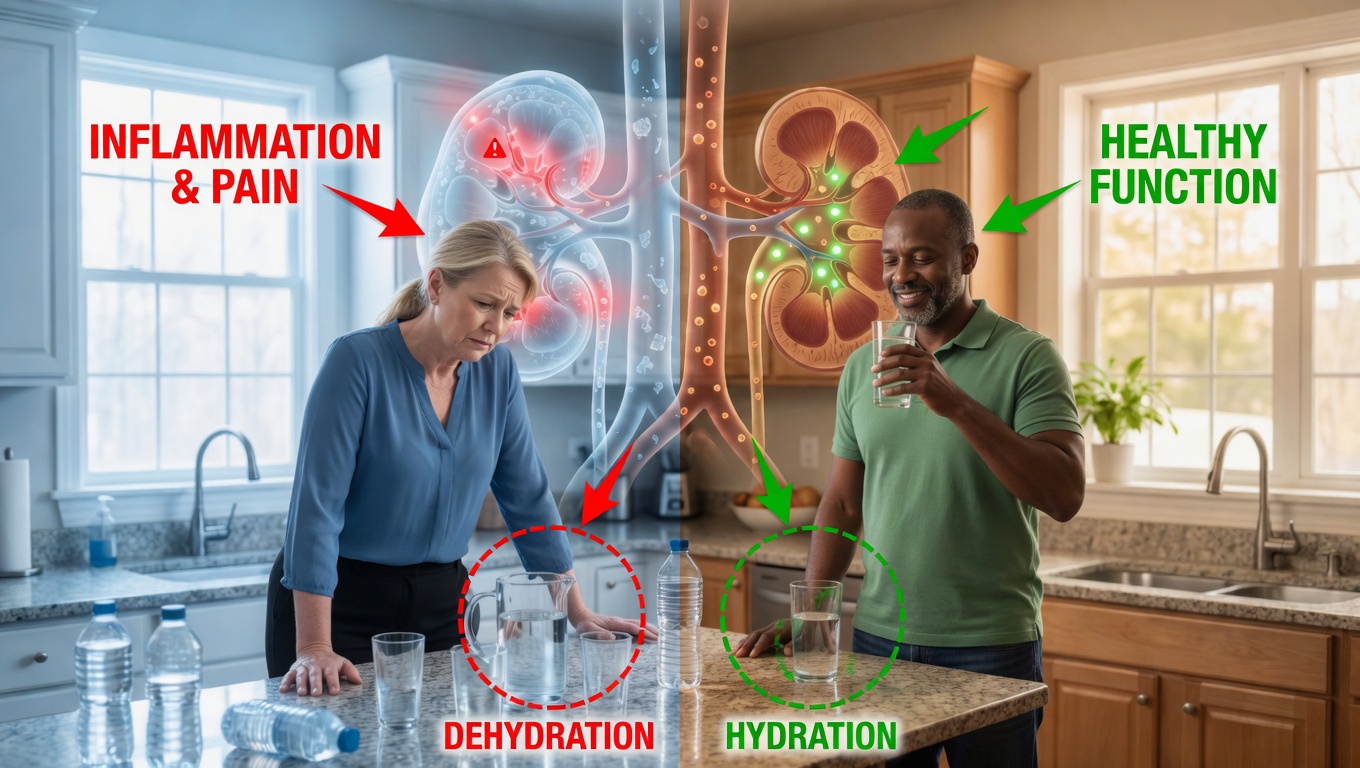
Let’s look at what research shows, so you can confidently set a daily hydration routine that supports your kidneys and overall health.
1. Why Science Recommends 2–3 Liters, Not “Eight Glasses”
Forget the catchy but inaccurate “8 glasses” rule. High-quality research supports a total daily fluid intake of about 2–3 liters for most healthy adults.
“Total fluid” includes:
- Plain water
- Other drinks like coffee, tea, and milk
- Water from food (usually around 20% of your total intake)
A large 2021 study published in Medicine found that people who regularly consumed 2–3 liters of fluid a day had about a 90% lower risk of developing chronic kidney disease (CKD).
Why? Your kidneys are busy 24/7 maintaining balance in your body (homeostasis). Each kidney contains around one million tiny filters and cleans your entire blood volume roughly 40 times per day. To do that well, they need enough—but not excessive—fluid.
Bottom line: For most healthy adults, 2–3 liters of total fluid a day is not only safe, it’s ideal for long-term kidney health.
2. The Hidden Risk of Overhydration: Hyponatremia
More water is not always better. Drinking extremely large amounts—typically more than 8 liters in a day, especially over a short time—can overload your kidneys.
The kidneys can usually handle only about 0.8–1 liter of water per hour. If you consistently exceed that, you increase your risk of hyponatremia, a condition where the sodium in your blood drops to dangerously low levels.
Common early symptoms include:
- Headache
- Nausea
- Fatigue
If it worsens, hyponatremia can lead to:
- Confusion
- Muscle cramps
- Seizures
- Coma
- Death in severe cases
Intensive care units have treated people who drank 10–15 liters a day—often due to “hydration challenges” or extreme wellness routines—and ended up critically ill.
If you feel unwell after forcing yourself to drink large amounts of water, do not ignore it. It may be a warning sign of overhydration.
3. The Myth of the “8 x 8” Rule
The “8 x 8” rule—eight 8-ounce (about 240 ml) glasses a day—sounds scientific, but it’s not.
Here’s what actually happened:
- In 1945, a guideline suggested humans need roughly 2.5 liters of water per day.
- That recommendation included the water found in food.
- Over time, this got simplified and misinterpreted into the “8 glasses of water a day” slogan.
Modern reviews, including one by Dr. Heinz Valtin in the American Journal of Physiology, found no scientific evidence supporting “8 x 8” as a universal rule for healthy adults living in normal conditions.
What to focus on instead:
- Aim for 2–3 liters of total fluid daily.
- Adjust for your body size, activity level, climate, and health status.
4. The Easiest Hydration Test: Look at Your Urine
You don’t need fancy trackers to know if you’re hydrated. Your urine color is a simple and reliable guide:
- Pale yellow (like light lemonade): Good hydration
- Completely clear: You may be drinking more than you need
- Dark yellow or amber (like apple juice): You probably need more fluids
Most healthy adults urinate about 6–8 times a day, though 4–10 times can still be normal. Frequency alone isn’t the best indicator—color is more informative than counting bathroom visits.
5. Why People with Kidney Disease Often Need Less Water
If you have chronic kidney disease (CKD)—particularly stage 3B, stage 4, or if you are on dialysis—your fluid needs are very different from those of someone with healthy kidneys.
Damaged kidneys can’t get rid of extra water effectively. That means fluid can build up in your body, leading to:
- Swelling in the legs and ankles
- Fluid in the lungs (shortness of breath)
- High blood pressure and strain on the heart
For many people with moderate to advanced CKD, fluid intake is limited to under 1.5 liters per day, and sometimes less, depending on individual circumstances.
If you have kidney disease, never follow generic “drink more water” advice. Always follow your nephrologist’s specific instructions.
6. How Extra Water Helps Prevent Kidney Stones
Here’s a clear win for hydration: more water can significantly lower your risk of kidney stones.
Research shows:
- Every additional 500 ml (about 2 cups) of water per day can cut your risk of kidney stones by about 7%.
- Increasing total fluid from 1.5 liters to 2.5 liters can reduce your stone risk by roughly 14%.
Just as important as the total amount is how you drink:
- People who sip water consistently throughout the day—not just in big bursts—have up to a 40% lower risk of forming stones.
Steady hydration helps keep your urine less concentrated, which makes it harder for crystals to form and turn into stones.
7. When Your Daily Water Needs Change
Your ideal fluid intake isn’t fixed. It changes with environment, activity, age, and health. Here are general adjustments for healthy adults (always confirm with your doctor if you have medical conditions):
- Hot weather: Add about 500–750 ml per day
- Exercise: Add 400–800 ml during and after workouts, depending on intensity and duration
- Fever: Add roughly 300–500 ml for each degree above normal body temperature
- Diarrhea or vomiting: Add 500 ml to 1 liter extra to replace lost fluids
- Pregnancy (mid to late): Add about 300 ml per day
- Age 65+: Thirst sensation can drop by up to 40%, so don’t rely only on feeling thirsty—keep an eye on urine color instead
- Heart or liver problems: You may need to limit fluids to less than 1 liter a day—only do this under medical supervision.
8. Do Coffee, Tea, and Milk Count as Hydration?
For most regular coffee and tea drinkers, these beverages do count toward your daily fluid total.
- Coffee and tea: While they have a mild diuretic effect, your body still retains most of the water if you consume them regularly.
- Milk (dairy or plant-based): Often hydrates even better than water because it contains electrolytes like sodium and potassium that help your body hold onto fluid.
However:
- Alcohol: Even though it’s a liquid, it can dehydrate you and provides no hydration benefits. It should be minimized, especially for kidney and liver health.
- Sugary drinks: Soft drinks, sweetened juices, and energy drinks are poor hydration choices. High sugar content drags extra water into the urine, increasing the risk of dehydration and stressing the kidneys and metabolism.
For optimal kidney health, prioritize water, unsweetened tea or coffee, and low-sugar or sugar-free drinks.
9. Hydration for Prevention vs. Treatment of Kidney Disease
Water is powerful as a preventive strategy, not as a cure.
- People who drink 2–3 liters of total fluid daily tend to have a lower risk of developing chronic kidney disease.
- But once kidney disease is moderate or advanced, drinking extra water beyond medical recommendations does not repair the kidneys and can even make things worse by causing fluid overload.
If you already have CKD, the goal isn’t to “flush the kidneys” with more water. The goal is to follow a personalized fluid plan designed by your healthcare team.
10. Simple Habits to Build a Healthy Hydration Routine
Here are practical strategies to hit your daily fluid goals safely:
- Start your day with 500 ml (about 2 glasses) of water shortly after waking.
- Drink a 250 ml glass before each meal—breakfast, lunch, and dinner.
- Avoid drinking more than 1 liter per hour to protect your kidneys and prevent hyponatremia.
- Stop drinking 2–4 hours before bedtime, especially if you have prostate issues or frequently wake to urinate at night.
- Use the “gulp estimate” if you like visuals:
- One normal gulp is roughly 30 ml
- A daily target of 70–100 gulps can help you reach around 2–3 liters total (from all fluids)
Choose the strategies that fit your lifestyle so hydration becomes automatic, not a chore.
Conclusion: Evidence-Based Rules for Kidney-Friendly Hydration
To support your kidneys and avoid common hydration myths, keep these science-backed principles in mind:
- Aim for 2–3 liters of total fluid a day (from all drinks and food) if you’re a healthy adult, unless your doctor advises differently.
- Avoid extreme intake: Consuming more than 8 liters per day can be dangerous and may lead to low sodium (hyponatremia).
- Use urine color as your guide: Pale yellow = well hydrated.
- If you have kidney disease, follow your nephrologist’s fluid limits, which are often under 1.5 liters per day.
- Consistent hydration throughout the day helps lower the risk of kidney stones and supports long-term kidney function.
Caring for your kidneys is an investment in your future health. Share these facts with anyone confused about how much water to drink—clear, evidence-based hydration habits can truly make a difference.
Source: Insights based on the work of Dr. Sean Hashmi, board-certified nephrologist.