How to Build Muscle With Bodyweight Training
If your goal is to gain muscle using only bodyweight exercises, you are in the right place.
Maybe you have seen impressive calisthenics athletes like Frank Medrano online and wondered whether that kind of physique is possible without lifting weights. Or maybe you train at home and only have basic equipment like a floor, a chair, or a pull-up bar.
Whatever your situation, building muscle with bodyweight workouts is absolutely possible when you train the right way.
In this guide, you will learn how to use bodyweight exercises for muscle growth, how to keep progressing without adding external weight, and which movements work best for beginners and advanced trainees alike.
You May Also Like
- 27 Best Bodyweight Exercises for Your At-Home Workout
- This 3-Step Checklist Is Your Key to a Perfect Push-Up
- 5 Killer Moves to Shred Your Lower Abs in Just 3 Weeks
3 Smart Ways to Build Muscle With Bodyweight Exercises
With traditional weight training, progression is simple: you add or remove weight. Bodyweight training works differently.
Since you are using your own body as resistance, progress usually comes from changing one of three things:
- Your angle relative to gravity
- The tempo of each repetition
- The stability of the surface or equipment
Let’s break down how each method can help you gain strength and size with calisthenics.
1. Use Gravity to Adjust Difficulty
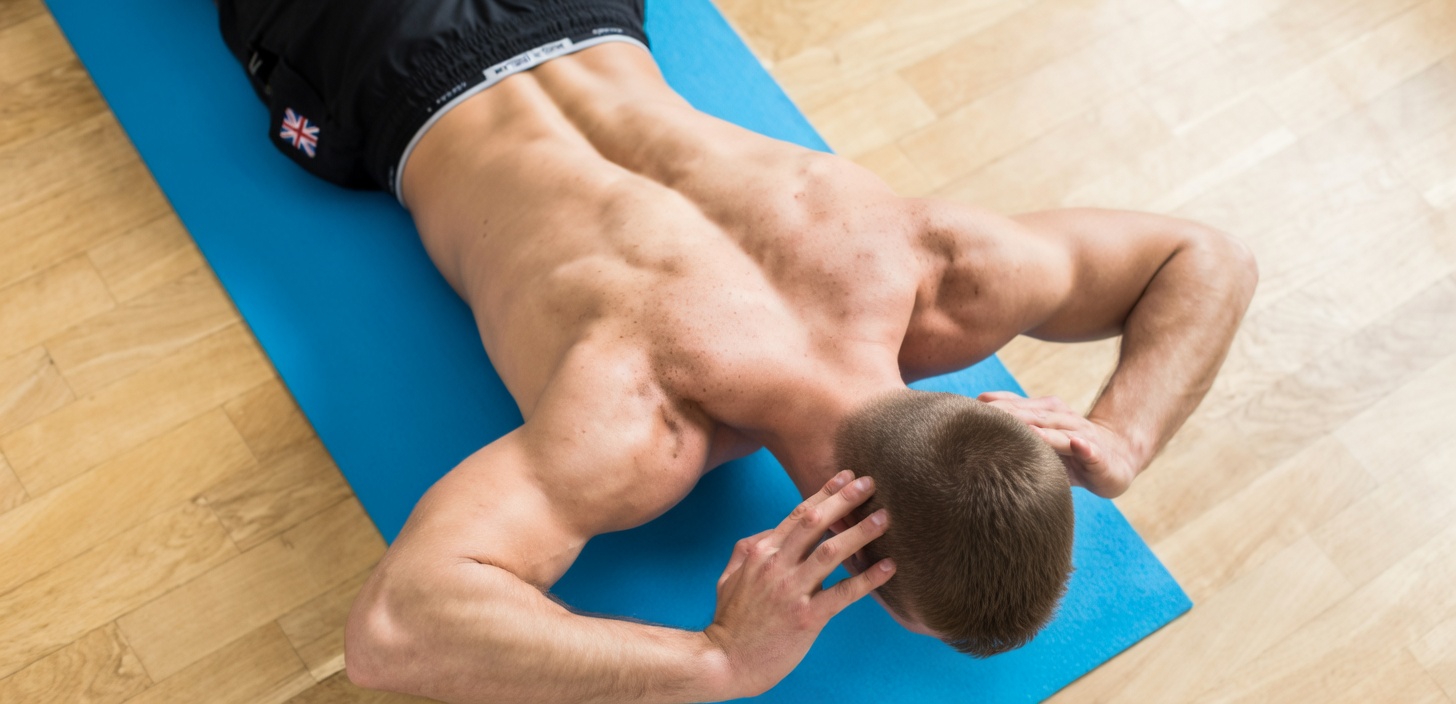
In bodyweight training, your position has a huge effect on how hard an exercise feels. This is largely due to torque, which changes based on how your body is aligned against gravity.
A simple example is the push-up:
- To make it harder, elevate your feet on a bench or box.
- To make it easier, place your hands on a bench or other raised surface.
This same principle applies to almost every bodyweight movement. By adjusting leverage and body angle, you can make an exercise more beginner-friendly or far more challenging.
2. Use Tempo to Increase Muscle Tension
Another effective way to make bodyweight exercises more demanding is to change how fast you perform them.
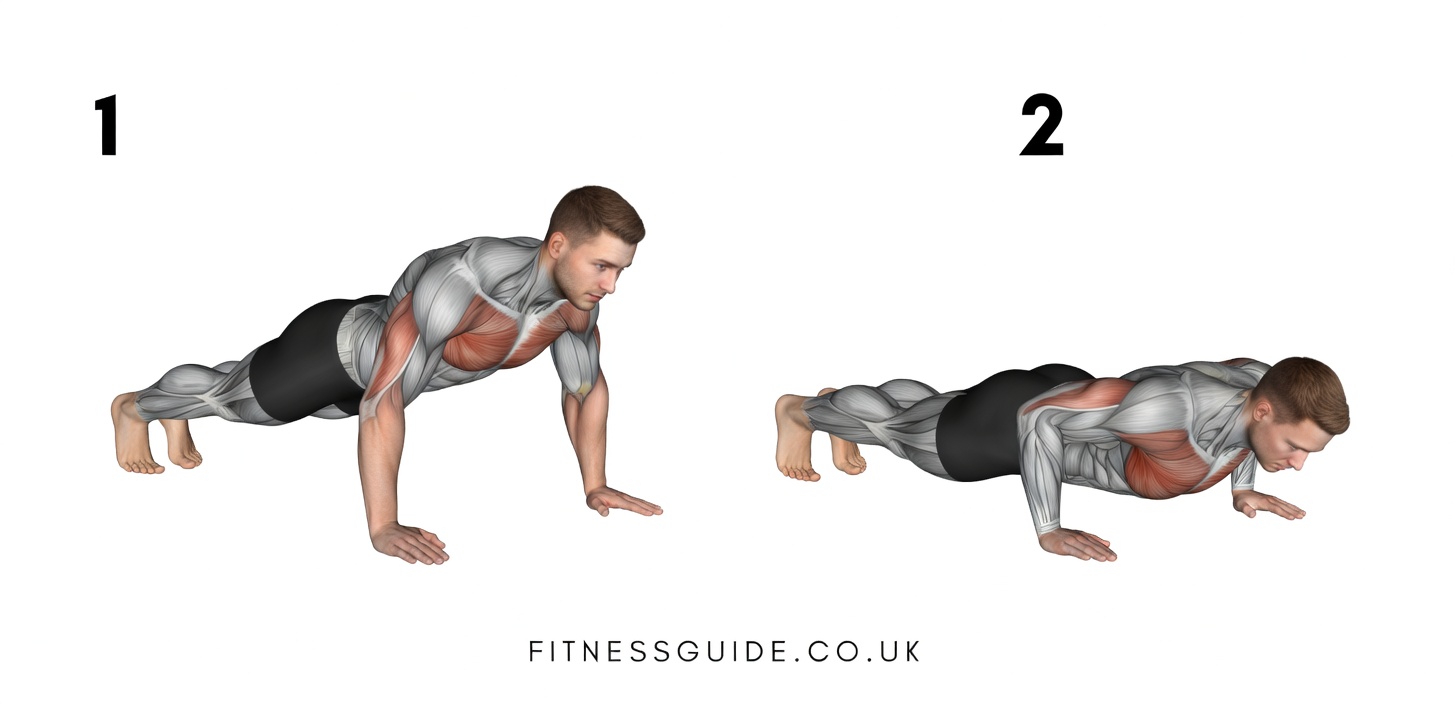
For example, during a push-up:
- The upward phase is called the concentric portion.
- The lowering phase is called the eccentric portion.
If you take 3 seconds to press up and 4 seconds to lower down, the movement becomes much tougher than a fast, casual rep. Slowing the tempo increases muscle control and raises the training demand.
On the other hand, speeding up a movement changes the nature of the exercise. Faster reps can be useful for power and plyometric training, even though they usually involve less total muscle tension over time.
Time Under Tension: Why It Matters for Muscle Growth
A key concept in bodyweight hypertrophy training is Time Under Tension (TUT).
Put simply, Time Under Tension is the amount of time your muscles are actively working during an exercise.
In many cases, increasing TUT can make your workouts more effective and lead to better long-term muscle gains.
There are also different ways muscles work during exercise, and these can influence TUT:
- Isotonic exercise: This is the most common type of movement. It includes both eccentric and concentric phases. A standard push-up, where you lower down and press back up repeatedly, is a good example.
- Isometric exercise: These are static holds. They are excellent for building strength at a specific joint angle or position. For example, you might pause at the bottom of a push-up for 10 seconds.
- Isokinetic exercise: This involves controlling movement speed while resistance changes through the range of motion. It can be useful, especially for athletes, but it usually requires specialized equipment and is less practical for most home workouts.
3. Use Unstable Surfaces to Recruit More Muscles
A third progression strategy is to reduce stability.
Standard floor push-ups are safe, effective, and great for building strength and endurance. But they do not require as much stabilization as more advanced variations.
When you perform an exercise on a less stable surface, your body must recruit more supporting muscles to stay in control.
For example:
- Push-ups on the floor mainly challenge the chest, shoulders, triceps, and core.
- Push-ups on gymnastics rings demand much more from the stabilizer muscles throughout the shoulders, chest, arms, and midsection.
This makes unstable-surface training a powerful option for advanced bodyweight athletes.
7 Bodyweight Exercises for Building Bigger Muscles
Now that the basic principles are clear, let’s look at a simple and effective bodyweight muscle-building routine.
These seven exercises can be added to almost any training plan and can be adapted for beginner, intermediate, and advanced levels.
Training Guidelines
- Train this routine 2 to 4 times per week
- Aim for at least 48 hours of rest between sessions
- Perform each exercise until you are close to fatigue
- For this article, fatigue means your final rep is the point where your form starts to break down
- Try to reach fatigue in the 10 to 15 rep range
- If you fail much earlier or much later than that, adjust the exercise using:
- gravity
- tempo
- stability
1. Push-Ups
Push-ups remain one of the most valuable exercises you can do. They are versatile, scalable, and highly effective for upper-body muscle development.
Main muscles worked:
- Chest
- Shoulders
- Triceps
- Core stabilizers
Recommended Volume
- 3 to 5 sets
- 10 to 15 reps
- 30 to 60 seconds of rest between sets and exercises
How to Do Push-Ups
- Start with your hands on the floor about shoulder-width apart.
- Place your feet about hip-width apart, balancing on your toes.
- Keep your core braced and your back flat.
- Lower your body slowly until your chest nearly touches the ground.
- Press back up to the starting position.
- Repeat for the target number of reps.
A strong push-up should be controlled from start to finish, with no sagging hips or rounded back.
2. Pull-Ups
Pull-ups are one of the most challenging bodyweight exercises, but they are also one of the best for upper-body strength and muscle development.
Because you are lifting your entire body using your back and arms, pull-ups naturally demand a high level of strength. Once you build the skill, they become a cornerstone of serious calisthenics training.
Main muscles worked:
- Lats
- Biceps
- Upper back
- Shoulders
- Core
Recommended Volume
- 3 to 5 sets
- 10 to 15 reps
- 30 to 60 seconds of rest between sets and exercises
How to Do Pull-Ups
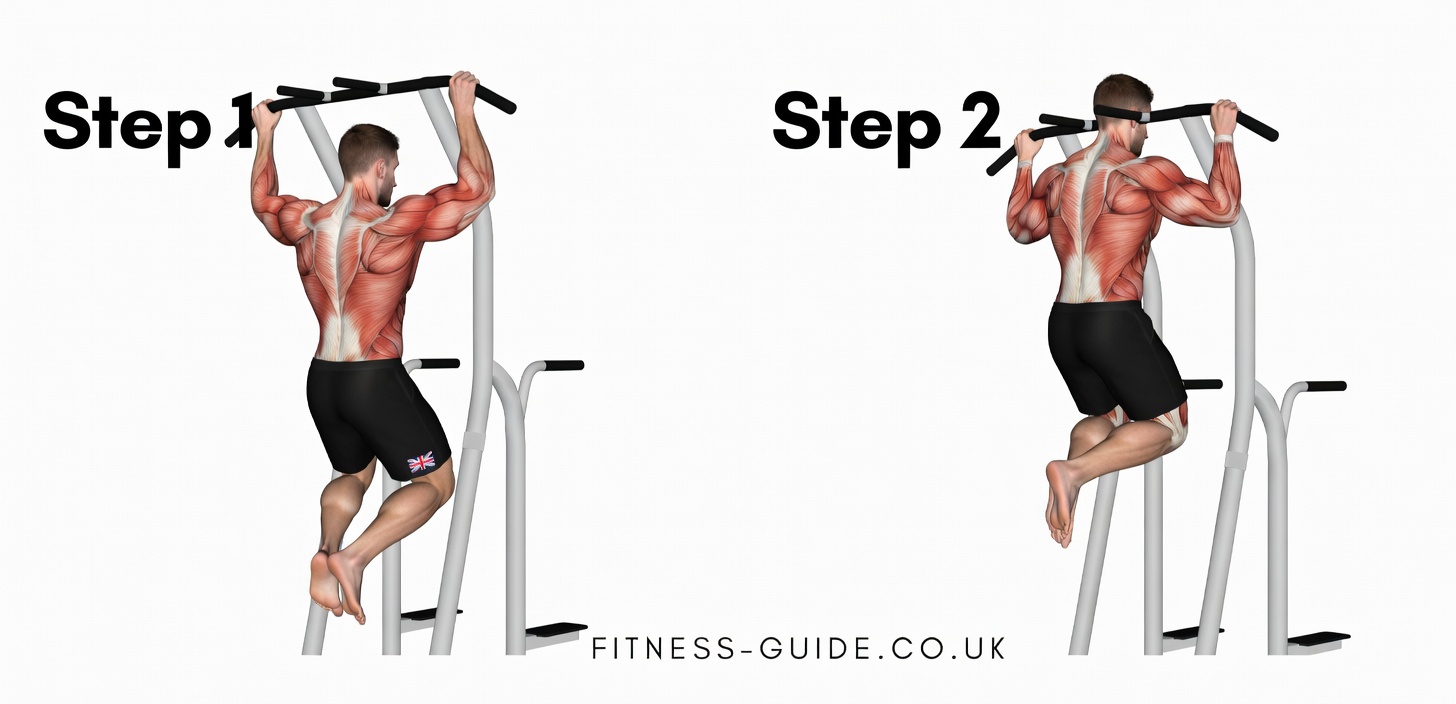
- Grab a pull-up bar or another stable overhead surface with both hands.
- Set your shoulders and keep your torso tight.
- Pull yourself upward until your chin rises above the bar.
- Lower yourself back down slowly and under control.
- Repeat for the planned number of reps.
Use the grip that feels best for your body, whether that is overhand, underhand, or neutral grip, as long as it is comfortable and safe.
3. Dips
Dips are excellent for adding size and strength to the chest, shoulders, and triceps. They can be performed on parallel bars, sturdy chairs, or dip stations.
Main muscles worked:
- Triceps
- Lower chest
- Front shoulders
Recommended Volume
- 3 to 5 sets
- 10 to 15 reps
- 30 to 60 seconds of rest
How to Do Dips
- Support yourself on parallel bars or another stable setup.
- Keep your chest lifted and shoulders controlled.
- Bend your elbows and lower your body until your upper arms are roughly parallel to the floor.
- Push back up until your arms are straight.
- Repeat with smooth, controlled reps.
4. Inverted Rows
If pull-ups are too difficult right now, inverted rows are a great alternative. They also balance out pushing exercises by strengthening the back.
Main muscles worked:
- Upper back
- Lats
- Biceps
- Rear shoulders
- Core
Recommended Volume
- 3 to 5 sets
- 10 to 15 reps
- 30 to 60 seconds of rest
How to Do Inverted Rows
- Position yourself under a low bar, table, or suspension trainer.
- Grab the bar with both hands.
- Keep your body straight from head to heels.
- Pull your chest toward the bar.
- Lower yourself slowly back to the start.
- Repeat for the target reps.
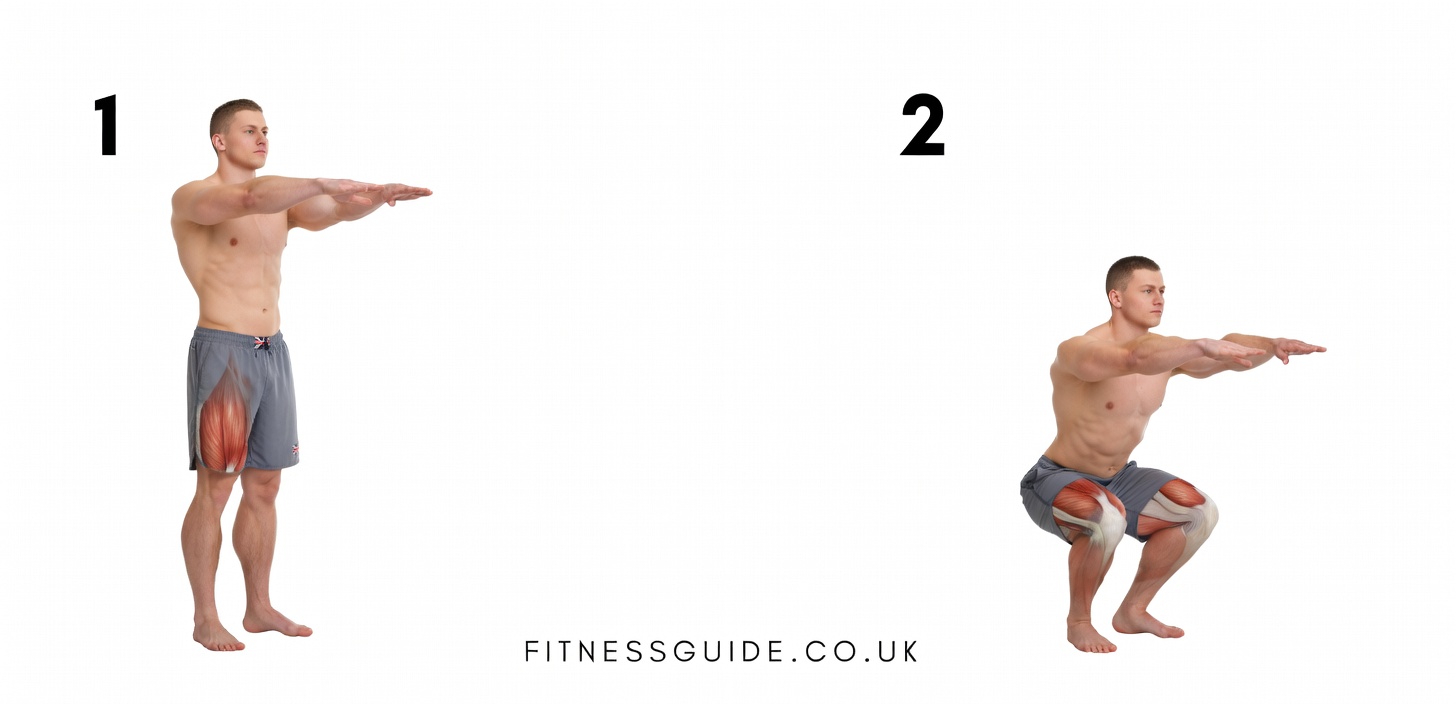
5. Bodyweight Squats
To build muscle effectively, you cannot ignore your lower body. Bodyweight squats are one of the easiest and most effective ways to train your legs at home.
Main muscles worked:
- Quadriceps
- Glutes
- Hamstrings
- Core
Recommended Volume
- 3 to 5 sets
- 10 to 15 reps or more if needed
- 30 to 60 seconds of rest
How to Do Bodyweight Squats
- Stand with your feet about shoulder-width apart.
- Brace your core and keep your chest up.
- Sit your hips back and bend your knees as you lower down.
- Descend until your thighs are at least parallel to the floor, if mobility allows.
- Drive through your feet to stand back up.
- Repeat for the desired number of reps.
To increase difficulty, slow the lowering phase or add pauses at the bottom.
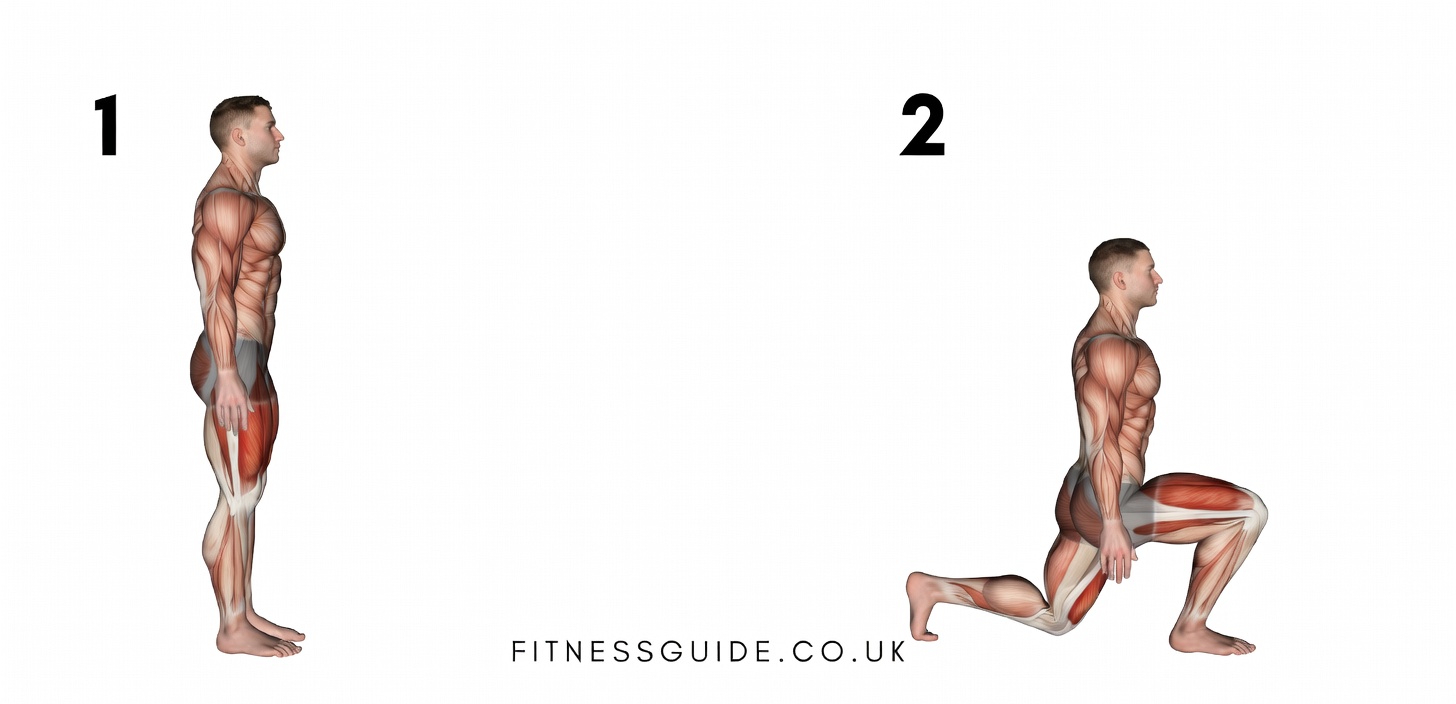
6. Split Squats or Lunges
Single-leg work is highly effective for building leg muscle when you do not have access to weights. It also improves balance and coordination.
Main muscles worked:
- Quads
- Glutes
- Hamstrings
- Stabilizing muscles in the hips and core
Recommended Volume
- 3 to 5 sets
- 10 to 15 reps per leg
- 30 to 60 seconds of rest
How to Do Split Squats
- Step one foot forward and one foot back.
- Keep your torso tall and your core tight.
- Lower your body by bending both knees.
- Push through the front foot to return to the top.
- Complete all reps on one side, then switch.
7. Pike Push-Ups
Pike push-ups are a powerful bodyweight movement for building the shoulders and upper chest. They are also a useful stepping stone toward handstand push-ups.
Main muscles worked:
- Shoulders
- Upper chest
- Triceps
- Core
Recommended Volume
- 3 to 5 sets
- 10 to 15 reps
- 30 to 60 seconds of rest
How to Do Pike Push-Ups
- Start in a push-up position.
- Lift your hips up so your body forms an inverted V shape.
- Place your hands firmly on the floor and keep your core engaged.
- Bend your elbows and lower your head toward the ground.
- Press back up to the starting position.
- Repeat for the target number of reps.
Final Thoughts on Bodyweight Muscle Building
You do not need a gym full of machines to build muscle. With smart programming and consistent effort, bodyweight training can produce impressive results.
The key is progression. Since you cannot simply add more plates, you must challenge your body by manipulating:
- Gravity
- Tempo
- Stability
- Time under tension
If you apply these principles and train hard within the right rep range, bodyweight exercises can help you gain size, strength, and control.
Start with the basics, focus on excellent form, and progress gradually. Whether you are a complete beginner or an advanced calisthenics athlete, these movements can help you build the physique you want.