Stop Acid Reflux by Fixing the Real Problem: Your Stomach Valve
A burning sensation climbing up your chest after meals is easy to recognize as heartburn. But reflux doesn’t always feel like fire. For many people, it shows up as a constant lump in the throat, stubborn mucus that won’t clear, or the need to cough or clear the throat before speaking. These can seem like unrelated issues—often blamed on allergies, anxiety, or “just stress”—yet they frequently share the same underlying cause: a valve that isn’t sealing as it should.
The issue is not always “too much acid.” In many cases, the real problem is that the stomach’s “security door” is left slightly open. And here’s the part that surprises many people: you can have significant reflux without feeling any burning at all.
Quick fixes like baking soda may put out the “flames” for a moment, but using them daily is like spraying a fire extinguisher on the smoke instead of finding the spark. The goal is not endless symptom relief; it’s fixing the mechanics. Drawing on the insights of Dr. Alberto Sanagustín, this guide focuses on how to strengthen that valve so acid and gas stop rising—and how to reduce your dependence on medication by tackling the root cause.
Key Takeaways
-
Reflux Is Often a Mechanical Problem: In many cases, acid reflux happens because the lower esophageal sphincter (LES)—the valve between your esophagus and stomach—is weak or too relaxed, not solely because of excess acid.
-
Let Gravity Help You: Sleeping on your left side, raising the head of your bed, and avoiding lying down for 2–3 hours after eating can significantly cut down reflux episodes.
-
Don’t Overfill the Tank: Aim to stop eating at about 80% fullness and avoid large amounts of fluid with meals. Too much volume increases pressure and can force the valve to open.
-
Watch for Chemical Relaxants: Substances like mint, chocolate, alcohol, and tobacco can chemically relax the valve and worsen reflux. Cutting them out temporarily can give the LES a chance to recover.
1. Your Stomach Is a Pressure System, Not Just a Simple Bag
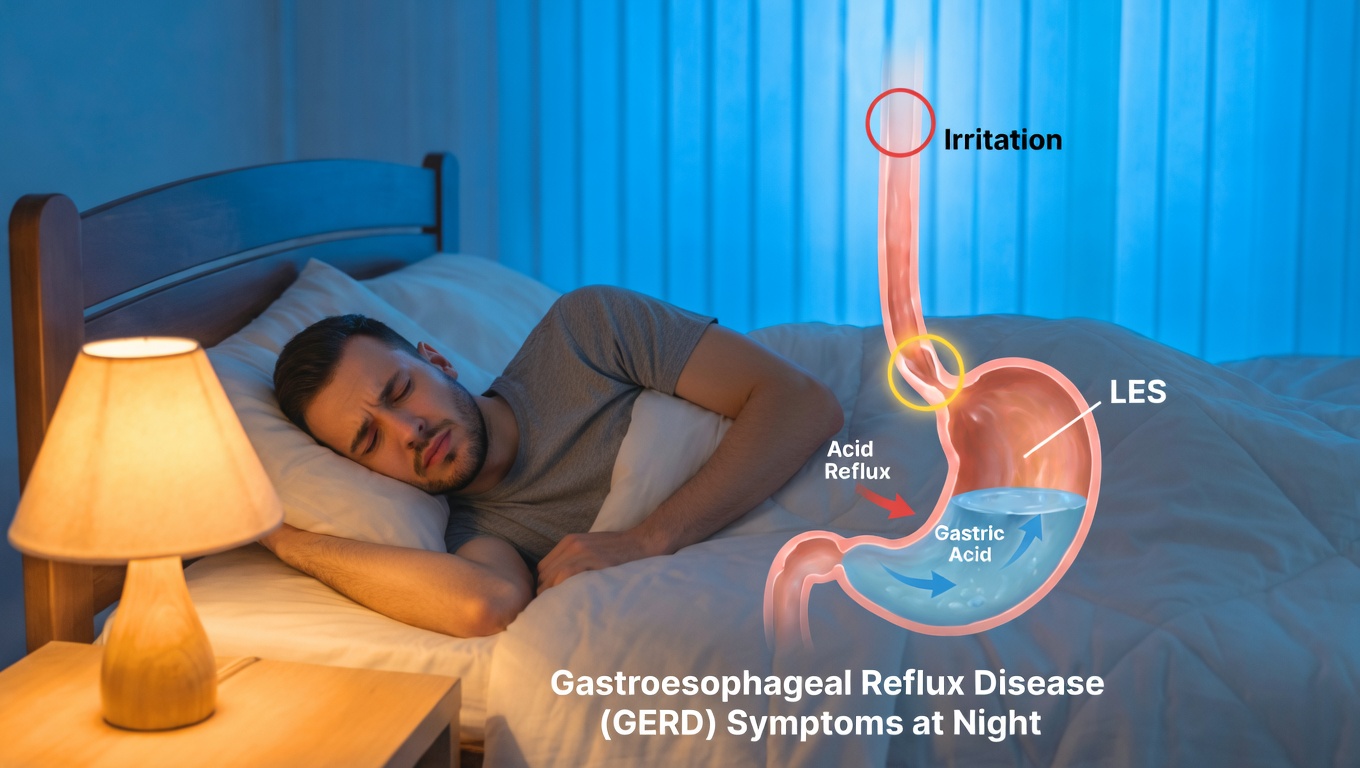
To fix reflux, it helps to picture your stomach correctly. It isn’t just a sack where food drops and sits—it’s more like a flexible tank where pressure constantly changes. Imagine a balloon filled with liquid and gas. When you squeeze that balloon, its contents look for an escape route, usually upwards.
Between your stomach and esophagus, a circular muscle called the lower esophageal sphincter (LES) is supposed to stop that upward escape. Think of it as the knot at the top of the balloon or a one-way valve in plumbing. When this “door” fails, stomach contents can move back toward the esophagus and throat.
This valve can malfunction for several reasons:
- The stomach stretches and pressure rises, forcing the valve open.
- The muscle relaxes at the wrong time.
- A hiatal hernia alters the anatomy and weakens the barrier, making reflux more likely.
A frequent question is: “If I have reflux, shouldn’t I get rid of my stomach acid?” The answer is no. Stomach acid is essential. It:
- Helps kill harmful bacteria.
- Breaks down proteins in your food.
- Is crucial for absorbing nutrients like vitamin B12.
The problem is not that acid exists—it’s that acid is showing up in the wrong place. It’s like water leaking upstairs into your attic: your esophagus and throat. That happens because the “doorman,” the LES, has lost tone or is opening at the wrong time.
Medications such as omeprazole reduce acid production, which can protect the esophagus and help heal inflammation. But they do not tighten or repair the valve itself. They change the acidity of what rises, not the fact that it is rising. Here, we focus on reinforcing the valve mechanically so the contents stay where they belong.
2. Plumber’s Mistake #1: Overfilling the Stomach and the 80% Rule
Let’s look at the problem as a basic plumbing issue. Why does the valve open when it shouldn’t? Besides structural issues like a hiatal hernia, one of the simplest and most common causes is overfilling the stomach.
Your stomach is a muscular, stretchy organ—but it has limits. When you eat until you feel completely stuffed, the stomach becomes distended and the internal pressure rises. That pressure can overpower the LES. It’s pure physics: more pressure inside means more force pushing against the “door.”
And this doesn’t apply only to solid food. If you notice that drinking a lot during meals makes your reflux or throat symptoms worse, it’s because you’re increasing the volume in that reservoir. More volume equals more pressure pushing up against the valve.
A practical solution comes from a Japanese concept called hara hachi bu, which encourages eating until you are about 80% full. This doesn’t require counting bites or weighing food. Instead:
- Stop eating when your hunger is satisfied,
- Not when you feel heavy, bloated, or uncomfortable.
If large amounts of liquid during meals make your symptoms flare, try this adjustment:
- Drink most of your fluids between meals, not alongside them.
- During meals, sip only small amounts if needed.
This simple change can dramatically reduce the pressure that forces the valve to open.
3. Plumber’s Mistake #2: Ignoring Gravity While You Sleep
One of the most effective—and cheapest—tools against reflux is gravity. To understand how, visualize the shape and position of your stomach. It’s curved and shaped roughly like a “J,” not a straight tube.
When you lie on your right side, your stomach tends to sit above the entrance to the esophagus. In that position, gravity pulls the contents of the stomach toward the valve. If the valve is weak, it opens and lets acid and gas move upward.
When you lie on your left side, the opposite happens. The stomach hangs below the esophagus, forming a kind of “pocket” that keeps liquids pooled away from the valve. Reflux becomes less likely because gravity is helping to keep contents down.
Practical tactics:
- If you have nighttime reflux, wake up with throat mucus, or notice morning hoarseness, and you can comfortably sleep on your left side, this position alone can greatly reduce symptoms.
- If left-side sleeping isn’t possible because of shoulder, hip, or back issues, try these alternatives:
- Raise the head of the bed by about 6 inches (15 cm) using blocks or risers under the bed legs at the head end. Extra pillows are less effective because they bend your body at the waist and may actually increase abdominal pressure.
- Avoid lying down for at least 2–3 hours after your evening meal. Give your stomach time to empty while you are upright, so there is less content available to reflux when you finally lie down.
Using gravity strategically—day and night—can significantly reduce the number and intensity of reflux episodes.
4. Chemical Saboteurs: Four Common Triggers That Weaken the Valve
Beyond physical pressure and body position, certain substances chemically relax the LES. They don’t necessarily create acid, but they make the “door” more likely to open.
If you want to give your valve the best chance to regain strength, it’s often helpful to avoid these four classic saboteurs for at least 2–3 weeks and watch how your body responds:
-
Mint
Peppermint and spearmint, despite their reputation as “digestive” herbs, can relax the LES. If you have reflux, it’s wise to avoid:- Mint teas after meals
- Mint candies and lozenges
- Strongly mint-flavored gums
-
Chocolate
Chocolate contains theobromine and fat, both of which can reduce LES tone. For many people, even small amounts in the evening can trigger symptoms later. A helpful strategy is:- Eliminate chocolate completely during your trial period.
- Later, reintroduce it slowly to discover your personal tolerance level.
-
Alcohol
Alcohol can both irritate the lining of the esophagus and stomach and reduce muscle tone in the LES. A drink in the evening may set you up for reflux in the early morning hours. For valve repair:- Avoid alcohol, especially at night, during the initial recovery phase.
-
Tobacco
Smoking is a strong and well-known relaxant of the LES. Each cigarette can reduce sphincter tone and promote reflux. The more you smoke, the more you undermine the valve:- Quitting smoking is one of the most beneficial steps you can take for reflux and overall health.
What About Coffee and Tomatoes?
Coffee, tomato products, and other acidic foods affect people differently:
- In some, they worsen symptoms by irritating the lining or stimulating more acid.
- In others, they cause little or no problem.
If your throat feels raw, scratched, or very sensitive:
- Consider avoiding coffee, tomato sauces, citrus juices, and other acidic foods at first.
- Then, reintroduce them one at a time and in small amounts to see which ones you tolerate and which clearly trigger symptoms.
5. A 3-Level Protocol to Strengthen Your Stomach Valve
To repair and protect your LES, you don’t need perfection—you need a structured approach. Think of this as a three-level protocol:
Level 1: Engineering Control (Diet and Mechanics)
Focus on habits that directly change pressure and position:
-
Time your evening meal:
Have dinner about 3–4 hours before going to bed. This gives your stomach time to empty while you’re upright, with gravity aiding digestion. -
Reduce abdominal pressure:
- If you are overweight, even modest weight loss can decrease pressure on your stomach and LES, reducing reflux.
- Avoid tight clothing around your midsection, such as very tight belts, shapewear, or girdles that compress the abdomen.
-
Be mindful of posture after eating:
As much as possible, avoid bending over or slumping forward shortly after meals, since this can increase pressure on the stomach and encourage contents to move upward.
By combining smart mechanical strategies with careful attention to volume, triggers, and body position, you address the real, physical cause of reflux: a valve under pressure. Strengthening that “gate” helps keep acid where it belongs and can reduce your dependence on constant symptom relief.