Wall Sit: A Simple Leg Exercise That Builds Real Strength
The wall sit is often underestimated because it looks so basic. Unlike squats or lunges, it does not involve repeated movement, so many people assume it is less effective for training the legs.
However, that assumption is misleading. A wall sit is a static exercise, meaning you hold one position without moving, yet it can be highly effective for developing lower-body strength and endurance.
This exercise can do an excellent job of targeting key muscles in the lower body, including the hamstrings, glutes, and hips.
It is also a practical way to measure leg strength and muscular endurance.
The reason is simple: the longer you can maintain the wall sit position, the stronger and more enduring your legs tend to be.
Try using it as a quick fitness test. Get into the wall sit position, start a timer, and see how long you can hold it.
Write down your result and use it as a benchmark for progress.
As a general guideline, being able to hold a wall sit for 60 seconds suggests your legs are in good condition.
If you cannot reach that mark yet, that is completely fine.
In this guide, you will learn how to perform a wall sit correctly so you can build more leg strength over time.
By the end, you will have a better idea of how fit your legs are and how to keep improving their strength and endurance.
You may also like:
- How to Do a Squat Correctly
- 27 Best Bodyweight Exercises You Can Do Anywhere
What Is a Wall Sit?
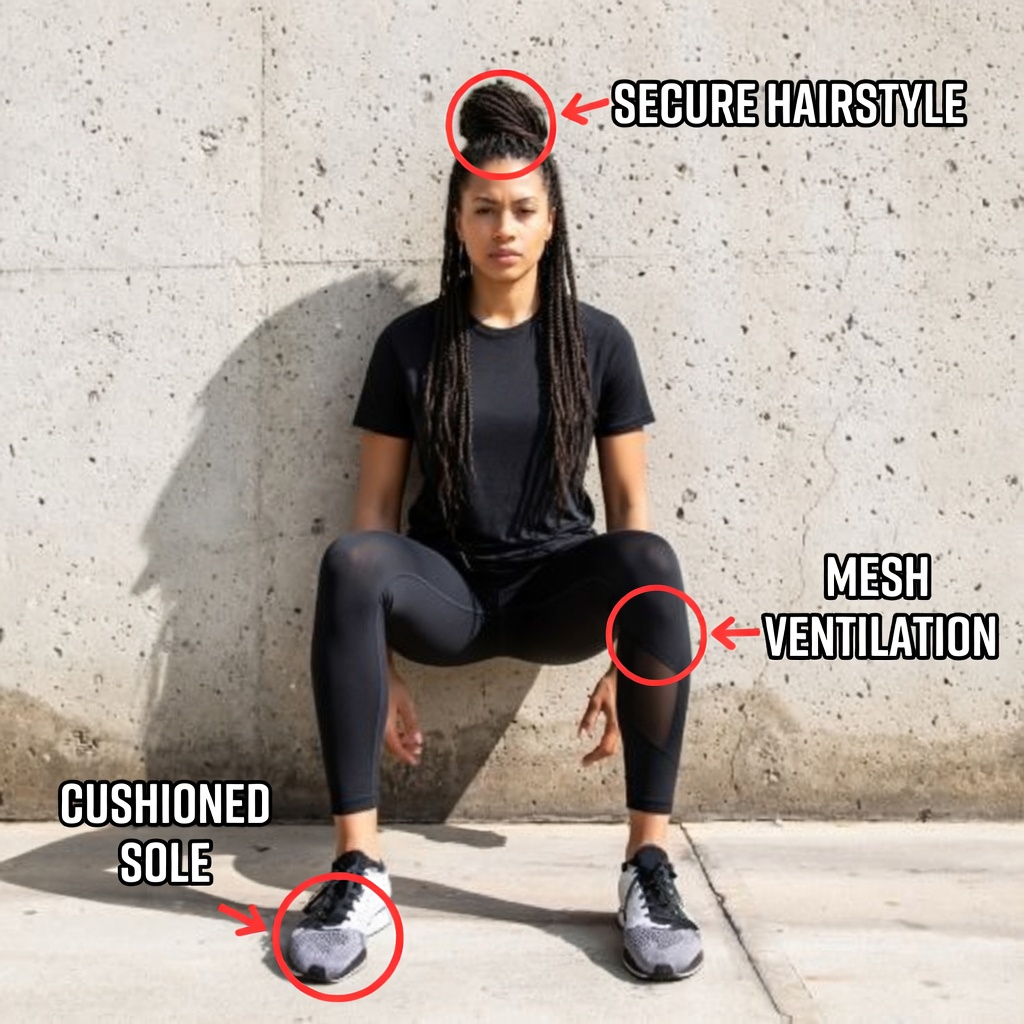
A wall sit, sometimes called a wall squat, is an isometric exercise.
It involves sliding down against a wall and holding a seated position for a set amount of time. Beginners should aim for 30 to 60 seconds.
In general, the stronger your lower body muscles are, especially your hamstrings and glutes, the longer you will be able to stay in position.
While holding the exercise, you mainly work your quadriceps, hamstrings, and glutes.
Another challenge of the wall sit is mental as well as physical. Staying in the position helps train your ability to tolerate discomfort and push through muscle fatigue.
One of the biggest advantages of wall sits is their convenience. You do not need gym equipment or much space, which makes them perfect for home workouts. All you need is a wall or another solid vertical surface.
Benefits of Doing Wall Sits
Regular wall sits offer several important benefits beyond simply testing your fitness level.
- Strengthens the lower body: Wall sits activate major leg muscles, including the glutes, hamstrings, quadriceps, and calves.
- Improves muscular endurance: Because you hold the position over time, the exercise helps your muscles sustain effort for longer periods.
- Supports balance and stability: Maintaining proper form requires your core and back muscles to stay engaged, which helps develop stabilizing strength.
- Easy to do anywhere: Since no equipment is required, wall sits are an accessible bodyweight exercise for nearly anyone.
How to Do a Wall Sit Properly
To perform a wall sit, find a flat wall and a firm, clear floor surface.
- Stand with your back against the wall.
- Place your feet about shoulder-width apart.
- Slowly slide down the wall until your knees are bent at roughly a 90-degree angle.
- Keep your knees aligned over your feet and avoid letting them move past your toes.
- Distribute your weight evenly through both feet to stay balanced.
- Keep your back straight against the wall and avoid excessive arching in your lower back.
- Tighten your core and hold the position for 30 to 60 seconds.
How to Progress
Once you can comfortably hold a wall sit for 60 seconds, make the exercise more challenging by:
- Increasing the number of sets
- Extending the hold time
- Gradually building up your endurance with consistent practice
Final Thoughts
The wall sit may be simple, but it is far from ineffective. It is a powerful lower-body exercise that can strengthen your legs, improve endurance, and help you measure your current fitness level.
If you are looking for an easy, equipment-free way to build stronger legs at home, the wall sit is a smart exercise to include in your routine.